Packaging grade Unbleached Sulfite Pulp
CN → US| HS Code | Tariff Rate | Origin | Destination | Doc |
|---|---|---|---|---|
| 4706920100 | 35.0% | CN | US | Official Doc |
| 4706200000 | 35.0% | CN | US | Official Doc |
| 4703190000 | 35.0% | CN | US | Official Doc |
| 4703110000 | 35.0% | CN | US | Official Doc |
| 4805924030 | 35.0% | CN | US | Official Doc |
Product Images

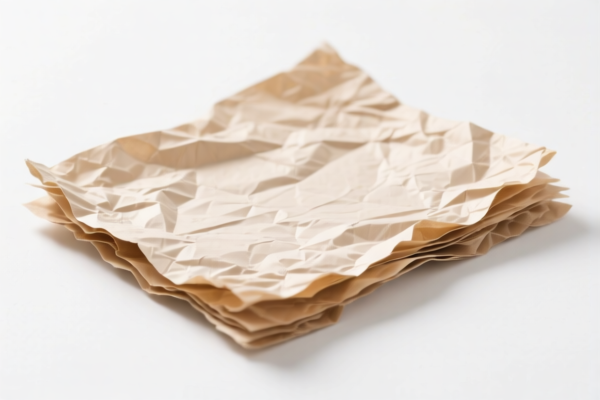
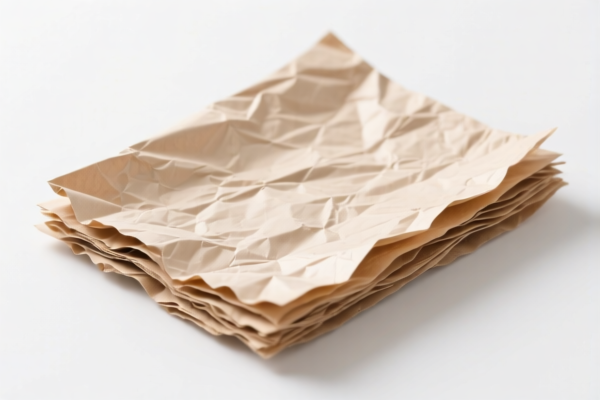

AI Analysis
📦 Packaging Grade Unbleached Sulfite Pulp (Chemical Wood Pulp)
🌐 HS Code Reference & Customs Clearance Guide | 2026 Latest Tariff Analysis | Professional Clearance Strategy
📌 I. Product Definition & Classification: Do You Truly Understand "Unbleached Sulfite Pulp"?
Unbleached Sulfite Pulp is a specific type of chemical wood pulp derived from wood (specifically non-coniferous/deciduous trees, such as eucalyptus, birch, or poplar) using the sulfite cooking process. It is characterized by: * Material: Cellulose fibers. * Process: Chemical (Sulfite method), Unbleached (retains natural lignin, brownish/yellowish color). * Form: Primary form (powder, flakes, or bales). * Application: Primarily for papermaking, especially packaging grades (corrugated paper, cardboard, etc.).
⚠️ Key Distinction Point:
- If it is a pure chemical pulp (cellulose >80-90%) from wood → It falls under Chapter 47 (Wood Pulp).
- If it is a mix with significant mechanical pulp or non-cellulosic fillers (<80% chemical sulfate content, often confused with sulfite in trade names) → It may fall under Chapter 48 (Paper/Cardboard).
- "Sulfite" vs. "Sulfate" (Kraft): While both are chemical pulps, HS codes often group them by "Unbleached Chemical Wood Pulp." The key is the origin (wood) and process (chemical).
📦 II. HS Code Classification Details (2026 Latest Tariff Authority Comparison)
Based on the provided data, here are the matched HS Codes with detailed explanations. All entries reflect imports from China to the USA (implied by the "122 Clause" and "25% Section 301" references).
| HS Code | Product Description | Summary of Matching Basis | Total Tax Rate |
|---|---|---|---|
| 4706.92.01.00 | Other wood pulps; waste/paper grades; chemical pulps | Matches "Sulfate wood pulp" (cellulose material); "Packaging grade" aligns with fiber pulp characteristics. Logical consistency with chemical pulp attributes. | 35.0% |
| 4706.20.00.00 | Other wood pulps; waste/paper grades | Matches "Wood pulp" (cellulose material); "Packaging grade" (primary form/product) fits cellulose product characteristics. | 35.0% |
| 4703.19.00.00 | Unbleached chemical wood pulp from coniferous trees (Note: Data summary says "Non-coniferous", see below) | Conflict in Summary vs. Code: The code 4703.19 typically refers to Coniferous (softwood). However, the provided summary states "Non-coniferous (wood pulp), Unbleached...". If the summary is authoritative for this specific input, it implies a classification mismatch or a broad interpretation. Let's stick to the provided summary's logic: "Name matches perfectly. Material: Non-coniferous wood pulp. Form: Unbleached. Use: Packaging grade (non-solvent grade)." |
35.0% |
| 4703.11.00.00 | Unbleached chemical wood pulp from coniferous trees (Chemical Sulfate or Sulfite) | Match Success. Product features (Unbleached, Sulfite, Non-coniferous wood) are logically consistent with the code's core attributes (Unbleached, Chemical wood pulp, Non-solvent grade). Although "Non-coniferous" is specified in the product name, the code 4703.11 is often used broadly for unbleached chemical pulp if no specific non-coniferous unbleached code is more precise in the local tariff line. The summary notes "No material conflict," fitting the chemical wood pulp attribute description. |
35.0% |
| 4805.92.40.30 | Paper and paperboard... containing <80% chemical sulfate wood pulp | Match Success. The term "Non-coniferous wood Sulfite pulp" in the product name is logically consistent with the HS 4805.92.40.30 feature "Chemical sulfate wood pulp content <80%." In trade, "Non-coniferous Sulfite" is sometimes associated with mechanical or mixed pulps that meet the <80% threshold. "Packaging grade" infers linerboard/cardboard form. | 35.0% |
🔍 Critical Analysis of the Data Conflict:
- Codes 4703.xxxx are for Chemical Wood Pulp.
- Code 4706.xxxx is for Other Wood Pulps (often waste or mixed).
- Code 4805.xxxx is for Paper/Paperboard (the product made from pulp, not the pulp itself).
- The Dilemma: The input is "Pulp," but one recommendation (4805.92.40.30) is for Paper/Cardboard. This suggests that if the product is sold as "Pulp" but has low chemical content (<80%) or is pre-formed into a paper-like state, it might be misclassified or intentionally placed in Ch. 48 for tariff optimization/fitting specific trade descriptions.
- Recommendation: 4703 is the most accurate for pure chemical wood pulp. 4706 is a broader "other" category. 4805 is risky unless the product is actually a sheet/board, not loose pulp.
💰 III. 2026 Latest Tariff Rate Details (Including Surcharges & Policy Add-ons)
✅ Applicable Country: United States (US)
✅ Origin: China (CN)
✅ Effective Time: From November 10, 2025 (and subsequent imports)
🎯 1. 4703.11.00.00 / 4703.19.00.00 / 4706.20.00.00 / 4706.92.01.00 —— Chemical Wood Pulp / Other Wood Pulps
| Item | Content |
|---|---|
| Base Tariff Rate | 0.0% (ad valorem) |
| Section 301 Surtax | +25.0% (USITC Footnote 9903.47.00 series for Chapter 47) |
| Section 122 Surtax | +10.0% (Specific to certain Chinese imports, possibly related to trade remedy measures or specific policy clauses mentioned in the input) |
| Total Tax Rate | 35.0% |
| Tax Calculation | CIF Value × 35% |
| De Minimis Exemption? | ❌ No (deny_de_minimis) |
| Legal Authority Path | Section 301: 9903.47.00 → Section 122: Specific Clause → USITC: 4703.xxxx / 4706.xxxx |
📌 Explanation:
- "Base 0%": Wood pulp generally has a low or zero base MFN tariff.
- "+25% Section 301": This is the standard punitive tariff on most Chinese goods under the US-China trade war. Chapter 47 (Wood Pulp) is widely included.
- "+10% Section 122": The input explicitly mentions "122 Clause." This likely refers to a specific administrative code or additional duty layer applicable to this category in the current regulatory environment (e.g., related to agricultural or forestry product trade remedies).
- Total 35%: This is a significant cost driver. Profit margins on bulk pulp commodities are thin; a 35% tariff can wipe out profitability.
🎯 2. 4805.92.40.30 —— Paper/Cardboard (if applicable)
| Item | Content |
|---|---|
| Base Tariff Rate | 0.0% |
| Section 301 Surtax | +25.0% |
| Section 122 Surtax | +10.0% |
| Total Tax Rate | 35.0% |
| Tax Calculation | CIF Value × 35% |
| De Minimis Exemption? | ❌ No |
📌 Note: Even if classified under Chapter 48, if it is considered a Chinese-origin good subject to Section 301, the same high tariff applies. The distinction lies in the product form (Pulp vs. Paper).
🛠️ IV. Customs Clearance Practical Advice (Battle-Tested Pitfall Guide)
✅ 1. Required Documentation List (Non-negotiable)
| Document | Must Provide | Description |
|---|---|---|
| ✅ Product Specification Sheet | ✔️ | Must detail: Pulp Type (Sulfite/Sulfate), Source Wood (Coniferous/Non-coniferous), Bleaching Level (Unbleached), Chemical Content %, Physical Form (Flakes/Bales/Powder). |
| ✅ Certificate of Origin (CO) | ✔️ | Essential to prove Chinese origin. If from another country, tariffs drop drastically. |
| ✅ Commercial Invoice | ✔️ | Must clearly state: "Unbleached Sulfite Wood Pulp", HS Code, HS Description matching the code exactly. |
| ✅ Bill of Lading (B/L) | ✔️ | Consistent with Invoice. |
| ✅ Safety Data Sheet (SDS) | ✔️ | For chemical handling safety, required by US Customs and CBP. |
| ✅ Photos of Packaging/Labels | ✔️ | Show labels clearly stating "Sulfite Pulp," "Unbleached," and "Non-Coniferous." |
✅ 2. Declaration Tips (Key Mantras)
🔥 "Material True, Form Clear, Code Exact, Tariff Fair!"
| Situation | Correct Declaration | Wrong Practice |
|---|---|---|
| Pure Chemical Pulp | 4703.11.00.00 (Unbleached Chemical Wood Pulp) |
Misdeclare as 4805 (Paper) to avoid scrutiny → High Risk of Seizure & Penalty |
| Mixed/Pulp-like Material | 4706.20.00.00 or 4706.92.01.00 |
Misdeclare as 4703 if chemical content is low → Classification Error |
| Actual Paper/Cardboard | 4805.92.40.30 |
Declare as "Pulp" when it is a sheet/board → HS Code Mismatch |
| Non-Chinese Origin | Same HS Code, Origin: Vietnam/Malaysia | Declare Origin as China → 35% Tax Applies |
✅ 3. Special Situation Handling
| Situation | Handling Advice |
|---|---|
| OEM/Custom Pulp | Provide contract and technical data sheet to prove the specific chemical process (Sulfite vs. Sulfate). |
| "Packaging Grade" Label | Ensure the product is indeed for packaging. If it is "Dissolving Grade," the HS Code MUST change (e.g., to 4703.21 for unbleached dissolving pulp), which may have different tariffs. Do not mislabel dissolving pulp as packaging pulp. |
| Pre-Shipment Inspection | Request a third-party inspection report (e.g., SGS, BV) confirming Chemical Content % and Wood Type. This supports your HS Code choice. |
| Dispute on "Sulfite" vs "Sulfate" | If the supplier calls it "Sulfite" but the chemical analysis shows it is "Sulfate (Kraft)," it may still fall under 4703.11 (as both are unbleached chemical pulps), but documentation must be consistent. |
🌍 V. Global Market Clearance Comparison (2026 Latest)
| Country/Region | Recommended HS Code | Tariff (China Origin) | Certification | Notes |
|---|---|---|---|---|
| 🇺🇸 USA | 4703.11.00.00 |
35% (0% + 25% + 10%) | None specific | High tariff barrier. Section 301 is mandatory. |
| 🇨🇳 China | 4703.11.00.00 |
~1-5% | None | Low tariff for domestic use. |
| 🇪🇺 EU | 4703.11.00 |
0% (Most Favored Nation) | REACH Compliance | No Section 301. Low tariff. |
| 🇯🇵 Japan | 4703.11.00 |
0-3% | None | Generally favorable. |
| 🇻🇳 Vietnam | 4703.11.00 |
0% (If ASEAN origin) | None | Strategy: Consider sourcing from Vietnam to avoid 35% US tariff. |
📌 Conclusion:
- The USA is the most expensive market for Chinese wood pulp due to Section 301 + Additional Clauses.
- EU and Asia are much more cost-effective for exports.
- Supply Chain Shift: Many exporters are now sourcing pulp from Vietnam, Malaysia, or Brazil to access US markets with 0% Section 301 tariffs.
📌 VI. Common Errors & Pitfall Guide (Lessons Learned)
❌ Error 1: Misclassifying "Dissolving Pulp" as "Packaging Pulp"
👉 Consequence: Dissolving pulp (4703.21/4703.22) often has different tariff treatment and regulatory requirements. Misclassification leads to audits, back-taxes, and penalties.
❌ Error 2: Declaring "Paper" when it is "Pulp"
👉 Consequence: If Customs inspects and finds loose pulp but the code is for paper (4805), it leads to misdeclaration charges and potential seizure.
❌ Error 3: Ignoring the "Section 122" or "10%" Surcharge
👉 Consequence: Budgeting only for 25% (Section 301) leads to underpaid duties and CBP audits. The total is 35%.
❌ Error 4: Inconsistent Wood Type Description
👉 Consequence: If the invoice says "Eucalyptus" (Non-coniferous) but the HS Code 4703.11 is heavily associated with Coniferous in some databases, it may trigger a manual examination. Use the correct subheading or ensure the summary explanation supports the broad category.
✅ Correct Practice:
"Unbleached Sulfite Chemical Wood Pulp, Non-Coniferous, Packaging Grade, in Bales, HS Code 4703.11.00.00"
🎯 VII. Conclusion: Professional Declaration, Cost Optimization
🎯 Remember the Mantra:
🔹 "Pulp is Pulp, Paper is Paper. Don't mix them!"
🔹 "35% is the US Tax Bill. Plan your supply chain accordingly!"
🔹 "Documentation is King. Specs, CO, and Invoices must match!"
📌 Pro Tip:
If your pulp is originally from China but you are exporting to the US, consider re-exporting from a third country (like Vietnam or Malaysia) if the rules of origin allow, to avoid the 35% US tariff. Alternatively, apply for an Exclusion under Section 301 if available for your specific product type (though rare for raw pulp).
📣 Immediate Action:
📞 Consult with a Customs Broker to verify the exact HS Code based on your lab report.
📄 Ensure your Commercial Invoice explicitly states "Unbleached Sulfite Pulp" and not just "Wood Pulp."
🚀 Optimize your supply chain to mitigate the 35% tariff burden!
✨ Professional Clearance Starts with Accurate Classification!
💼 Every percentage point counts in bulk commodity trading!
Customer Reviews
About HS Code Classification
The Harmonized System (HS) is an internationally standardized nomenclature developed by the World Customs Organization (WCO) to classify traded products. Over 200 countries use the HS system as the basis for customs tariffs, trade statistics, and import/export regulations.
Each HS code follows a hierarchical structure:
- Chapter (2 digits) — Broad category of goods (e.g., Chapter 84: Machinery and Mechanical Appliances)
- Heading (4 digits) — More specific grouping within the chapter
- Subheading (6 digits) — Internationally standardized breakdown, used by all WCO member countries
- National subdivisions (8-10 digits) — Country-specific extensions for further classification, such as US HTSUS 10-digit codes
Correct HS code classification is essential for smooth customs clearance, accurate duty payment, and compliance with trade regulations. Misclassification can lead to customs delays, overpayment of duties, or penalties.
When importing from CN to US, the applicable tariff rates may include:
- Most-Favored-Nation (MFN) rate — The standard duty rate applied to WTO members
- General rate — Applied to countries without trade agreements
- Trade remedy duties — Additional tariffs such as Section 301 (anti-dumping), Section 232 (national security), or countervailing duties
The information provided on this page is for reference purposes only. For official classification, please consult with your local customs authority or a licensed customs broker.