Padlocks
CN → US| HS Code | Tariff Rate | Origin | Destination | Doc |
|---|---|---|---|---|
| 8301106080 | 23.6% | CN | US | Official Doc |
| 7326908688 | 87.9% | CN | US | Official Doc |
| 7326190080 | 87.9% | CN | US | Official Doc |
| 8301108000 | 22.3% | CN | US | Official Doc |
| 8301106080 | 23.6% | CN | US | Official Doc |
Product Images
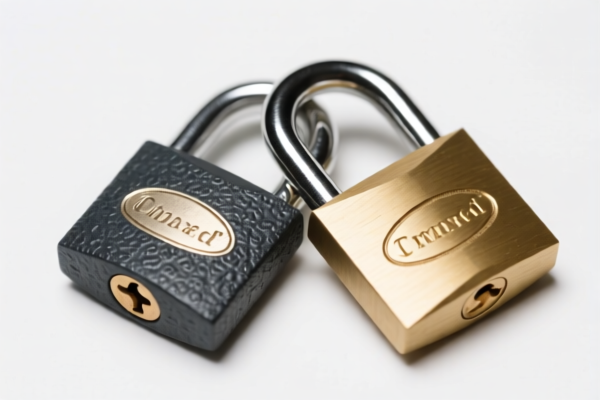
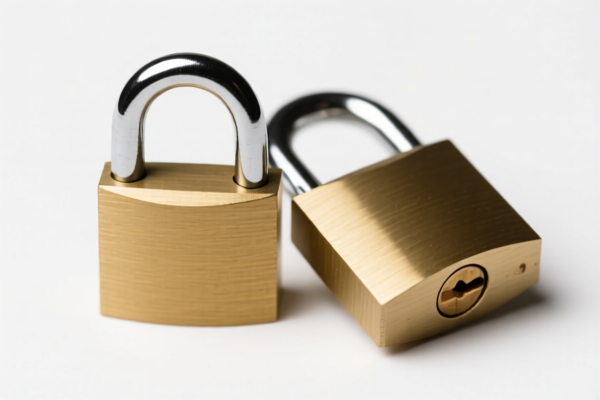
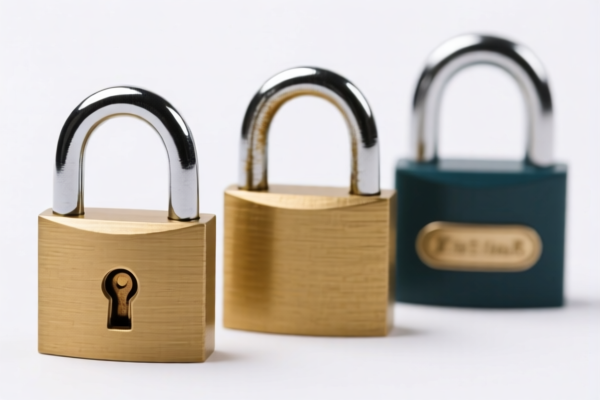

AI Analysis
🔒 Padlocks (Security Locks for Metals/Steel)
🌐 HS Code Reference & Customs Clearance Guide | 2026 Latest Tariff Analysis | Professional Clearance Strategy
📌 I. Product Definition & Classification: Do You Really Understand “Padlocks”?
Padlocks are portable locking devices primarily made of base metals, steel, or iron, used to secure gates, chains, lockers, or cargo containers. In international trade, the classification depends heavily on material composition and specific manufacturing details.
Key Distinctions: - General Base Metal Locks: Falls under heading 8301 (Locks of base metal). Often includes brass, zinc alloy, or other non-ferrous metals. - Steel/Iron Specific Locks: Falls under heading 7326 (Other articles of iron or steel) if they are deemed “other articles” rather than specialized locking mechanisms under 8301. This often applies to heavy-duty steel padlocks where the locking mechanism is integrated into a general steel form.
⚠️ Critical Classification Point:
- If the padlock is explicitly defined as a "lock" made of base metal (including steel/iron in broader HS interpretations for 8301), it may fall under 8301.
- However, if customs authorities classify it as a generic "steel article" rather than a functional lock mechanism (or if specific national notes exclude steel locks from 8301), it may fall under 7326.
- Note: The provided data reflects a split classification, likely due to differing national interpretations of "lock" vs. "steel article".
📦 II. HS Code Classification Details (2026 Latest Tariff Reference)
| HS Code | Product Description | Material / Key Feature | Total Tax Rate (China Origin → US) |
|---|---|---|---|
8301.10.60.80 |
Padlocks, material: base metal; other catch-all range | Base Metal (General) | 23.6% |
7326.90.86.88 |
Padlocks, material: iron/steel; other iron/steel articles | Iron/Steel | 87.9% |
7326.19.00.80 |
Key padlocks, material: steel/iron; other steel articles | Steel/Iron | 87.9% |
8301.10.80.00 |
Key padlocks, material: base metal; use: padlock | Base Metal (Specific) | 22.3% |
🔍 Key Observation:
- Base Metal Classification (8301): Significantly lower tax burden (~22-24%).
- Steel/Iron Classification (7326): Extremely high tax burden (~88%).
- Risk: Misclassifying a steel padlock as a "base metal lock" under 8301 could lead to severe penalties. Conversely, classifying a general base metal lock under 7326 results in overpayment.
💰 III. Detailed Tariff Rate Breakdown (Including Additional Duties)
✅ Applicable Country: United States (US)
✅ Origin: China (CN)
✅ Effective Date: Current tariffs apply (including Section 301 and Section 232 measures)
🎯 1. 8301.10.60.80 & 8301.10.80.00 —— Padlocks (Base Metal)
| Item | Content |
|---|---|
| Base Duty Rate | 4.8% – 6.1% (Ad valorem) |
| Section 301 Surcharge | +7.5% (Standard Section 301 tariff) |
| Section 232 Tariff (122 Clause) | +10% (Steel/Aluminum related provisions) |
| Total Tax Rate | 23.6% (for 8301.10.60.80) 22.3% (for 8301.10.80.00) |
| Tax Calculation | CIF Value × Total Rate |
| De Minimis Exemption | ❌ Not Eligible |
| Legal Basis Path | HTSUS:8301.10 → Section 301: HTSUS 8301.10.60.80 → Section 232: Footnote |
📌 Explanation:
- These codes fall under Heading 8301 (Locks of base metal).
- The 7.5% is the standard Section 301 tariff for many Chinese goods.
- The 10% is the Section 232 tariff, which applies to steel/aluminum products. Note that while 8301 is "base metal," some interpretations may link it to steel components, triggering the 122 clause.
- Total ~23% is manageable compared to steel-specific codes.
🎯 2. 7326.90.86.88 & 7326.19.00.80 —— Padlocks (Iron/Steel Articles)
| Item | Content |
|---|---|
| Base Duty Rate | 2.9% (Ad valorem) |
| Section 301 Surcharge | +25.0% (Higher tier for certain steel goods) |
| Section 232 Tariff (Steel/Aluminum) | +50% (Specific steel/aluminum surcharge) |
| 122 Clause Tariff | +10% |
| Total Tax Rate | 87.9% |
| Tax Calculation | CIF Value × 87.9% |
| De Minimis Exemption | ❌ Not Eligible |
| Legal Basis Path | HTSUS:7326.19 / 7326.90 → Section 301: HTSUS 7326 → Section 232: Steel/Aluminum Footnote 50% |
📌 Explanation:
- These codes fall under Heading 7326 (Other articles of iron or steel).
- The 50% is the critical Section 232 tariff for steel/aluminum products from China.
- The 25% is an additional Section 301 tariff layer.
- The 10% is the 122 clause.
- Total ~88% is extremely high and can destroy profit margins. This classification treats the padlock primarily as a steel commodity, not a specialized lock mechanism.
🛠️ IV. Customs Clearance Practical Advice (Pitfall Avoidance Guide)
✅ 1. Preparation Checklist (Must-Have Documents)
| Document | Required | Description |
|---|---|---|
| ✅ Product Specification Sheet | ✔️ | Must specify exact material (e.g., "Brass Alloy," "Stainless Steel," "Carbon Steel"). |
| ✅ Material Certificate | ✔️ | Crucial for distinguishing between 8301 (Base Metal) and 7326 (Steel). |
| ✅ Product Photos (Clear) | ✔️ | Show locking mechanism, keyway, and shackle to prove it’s a functional lock. |
| ✅ Commercial Invoice | ✔️ | Clearly state: "Padlock, Brass Alloy, For Security Use." Avoid vague terms like "Metal Item." |
| ✅ Packing List | ✔️ | Match invoice details. |
✅ 2. Declaration Tips (Key Strategies)
🔥 “Material Defines Code, Mechanism Defines Use, Avoid Steel Trap!”
| Scenario | Correct HS Code | Incorrect Approach |
|---|---|---|
| Brass/Zinc Alloy Padlock | 8301.10.60.80 or 8301.10.80.00 |
❌ Classify as Steel → 87.9% |
| Carbon Steel Padlock (Functional Lock) | 8301.10.80.00 (Best) |
❌ Classify as "Steel Article" → 87.9% |
| Steel Padlock (Generic/Heavy Duty) | 7326.19.00.80 (If 8301 rejected) |
⚠️ High tax, but correct if 8301 deemed inapplicable. |
| Lock Parts (Shackle, Body without mechanism) | 7326.90.86.88 |
❌ Declare as "Padlock" → Risk of misclassification. |
📌 Strategy:
- Argue for 8301: If the padlock is a functional locking device made of steel, argue that it falls under 8301 (Locks of base metal) because the primary function is locking, not just being a steel article.
- Provide Material Proof: If it’s stainless steel or brass, it’s easier to place under 8301. If it’s plain carbon steel, customs may lean toward 7326 unless you can prove it’s a specialized lock mechanism.
✅ 3. Special Cases
| Case | Handling Advice |
|---|---|
| Mixed Materials | If shackle is steel and body is brass, declare as Base Metal (8301) if brass is the primary visible/functional part. |
| Custom Engraved Locks | Still classified by material and function. Engraving doesn’t change HS code. |
| Smart/Electronic Padlocks | May fall under 8531 (Electrical signaling equipment) or 8543 (Other electrical machines). Check additional codes not in this dataset. |
🌍 V. Global Market Clearance Comparison (2026 Latest)
| Country/Region | Recommended HS Code | Tariff (China Origin) | Certification | Note |
|---|---|---|---|---|
| 🇺🇸 USA | 8301.10.80.00 |
22.3% | N/A | Avoid 7326 (87.9%) |
| 🇨🇳 China | 8301.10.80.00 |
4.8% | CCC (if applicable) | Lower base rate |
| 🇪🇺 EU | 8301.10.00 |
2.7% | CE (if electronic) | Low duty, but strict rules |
| 🇬🇧 UK | 8301.10.00 |
2.7% | UKCA | Post-Brexit, aligns with EU |
| 🇦🇺 Australia | 8301.10.00 |
5.0% | RCM (if electronic) | Moderate duty |
📌 Conclusion:
- USA has the highest complexity due to Section 301 and 232 tariffs.
- European markets are more favorable with lower base duties.
- Key Risk: US customs may aggressively classify steel padlocks under 7326. Proactive communication with customs brokers is essential.
📌 VI. Common Mistakes & Pitfalls (Lessons Learned)
❌ Mistake 1: Declaring steel padlocks as "Brass" or "Zinc" without justification
👉 Consequence: Customs inspection → Seizure + Fines.
❌ Mistake 2: Ignoring the "Section 232 Steel/Aluminum" surcharge
👉 Consequence: Unexpected 50% tariff shock → Profit loss > 60%.
❌ Mistake 3: Using vague descriptions like "Metal Lock"
👉 Consequence: Customs assigns highest duty rate (7326) due to lack of clarity.
❌ Mistake 4: Assuming all "Base Metals" are equal
👉 Consequence: Steel is a base metal, but if classified under 7326, it triggers higher tariffs. Function matters.
✅ Correct Declaration Example:
"Padlock, Model XYZ, Material: Brass Alloy, Mechanism: Pin Tumbler, For Gate Security, No Electronic Components, HS Code: 8301.10.80.00"
🎯 VII. Conclusion: Precision Saves Money!
🎯 Remember This Mantra:
🔹 "Steel Locks Can Be 8301, Not Just 7326!"
🔹 "Material Certs Are King – Keep Them Ready!"
🔹 "87.9% vs 22.3% – That’s a 65% Difference!"
📌 Pro Tip:
- If you are exporting steel padlocks to the US, consult a customs broker to apply for a Pre-Ruling or argue for 8301 classification based on the product’s primary function as a lock.
- For non-steel base metals (brass, zinc, aluminum), 8301 is safer and cheaper.
📣 Action Required:
📞 Engage a licensed customs broker.
📄 Prepare material certificates.
🚀 Classify correctly – Don’t let an 87% tariff lock your profits!
✨ Professional clearance starts with accurate classification!
💼 Every percentage point counts in global trade!
Customer Reviews
About HS Code Classification
The Harmonized System (HS) is an internationally standardized nomenclature developed by the World Customs Organization (WCO) to classify traded products. Over 200 countries use the HS system as the basis for customs tariffs, trade statistics, and import/export regulations.
Each HS code follows a hierarchical structure:
- Chapter (2 digits) — Broad category of goods (e.g., Chapter 84: Machinery and Mechanical Appliances)
- Heading (4 digits) — More specific grouping within the chapter
- Subheading (6 digits) — Internationally standardized breakdown, used by all WCO member countries
- National subdivisions (8-10 digits) — Country-specific extensions for further classification, such as US HTSUS 10-digit codes
Correct HS code classification is essential for smooth customs clearance, accurate duty payment, and compliance with trade regulations. Misclassification can lead to customs delays, overpayment of duties, or penalties.
When importing from CN to US, the applicable tariff rates may include:
- Most-Favored-Nation (MFN) rate — The standard duty rate applied to WTO members
- General rate — Applied to countries without trade agreements
- Trade remedy duties — Additional tariffs such as Section 301 (anti-dumping), Section 232 (national security), or countervailing duties
The information provided on this page is for reference purposes only. For official classification, please consult with your local customs authority or a licensed customs broker.