Pai Pai Lamp
CN → US| HS Code | Tariff Rate | Origin | Destination | Doc |
|---|---|---|---|---|
| 9503000073 | 10.0% | CN | US | Official Doc |
| 9503000090 | 10.0% | CN | US | Official Doc |
| 8513104000 | 13.5% | CN | US | Official Doc |
| 8513102000 | 22.5% | CN | US | Official Doc |
| 9405218010 | 38.9% | CN | US | Official Doc |
| 9405298010 | 38.9% | CN | US | Official Doc |
Product Images
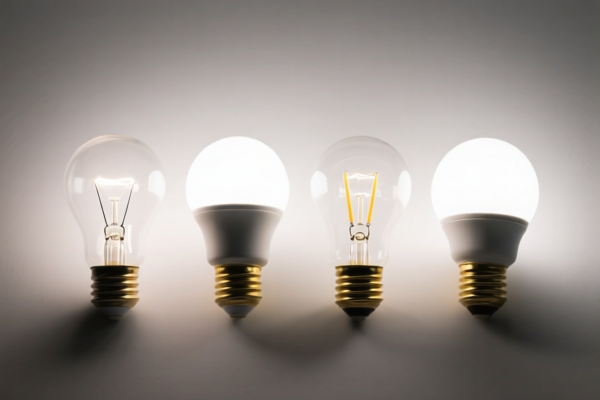
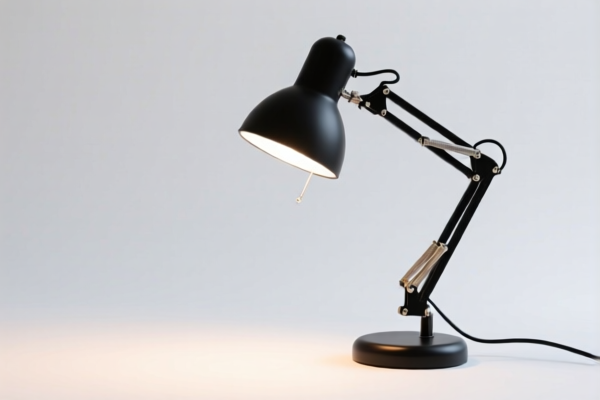
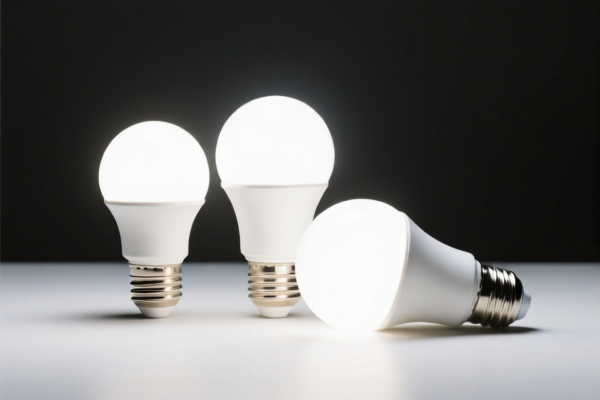
AI Analysis
🌟 Pai Pai Lamp (Portable Electric Lamps & Flashlights)
🌐 HS Code Reference & Customs Clearance Guide | 2026 Tax Regime Analysis | Professional Entry Strategy
📌 One, Product Definition & Classification: What Exactly is a "Pai Pai Lamp"?
"Pai Pai Lamp" is a colloquial or regional term for portable electric lamps that operate on their own internal power source, such as dry batteries, rechargeable storage batteries, or magnetos. Crucially, these are NOT the lighting equipment of Heading 8512 (e.g., vehicle lights).
In international trade, these products are split into two distinct categories based on their design and application:
- General Portable Lamps: Standard battery-operated lamps for camping, emergency use, or general utility.
- Flashlights: Specifically designed hand-held devices for focused, directed lighting (often called "torch lights").
⚠️ Critical Distinction:
- If the product is a general portable lamp (e.g., a camping lantern, battery-operated desk lamp) → It falls under HS Code 8513.10.40.00.
- If the product is strictly a flashlight (handheld, directional) → It falls under HS Code 8513.10.20.00.
📦 Two, HS Code Classification Details (2026 Customs Tariff Authority)
| HS Code | Product Description | Application Scenario | Tax Category |
|---|---|---|---|
8513.10.40.00 |
Portable electric lamps (other than flashlights): Other | Camping lanterns, battery-operated work lamps, emergency lights, "Pai Pai" style general lamps. | 3.5% (Total) |
8513.10.20.00 |
Portable electric lamps: Flashlights | Handheld torches, tactical lights, standard pocket flashlights. | 12.5% (Total) |
| Note: Other toys (HS 9503) are excluded unless the "lamp" is clearly a toy. |
🔍 Key Reminder:
- "Pai Pai" as a Toy: If the lamp is a toy (e.g., a glowing doll accessory or a child's play item), it must be declared under HS 9503 (Toys) to enjoy 0% Tax, but strict proof of "intended for children aged 3-12" is required.
- Adult Use: If the lamp is sold as a utility tool for adults, HS 8513 is mandatory. Do not misdeclare as toys to save tax; this triggers severe penalties.
💰 Three, 2026 Latest Tax Rate Analysis (Detailed Breakdown)
✅ Applicable Country: USA (US)
✅ Country of Origin: China (CN)
✅ Valid Date: 2026 Tariff Schedule
🎯 1. HS Code 8513.10.40.00 —— General Portable Lamps (Non-Flashlight)
| Item | Content |
|---|---|
| Base Tariff (MFN) | 3.5% (Ad Valorem) |
| Additional Tariffs (Section 301 / USITC) | 0.0% (No Section 301 surcharge for this specific subheading in current data) |
| Total Tax Rate | 3.5% |
| Tax Calculation | CIF Value × 3.5% |
| Exemption Status | ✅ Low Risk: Generally eligible for de minimis entry if under $800 (Section 321). |
| Legal Basis | 8513.10.40.00 (Portable electric lamps, other than flashlights) |
📌 Interpretation:
- This is the most cost-effective category for general "Pai Pai" style lamps.
- The tax is low because these items are considered general utility goods without the high-tech "flashlight" designation.
- No Section 301 surcharge applies in the provided dataset, making this a highly competitive SKU for exporters.
🎯 2. HS Code 8513.10.20.00 —— Flashlights
| Item | Content |
|---|---|
| Base Tariff (MFN) | 12.5% (Ad Valorem) |
| Additional Tariffs (Section 301 / USITC) | 0.0% (No Section 301 surcharge for this specific subheading in current data) |
| Total Tax Rate | 12.5% |
| Tax Calculation | CIF Value × 12.5% |
| Exemption Status | ✅ Low Risk: Eligible for de minimis entry if under $800. |
| Legal Basis | 8513.10.20.00 (Portable electric lamps: Flashlights) |
📌 Interpretation:
- Flashlights attract a significantly higher base rate (12.5%) compared to general lamps.
- This reflects the classification of flashlights as a distinct, often higher-volume, and potentially more regulated category.
- No Section 301 surcharge applies here either, but the base 12.5% still impacts margins.
🛠️ Four, Customs Clearance Practical Advice (Avoiding Pitfalls)
✅ 1. Preparation Checklist (Must-Haves)
| Document | Requirement | Explanation |
|---|---|---|
| ✅ Product Specifications | ✔️ | Must clearly state: Power source (Battery type/voltage), Light source (LED/Incandescent), and IP rating (Waterproof?). |
| ✅ Battery Certificates | ✔️ | CRITICAL: Proof of battery safety (UN38.3, MSDS). Customs will reject battery-containing goods without these. |
| ✅ Usage Photos | ✔️ | Show the product in use. If it looks like a toy, declare as Toy; if it looks like a tool, declare as Lamp. |
| ✅ Commercial Invoice | ✔️ | Exact Description: "Portable LED Lamp" vs "Flashlight". Do not use vague terms like "Light". |
| ✅ Packaging List | ✔️ | Specify if batteries are included inside or shipped separately (affects shipping classification). |
✅ 2. Declaration Strategy (The "Golden Rules")
🔥 Rule: "Describe the Function, Not the Brand."
- Do NOT declare as "Toy Lamp" unless it has explicit "3-12 years" labeling. Misdeclaring a utility lamp as a toy results in a 0% vs 12.5% error, leading to 100% penalty fines. - Do NOT declare a Flashlight as a "General Lamp". The 12.5% rate is strict for flashlights. If you declare a flashlight as8513.10.40.00(3.5%), Customs will audit and reclassify, adding 9% duty + interest.
| Scenario | Correct HS Code | Risk if Incorrect |
|---|---|---|
| Camping Lantern (Wide light) | 8513.10.40.00 (3.5%) |
⚠️ If declared as Flashlight → Overpay 9% |
| Handheld Torch (Focused beam) | 8513.10.20.00 (12.5%) |
⚠️ If declared as General Lamp → Underpayment Audit |
| Child's Glow Stick | 9503.00.00.73 (0%) |
⚠️ Must prove "Toy" intent; otherwise, 8513 applies |
✅ 3. Special Case: Battery Logistics
- Lithium Batteries: All "Pai Pai Lamps" containing lithium batteries require a UN38.3 Test Report and a MSDS.
- Shipping: If shipped via air, ensure the label "Lithium Battery" is on the package.
- De Minimis: If the total value is under $800, you may qualify for Section 321 entry (tax-free), BUT only if the duty rate is not 0%? Actually, Section 321 exempts duties up to $800. So for 3.5% or 12.5% duties, if the value is < $800, NO DUTY IS COLLECTED for US imports.
- Correction for US Imports: For entries under $800, duties are generally waived (De Minimis). However, this does not apply to all categories. For
8513, it usually works under the $800 threshold. - Strategy: For bulk shipments over $800, the 3.5% vs 12.5% becomes a major margin factor.
🌍 Five, Global Market Comparison (2026 Snapshot)
| Market | Recommended HS Code | Duty Rate (China Origin) | Key Requirement |
|---|---|---|---|
| 🇺🇸 USA | 8513.10.40.00 (Lamp) |
3.5% | Battery Safety Cert |
| 🇺🇸 USA | 8513.10.20.00 (Flashlight) |
12.5% | Battery Safety Cert |
| 🇪🇺 EU | 8513.10.40/20 | ~4-6% | CE Mark + Battery Directive |
| 🇨🇦 Canada | 8513.10.40 | 5% | Health Canada (if LED) |
📌 Conclusion:
- The USA market offers 0% surcharge for these items but has a clear 3.5% vs 12.5% split.
- Flashlights are taxed 3.5x higher than general portable lamps.
- Classification Accuracy is the #1 cost-saving factor here.
📌 Six, Common Errors & Pitfalls (Lessons Learned)
❌ Error 1: Calling a "Flashlight" a "Portable Lamp" to pay 3.5% instead of 12.5%.
👉 Consequence: Customs audit, retroactive tax payment (9% + interest), and potential fines.
❌ Error 2: Declaring a utility lamp as a "Toy" to get 0% tax.
👉 Consequence: Rejection at customs; requires return or re-export.
❌ Error 3: Ignoring battery certification (UN38.3).
👉 Consequence: Complete shipment seizure or delay.
✅ Correct Practice:
"Portable LED Lantern, 18650 Battery, IP65 Waterproof, Model XYZ" →
8513.10.40.00
"Tactical LED Flashlight, Zoomable, 18650 Battery, Model ABC" →8513.10.20.00
🎯 Seven, Final Verdict: Smart Shipping Strategy
🎯 Remember:
🔹 "Lamp vs. Flashlight is the key: 3.5% or 12.5%?"
🔹 "Battery Certs are mandatory: No UN38.3, No Entry!"
🔹 "Under $800? You might pay $0 duty in the US, but still need the right HS Code for reporting!"
📌 Action Plan:
1. Identify if your "Pai Pai Lamp" is a wide-light lantern (3.5%) or a focused flashlight (12.5%).
2. Verify all batteries have UN38.3 and MSDS.
3. Declare precisely using the descriptions above.
4. Calculate your landed cost based on the 3.5% or 12.5% rate.
✨ Professional Customs Clearance Starts with Precise Classification!
💼 Every percentage point counts. Get the HS Code right, maximize your profit!
Customer Reviews
About HS Code Classification
The Harmonized System (HS) is an internationally standardized nomenclature developed by the World Customs Organization (WCO) to classify traded products. Over 200 countries use the HS system as the basis for customs tariffs, trade statistics, and import/export regulations.
Each HS code follows a hierarchical structure:
- Chapter (2 digits) — Broad category of goods (e.g., Chapter 84: Machinery and Mechanical Appliances)
- Heading (4 digits) — More specific grouping within the chapter
- Subheading (6 digits) — Internationally standardized breakdown, used by all WCO member countries
- National subdivisions (8-10 digits) — Country-specific extensions for further classification, such as US HTSUS 10-digit codes
Correct HS code classification is essential for smooth customs clearance, accurate duty payment, and compliance with trade regulations. Misclassification can lead to customs delays, overpayment of duties, or penalties.
When importing from CN to US, the applicable tariff rates may include:
- Most-Favored-Nation (MFN) rate — The standard duty rate applied to WTO members
- General rate — Applied to countries without trade agreements
- Trade remedy duties — Additional tariffs such as Section 301 (anti-dumping), Section 232 (national security), or countervailing duties
The information provided on this page is for reference purposes only. For official classification, please consult with your local customs authority or a licensed customs broker.