Paint Activated Carbon Filter
CN → US| HS Code | Tariff Rate | Origin | Destination | Doc |
|---|---|---|---|---|
| 8421390140 | 35.0% | CN | US | Official Doc |
| 8421390115 | 35.0% | CN | US | Official Doc |
| 3802100050 | 39.8% | CN | US | Official Doc |
| 3802905000 | 39.8% | CN | US | Official Doc |
| 4402900100 | 35.0% | CN | US | Official Doc |
| 4402200000 | 35.0% | CN | US | Official Doc |
| 392690 | 0.0% | CN | US | Official Doc |
| 380210 | 0.0% | CN | US | Official Doc |
Product Images
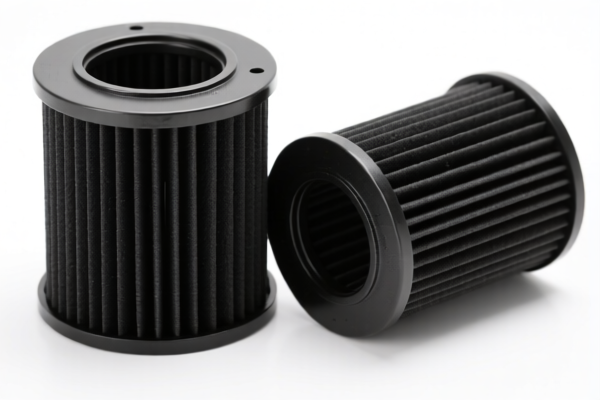
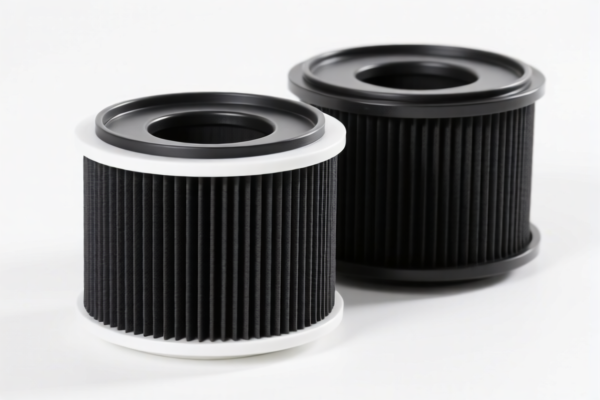
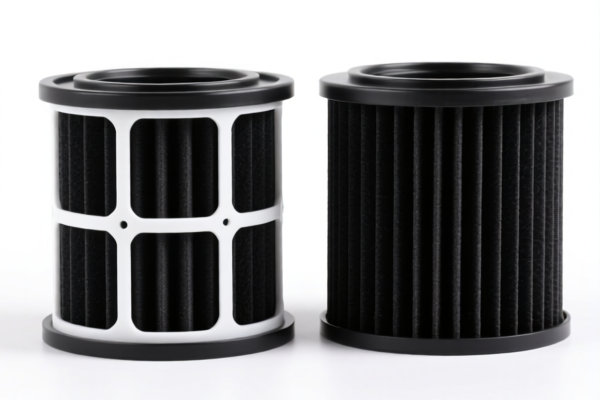

AI Analysis
🎨 Paint Activated Carbon Filter (Industrial Air Purification)
🌐 HS Code Reference & Customs Clearance Guide | 2026 Tariff Breakdown | Professional Compliance Strategy
📌 I. Product Definition: What Exactly is a "Paint Activated Carbon Filter"?
Paint Activated Carbon Filters are specialized air purification media used in paint booths, spray rooms, and industrial ventilation systems. Their primary function is chemical adsorption to remove volatile organic compounds (VOCs), odors, and overspray particulates from the air before it is recirculated or released.
In international trade, these products are NOT classified as simple "filters" or "machinery" but rather based on their functional composition and material basis. They fall into two distinct categories depending on how they are integrated:
- Plastic-Based Activated Carbon Filters:
- Description: Filters where the primary structural material is plastic, with activated carbon incorporated for chemical adsorption.
- Key Feature: The plastic housing/media structure is the defining characteristic.
- Loose/Standard Activated Carbon:
- Description: Pure activated carbon products (powder, granular, or pellets) or standard carbon filters not defined by a specific plastic housing mechanism in the tariff note.
- Key Feature: The carbon itself is the primary value driver.
⚠️ Critical Classification Distinction:
- If the product is a filter cartridge/cartridge with plastic housing designed specifically for air purification where plastic is the main body → 3926.90.
- If the product is pure activated carbon (regardless of whether it's granular or in a simple bag) → 3802.10.00.50.
- If it is a complete gas separation machine (heavy industrial equipment) → 8421.39.01.40.
📦 II. HS Code Classification Details (2026 Tariff Alignment)
| HS Code | Product Description | Applicable Scenario | Material/Function Focus |
|---|---|---|---|
3926.90 |
Other articles of plastics, including activated carbon filters used for air/gas purification where the primary function is filtration and material is plastic-based with activated carbon incorporated. | Prefabricated filter cartridges, plastic housing media units for paint booths. | ✅ Plastic-based (Primary structure) |
3802.10.00.50 |
Activated carbon, Other: Activated carbon not elsewhere specified. | Granular activated carbon (GAC), loose carbon, or simple carbon bags used in paint filtration. | ✅ Carbon-based (Pure adsorbent) |
8421.39.01.40 |
Filtering/purifying machinery for gases: Gas separation equipment. | Large-scale industrial gas separation units (NOT simple filters). | ❌ Machinery/Equipment |
8421.39.01.15 |
Filtering/purifying machinery for gases: Dust collection and air purification equipment (Other). | Industrial dust collectors (if distinct from chemical adsorption). | ⚠️ Mechanical Filtration |
🔍 Key Insight:
- Most "Paint Activated Carbon Filters" sold as replaceable media/cartridges fall under 3926.90 (if plastic-heavy) or 3802.10.00.50 (if carbon-heavy).
- Do not classify simple filter cartridges as8421(Machinery) unless they are integral, non-removable parts of a large machine. Removable filters are typically classified as parts or articles of the material.
💰 III. 2026 Tariff Rate Breakdown (USA Import)
✅ Applicable Country: United States (US)
✅ Country of Origin: China (CN)
✅ Effective Date: Current rates apply for imports post-2025.
🎯 1. 3926.90 — Plastic-Based Activated Carbon Filters
| Item | Detail |
|---|---|
| Base Tariff | 0% (General Rate) |
| Section 301 / Additional Duty | Error / Failed to Retrieve (See Note Below) |
| Total Tax | Error |
| Calculation | CIF Value × Unknown/Error Rate |
| De Minimis Exemption | ❓ Uncertain (Requires verification; Plastic articles often face scrutiny) |
| Legal Basis | HTSUS 3926.90.00 |
📌 Explanation:
- The provided data indicates a retrieval failure for tax information for HS3926.90.
- Risk Alert: Plastic articles from China often face Section 301 tariffs (typically 25%). If the system fails to retrieve it, it may be because the specific subheading requires a manual check or has variable rates. Assume 25% additional duty applies until confirmed otherwise.
- Recommendation: Do not assume 0%. Contact a customs broker to verify if3926.90.00.80or similar applies.
🎯 2. 3802.10.00.50 — Activated Carbon, Other
| Item | Detail |
|---|---|
| Base Tariff | 4.8% (Ad Valorem) |
| Section 301 / Additional Duty | +25.0% |
| Total Tax | 29.8% |
| Calculation | CIF Value × 29.8% |
| De Minimis Exemption | ❌ Not Applicable (Section 301 goods generally excluded) |
| Legal Basis | HTSUS 3802.10.00.50 + USITC Footnote |
📌 Explanation:
- This is the most common classification for loose granular activated carbon or standard carbon filters used in paint booths.
- 29.8% is a high effective tariff.
- Base 4.8% is standard for activated carbon.
- +25% is the standard Section 301 penalty on Chinese-origin carbon products.
- Total Cost Impact: For every $10,000 of carbon filters, expect $2,980 in duties.
🎯 3. 8421.39.01.40 & 8421.39.01.15 — Machinery/Equipment Filters
| Item | Detail |
|---|---|
| Base Tariff | 0% |
| Section 301 / Additional Duty | +25.0% |
| Total Tax | 25.0% |
| Calculation | CIF Value × 25.0% |
| De Minimis Exemption | ❌ Not Applicable |
| Legal Basis | HTSUS 8421.39.01.xx |
📌 Explanation:
- Only apply if importing complete gas separation units or large dust collection systems.
- 25% is the standard Section 301 rate.
- Warning: If you import simple filter cartridges but declare them as "Machinery Parts" under8421, you risk misclassification penalties. Only use this for actual machinery.
🛠️ IV. Customs Clearance Practical Advice
✅ 1. Documentation Checklist (Must-Have)
| Document | Required? | Notes |
|---|---|---|
| Commercial Invoice | ✔️ | Must clearly state: "Activated Carbon Filter for Paint Booth Air Purification" |
| Product Specification | ✔️ | Detail: Carbon type (coal/nut/plastic), mesh size, adsorption capacity. |
| Material Safety Data Sheet (MSDS) | ✔️ | Required for carbon products to confirm non-hazardous nature (if applicable). |
| Proof of Origin | ✔️ | China Origin Certificate is critical to assess Section 301 liability. |
| Photos | ✔️ | Show product, label, and packaging. Highlight if it’s a "plastic cartridge" vs. "granular carbon". |
✅ 2. Declaration Strategy (Key Tips)
🔥 Golden Rule: "Be Specific About Material & Function!"
| Scenario | Correct HS Code | Wrong HS Code | Consequence |
|---|---|---|---|
| Plastic Housing Filter Cartridge | 3926.90 |
8421.39 (Machinery) |
Misclassification Risk. If deemed "machine part," rate is 25% anyway, but scrutiny is higher. |
| Loose Granular Carbon | 3802.10.00.50 |
3926.90 (Plastic) |
Under/Over Payment. 29.8% vs. Unknown/Error. Better to pay 29.8% if confirmed. |
| Complete Air Purification Machine | 8421.39.01.40 |
3802.10 (Carbon) |
Severe Penalty. Machine parts cannot be declared as raw carbon. |
| Simple Carbon Bag (Non-Plastic) | 3802.10.00.50 |
6307.90 (Textile) |
Rate Mismatch. 29.8% vs. potential lower rate, but carbon content dictates classification. |
📌 Note on
3926.90:
Since the tax info is "Error," do not assume 0%. The default Section 301 rate for plastic articles from China is often 25%. Plan for 25-30% total duty until you receive a formal Advance Ruling.
✅ 3. Special Cases & Warnings
| Situation | Handling Advice |
|---|---|
| "Made in China" Label | Always declare China origin. Any attempt to hide origin triggers severe penalties. |
| Small Quantity Samples | Check if de minimis ($800) applies. Likely NO for Section 301 goods. Plan for duty even on samples. |
| Mixed Shipments (Carbon + Machine) | Separate Lines! Declare carbon under 3802.10 and machine under 8421.39. Do not bundle. |
| Plastic + Carbon Composite | If the plastic is the primary structure, argue for 3926.90. If carbon is the value, argue for 3802.10. Consistency is key. |
🌍 V. Global Market Comparison (2026)
| Market | Recommended HS Code | Estimated Duty (China Origin) | Notes |
|---|---|---|---|
| 🇺🇸 USA | 3802.10.00.50 |
29.8% (High) | Section 301 applies. Plastic variants (3926.90) may also face 25%. |
| 🇨🇳 China | 3802.10.00.50 |
~4.8% (Import) | Low duty for domestic recycling/import. |
| 🇪🇺 EU | 3802.10 |
6.5% | No Section 301. Standard MFN rate applies. |
| 🇬🇧 UK | 3802.10 |
6.5% | Post-Brexit, follows UK Global Tariff. |
| 🇮🇳 India | 3802.10 |
Variable | Check specific notifications; often 7.5% - 15%. |
📌 Conclusion:
- USA is the most expensive market for activated carbon filters due to Section 301.
- EU/UK offer more competitive duty rates (~6.5%).
- Consider diversifying suppliers (e.g., Vietnam, Thailand) if exporting to the USA to avoid 25% additional duty.
📌 VI. Common Mistakes & Pitfalls (Learn from Others)
❌ Mistake 1: Classifying plastic filter cartridges as "Textile" or "Paper" filters.
👉 Result: Customs may reassess as 3926.90 or 3802.10 + penalties.
❌ Mistake 2: Assuming "Filter" always means 8421 (Machinery).
👉 Result: Removable filters are not machinery. They are parts/articles. Misdeclaration leads to delays.
❌ Mistake 3: Ignoring Section 301 for 3802.10.00.50.
👉 Result: Paying only 4.8% instead of 29.8%. Back taxes + interest + penalties!
❌ Mistake 4: Not declaring "Plastic-Based" for 3926.90.
👉 Result: If tax info is "Error," you cannot prove the lower base rate. Clarify material composition in invoice.
✅ Correct Declaration Example:
"ACTIVATED CARBON FILTER CARTRIDGE, PLASTIC HOUSING, FOR INDUSTRIAL PAINT BOOTH AIR PURIFICATION, MODEL XYZ, MADE IN CHINA."
🎯 VII. Conclusion: Precision Saves Money
🎯 Key Takeaways:
1. Identify Material: Is it Plastic-based (3926.90) or Carbon-based (3802.10)?
2. Expect High Duties in USA: Prepare for 25-30% total duty on Chinese-origin products.
3. Verify 3926.90: Since tax info is "Error," consult a broker immediately. Do not assume 0%.
4. Document Everything: MSDS, Origin Cert, and clear product descriptions are non-negotiable.
📌 Pro Tip:
If your volume is high, apply for a Section 301 Exclusion (if still available) or consider tariff engineering (e.g., sourcing carbon from non-China origins like Vietnam or Indonesia) to reduce the 25% penalty.
📣 Action Required:
📞 Contact a Licensed Customs Broker to verify the exact rate for
3926.90.
📦 Review Product Composition: Confirm if it's >50% plastic by weight/value.
💡 Optimize Supply Chain: Evaluate non-China origins for USA-bound shipments to cut costs by 25%.
✨ Accurate Classification is Your Best Defense Against Customs Audits!
💼 Every Percent of Duty Saved is Pure Profit Added!
Customer Reviews
About HS Code Classification
The Harmonized System (HS) is an internationally standardized nomenclature developed by the World Customs Organization (WCO) to classify traded products. Over 200 countries use the HS system as the basis for customs tariffs, trade statistics, and import/export regulations.
Each HS code follows a hierarchical structure:
- Chapter (2 digits) — Broad category of goods (e.g., Chapter 84: Machinery and Mechanical Appliances)
- Heading (4 digits) — More specific grouping within the chapter
- Subheading (6 digits) — Internationally standardized breakdown, used by all WCO member countries
- National subdivisions (8-10 digits) — Country-specific extensions for further classification, such as US HTSUS 10-digit codes
Correct HS code classification is essential for smooth customs clearance, accurate duty payment, and compliance with trade regulations. Misclassification can lead to customs delays, overpayment of duties, or penalties.
When importing from CN to US, the applicable tariff rates may include:
- Most-Favored-Nation (MFN) rate — The standard duty rate applied to WTO members
- General rate — Applied to countries without trade agreements
- Trade remedy duties — Additional tariffs such as Section 301 (anti-dumping), Section 232 (national security), or countervailing duties
The information provided on this page is for reference purposes only. For official classification, please consult with your local customs authority or a licensed customs broker.