Paint Thinner
CN → US| HS Code | Tariff Rate | Origin | Destination | Doc |
|---|---|---|---|---|
| 3814002000 | 41.5% | CN | US | Official Doc |
| 3814001000 | 41.5% | CN | US | Official Doc |
| 3403114000 | 41.1% | CN | US | Official Doc |
| 3402905050 | 38.7% | CN | US | Official Doc |
| 3402901000 | 38.8% | CN | US | Official Doc |
Product Images
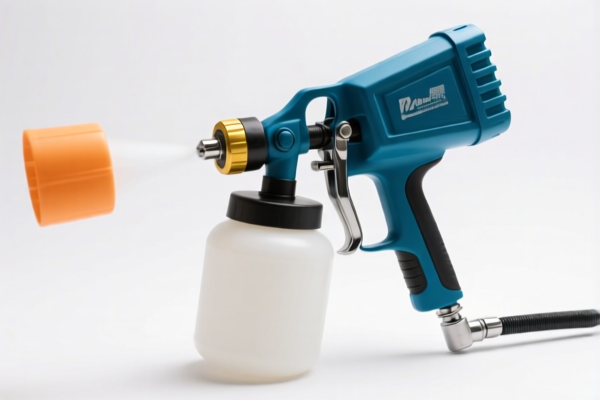


AI Analysis
🧪 Paint Thinner (Diluent/Thinner)
---
🌐 HS Code Reference & Customs Clearance Guide | 2026 Latest Tariff Analysis | Professional Entry Strategy
📌 I. Product Definition & Classification: What Exactly is "Paint Thinner"?
Paint Thinner, often referred to as a diluent or solvent, is a chemical substance used to thin oil-based paints, varnishes, and stains, thereby facilitating easier application and cleaning. It is essentially an organic solvent mixture.
In international trade and customs classification, the specific HS Code depends heavily on the primary function and chemical composition (e.g., whether it is primarily a simple diluent, a complex solvent mixture, or contains specific surfactants). Based on common knowledge and chemical properties, Paint Thinner generally falls under Chapter 38 (Miscellaneous Chemical Products) or Chapter 34 (Soap, Organic Surface-Active Agents, Washing Preparations, Lubricating Preparations).
⚠️ Key Distinction Point:
- If it is purely an organic solvent/diluent for paints → Chapter 38 (3814.00)
- If it is classified as a chemical preparation with surfactant properties or broad "other" chemical nature → Chapter 34 (3403or3402)
- Note: The exact code depends on the specific ingredient list (MSDS) and primary use.
📦 II. HS Code Classification Details (2026 Latest Tariff Authority Comparison)
| HS Code | Product Description | Applicable Scenario | Chemical Nature |
|---|---|---|---|
3814.00.20.00 |
Diluents and Thinner Fluids (Specific) | Paint thinners explicitly labeled as "Diluents"; matches the specific category of "Diluents" | Organic Solvents |
3814.00.10.00 |
Organic Composite Solvents and Diluents | Paint thinners that are complex mixtures of organic solvents; usage aligns perfectly with "Organic Composite Solvents" | Organic Solvents |
3403.11.40.00 |
Lubricating Preparations Containing Petroleum Oils (Other) | Based on common knowledge, some paint thinners contain petroleum-derived oils; classified under "Other" if no specific textile/leather use is declared | Petroleum-based Solvents |
3402.90.50.50 |
Organic Surface-Active Agents (Other) | If the "Paint Additive/Thinner" acts primarily as a surfactant or chemical agent not fitting washing/cleaning categories | Surfactants/Chemical Agents |
3402.90.10.00 |
Other Surface-Active Agents and Preparations | Paint additives/thinners with surfactant properties; fits the "Other" category logic for chemical制剂 | Surfactants/Chemical Agents |
🔍 Key Reminder:
- For pure solvents (like mineral spirits, turpentine substitutes),3814is the most direct and common classification.
- If the product is a formulated blend with specific functional additives (surfactants),3402or3403may apply.
- Always provide the MSDS (Material Safety Data Sheet) to customs to justify the chemical nature.
💰 III. 2026 Latest Tariff Rate Breakdown (Including Additional Duties & Policies)
✅ Applicable Country: United States (US)
✅ Country of Origin: China (CN)
✅ Effective Date: From November 10, 2025 (including subsequent imports)
🎯 1. 3814.00.20.00 & 3814.00.10.00 —— Diluents & Organic Solvents
| Item | Content |
|---|---|
| Base Duty Rate | 6.5% (ad valorem) |
| Section 301 Additional Duty | +25.0% (USITC Footnote for Section 301) |
| Section 122/IEEPA Additional Duty | +10.0% (Specific tariff clause for Chinese goods) |
| Total Tax Rate | 41.5% |
| Tax Calculation | CIF Value × 41.5% |
| De Minimis Exemption? | ❌ No (deny_de_minimis) |
| Legal Basis Path | Section 301: 9903.88.01 → IEEPA: 9903.01.xx → USITC: 3814.xx.xx.xx |
📌 Explanation:
- Paint thinners/solvents from China are subject to high tariffs due to trade friction policies.
- The 25% Section 301 duty is significant for chemical products.
- The additional 10% further increases the cost.
- Total 41.5% is a critical cost factor to calculate before shipping.
🎯 2. 3403.11.40.00 —— Lubricating Preparations (Petroleum-Based)
| Item | Content |
|---|---|
| Base Duty Rate | 6.1% (ad valorem) |
| Section 301 Additional Duty | +25.0% |
| Section 122/IEEPA Additional Duty | +10.0% |
| Total Tax Rate | 41.1% |
| Tax Calculation | CIF Value × 41.1% |
| De Minimis Exemption? | ❌ No |
| Legal Basis Path | Section 301: 9903.88.01 → USITC: 3403.11.40.00 |
📌 Note:
- Slightly lower base rate (6.1% vs 6.5%) but still subject to the same additional duties.
- Applicable if the thinner is chemically closer to a petroleum-based lubricant/preparation.
🎯 3. 3402.90.50.50 & 3402.90.10.00 —— Surface-Active Agents (Other)
| Item | Content |
|---|---|
| Base Duty Rate | 3.7% (3402.90.50.50) / 3.8% (3402.90.10.00) |
| Section 301 Additional Duty | +25.0% |
| Section 122/IEEPA Additional Duty | +10.0% |
| Total Tax Rate | 38.7% / 38.8% |
| Tax Calculation | CIF Value × 38.7% or 38.8% |
| De Minimis Exemption? | ❌ No |
| Legal Basis Path | Section 301: 9903.88.01 → USITC: 3402.xx.xx.xx |
📌 Note:
- These codes have a lower base duty (~3.7-3.8%), resulting in a slightly lower total rate (~38.7-38.8%).
- This classification applies if the product is deemed a surfactant or chemical preparation rather than a pure solvent.
- Justification Required: Must demonstrate surfactant properties or specific chemical formulation.
🛠️ IV. Customs Clearance Practical Advice (Real-World Pitfall Avoidance)
✅ 1. Essential Documentation Checklist (Non-Negotiable)
| Document | Required | Description |
|---|---|---|
| ✅ MSDS (Material Safety Data Sheet) | ✔️ | CRITICAL. Must list all chemical components, CAS numbers, and hazards. Determines HS Code accuracy. |
| ✅ Commercial Invoice | ✔️ | Clearly state "Paint Thinner" or "Organic Solvent". Avoid vague terms like "Chemical Liquid". |
| ✅ Packing List | ✔️ | Detail net weight, gross weight, and container volume. |
| ✅ Product Label/Photo | ✔️ | Show ingredient warnings, hazard symbols (flammable, toxic). |
| ✅ FEMA/IFC Declaration | ✔️ | If applicable, confirm flammability classification. |
✅ 2. Declaration Tips (Key Mantra)
🔥 “Be Precise, Disclose Chemistry, Avoid Misclassification!”
| Scenario | Correct Declaration | Incorrect Practice |
|---|---|---|
| Pure Solvent Mix | 3814.00.10.00 or 3814.00.20.00 |
Vague "Chemical Solvent" → Potential audit |
| Paint Additive/Surfactant | 3402.90.50.50 or 3402.90.10.00 |
Declare as "Paint" → Wrong chapter (Chapter 32) |
| Petroleum-Based | 3403.11.40.00 |
Declare as "Essential Oil" → Wrong classification |
| Misdeclaration Risk | Always provide MSDS | Hiding ingredients → Seizure + Fines |
✅ 3. Special Cases Handling
| Situation | Handling Advice |
|---|---|
| Flammable Goods | Paint thinner is Class 3 Flammable Liquid. Ensure proper UN packaging (UN 1263 or UN 1993). Customs will check for DOT compliance. |
| MSDS Mismatch | If declared HS Code doesn't match the chemical nature in MSDS, customs will reclassify, leading to delays and potential penalties. |
| Low Volume Shipments | No De Minimis Exemption. Even small parcels from China to US are subject to the 38-41% duty. Factor this into pricing. |
| Pre-Clearance Ruling | Consider applying for an Advance Ruling from CBP to confirm the correct HS Code (3814 vs 3402) to avoid disputes. |
🌍 V. Global Market Customs Comparison (2026 Latest)
| Country/Region | Recommended HS Code | Duty (China Origin) | Certification | Notes |
|---|---|---|---|---|
| 🇺🇸 USA | 3814.00.10.00 |
41.5% | DOT (Flammable) | High tariff due to Section 301. |
| 🇨🇳 China | 3814.00.10.00 |
5% | None | No additional duties. |
| 🇪🇺 EU | 3814.00.10.00 |
6.5% | REACH + CLP | No Section 301 equivalent, but REACH registration needed. |
| 🇬🇧 UK | 3814.00.10.00 |
6.5% | UK REACH | Post-Brexit rules apply. |
| 🇯🇵 Japan | 3814.00.10.00 |
7.5% | JIS Standards | Moderate duty. |
📌 Conclusion:
- USA has the highest effective tariff for Paint Thinner from China due to the combination of base duty and multiple additional taxes.
- Flammability is the biggest logistical challenge globally. Ensure proper packaging and labeling.
📌 VI. Common Errors & Pitfalls Guide (Lessons Learned)
❌ Error 1: Declaring as "Paint" (Chapter 32)
👉 Consequence: Wrong chapter. Paint thinners are solvents, not paints. Misclassification leads to rejection or reclassification penalties.
❌ Error 2: Ignoring Flammable Classification
👉 Consequence: Shipments may be held at port for not meeting DOT/UN packaging standards. Fines for improper hazardous material declaration.
❌ Error 3: Vague Description "Chemical Liquid"
👉 Consequence: Customs will ask for MSDS. If not provided promptly, shipment delays. If MSDS shows high solvent content, they may apply higher duties.
❌ Error 4: Assuming De Minimis Exemption Applies
👉 Consequence: For China-origin goods, Section 301 and IEEPA duties apply regardless of value. Even a $10 sample pays ~$4 in duties.
✅ Correct Action:
“Paint Thinner, Organic Solvent Mixture, UN 1263, Flammable Liquid, Class 3. MSDS Provided. HS Code: 3814.00.10.00”
🎯 VII. Conclusion: Professional Declaration, Cost Control, Smooth Clearance
🎯 Remember the Mantra:
🔹 “MSDS is King, Flammable Class 3, 3814 is Key, 41.5% Duty, No Exemption!”
🔹 “Accurate Description Saves Money, Misclassification Costs Thousands!”
📌 Pro Tip:
If your Paint Thinner is originating from Vietnam, Malaysia, or Thailand, you may avoid the 25% Section 301 and 10% IEEPA duties, potentially lowering the total tax to ~6-10%.
Consider supply chain diversification or substantial transformation strategies to reduce tax burden.
📣 Immediate Action:
📞 Consult a Licensed Customs Broker
📄 Prepare MSDS + Commercial Invoice
🚀 Clear Your Paint Thinner Through Customs Efficiently!
✨ Professional Clearance Starts with Accurate Classification!
💼 Every Percent of Duty Saved is Profit Gained!
Customer Reviews
About HS Code Classification
The Harmonized System (HS) is an internationally standardized nomenclature developed by the World Customs Organization (WCO) to classify traded products. Over 200 countries use the HS system as the basis for customs tariffs, trade statistics, and import/export regulations.
Each HS code follows a hierarchical structure:
- Chapter (2 digits) — Broad category of goods (e.g., Chapter 84: Machinery and Mechanical Appliances)
- Heading (4 digits) — More specific grouping within the chapter
- Subheading (6 digits) — Internationally standardized breakdown, used by all WCO member countries
- National subdivisions (8-10 digits) — Country-specific extensions for further classification, such as US HTSUS 10-digit codes
Correct HS code classification is essential for smooth customs clearance, accurate duty payment, and compliance with trade regulations. Misclassification can lead to customs delays, overpayment of duties, or penalties.
When importing from CN to US, the applicable tariff rates may include:
- Most-Favored-Nation (MFN) rate — The standard duty rate applied to WTO members
- General rate — Applied to countries without trade agreements
- Trade remedy duties — Additional tariffs such as Section 301 (anti-dumping), Section 232 (national security), or countervailing duties
The information provided on this page is for reference purposes only. For official classification, please consult with your local customs authority or a licensed customs broker.