Painted Non Coniferous Wooden Poles
CN → US| HS Code | Tariff Rate | Origin | Destination | Doc |
|---|---|---|---|---|
| 4407990295 | 35.0% | CN | US | Official Doc |
| 3208100000 | 38.7% | CN | US | Official Doc |
| 3208900000 | 38.2% | CN | US | Official Doc |
| 4407110002 | 35.0% | CN | US | Official Doc |
| 4407120002 | 35.0% | CN | US | Official Doc |
Product Images
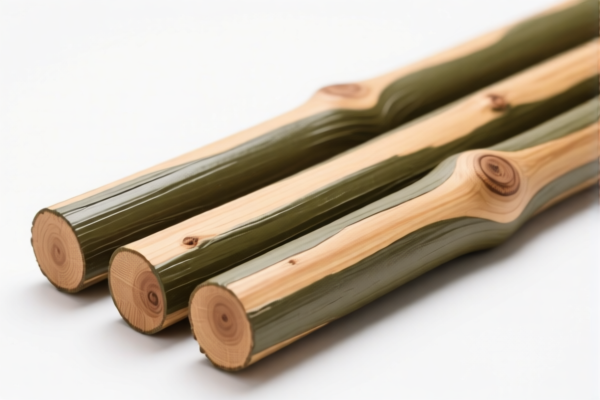
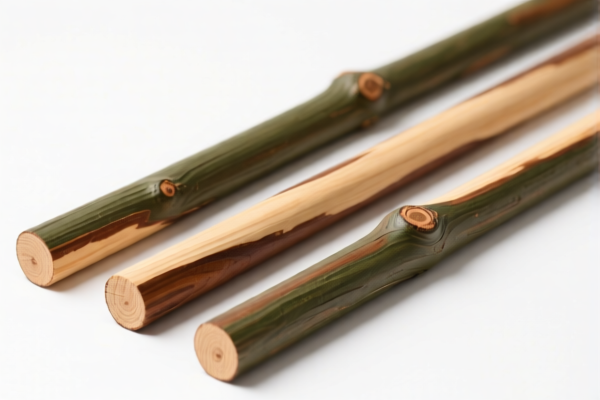
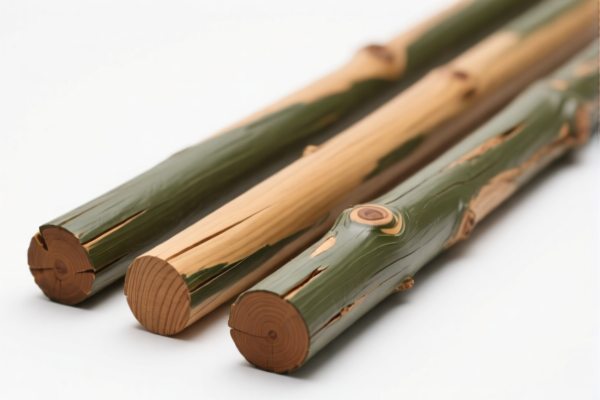
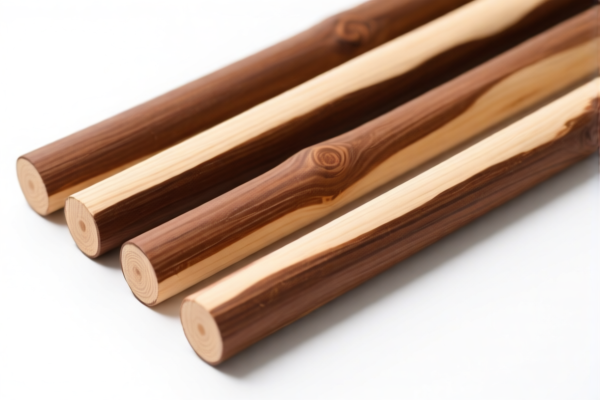
AI Analysis
🌲 Painted Non-Coniferous Wooden Poles (The "Hybrid" Hazard)
🌐 HS Code Reference & Customs Clearance Guide | 2026 Latest Tariff Analysis | Professional Clearance Strategy
📌 I. Product Definition & Classification: What Exactly Are We Shipping?
"Painted Non-Coniferous Wooden Poles" represent a complex intersection of materials and treatments. In international trade, they are often misclassified because they possess dual characteristics: structural timber and chemically treated/coated surfaces.
To determine the correct HS Code, we must analyze two key features: 1. The Substrate (Wood Type): The wood is Non-Coniferous (Broadleaf/Hardwood), such as Oak, Eucalyptus, or Pine (if not technically coniferous in the specific tariff sense, though usually "non-coniferous" implies hardwood). 2. The Treatment (Surface): The poles are Painted or coated, likely with polyester or synthetic polymers for protection.
⚠️ Critical Distinction Point: - If classified as Wood, it falls under Chapter 44 (Timber). However, painting often triggers higher tariffs due to Section 301/122 duties. - If classified as Paint/Coating, it falls under Chapter 32 (Paints/Varnishes). This is risky if the primary value is the wood, not the paint. - Risk: Misclassification leads to massive duty discrepancies (e.g., 0% vs. 38.7%).
📦 II. HS Code Classification Details (2026 Latest Tariff Authority Comparison)
| HS Code | Product Description | Summary of Matching Logic | Total Tax Rate | Tax Breakdown |
|---|---|---|---|---|
4407.99.02.95 |
Non-Coniferous Wood, Sawed, Veneered, etc. | Matches Non-Coniferous Wood Material and Painted Treatment characteristics. Fits the classification for processed wood. | 35.0% | Base: 0.0% Add'l (301): 25.0% Sec 122: 10% |
3208.10.00.00 |
Paints/Varnishes, Base: Polyesters | Matches Paint Morphology & Use. Classifies based on Polyester-based Paint attributes. Risk: Treats product as paint, not wood. | 38.7% | Base: 3.7% Add'l (301): 25.0% Sec 122: 10% |
3208.90.00.00 |
Paints/Varnishes, Other Synthetic Polymers | Matches Synthetic Polymer Paint Material and treatment purpose. Fits "Other Paints" category. | 38.2% | Base: 3.2% Add'l (301): 25.0% Sec 122: 10% |
4407.11.00.02 |
Coniferous Wood, Sawed (Reference) | Reference Only. Primarily for Coniferous wood, but used as a reference code for Painted Wood. | 35.0% | Base: 0.0% Add'l (301): 25.0% Sec 122: 10% |
4407.12.00.02 |
Coniferous Wood, Specific Thickness (Reference) | Reference Only. Reference code for Painted Wood, involving thickness and treatment form matching. | 35.0% | Base: 0.0% Add'l (301): 25.0% Sec 122: 10% |
🔍 Key Insight: - Wood Classification (
4407): The primary value is the timber. The paint is considered a finishing treatment. - Paint Classification (3208): This classification assumes the product is primarily paint/coating applied to a substrate. This is generally incorrect for solid wooden poles unless the wood value is negligible. - Note on4407.11/12: These codes specify Coniferous wood. While the product is Non-Coniferous, the provided data lists them as "Reference Codes." In practice,4407.99.02.95is the precise fit for Non-Coniferous wood. Do not use4407.11/12unless your specific non-coniferous wood falls under a sub-category that maps to these references in your local customs authority's interpretation.
💰 III. 2026 Latest Tariff Rate Details (Including Additional Taxes & Policy Surcharges)
✅ Applicable Country: United States (US)
✅ Origin: China (CN) (Implied by the 25% + 10% structure)
✅ Effective Time: 2025/2026 (Post-Trade War Adjustments)
🎯 1. 4407.99.02.95 —— Non-Coniferous Wood (Processed/Painted)
| Item | Content |
|---|---|
| Base Tariff | 0% (Ad Valorem) |
| USITC Add'l Tax (301) | +25% (Section 301 Duties on Chinese Wood Products) |
| Section 122 Tax | +10% (Specific to certain wood/forest products under USITC Section 122) |
| Total Effective Rate | 35.0% |
| Tax Calculation | CIF Value × 35% |
| De Minimis Exemption | ❌ Not Eligible (Deny De Minimis for Wood Products) |
| Legal Path | USITC:4407.99.02.95 → FOOTNOTE:301 → FOOTNOTE:122 |
📌 Explanation: - Although the base tariff is 0%, the 25% Section 301 duty and 10% Section 122 duty apply aggressively to Chinese wood products. - Total 35% is significant. Always ensure the HS code explicitly identifies the product as Wood to avoid being classified as a "Paint Product" which has a higher base.
🎯 2. 3208.10.00.00 —— Paints Based on Polyesters
| Item | Content |
|---|---|
| Base Tariff | 3.7% |
| USITC Add'l Tax (301) | +25% |
| Section 122 Tax | +10% |
| Total Effective Rate | 38.7% |
| Tax Calculation | CIF Value × 38.7% |
| De Minimis Exemption | ❌ Not Eligible |
| Legal Path | USITC:3208.10.00.00 → FOOTNOTE:301 → FOOTNOTE:122 |
📌 Warning: - This rate is higher than the wood classification (35% vs 38.7%). - Classifying wooden poles as "Paint" is a common customs error that increases costs. Only use this if the poles are essentially paint-coated fibers or the wood value is de minimis.
🎯 3. 3208.90.00.00 —— Other Paints (Synthetic Polymers)
| Item | Content |
|---|---|
| Base Tariff | 3.2% |
| USITC Add'l Tax (301) | +25% |
| Section 122 Tax | +10% |
| Total Effective Rate | 38.2% |
| Tax Calculation | CIF Value × 38.2% |
| De Minimis Exemption | ❌ Not Eligible |
| Legal Path | USITC:3208.90.00.00 → FOOTNOTE:301 → FOOTNOTE:122 |
📌 Note: - Slightly better than
3208.10but still worse than the wood classification (4407). - "Synthetic Polymer" is a broad category. If the paint is polyester-based,3208.10is more accurate.
🎯 4. 4407.11.00.02 & 4407.12.00.02 —— Reference Codes for Coniferous Wood
| Item | Content |
|---|---|
| Base Tariff | 0% |
| USITC Add'l Tax (301) | +25% |
| Section 122 Tax | +10% |
| Total Effective Rate | 35.0% |
| Status | Reference Only |
📌 Caution: - These codes are for Coniferous wood (Softwood like Pine, Spruce). - Your product is Non-Coniferous (Hardwood). - Do not use these codes unless your local customs authority explicitly allows mapping Non-Coniferous poles to these specific references. Prefer
4407.99.02.95.
🛠️ IV. Customs Clearance Practical Advice (Battle-Tested Pitfall Guide)
✅ 1. Documentation Checklist (Non-Negotiable)
| Document | Required? | Purpose |
|---|---|---|
| ✅ Product Specification Sheet | ✔️ | Must state: Wood Type (e.g., Eucalyptus), Diameter, Length, Paint Type (Polyester/Synthetic). |
| ✅ Photos of Poles | ✔️ | Show raw wood grain AND painted surface. Prove it is a solid wooden pole, not a painted pipe. |
| ✅ Commercial Invoice | ✔️ | Describe as "Painted Non-Coniferous Wooden Poles." Avoid vague terms like "Wooden Structure." |
| ✅ Bill of Lading | ✔️ | Consistent with Invoice. |
| ✅ Certificate of Origin | ✔️ | To prove Chinese origin (triggering 301/122 duties) or origin from other countries. |
✅ 2. Declaration Tips (Key Mantra)
🔥 "Wood is Primary, Paint is Secondary! Declare as Timber, Not Paint!"
| Scenario | Correct Declaration | Wrong Approach |
|---|---|---|
| Solid Wooden Poles, Painted | HS 4407.99.02.95 (Wood) |
Declare as "Painted Pipes" → HS 3208 |
| Raw Wood Poles (Unpainted) | HS 4407 (Wood) |
N/A |
| Paint Only (No Wood) | HS 3208 |
N/A |
📌 Why
4407is Better: - Rate: 35% (Wood) vs. 38.2%-38.7% (Paint). - Accuracy: The product's essential character is the wood. The paint is a surface treatment.
✅ 3. Special Cases
| Scenario | Handling Advice |
|---|---|
| Treated Wood (Pressure Treated) | If the poles are chemically treated (e.g., creosote) and painted, ensure the description includes "Chemically Treated." This may affect HS code further (e.g., 4403), but 4407 is for sawn wood. Check if 4403 applies. |
| Varnished vs. Painted | Varnish may fall under 4407 as well. Paint is explicitly mentioned in the data for 3208. If the paint layer is very thick and constitutes the main value, 3208 might be argued, but it's rare for poles. |
| Origin Shift | If the wood is imported from Southeast Asia and painted in China, origin may still be China. Check Substantial Transformation rules. |
🌍 V. Global Market Comparison (2026 Latest)
| Country/Region | Recommended HS Code | Tariff (China Origin) | Notes |
|---|---|---|---|
| 🇺🇸 USA | 4407.99.02.95 |
35.0% | 301 + 122 duties apply. Avoid 3208 codes. |
| 🇨🇳 China | 4407.99.02.95 |
~5-10% | Lower base tariff. No 301/122. |
| 🇪🇺 EU | 4407.99 |
~5-10% | No Section 301. May have anti-dumping duties on specific woods. |
| 🇬🇧 UK | 4407.99 |
~5-10% | Post-Brexit tariffs similar to EU. |
📌 Conclusion: - USA is the high-risk zone due to additional duties. - Accuracy is crucial. Declaring as Paint (
3208) increases your cost by ~3-4% and increases scrutiny.
📌 VI. Common Errors & Pitfalls (Lessons Learned)
❌ Error 1: Declaring "Painted Wooden Poles" as "Steel Pipes" or "Concrete Poles"
👉 Consequence: Immediate detention, fines, and potential fraud allegations.
❌ Error 2: Using 3208 Codes for Wooden Poles
👉 Consequence: Higher duty (38.7% vs 35.0%) + Audit risk for misdeclaration.
❌ Error 3: Ignoring Section 122 Duties
👉 Consequence: Underpayment of 10%. Customs will bill the difference + interest.
❌ Error 4: Vague Description: "Wooden Items"
👉 Consequence: Customs may classify as the worst-case scenario or reject the entry.
✅ Correct Declaration Example:
"Painted Non-Coniferous Wooden Poles, Eucalyptus Species, Diameter 20cm, Length 4m, Surface Coated with Polyester Paint, HS Code: 4407.99.02.95"
🎯 VII. Conclusion: Professional Declaration, Cost Optimization!
🎯 Remember the Mantra:
🔹 "Wood is King, Paint is Queen, Declare as Timber to Save the Scene!"
🔹 "HS Code4407wins the war,3208loses the prize (higher cost)!"
🔹 "301 & 122 duties are real, 35% is the deal!"
📌 Pro Tip:
If you are shipping large volumes, consider applying for a Tariff Engineering exemption or checking if your specific wood type has a different sub-category. Also, ensure your Supplier provides accurate wood species data to justify 4407.99 over generic codes.
📣 Immediate Action:
📞 Confirm HS Code
4407.99.02.95with your Customs Broker.
🚀 Ensure Invoice Description is Precise to avoid 38%+ tax traps.
✨ Professional Customs Clearance Starts with Precision!
💼 Every Percent Saved is Pure Profit!
Customer Reviews
About HS Code Classification
The Harmonized System (HS) is an internationally standardized nomenclature developed by the World Customs Organization (WCO) to classify traded products. Over 200 countries use the HS system as the basis for customs tariffs, trade statistics, and import/export regulations.
Each HS code follows a hierarchical structure:
- Chapter (2 digits) — Broad category of goods (e.g., Chapter 84: Machinery and Mechanical Appliances)
- Heading (4 digits) — More specific grouping within the chapter
- Subheading (6 digits) — Internationally standardized breakdown, used by all WCO member countries
- National subdivisions (8-10 digits) — Country-specific extensions for further classification, such as US HTSUS 10-digit codes
Correct HS code classification is essential for smooth customs clearance, accurate duty payment, and compliance with trade regulations. Misclassification can lead to customs delays, overpayment of duties, or penalties.
When importing from CN to US, the applicable tariff rates may include:
- Most-Favored-Nation (MFN) rate — The standard duty rate applied to WTO members
- General rate — Applied to countries without trade agreements
- Trade remedy duties — Additional tariffs such as Section 301 (anti-dumping), Section 232 (national security), or countervailing duties
The information provided on this page is for reference purposes only. For official classification, please consult with your local customs authority or a licensed customs broker.