Painted Pine Wood Board
CN → USProduct Images
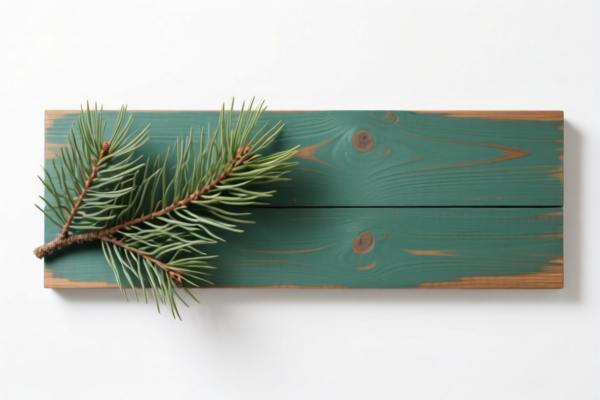
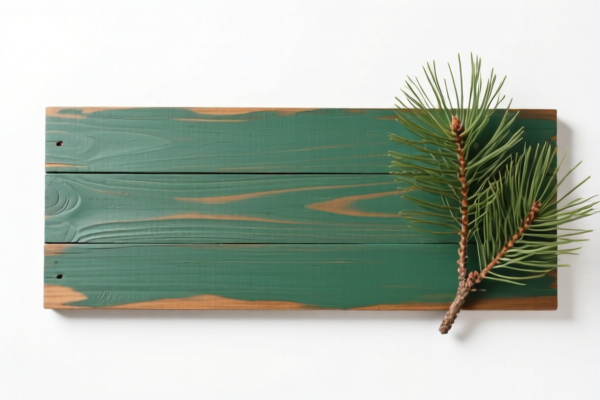
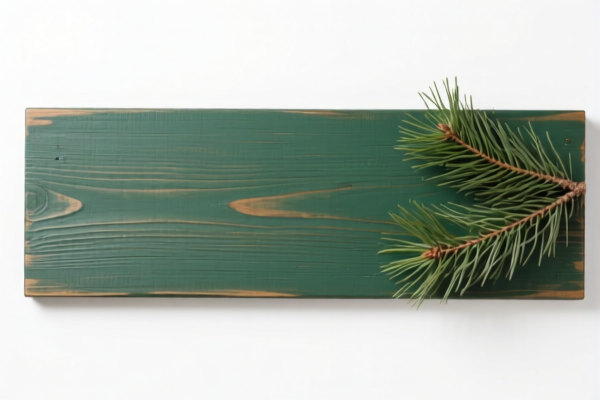
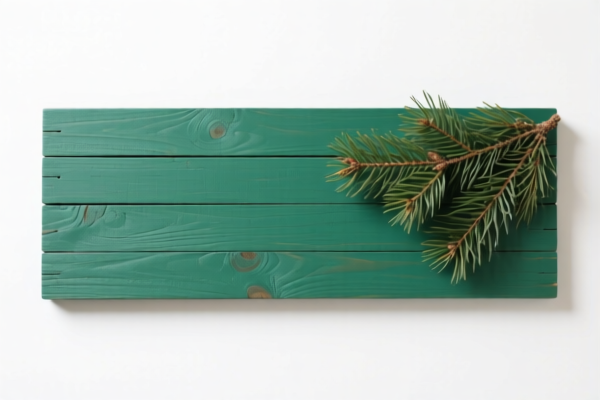
AI Analysis
🌲 Painted Pine Wood Board (Processed Timber)
🌐 HS Code Reference & Customs Clearance Guide | 2026 Latest Tariff Analysis | Professional-Level Logistics Strategy
📌 I. Product Definition & Classification: Do You Really Know "Painted Pine Wood Board"?
Painted pine wood boards are processed wooden products derived from pine timber, undergoing surface treatment (painting/staining) and dimensional processing. In international trade, classification depends heavily on whether the product is merely shaped (semi-finished) or finished for direct use (finished goods), and the specific degree of processing.
Semi-finished Boards (Planks/Strips):
Raw or roughly shaped pine wood, painted on the surface, but not yet assembled into final furniture or building components.
Finished Goods (Flooring/Wall Panels/Furniture Parts):
Pine wood boards cut to specific sizes, sanded, painted, and possibly tongue-and-groove joined, intended for immediate installation as flooring, wall cladding, or furniture parts.
⚠️ Key Distinction Point:
- If it is a simple plank/board with paint applied, but not yet shaped for final use → Classified under Chapter 44 (Wood)
- If it is part of a larger assembly or finished furniture → May fall under Chapter 94 (Furniture)
- Note: For standalone "boards," Chapter 44 is the primary category.
📦 II. HS Code Classification Details (2026 Latest Tariff Authority Comparison)
| HS Code | Product Description | Application Scenario | Painted/Processed? |
|---|---|---|---|
4407.10.40.00 |
Wood sawn lengthwise, sliced or peeled, chipped or planed, painted, varnished or impregnated, pine wood | Surface-treated pine planks, semi-finished boards for further processing | ✅ Yes |
4409.10.00.00 |
Wood (pine) continuously shaped along any of its edges with tongue, groove, etc., painted or not | Flooring, wall panels, decorative strips | ✅ Yes |
4421.91.00.00 |
Other wood articles (e.g., wooden pallets, crates, simple boxes) | Not typically for boards; used for packaging | ❌ No (usually unpainted) |
9403.20.00.00 |
Furniture made of iron or steel | ❌ Incorrect for wood | ❌ No |
9403.40.00.00 |
Other wooden furniture | ❌ Incorrect unless assembled | ❌ No |
🔍 Important Reminder:
- Painted pine wood boards are primarily classified under 4407 (sawn wood) or 4409 (shaped wood).
- 4407 is for planed, sawn, or chipped wood (basic processing).
- 4409 is for continuously shaped wood (e.g., flooring with tongue-and-groove).
- Do not misclassify as furniture (9403) unless the board is part of an assembled unit.
💰 III. 2026 Latest Tariff Rate Details (Including Surcharges)
✅ Applicable Country: United States (US)
✅ Origin: China (CN)
✅ Effective Date: From November 10, 2025 (including subsequent imports)
🎯 1. 4407.10.40.00 —— Painted Pine Wood Planks (Sawn Wood)
| Item | Content |
|---|---|
| Base Tariff Rate | 4.9% (ad valorem) |
| USITC Surcharge | +25% (from USITC Footnote 9903.10.00) |
| IEEPA Surcharge | +10% (for Chinese/HK products, from Nov 10, 2025) |
| Total Tariff Rate | 39.9% |
| Tax Calculation | CIF Value × 39.9% |
| De Minimis Exemption | ❌ Not Eligible (deny_de_minimis) |
| Legal Basis Path | IEEPA:9903.01.25 → IEEPA:9903.01.24 → USITC:4407.10.40.00 → FOOTNOTE:9903.10.00 |
📌 Explanation:
- "USITC Surcharge 25%" comes from Section 301 tariffs;
- "IEEPA 10%" is the additional tariff on Chinese products under the International Emergency Economic Powers Act;
- Total 39.9%, a high tariff rate, must be predicted in advance!
🎯 2. 4409.10.00.00 —— Painted Pine Wood Flooring/Strips (Shaped Wood)
| Item | Content |
|---|---|
| Base Tariff Rate | 5.3% (ad valorem) |
| USITC Surcharge | +25% |
| IEEPA Surcharge | +10% |
| Total Tariff Rate | 40.3% |
| Tax Calculation | CIF × 40.3% |
| De Minimis Exemption | ❌ Not Eligible |
| Legal Basis Path | IEEPA:9901.25 → IEEPA:9903.01.24 → USITC:4409.10.00.00 → FOOTNOTE:9903.10.00 |
📌 Note:
- Similar to the previous item, both fall under "painted wood products";
- Even if it is "oak flooring" or "maple strips," as long as it is shaped and painted, this tariff applies.
🛠️ IV. Customs Clearance Practical Advice (Avoid Pitfalls Guide)
✅ 1. Preparation Checklist (Missing Items Not Allowed)
| Material | Required | Description |
|---|---|---|
| ✅ Product Specification Sheet | ✔️ | Includes dimensions, grain direction, paint type, moisture content |
| ✅ Photos (including packaging) | ✔️ | Clearly showing the board's surface, edges, and packaging |
| ✅ Certificate of Origin (CO) | ✔️ | If not Chinese origin, apply for preferential tariff |
| ✅ Commercial Invoice | ✔️ | Must specify "Painted Pine Wood Board" and HS Code |
| ✅ Packing List | ✔️ | Indicate the relationship between boards and packaging, avoid split declaration |
| ✅ Fumigation Certificate (ISPM 15) | ✔️ | For wood products, fumigation is mandatory to prevent pest infestation |
✅ 2. Declaration Tips (Key Mantra)
🔥 "Wood needs fumigation, paint needs specification, shape determines code, split is a trap!"
| Situation | Correct Declaration Method | Wrong Practice |
|---|---|---|
| Painted pine plank (simple) | 4407.10.40.00 |
Misreport as "furniture" → 20%+ |
| Pine flooring (tongue & groove) | 4409.10.00.00 |
Misreport as "plank" → 25%+ |
| Unpainted pine board | 4407.10.90.00 |
Misreport as "painted" → Unnecessary surcharge |
| Wood furniture (assembled) | 9403.40.00.00 |
Misreport as "board" → Delayed release |
✅ 3. Special Situations Handling
| Situation | Handling Advice |
|---|---|
| Custom Size Boards | Provide customer order + design drawings, avoid being deemed "non-standard" |
| Wood with Toxic Paint | Must provide SDS (Safety Data Sheet) and RoHS compliance certificate |
| Wood for Outdoor Use | If treated with preservatives, must declare "impregnated wood" and provide relevant certificates |
| Wood for Children's Furniture | Must meet stricter safety standards (CPSIA), provide test reports |
🌍 V. Global Major Market Clearance Comparison (2026 Latest)
| Country/Region | Recommended HS Code | Tariff | Certification Requirements | Remarks |
|---|---|---|---|---|
| 🇺🇸 USA | 4407.10.40.00 |
39.9% (China origin) | Fumigation + FSC | High tariff for painted wood |
| 🇨🇳 China | 4407.10.40.00 |
5% | None | No additional surcharge |
| 🇪🇺 EU | 4407.10.40.00 |
0% (if FSC/PEFC) | CE + REACH | No surcharge |
| 🇦🇺 Australia | 4407.10.40.00 |
5% | IPP (Quarantine) | Strict biosecurity |
| 🇯🇵 Japan | 4407.10.40.00 |
0% | JAS (Japanese Agricultural Standard) | No surcharge |
📌 Conclusion:
- The USA imposes high additional tariffs on Chinese painted wood products;
- Chinese-origin painted wood boards face high clearance costs in the US; consider adjusting supply chain or destination markets.
📌 VI. Common Errors & Pitfall Guide (Blood & Tears Lessons)
❌ Error 1: Failing to provide fumigation certificate
👉 Consequence: Goods detained or returned → Delay + Storage Fees
❌ Error 2: Misreporting "painted wood" as "unpainted"
👉 Consequence: Tariff evasion detection → Fine + Penalty
❌ Error 3: Splitting "board + hardware" declaration
👉 Consequence: Hardware taxed separately at high rate → Total tax increases significantly
❌ Error 4: Using "wooden board" as generic description
👉 Consequence: Customs unable to determine correct HS code → Delayed release or reclassification
✅ Correct Practice:
"Painted Pine Wood Plank, 12mm Thick, Varnished Surface, FSC Certified, Fumigated, Model XYZ, for Flooring Substrate"
🎯 VII. Conclusion: Professional Declaration, Save Time & Cost!
🎯 Remember the Mantra:
🔹 "Wood needs fumigation, paint needs code, 39.9% in US, 0% in EU, declaration differs, cost varies greatly!"
🔹 "HS Code determines fate, tariff difference is huge, declare accurately, avoid penalties!"
📌 Tips:
If your wood products are originated from Vietnam, Malaysia, Thailand, you can apply for IEEPA exemption, and the tariff is only 0%~5%;
It is recommended to apply for Advance Ruling in advance to avoid clearance risks.
📣 Take Action Now:
📞 Contact a professional customs broker + Provide product photos + Apply for HS Code Advance Ruling
🚀 Let your painted pine wood boards, clear customs smoothly, export efficiently, double profits!
✨ Professional Clearance Starts with Accurate Classification!
💼 Every cent of your cost deserves precise calculation!
Customer Reviews
About HS Code Classification
The Harmonized System (HS) is an internationally standardized nomenclature developed by the World Customs Organization (WCO) to classify traded products. Over 200 countries use the HS system as the basis for customs tariffs, trade statistics, and import/export regulations.
Each HS code follows a hierarchical structure:
- Chapter (2 digits) — Broad category of goods (e.g., Chapter 84: Machinery and Mechanical Appliances)
- Heading (4 digits) — More specific grouping within the chapter
- Subheading (6 digits) — Internationally standardized breakdown, used by all WCO member countries
- National subdivisions (8-10 digits) — Country-specific extensions for further classification, such as US HTSUS 10-digit codes
Correct HS code classification is essential for smooth customs clearance, accurate duty payment, and compliance with trade regulations. Misclassification can lead to customs delays, overpayment of duties, or penalties.
When importing from CN to US, the applicable tariff rates may include:
- Most-Favored-Nation (MFN) rate — The standard duty rate applied to WTO members
- General rate — Applied to countries without trade agreements
- Trade remedy duties — Additional tariffs such as Section 301 (anti-dumping), Section 232 (national security), or countervailing duties
The information provided on this page is for reference purposes only. For official classification, please consult with your local customs authority or a licensed customs broker.