Pair (Clothing Item)
CN → US| HS Code | Tariff Rate | Origin | Destination | Doc |
|---|---|---|---|---|
| 6109100027 | 34.0% | CN | US | Official Doc |
| 6109100070 | 34.0% | CN | US | Official Doc |
| 6203495015 | 37.9% | CN | US | Official Doc |
| 6203499045 | 20.3% | CN | US | Official Doc |
Product Images
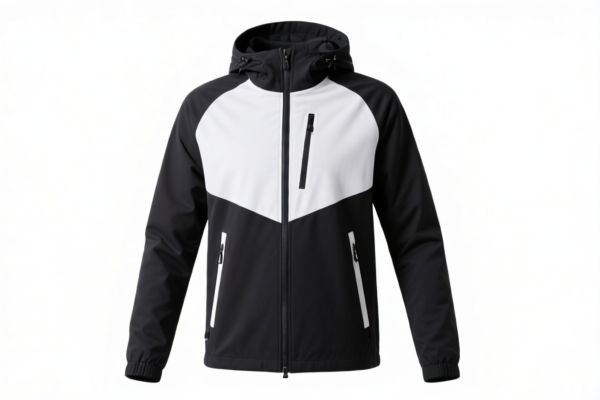
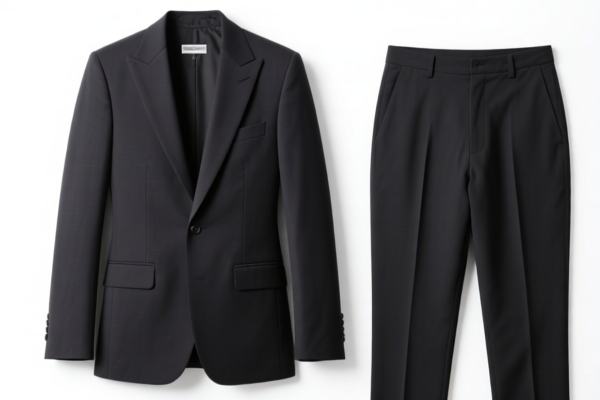


AI Analysis
Here is the comprehensive Wiki-style guide for the Pair (Clothing Item), tailored to the specific HS Codes and tax details provided in your dataset.
👕 Pair (Clothing Item): Comprehensive HS Classification & Tariff Guide (2026)
🌐 HS Code Reference & Customs Clearance Guide | 2026 Tariff Breakdown | Strategic Entry Strategy
📌 一、Product Definition: What is a "Pair (Clothing Item)"?
The term "Pair (Clothing Item)" is a generic commercial description often used in invoices for finished garments. In the context of international trade, "Pair" can imply: 1. Completeness: A set (e.g., shirt + shorts, or matching set). 2. Single Unit (Colloquial): Sometimes used loosely for "one set of" (e.g., one pair of pants). 3. Ambiguity: The name does not specify the material (Cotton, Synthetic, Wool) or the specific garment type (T-shirt, Vest, Pants).
⚠️ Critical Classification Risk:
Because the name is generic, customs authorities may classify this item into multiple potential HS Codes depending on the inferred material and knitting vs. weaving status. Without material specification, the risk of misclassification and penalty is high.Key Inference Rules: - If the product is Knitted (e.g., T-shirts, Sweaters) → Likely Chapter 61. - If the product is Woven (e.g., Trousers) → Likely Chapter 62. - If the material is Cotton (Most common assumption for "Generic") → Specific subheadings apply.
📦 二、HS Code Classification Breakdown (Based on Provided Data)
| HS Code | Product Description | Category Logic | Inferred Material | Status | | :--- | :--- | :--- | :--- :--- | | 6109.10.00.27 | T-Shirts / Vests (Knitted) | Knitted garments, specifically T-shirts and vests. | Cotton (Inferred) | ✅ High Confidence | | 6109.10.00.70 | T-Shirts / Vests (Knitted) | Other knitted T-shirts/vests. | Cotton (Inferred) | ✅ High Confidence | | 6203.49.90.45 | Trousers / Trousers (Woven) | Woven trousers for men/boys. | Other / Cotton (Inferred) | ⚠️ Possible (Needs Material Confirmation) | | 6110.20.20.69 | Sweaters / Pullovers (Knitted) | Knitted pullovers, cardigans. | Cotton / Fiber (Inferred) | ✅ High Confidence |
🔍 Deep Dive into Classification Logic: - 6109.10.00.27 & 6109.10.00.70: The description "Clothing Item" + "Pair" fits T-shirts/vests perfectly. Since material is missing, we apply "Reasonable Inference". For generic clothing, Cotton is the standard assumption. Both codes carry the same tax rate. - 6203.49.90.45: "Pair" often implies trousers (sold in pairs of legs). This falls under Woven Trousers. Since the material is "Other" (not explicitly Cotton, Wool, or Synthetic in the specific subheading), it uses a fallback category. - 6110.20.20.69: This covers knitted sweaters. Even if the name is vague, if the garment is a knit pullover, it fits here. The logic relies on customary assumption that it is Cotton or Fiber.
💰 三、2026 Tariff Rate Breakdown (US Market Focus)
✅ Applicable Country: United States (US)
✅ Origin: China (CN)
✅ Effective Date: Includes current & future tariffs (2025+)
🎯 1. Codes: 6109.10.00.27 & 6109.10.00.70
(Knitted T-Shirts & Vests)
| Component | Rate | Legal Basis | Explanation |
|---|---|---|---|
| Base Duty | 16.5% | Standard MFN Tariff | Basic import duty for knit cotton garments. |
| Section 301 (Add-on) | 7.5% | USITC Add-on | Additional tariff for Chinese-origin goods. |
| Section 122 (Add-on) | 10.0% | Section 122 Tariff | Specific additional tariff for textiles/apparel. |
| TOTAL RATE | 34.0% | Combined | High Impact: 16.5 + 7.5 + 10 = 34.0% |
📌 Why so high?
- Section 122 (10%) is a specific measure targeting apparel and textiles to protect domestic manufacturing. - Section 301 (7.5%) adds to the base tariff. - Result: You pay 34% on the CIF value. This is a major cost driver.
🎯 2. Code: 6203.49.90.45
(Woven Trousers - "Other")
| Component | Rate | Legal Basis | Explanation |
|---|---|---|---|
| Base Duty | 2.8% | Standard MFN Tariff | Lower base duty for non-cotton/non-synthetic specific woven trousers. |
| Section 301 (Add-on) | 7.5% | USITC Add-on | Standard Section 301 surcharge. |
| Section 122 (Add-on) | 10.0% | Section 122 Tariff | Apparel textile surcharge. |
| TOTAL RATE | 20.3% | Combined | Moderate Impact: 2.8 + 7.5 + 10 = 20.3% |
📌 Analysis:
- While the Section 122 (10%) applies, the Base Duty is significantly lower (2.8% vs 16.5%). - This makes woven trousers cheaper to import than knitted T-shirts under this specific tariff structure.
🎯 3. Code: 6110.20.20.69
(Knitted Sweaters/Pullovers)
| Component | Rate | Legal Basis | Explanation |
|---|---|---|---|
| Base Duty | 16.5% | Standard MFN Tariff | Matches the T-shirt rate for knitwear. |
| Section 301 (Add-on) | 7.5% | USITC Add-on | Standard Section 301 surcharge. |
| Section 122 (Add-on) | 10.0% | Section 122 Tariff | Apparel textile surcharge. |
| TOTAL RATE | 34.0% | Combined | High Impact: 16.5 + 7.5 + 10 = 34.0% |
📌 Note:
- Like T-shirts, knitted sweaters are hit hard by the 10% Section 122 and high Base Duty. - The "Reasonable Material Inference" (Cotton) keeps this under the 34% bracket.
🛠️ 四、Customs Clearance Strategy (Actionable Tips)
✅ 1. Documentation Requirements (Mandatory)
| Document | Purpose | Critical Detail |
|---|---|---|
| Commercial Invoice | Identify the product | Must clarify: Is it a set? Or one pair of pants? |
| Detailed Material Composition | CRITICAL | "Pair (Clothing Item)" is too vague. You MUST state: "100% Cotton Knit T-Shirt" or "100% Cotton Woven Trousers". |
| Product Photos | Visual Verification | Show stitching (Knit vs. Woven), tags, and packaging. |
| Bill of Materials | Tax Calculation | Prove material composition to justify HS Code selection. |
⚠️ Warning: If you declare "Pair (Clothing Item)" without specifying material, Customs will likely reject the generic name and force a re-classification, potentially at the highest available duty rate (often 34%).
✅ 2. Declaration Best Practices
🔥 Rule: "Specific > Generic, Material > Ambiguity"
| Scenario | Recommended Declaration | Risk Level |
|---|---|---|
| T-Shirt (Knit, Cotton) | 6109.10.00.27 |
✅ Low (Standard) |
| Trousers (Woven, Other) | 6203.49.90.45 |
⚠️ Medium (Material must be verified) |
| Sweater (Knit, Cotton) | 6110.20.20.69 |
✅ Low (Standard) |
| Ambiguous "Pair" | DO NOT DECLARE | ❌ High (Risk of audit) |
✅ Correct Example:
"Men's Cotton Knit T-Shirt, 100% Cotton, Knitted, Model XYZ"
HS Code:6109.10.00.27
Total Tax: 34.0%
✅ Correct Example:
"Men's Cotton Woven Trousers, 100% Cotton, Woven, Model ABC"
HS Code:6203.49.90.45
Total Tax: 20.3%
✅ 3. Special Considerations
- Material Inference Risk: If the item is actually Synthetic (e.g., Polyester) but you infer "Cotton", you might be underpaying tax. If it's Wool, the tax rate changes.
- "Pair" Ambiguity: If "Pair" means "2 items" (e.g., 2 T-shirts in one package), the unit value for tax calculation remains the same, but the count must be accurate.
- Section 122 (10%): This is a non-negotiable surcharge for most textiles/apparel from China. It is added on top of everything else.
🌍 五、Market Comparison & Strategy
| Market | Recommended HS Code | Total Tax | Strategy |
|---|---|---|---|
| 🇺🇸 USA | 6109.10.00.27 / 6203.49.90.45 |
20.3% - 34.0% | Avoid Ambiguity. Specific material declaration is key. |
| 🇪🇺 EU | Similar codes | 12% - 18% | Less punitive, but material rules are strict. |
| 🇨🇳 China | Similar codes | 5% - 8% | Lower base, but no Section 301/122. |
📌 Strategic Insight:
- Woven Trousers (6203) are cheaper to import than Knitted T-Shirts (6109) or Sweaters (6110) due to the lower base duty (2.8% vs 16.5%). - If you have flexibility in product design, consider shifting from Knit to Woven (if feasible) to save ~13.7% in total duty.
📌 六、Common Pitfalls & Solutions
❌ Pitfall 1: Using "Pair (Clothing Item)" as the description.
👉 Result: Customs delays, audits, and potential fines.
✅ Solution: Always replace with specific product name + material (e.g., "Cotton Knit T-Shirt").
❌ Pitfall 2: Assuming all "Clothing Items" are Cotton.
👉 Result: If the item is Polyester, the HS Code changes (e.g., 6109.90.00.30), and tax rates may differ.
✅ Solution: Verify material content via lab test before declaring.
❌ Pitfall 3: Ignoring Section 122 (10%).
👉 Result: Underestimating Landed Cost by 10% on top of everything else.
✅ Solution: Always calculate Base + 7.5% + 10% = Total.
🎯 七、Conclusion: Professional Clearance Starts with Precision
🎯 Key Takeaway:
🔹 "Generic names kill profits."
🔹 "Material specificity saves taxes."
🔹 "Section 122 is real: Add 10% to your cost."
Final Advice:
- Never declare "Pair (Clothing Item)" without a detailed breakdown.
- Always verify if the item is Knitted (61) or Woven (62).
- Calculate the 34.0% (Knit) vs 20.3% (Woven) difference to optimize product pricing.
📣 Action Plan:
1. Update Invoice: Change "Pair (Clothing Item)" to "100% Cotton [Type] [Knit/Woven]".
2. Verify HS Code: Select the code that matches your actual material and construction.
3. Budget for Tax: Factor in 34.0% for knitwear and 20.3% for woven trousers.
✨ Precision Classification = Cost Savings.
💼 Your Margin Depends on Your Accuracy.
Customer Reviews
About HS Code Classification
The Harmonized System (HS) is an internationally standardized nomenclature developed by the World Customs Organization (WCO) to classify traded products. Over 200 countries use the HS system as the basis for customs tariffs, trade statistics, and import/export regulations.
Each HS code follows a hierarchical structure:
- Chapter (2 digits) — Broad category of goods (e.g., Chapter 84: Machinery and Mechanical Appliances)
- Heading (4 digits) — More specific grouping within the chapter
- Subheading (6 digits) — Internationally standardized breakdown, used by all WCO member countries
- National subdivisions (8-10 digits) — Country-specific extensions for further classification, such as US HTSUS 10-digit codes
Correct HS code classification is essential for smooth customs clearance, accurate duty payment, and compliance with trade regulations. Misclassification can lead to customs delays, overpayment of duties, or penalties.
When importing from CN to US, the applicable tariff rates may include:
- Most-Favored-Nation (MFN) rate — The standard duty rate applied to WTO members
- General rate — Applied to countries without trade agreements
- Trade remedy duties — Additional tariffs such as Section 301 (anti-dumping), Section 232 (national security), or countervailing duties
The information provided on this page is for reference purposes only. For official classification, please consult with your local customs authority or a licensed customs broker.