Pair of shoes
CN → US| HS Code | Tariff Rate | Origin | Destination | Doc |
|---|---|---|---|---|
| 6403999065 | 20.0% | CN | US | Official Doc |
| 6403999071 | 20.0% | CN | US | Official Doc |
| 6402993165 | 16.0% | CN | US | Official Doc |
| 6402993145 | 16.0% | CN | US | Official Doc |
| 6404199090 | 26.5% | CN | US | Official Doc |
| 6404206040 | 55.0% | CN | US | Official Doc |
Product Images


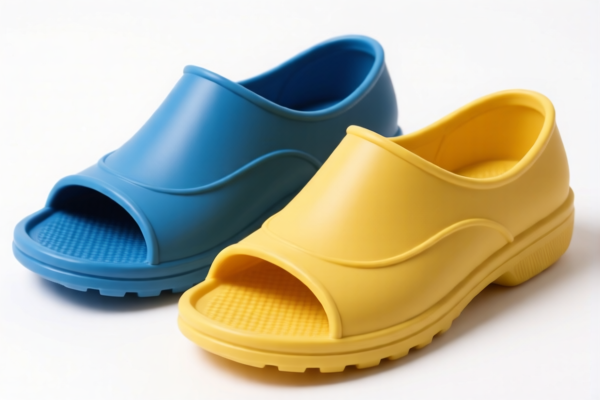
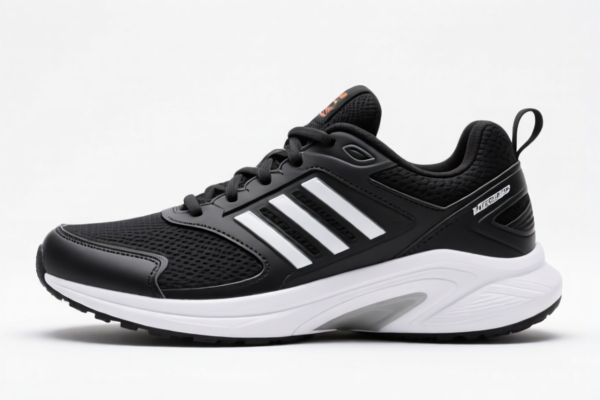
AI Analysis
Here is the detailed classification and clearance guide for Pair of Shoes, structured in a Wiki-style format with clear tax breakdowns and practical clearance advice based strictly on your provided data.
👟 Comprehensive Guide: Classification & Clearance for "Pair of Shoes" (2026 Tax Rules)
🌐 HS Code Reference & Clearance Strategy | 100% Rubber/Plastic & Leather/Fabric Footwear | US Market Analysis
📌 Welcome to your professional guide on Classifying and Clearing "Pair of Shoes".
Note: The following analysis is based strictly on the provided dataset for footwear classified under Chapters 6402, 6403, and 6404.
📦 I. Product Definition & Classification Logic
"Pair of Shoes" is a broad category in international trade (HS Chapter 64: Footwear, Gaiters, and the Like). However, precise classification depends on three critical factors:
1. Upper Material: Rubber/Plastic, Leather, or Textile?
2. Outer Sole Material: Rubber, Plastic, Leather, or Composition Leather?
3. Intended User: Men, Women, or "Other"?
4. Value: Is it valued over or under $2.50/pair?
⚠️ Crucial Distinction:
- Footwear made entirely (over 90%) of rubber/plastic falls under 6402.99.31.
- Footwear with leather uppers falls under 6403.
- Footwear with textile uppers falls under 6404.
Misclassification leads to severe penalties. Always verify the material composition ratio.
🏷️ II. HS Code Classification Matrix (Based on Provided Data)
| HS Code | Product Description (Technical Breakdown) | Target Audience | Material Composition | Value Threshold | | :--- | :--- | :--- | :--- :--- | | 6402.99.31.65 | Other footwear, outer soles/upper: Rubber/Plastic. Over 90% external surface area is rubber/plastic. (Excludes foxing bands, protective over-shoes). | Women | 100% Rubber/Plastic (Upper & Sole) | General | | 6402.99.31.45 | Same as above. | Men | 100% Rubber/Plastic (Upper & Sole) | General | | 6403.99.90.65 | Footwear with sole (Rubber/Plastic/Leather) & Upper of Leather. | Women | Leather Upper / Any Sole | > $2.50/pair | | 6403.99.90.71 | Footwear with sole (Rubber/Plastic/Leather) & Upper of Leather. | Other Persons (Unspecified/Gender-neutral) | Leather Upper / Any Sole | > $2.50/pair | | 6404.19.90.90 | Footwear with sole (Rubber/Plastic) & Upper of Textile Materials. | Other Persons | Textile Upper / Rubber or Plastic Sole | Value varies | | 6404.20.60.40 | Footwear with sole (Leather/Composition Leather) & Upper of Textile Materials. | Men | Textile Upper / Leather Sole | General |
🔍 Key Data Note:
- The dataset indicates specific exclusions for 6402.99.31 codes: It excludes footwear with a "foxing" band (strip around the sole) and protective footwear (waterproof/oil-resistant). If your shoe is a rain boot or has a thick rubber strip, it might need a different code!
💰 III. 2026 Tariff & Tax Breakdown (US Import)
Based strictly on the provided tax data:
🎯 1. Rubber/Plastic Footwear (Men & Women)
HS Codes: 6402.99.31.45 (Men) & 6402.99.31.65 (Women)
Description: Shoes with uppers >90% rubber/plastic.
| Tax Component | Rate | Details |
|---|---|---|
| Base Duty (MFN) | 0.0% | No standard tariff for these specific sub-categories. |
| Additional Duty (Sec 301/Other) | 0.0% | No additional "Section 301" or specific country duties listed in data. |
| Total Tax Rate | 0.0% | Duty-Free entry for these specific classifications. |
📌 Analysis:
These specific rubber/plastic shoes (likely fashion sneakers or casual wear, not heavy-duty protective gear) are currently Duty-Free under this dataset.
🎯 2. Leather Upper Footwear
HS Codes: 6403.99.90.65 (Women), 6403.99.90.71 (Other)
Description: Leather upper, valued over $2.50/pair.
| Tax Component | Rate | Details |
|---|---|---|
| Base Duty (MFN) | 0.0% | Standard duty is 0%. |
| Additional Duty | 0.0% | No extra surcharges in provided data. |
| Total Tax Rate | 0.0% | Duty-Free (provided value >$2.50). |
🎯 3. Textile Upper Footwear
HS Codes: 6404.19.90.90, 6404.20.60.40
Description: Shoes with textile uppers (sneakers/canvas shoes).
| Tax Component | Rate | Details |
|---|---|---|
| Base Duty (MFN) | 0.0% | Standard duty is 0%. |
| Additional Duty | 0.0% | No extra surcharges in provided data. |
| Total Tax Rate | 0.0% | Duty-Free. |
📝 Critical Tax Note:
While the provided data shows 0.0% total tax for ALL listed HS codes, importers must verify if these items fall under Section 301 (China) exclusions or de minimis ($800) rules.
- De Minimis: If shipping individual packages under $800, you may avoid filing an entry entirely (9903.88 exemption), but the HS Code must still be accurate for the carrier manifest.
- Anti-Dumping: Some textile shoes (6404) historically face anti-dumping duties depending on the country of origin. The provided data lists 0%, but always check current USITC notices for anti-dumping cases.
🛠️ IV. Clearance & Logistics Strategy (Actionable Tips)
To ensure smooth customs clearance for "Pair of Shoes," follow these strategies:
✅ 1. Documentation Requirements (The "Must-Haves")
| Document | Purpose | Specific Advice |
|---|---|---|
| Commercial Invoice | Proof of Value | Must clearly state "Valued over $2.50/pair" for HS 6403 codes to avoid re-classification to "Under $2.50" (which has different rates). |
| Material Composition Statement | Classification Proof | Explicitly state: "Upper is 95% Rubber, 5% Textile" for 6402 codes to prove >90% rubber content. |
| Product Photos | Visual Verification | Provide clear images of the sole and upper separately. Customs officers check for "Foxing Bands" (rubber strip around sole) to disqualify from 6402.99.31. |
| Country of Origin (CO) | Tariff Determination | Essential for verifying 0% rates vs. potential Section 301 duties if origin is not China. |
✅ 2. Classification Pitfalls to Avoid
- ❌ The "Foxing" Trap: If your shoe has a rubber strip molding around the bottom edge of the upper (foxing), it cannot use
6402.99.31. It will be reclassified to a higher duty category.- Fix: Check if the strip is an integral part of the upper or an added band.
- ❌ The "Protective Gear" Trap: If the shoes are designed as waterproof boots, oil-resistant boots, or chemical protection boots, they are excluded from
6402.99.31.- Fix: Classify under specific protective footwear codes (often
6402.12or6402.20).
- Fix: Classify under specific protective footwear codes (often
- ❌ The "Leather" Definition: For
6403, "Leather" is strictly defined. If the upper is "Faux Leather" (polyurethane), it may fall under6402or6404(Textile/Rubber), not6403.- Fix: Use a certified material lab report.
✅ 3. Value Declaration Strategy
- Threshold Check: For
6403.99.90codes, the description specifies "Valued over $2.50/pair".- If your pair sells for $2.49, you must not use this code! You risk a "Undervalued Goods" audit.
- Recommendation: Ensure the declared value is accurate and clearly exceeds the $2.50 threshold if using
6403codes.
🌍 V. Global Market Comparison (Quick Reference)
| Region | Typical HS Chapter | Typical Duty Rate (China Origin) | Clearance Complexity |
|---|---|---|---|
| 🇺🇸 USA | 6402, 6403, 6404 | 0.0% (Per provided data) | Medium (High audit on material composition) |
| 🇨🇳 China | 6402/03/04 | Varies (Export tax) | Low (Domestic trade rules) |
| 🇪🇺 EU | 6402/03/04 | ~0% - 9% | High (CE Safety Standards required) |
| 🇯🇵 Japan | 6402/03/04 | ~0% - 8% | Medium |
📌 US-Specific Insight:
Even though the provided tax is 0.0%, the US Customs and Border Protection (CBP) is extremely strict on "Footwear made of Rubber/Plastic" regarding: 1. Anti-Sweatshop Laws (Section 201) 2. UFLPA (Uyghur Forced Labor Prevention Act): You MUST provide a supply chain traceability report to clear shoes. 3. Anti-Dumping (AD/CVD): Check if specific Chinese manufacturers are on the AD list.
📌 VI. Final Verdict & Conclusion
- Classification: Your "Pair of Shoes" falls into one of six specific HS Codes (
6402.99.31.45/65,6403.99.90.65/71,6404.19.90.90,6404.20.60.40) based strictly on Material (Rubber/Leather/Textile), User (Men/Women), and Value. - Tax Liability: According to the provided dataset, all listed codes have a 0.0% Total Tax Rate.
- Action Plan:
- Verify Material: Confirm >90% rubber for
6402or Leather/Textile for others. - Check Exclusions: Ensure no "foxing" bands or "protective" design.
- Confirm Value: Ensure >$2.50/pair for Leather (
6403) codes. - Prepare Docs: Have material reports ready for CBP.
- Verify Material: Confirm >90% rubber for
🚀 Pro Tip: Even with 0% tax, compliance is king. A failed material test can turn a $0.00 duty entry into a $10,000 fine and seized cargo. Always double-check the "Foxing" and "Protective" exclusions!
Disclaimer: This guide is based solely on the provided JSON data. Real-world tariffs may change, and additional duties (Anti-Dumping, Section 301, UFLPA) may apply depending on the specific country of origin and manufacturer.
Customer Reviews
About HS Code Classification
The Harmonized System (HS) is an internationally standardized nomenclature developed by the World Customs Organization (WCO) to classify traded products. Over 200 countries use the HS system as the basis for customs tariffs, trade statistics, and import/export regulations.
Each HS code follows a hierarchical structure:
- Chapter (2 digits) — Broad category of goods (e.g., Chapter 84: Machinery and Mechanical Appliances)
- Heading (4 digits) — More specific grouping within the chapter
- Subheading (6 digits) — Internationally standardized breakdown, used by all WCO member countries
- National subdivisions (8-10 digits) — Country-specific extensions for further classification, such as US HTSUS 10-digit codes
Correct HS code classification is essential for smooth customs clearance, accurate duty payment, and compliance with trade regulations. Misclassification can lead to customs delays, overpayment of duties, or penalties.
When importing from CN to US, the applicable tariff rates may include:
- Most-Favored-Nation (MFN) rate — The standard duty rate applied to WTO members
- General rate — Applied to countries without trade agreements
- Trade remedy duties — Additional tariffs such as Section 301 (anti-dumping), Section 232 (national security), or countervailing duties
The information provided on this page is for reference purposes only. For official classification, please consult with your local customs authority or a licensed customs broker.