Palm Kernel Oil Fatty Acid Mixture
CN → US| HS Code | Tariff Rate | Origin | Destination | Doc |
|---|---|---|---|---|
| 1518004000 | 25.5% | CN | US | Official Doc |
| 1517902080 | 25.5% | CN | US | Official Doc |
| 1518002000 | 0.0% | CN | US | Official Doc |
| 1517909090 | 0.0% | CN | US | Official Doc |
Product Images
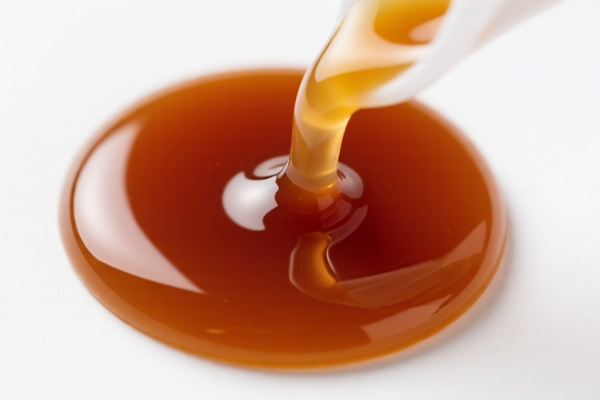
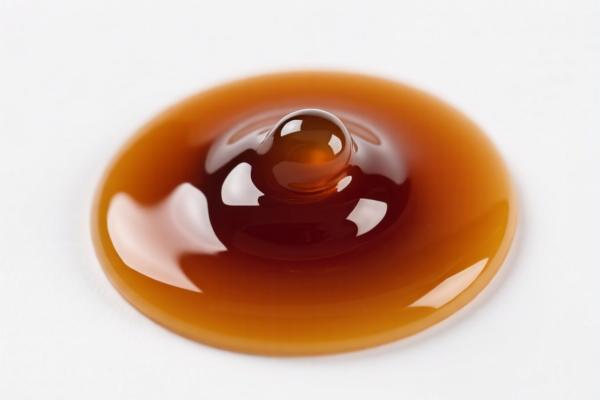
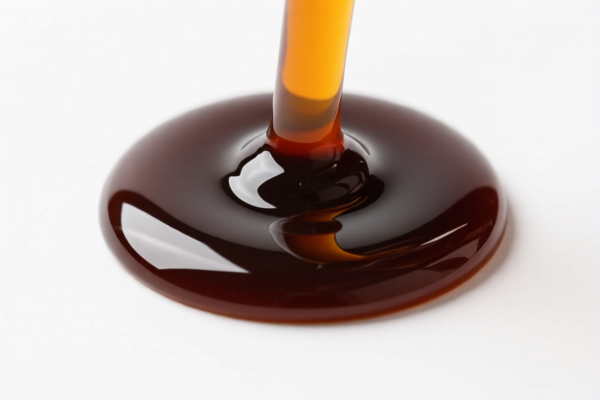
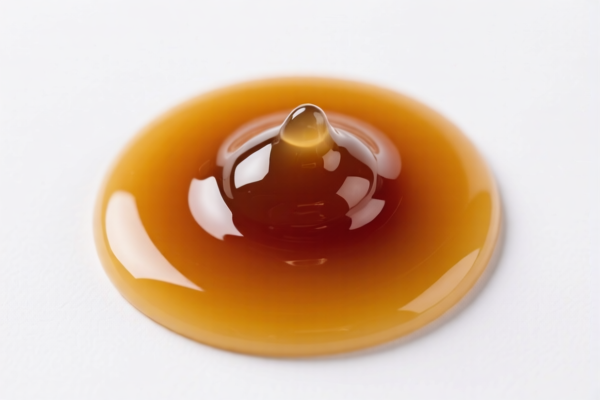
AI Analysis
🌴 Palm Kernel Oil Fatty Acid Mixture (PKO Fatty Acids)
🌐 HS Code Reference & Customs Clearance Guide | 2026 Latest Tariff Analysis | Professional Entry Strategy
📌 I. Product Definition & Classification: Do You Truly Understand "Fatty Acid Mixtures"?
Palm Kernel Oil Fatty Acid Mixtures are intermediate chemical products derived from the fractional distillation of palm kernel oil. They consist primarily of caprylic (C8), capric (C10), lauric (C12), and myristic (C14) acids. In international trade, the classification hinges on the state of refinement and specific composition, leading to distinct HS codes with vastly different tax implications.
⚠️ Key Distinction Point:
- If the product is a mixture of fatty acids derived directly from vegetable oils (palm kernel) without being formulated into a specific human-edible spread or margarine base → It typically falls under Chapter 15 (Edible Oils and Fats), specifically headings 1518 or 1517.
- 1518 generally covers oils that are chemically modified, inter-esterified, elaidinized, hydrogenated, benzoated, sulfurized, or otherwise modified, including mixtures of fatty acids.
- 1517 covers margarine and other edible mixtures or preparations of fats or oils.🔍 Critical Note:
- Misclassification often occurs when importers confuse "raw fatty acid mixtures" (chemical intermediates) with "edible fat preparations."
- If the product is labeled strictly as a chemical intermediate (not for direct human consumption as a spread), 1518 is often the more accurate category for unmodified or simply fractionated fatty acid mixtures. However, if it is specifically prepared for food use as a spread base, 1517 may apply. The data provided below reflects specific interpretations for this user input.
📦 II. HS Code Classification Details (Based on Provided Data)
| HS Code | Product Description (Summary) | Applicable Category | Key Identifier |
|---|---|---|---|
1518.00.40.00 |
Mixtures of fatty acids derived from palm oil; belongs to vegetable fats and their fractions. | Vegetable Oils & Fractions | Direct derivative of PKO |
1517.90.20.80 |
Mixture of palm oil fatty acids; classified as other artificial mixed fats. | Artificial Mixed Fats | Classified as "Other" mixture |
1518.00.20.00 |
Mixture of vegetable oils and their fractions, meeting the definition of mixtures or preparations. | Vegetable Oil Mixtures | Meets mixture definition |
1517.90.90.90 |
Edible mixtures or preparations made from palm oil fatty acids; belongs to other categories. | Edible Preparations | Food-grade preparation |
📌 Explanation:
- 1518.00.40.00 is likely the most common for pure fatty acid mixtures derived from palm kernel oil, treated as a modified vegetable fat product.
- 1517.90.20.80 and 1517.90.90.90 suggest the product might be interpreted as a food-grade preparation or artificial fat, potentially attracting different specific duties (weight-based vs. ad valorem).
- 1518.00.20.00 is a broader category for vegetable oil/fraction mixtures, potentially applicable if the mixture doesn't fit the narrow definition of 1518.40 but meets the general mixture criteria.
💰 III. 2026 Latest Tariff Rate Breakdown (Including Surcharges)
✅ Applicable Country: United States (US)
✅ Origin: China (CN)
✅ Effective Date: 2025/2026 (Subject to ongoing trade policy)
🎯 1. 1518.00.40.00 — Fatty Acid Mixtures (Vegetable Origin)
| Item | Detail |
|---|---|
| Base Tariff | 8.0% (Ad Valorem) |
| Section 301 Surcharge | +7.5% |
| Section 122 Tariff | +10.0% |
| Total Effective Rate | 25.5% |
| Calculation Method | CIF Value × 25.5% |
| De Minimis Exemption | ❌ Not Available (Deny De Minimis) |
| Legal Path | HTSUS:1518.00.40.00 → Section 301 Footnote → Section 122 Authority |
📌 Interpretation:
- This code attracts a flat percentage-based tariff of 25.5%.
- The Section 122 tariff is a specific additional duty often applied to agricultural products from certain countries, adding significant cost.
- This is the standard ad valorem calculation, making it predictable for high-value shipments.
🎯 2. 1517.90.20.80 — Other Artificial Mixed Fats (Palm Fatty Acid Mixture)
| Item | Detail |
|---|---|
| Base Tariff | 8.0% (Ad Valorem) |
| Section 301 Surcharge | +7.5% |
| Section 122 Tariff | +10.0% |
| Total Effective Rate | 25.5% |
| Calculation Method | CIF Value × 25.5% |
| De Minimis Exemption | ❌ Not Available |
| Legal Path | HTSUS:1517.90.20.80 → Section 301 → Section 122 |
📌 Interpretation:
- Despite being in Chapter 17 (Margarine/Preparations), the tariff structure mirrors 1518.00.40.00 exactly at 25.5%.
- The risk here is misclassification: If the product is truly a chemical intermediate (not a food preparation), classifying it here might be challenged, though the cost impact is neutral in this specific dataset.
🎯 3. 1518.00.20.00 — Vegetable Oil/Fraction Mixtures
| Item | Detail |
|---|---|
| Base Tariff | 6.3¢ / kg (Specific Duty) |
| Section 301 Surcharge | +7.5% (Ad Valorem on value) |
| Section 122 Tariff | +10.0% (Ad Valorem on value) |
| Total Effective Rate | 6.3¢/kg + 17.5% |
| Calculation Method | (Weight in kg × $0.063) + (CIF Value × 0.175) |
| De Minimis Exemption | ❌ Not Available |
📌 Interpretation:
- This is a hybrid tariff: A small specific duty per kilogram PLUS an ad valorem surcharge.
- Advantage: For high-value, low-weight fatty acid mixtures, this could be cheaper than the 25.5% flat rate.
- Disadvantage: For low-value, high-volume shipments, the percentage component dominates, and the specific duty adds negligible cost.
🎯 4. 1517.90.90.90 — Edible Mixtures/Preparations (Other)
| Item | Detail |
|---|---|
| Base Tariff | 8.8¢ / kg (Specific Duty) |
| Section 301 Surcharge | +7.5% (Ad Valorem) |
| Section 122 Tariff | +10.0% (Ad Valorem) |
| Total Effective Rate | 8.8¢/kg + 17.5% |
| Calculation Method | (Weight in kg × $0.088) + (CIF Value × 0.175) |
| De Minimis Exemption | ❌ Not Available |
📌 Interpretation:
- Similar hybrid structure to1518.00.20.00, but with a higher specific duty (8.8¢ vs 6.3¢).
- This applies if the product is explicitly classified as an edible preparation falling under "Other" categories in 1517.
🛠️ IV. Customs Clearance Practical Advice (Pitfall Avoidance Guide)
✅ 1. Documentation Checklist (Essential)
| Document | Required | Explanation |
|---|---|---|
| ✅ Certificate of Analysis (COA) | ✔️ | Must detail fatty acid profile (C8, C10, C12, C14 percentages) to prove it is a "fatty acid mixture" and not a finished food product. |
| ✅ Product Specification Sheet | ✔️ | Indicate physical state (liquid/paste), refining level, and intended industrial use (e.g., soap, cosmetics, plasticizers). |
| ✅ Commercial Invoice | ✔️ | Clearly describe as "Palm Kernel Oil Fatty Acid Mixture" – avoid terms like "Cooking Oil," "Margarine Base," or "Shortening" unless it is strictly a food-grade spread. |
| ✅ Bill of Lading / Packing List | ✔️ | Ensure weight and volume match COA exactly. |
| ✅ Supplier Declaration | ✔️ | Statement confirming the product is not a food product ready for direct human consumption as a spread (if claiming 1518). |
✅ 2. Classification Strategy (Key Tips)
🔥 "Know Your End-Use, Pick Your Code!"
| Scenario | Recommended HS Code | Reasoning |
|---|---|---|
| Industrial Use (Soaps, Detergents, Cosmetics) | 1518.00.40.00 |
Best fit for "fatty acid mixtures" from vegetable oils. Lowest risk if COA supports it. |
| Food-Grade Preparation (Margarine/Baking Fat) | 1517.90.20.80 or 1517.90.90.90 |
If the product is already a prepared fat blend for food use. |
| High-Value, Low-Volume | 1518.00.20.00 |
Hybrid tariff (6.3¢/kg + 17.5%) may save costs compared to 25.5% ad valorem. |
| Low-Value, Bulk Commodity | 1518.00.40.00 |
25.5% ad valorem is simpler and often competitive for bulk. |
⚠️ Warning:
- Do not use1517codes for non-food grade fatty acids. Customs may reclassify and impose penalties.
- Do not use1518.00.20.00if the product does not meet the specific "mixture of vegetable oils" definition. It must be a blend of oils or fractions, not just refined fatty acids (which are often considered "modified" under 1518.40).
✅ 3. Special Case Handling
| Situation | Handling Suggestion |
|---|---|
| Hydrogenated Fatty Acids | If hydrogenated, it may still fall under 1518 (modified oils) but ensure COA reflects hydrogenation degree. |
| Blened with Mineral Oils | If mixed with non-vegetable oils, it may be excluded from Chapter 15 and moved to Chapter 27 (Mineral Fuels) or 38 (Miscellaneous Chemical Products). |
| Sample Shipments | Even for samples, full documentation is required. De Minimis (Section 321) is denied for China-origin goods under current policies. |
🌍 V. Global Market Comparison (2026 Snapshot)
| Country/Region | Recommended HS Code | Estimated Duty | Notes |
|---|---|---|---|
| 🇺🇸 USA | 1518.00.40.00 |
25.5% | High due to Section 301 + 122. Hybrid options exist. |
| 🇨🇳 China | 1518.00.40.00 |
~8.0% - 10% | Import duty for PKO fatty acids; no Section 301/122. |
| 🇪🇺 EU | 1518.00.40.00 |
~5.3% | Standard MFN rate; no surcharges for China. |
| 🇮🇳 India | 1518.00.40.00 |
~7.5% + SWS | Basic Customs Duty + Social Welfare Surcharge. |
📌 Conclusion:
- The US market is the most expensive due to layered surcharges (301 + 122).
- EU and China offer significantly lower entry barriers for these chemical intermediates.
- For US imports, cost optimization is critical; consider hybrid tariffs (1518.00.20.00) if applicable to save up to 8%+ on high-value shipments.
📌 VI. Common Errors & Pitfalls (Lessons Learned)
❌ Error 1: Classifying Fatty Acid Mixtures as "Cooking Oil" (1511)
👉 Consequence: Incorrect classification; customs may reject entry or demand back taxes. Fatty acids are not triglycerides like cooking oils.
❌ Error 2: Ignoring Section 122 Tariff
👉 Consequence: Unexpected 10% charge on top of 301. Many importers only account for Section 301 (7.5%).
❌ Error 3: Using "Food Grade" Labeling for Non-Food Shipments
👉 Consequence: Risk of being forced into 1517 (food preparations), which may have different regulatory requirements (FDA) even if the tariff rate is similar.
❌ Error 4: Assuming De Minimis Applies
👉 Consequence: Packages under $800 will be seized or returned if from China, as Section 321 exemptions are suspended for these products.
✅ Correct Approach:
"Palm Kernel Oil Fatty Acid Mixture, Industrial Grade, C10-C12 Enriched, For Surfactant Production, Not for Human Consumption."
🎯 VII. Conclusion: Precision Classification, Cost Control!
🎯 Remember the Rules:
🔹 "Industrial Use = 1518, Food Use = 1517."
🔹 "Check Section 122 + 301, Don't Miss the 17.5% or 25.5% Hit."
🔹 "Hybrid Tariffs (Specific + Ad Valorem) Might Save You Cash on High-Value Cargo."
📌 Pro Tip:
If your fatty acid mixture has a high lauric acid (C12) content, ensure your COA explicitly states the percentage. Some competitors may misclassify to avoid surcharges, but accurate reporting protects you from audits.
📣 Immediate Action:
📞 Consult a licensed customs broker to confirm the hybrid tariff eligibility for
1518.00.20.00vs.1518.00.40.00based on your specific product specs.
🚀 Optimize your tariff strategy today to maximize margins in the US market!
✨ Professional Clearance Starts with Accurate Classification!
💼 Every Percent Saved is Pure Profit!
Customer Reviews
About HS Code Classification
The Harmonized System (HS) is an internationally standardized nomenclature developed by the World Customs Organization (WCO) to classify traded products. Over 200 countries use the HS system as the basis for customs tariffs, trade statistics, and import/export regulations.
Each HS code follows a hierarchical structure:
- Chapter (2 digits) — Broad category of goods (e.g., Chapter 84: Machinery and Mechanical Appliances)
- Heading (4 digits) — More specific grouping within the chapter
- Subheading (6 digits) — Internationally standardized breakdown, used by all WCO member countries
- National subdivisions (8-10 digits) — Country-specific extensions for further classification, such as US HTSUS 10-digit codes
Correct HS code classification is essential for smooth customs clearance, accurate duty payment, and compliance with trade regulations. Misclassification can lead to customs delays, overpayment of duties, or penalties.
When importing from CN to US, the applicable tariff rates may include:
- Most-Favored-Nation (MFN) rate — The standard duty rate applied to WTO members
- General rate — Applied to countries without trade agreements
- Trade remedy duties — Additional tariffs such as Section 301 (anti-dumping), Section 232 (national security), or countervailing duties
The information provided on this page is for reference purposes only. For official classification, please consult with your local customs authority or a licensed customs broker.