Palm Leaf Baskets
CN → US| HS Code | Tariff Rate | Origin | Destination | Doc |
|---|---|---|---|---|
| 4602191600 | 40.0% | CN | US | Official Doc |
| 4602191400 | 35.0% | CN | US | Official Doc |
Product Images
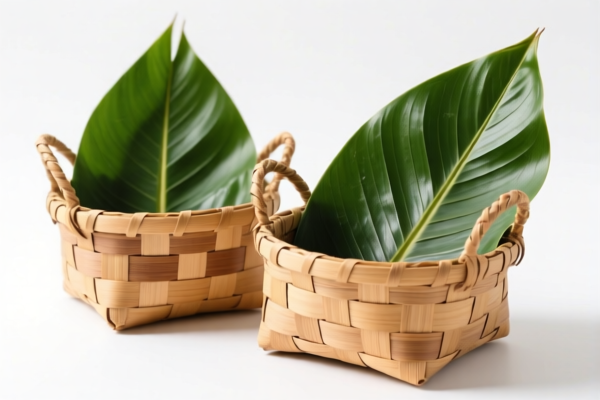
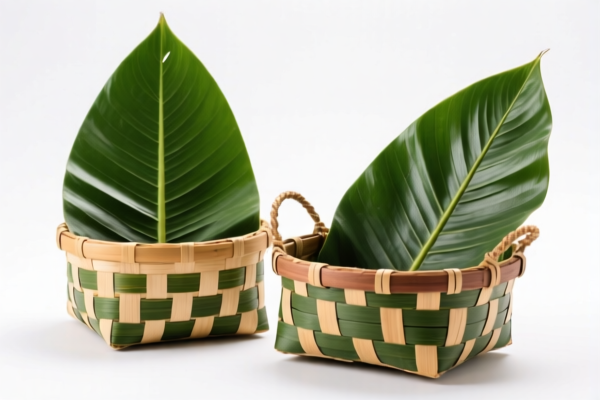
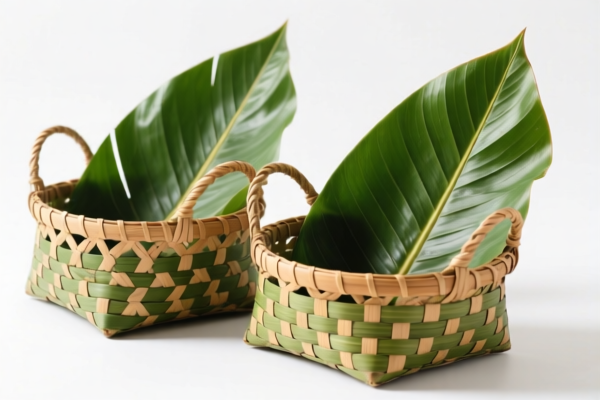
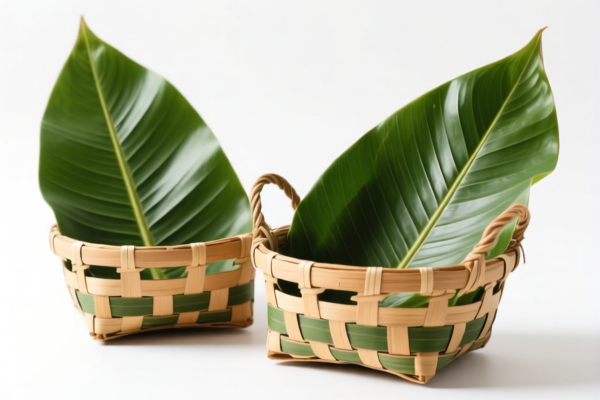
AI Analysis
🧺 Palm Leaf Baskets (Handmade Wickerwork & Basketry)
🌐 HS Code Reference & Customs Clearance Guide | 2026 Latest Tariff Analysis | Professional Level Clearance Strategy
📌 I. Product Definition & Classification: Do You Really Know "Palm Leaf Baskets"?
Palm leaf baskets belong to the category of handmade wickerwork and basketry in international trade. They are products made directly to shape from plaiting materials (vegetable materials) or made up from articles of heading 4601. In the context of US customs, the classification hinges on whether the item is considered a finished "basket/bag" or "wickerwork," which drastically affects the tax liability.
Key Distinction:
* General Baskets/Bags (4602.19.16.00): Finished containers (totes, market baskets, storage bins) lined or unlined, intended for holding goods.
* Wickerwork (4602.19.14.00): Articles classified as "wickerwork" generally refer to woven decorative items, frames, or specific structured woven goods that may not be primarily functional containers in the same sense, or are specifically classified under the "Wickerwork" sub-heading for palm leaf.
⚠️ Critical Differentiation Point:
- If the item is a functional container (basket, bag, tote) made of palm leaf →4602.19.16.00
- If the item is specifically classified as "Wickerwork" (often decorative or structural weaving) made of palm leaf →4602.19.14.00
📦 II. HS Code Classification Details (2026 Latest Tariff Authority Comparison)
| HS Code | Product Description | Applicable Scenario | Tax Status (China Origin) |
|---|---|---|---|
4602.19.16.00 |
Other baskets and bags, whether or not lined: Of palm leaf: Other | Functional palm leaf baskets, totes, market bags, storage containers | ✅ 0.0% (Base 0%, Add. 0%) |
4602.19.14.00 |
Other baskets and bags, whether or not lined: Of palm leaf: Wickerwork | Palm leaf wickerwork items (often decorative, frames, or specific woven goods categorized as wicker) | ⚠️ 25.0% (Base 0%, Add. 25%) |
🔍 Key Reminder:
- The phrase "Other" in4602.19.16.00captures general palm leaf baskets that do not fall under specific "Wickerwork" classifications. - The phrase "Wickerwork" in4602.19.14.00attracts the 25% additional tariff. - Misclassifying a standard palm leaf basket as "Wickerwork" will result in an unexpected 25% tax bill. Conversely, misclassifying wickerwork as a "basket" might be challenged by customs if the physical nature differs.
💰 III. 2026 Latest Tariff Rate Detailed Explanation (Including Additional Taxes)
✅ Applicable Country: United States (US)
✅ Origin: China (CN)
✅ Effective Time: Current Rates (Subject to USITC/Section 301 updates)
🎯 1. 4602.19.16.00 —— Other Baskets and Bags (Palm Leaf)
| Item | Content |
|---|---|
| Base Tariff Rate | 0.0% (ad valorem) |
| Additional Tariff (Section 301) | 0.0% |
| Total Tax Rate | 0.0% |
| Tax Calculation | CIF Value × 0% = $0 |
| De Minimis Eligibility | ✅ Yes (Generally eligible for low-value exemptions if under $800, subject to CBP enforcement on Section 301 goods) |
| Legal Basis Path | HTSUS:4602.19.16.00 |
📌 Explanation:
- This HS code is currently exempt from additional Section 301 tariffs. - It is a duty-free import for Chinese-origin palm leaf baskets (classified as "Other" rather than "Wickerwork"). - This makes it a highly cost-effective classification for functional containers.
🎯 2. 4602.19.14.00 —— Wickerwork (Palm Leaf)
| Item | Content |
|---|---|
| Base Tariff Rate | 0.0% (ad valorem) |
| Additional Tariff (Section 301) | +25.0% |
| Total Tax Rate | 25.0% |
| Tax Calculation | CIF Value × 25% |
| De Minimis Eligibility | ❌ No/Denied (Section 301 goods are generally excluded from de minimis relief if they fall under specific footnotes) |
| Legal Basis Path | HTSUS:4602.19.14.00 → USITC Footnote |
📌 Warning:
- Although the base tariff is 0%, the 25% additional tariff significantly increases the landed cost. - This classification applies to items specifically defined as "Wickerwork" under the palm leaf sub-heading. - Do not use this code if your product is a standard basket/bag, as it will unnecessarily increase your costs by 25%.
🛠️ IV. Customs Clearance Practical Advice (Real-World Pitfall Avoidance Guide)
✅ 1. Preparation Checklist (缺一不可)
| Document | Required | Description |
|---|---|---|
| ✅ Product Specification Sheet | ✔️ | Must clearly state material: "100% Palm Leaf" or "Vegetable Material." |
| ✅ Product Photos | ✔️ | Clear images of the item, including interior (lined/unlined) and structure. |
| ✅ Commercial Invoice | ✔️ | Must accurately describe goods as "Palm Leaf Baskets" or "Wickerwork" consistent with HS code. |
| ✅ Packing List | ✔️ | Details weight, dimensions, and quantity. |
| ✅ Material Composition Proof | ✔️ | If asked, provide proof that materials are vegetable/plaiting (not metal, plastic, or wood mixed). |
✅ 2. Declaration Tips (Key Mantra)
🔥 "Function Defines Code: Basket/Bag = 0%, Wickerwork = 25%!"
| Scenario | Correct Declaration | Wrong Practice |
|---|---|---|
| Standard Palm Leaf Tote/Market Basket | 4602.19.16.00 (Other Baskets/Bags) |
Mislabeling as "Wickerwork" → 25% Tax |
| Decorative Palm Leaf Woven Frame/Art | 4602.19.14.00 (Wickerwork) |
Mislabeling as "Basket" → Customs Dispute/Risk |
| Mixed Material (e.g., Palm Leaf + Metal Handle) | Check specific notes; if palm is principal material, likely 4602.19.16.00 or 4602.19.14.00 |
Ignoring component mix → Classification Error |
✅ 3. Special Situation Handling
| Situation | Handling Advice |
|---|---|
| Lined vs. Unlined | Both 4602.19.16.00 descriptions include "whether or not lined." Lining does not change the HS code from "Other." |
| OEM Custom Baskets | Ensure the design is clearly a "basket" or "bag" function to justify 4602.19.16.00. |
| Dispute with Customs | If customs assesses 25%, argue that the item is a "basket/bag" (functional container) under 4602.19.16.00, not "wickerwork" (decorative/structural). Provide functional demonstration. |
| De Minimis (Section 321) | Verify if the specific Section 301 footnote excludes these palm leaf items. Recent enforcement has tightened on woven goods from China. |
🌍 V. Global Main Market Clearance Comparison (2026 Latest)
| Country/Region | Recommended HS Code | Tariff | Certification | Notes |
|---|---|---|---|---|
| 🇺🇸 United States | 4602.19.16.00 |
0% | None | Best for functional baskets. Avoid 14.00 to save 25%. |
| 🇨🇳 China | 4602.19.16.00 |
Low/Reduced | N/A | Import duties may vary, but export is the main concern here. |
| 🇪🇺 EU | 4602.19 |
0% | CE (if applicable) | Generally free trade for basketry. |
| 🇬🇧 UK | 4602.19 |
0% | UKCA | Post-Brexit alignment similar to EU. |
| 🇦🇺 Australia | 4602.19 |
0% | N/A | Low duty environment. |
📌 Conclusion:
- The US is the critical market where the distinction between16.00(0%) and14.00(25%) creates a massive cost difference. - For all other major markets, palm leaf basketry generally enjoys 0% duty. - Strategy: Always aim for4602.19.16.00for functional items to maximize profit margins in the US.
📌 VI. Common Errors & Pitfall Guide (Blood Lessons)
❌ Error 1: Calling a functional tote "Wickerwork" to avoid "Basket" scrutiny
👉 Consequence: You pay 25% extra tax unnecessarily. "Wickerwork" is a specific sub-category, not a blanket term for all woven goods.
❌ Error 2: Misclassifying plastic-coated palm leaf items
👉 Consequence: If the coating changes the essential character, it might not be Chapter 46. However, simple lining or light coating usually remains Chapter 46.
❌ Error 3: Ignoring the "Origin" rule
👉 Consequence: If not made in China, Section 301 doesn't apply. But if made in China, the 0%/25% split is vital.
✅ Correct Practice:
"Palm Leaf Market Basket, Unlined, Handmade, HS Code 4602.19.16.00"
🎯 VII. Conclusion: Professional Classification Saves 25%!
🎯 Remember the Mantra:
🔹 "Basket/Bag = 0%, Wickerwork = 25%!"
🔹 "Don't let 'Wicker' trick you into paying extra!"
🔹 "Palm Leaf Baskets are duty-free IF classified correctly under 'Other Baskets'."
📌 Pro Tip:
If your product is decorative and not primarily for holding goods, it might legitimately be 4602.19.14.00. Be honest about the primary use. For functional storage, transport, or retail baskets, always insist on 4602.19.16.00.
📣 Immediate Action:
📞 Consult a customs broker to verify if your specific palm leaf item qualifies as "Basket/Bag" vs. "Wickerwork".
🚀 Secure the 0% tariff rate for your palm leaf baskets today!
✨ Professional Clearance Starts with Accurate Classification!
💼 Your Cost Savings Are Worth the Precision!
Customer Reviews
About HS Code Classification
The Harmonized System (HS) is an internationally standardized nomenclature developed by the World Customs Organization (WCO) to classify traded products. Over 200 countries use the HS system as the basis for customs tariffs, trade statistics, and import/export regulations.
Each HS code follows a hierarchical structure:
- Chapter (2 digits) — Broad category of goods (e.g., Chapter 84: Machinery and Mechanical Appliances)
- Heading (4 digits) — More specific grouping within the chapter
- Subheading (6 digits) — Internationally standardized breakdown, used by all WCO member countries
- National subdivisions (8-10 digits) — Country-specific extensions for further classification, such as US HTSUS 10-digit codes
Correct HS code classification is essential for smooth customs clearance, accurate duty payment, and compliance with trade regulations. Misclassification can lead to customs delays, overpayment of duties, or penalties.
When importing from CN to US, the applicable tariff rates may include:
- Most-Favored-Nation (MFN) rate — The standard duty rate applied to WTO members
- General rate — Applied to countries without trade agreements
- Trade remedy duties — Additional tariffs such as Section 301 (anti-dumping), Section 232 (national security), or countervailing duties
The information provided on this page is for reference purposes only. For official classification, please consult with your local customs authority or a licensed customs broker.