Palm Leaf Gift Basket
CN → US| HS Code | Tariff Rate | Origin | Destination | Doc |
|---|---|---|---|---|
| 4602191600 | 15.0% | CN | US | Official Doc |
| 1404909090 | 35.0% | CN | US | Official Doc |
| 1404904000 | 37.3% | CN | US | Official Doc |
| 4602191400 | 10.0% | CN | US | Official Doc |
| 4601922000 | 41.6% | CN | US | Official Doc |
Product Images


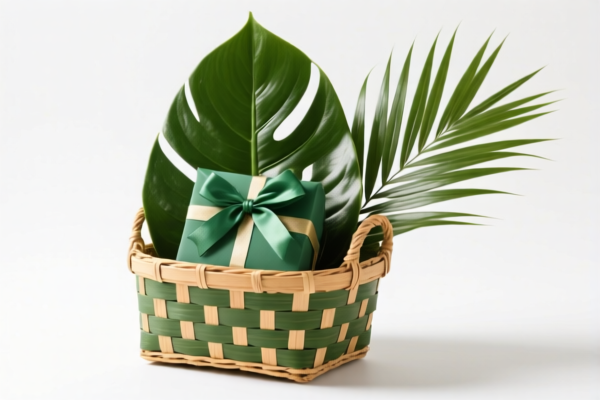
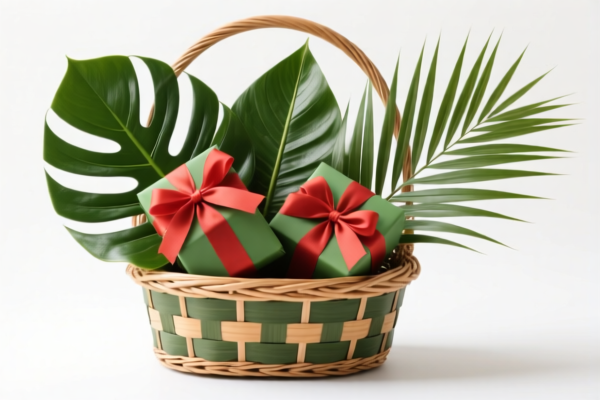
AI Analysis
🌴 Palm Leaf Gift Basket: HS Code Classification & US Customs Clearance Guide
🌐 HS Code Reference & Customs Guide | 2026 Latest Tariff Analysis | Professional Clearance Strategy
📌 I. Product Definition & Classification: What Exactly is a "Palm Leaf Gift Basket"?
A Palm Leaf Gift Basket is an eco-friendly, artisanal container woven from palm leaves (such as areca, betel, or piassava) designed for holding gifts, flowers, or food items. In international trade, these products fall under Chapter 46 (Plaiting materials; basketware, wickerwork and other articles) or Chapter 14 (Vegetable plaiting materials; other vegetable products not elsewhere specified or included).
Key Classification Distinctions: * Basketware (Chapter 46): If the product is specifically shaped, woven, or constructed as a basket, bag, or container with a defined structure for holding items, it generally falls under Heading 4602 or 4601. * Other Vegetable Products (Chapter 14): If the product is considered a simple prepared vegetable material (like dried leaves bundled or loosely formed without complex basket-weaving structures), it may fall under Heading 1404.
⚠️ Critical Distinction:
- If it is a structured basket/bag (woven handles, defined bottom/sides) → HS 4602.19
- If it is loose prepared leaf material or non-structured matting → HS 1404.90
📦 II. HS Code Breakdown (2026 Latest Tariff Authority Comparison)
| HS Code | Product Description | Application Scenario | Structural Integrity |
|---|---|---|---|
4602.19.16.00 |
Baskets and bags made of palm leaf, for gift baskets | Structured woven baskets with handles, rigid base, designed specifically as gift containers | ✅ High (Structured) |
1404.90.90.90 |
Other vegetable products, palm leaf material, for gift baskets | Loosely prepared leaves, mats, or non-structured bundles used in gift assembly | ❌ Low (Raw/Prepared) |
1404.90.40.00 |
Other vegetable fiber products, palm leaf material, for gift baskets | Fiber strips or processed fibers not woven into baskets, used as filler or wrapping | ❌ Low (Fiber/Mat) |
4602.19.14.00 |
Baskets and bags made of palm leaf, for gift baskets | Similar to 4602.19.16 but potentially different weave density or sub-classification under "Other" | ✅ High (Structured) |
4601.92.20.00 |
Other plaited textile materials, palm leaf material, for gift baskets | Plaited mats or sheets (not finished baskets) made of palm leaf, used as base or wrapping | ⚠️ Medium (Semi-finished) |
🔍 Important Note:
- HS 4602.19 codes apply to finished basketware. This is the most common classification for "Gift Baskets" that are ready-to-use containers. - HS 1404.90 codes apply to raw or prepared vegetable materials. If the "basket" is actually just a pile of leaves bundled with string, it might fall here, but customs often reclassify structured baskets to Chapter 46. - HS 4601.92 applies to plaited mats/sheets. If the product is a flat mat sold as a "basket liner" or unfinished base, it goes here.
💰 III. 2026 Latest Tariff Rate Breakdown (Including Surtaxes & Policy Add-ons)
✅ Applicable Country: United States (US)
✅ Origin: China (CN)
✅ Effective Date: November 10, 2025 (and onwards)
🎯 1. 4602.19.16.00 – Baskets and Bags, Palm Leaf, Gift Use
| Item | Details |
|---|---|
| Base Duty Rate | 5.0% (ad valorem) |
| Section 301 Surtax | 0.0% (Not included in this specific subheading for current 301 lists, verify with latest update) |
| Section 122 Surcharge | +10% (Specific surcharge for certain vegetable/plaiting materials) |
| Total Tax Rate | 15.0% |
| Tax Calculation | CIF Value × 15.0% |
| De Minimis Exemption? | ❌ No (Deny De Minimis) |
| Legal Basis | USITC:4602.19.16.00 → FOOTNOTE:122 |
📌 Explanation:
- The 10% Section 122 surcharge is a specific additional duty applied to certain plaiting materials and basketware from China. - The base duty is 5%, which is relatively low compared to other categories. - Total 15% is moderate but still significant for low-margin goods.
🎯 2. 1404.90.90.90 – Other Vegetable Products, Palm Leaf
| Item | Details |
|---|---|
| Base Duty Rate | 0.0% |
| Section 301 Surtax | +25.0% (Standard 301 surcharge for Section 3 list items) |
| Section 122 Surcharge | +10% |
| Total Tax Rate | 35.0% |
| Tax Calculation | CIF Value × 35.0% |
| De Minimis Exemption? | ❌ No |
| Legal Basis | USITC:1404.90.90.90 → 301:9903.88.01 → FOOTNOTE:122 |
📌 Explanation:
- Although the base duty is 0%, the 25% Section 301 tariff makes this highly expensive. - 35% total is very high. Misclassifying a structured basket as "other vegetable products" to avoid 4602 rates will likely be rejected by Customs, leading to penalties.
🎯 3. 1404.90.40.00 – Other Vegetable Fiber Products, Palm Leaf
| Item | Details |
|---|---|
| Base Duty Rate | 2.3% |
| Section 301 Surtax | +25.0% |
| Section 122 Surcharge | +10% |
| Total Tax Rate | 37.3% |
| Tax Calculation | CIF Value × 37.3% |
| De Minimis Exemption? | ❌ No |
| Legal Basis | USITC:1404.90.40.00 → 301:9903.88.01 → FOOTNOTE:122 |
📌 Explanation:
- This category is for fibers/strips, not baskets. - 37.3% total is the highest rate in this dataset. Avoid this classification unless the product is truly just processed fiber mats.
🎯 4. 4602.19.14.00 – Baskets and Bags, Palm Leaf, Gift Use
| Item | Details |
|---|---|
| Base Duty Rate | 0.0% |
| Section 301 Surtax | 0.0% |
| Section 122 Surcharge | +10% |
| Total Tax Rate | 10.0% |
| Tax Calculation | CIF Value × 10.0% |
| De Minimis Exemption? | ❌ No |
| Legal Basis | USITC:4602.19.14.00 → FOOTNOTE:122 |
📌 Explanation:
- Best-case scenario! This is a structured basket (Chapter 46) but qualifies for 0% base duty and 0% Section 301. - Only the 10% Section 122 surcharge applies. - Total 10% is the most cost-effective classification if the product meets the criteria for this subheading. Note: Customs may scrutinize why 4602.19.14 is chosen over 4602.19.16, so documentation must prove the specific weave/type.
🎯 5. 4601.92.20.00 – Other Plaited Materials, Palm Leaf
| Item | Details |
|---|---|
| Base Duty Rate | 6.6% |
| Section 301 Surtax | +25.0% |
| Section 122 Surcharge | +10% |
| Total Tax Rate | 41.6% |
| Tax Calculation | CIF Value × 41.6% |
| De Minimis Exemption? | ❌ No |
| Legal Basis | USITC:4601.92.20.00 → 301:9903.88.01 → FOOTNOTE:122 |
📌 Explanation:
- This is for plaited mats/sheets, not finished baskets. - 41.6% total is extremely high. Do not use this for finished gift baskets. Use only for flat woven materials.
🛠️ IV. Customs Clearance Practical Advice (Battle-Tested Pitfall Guide)
✅ 1. Preparation Checklist (Non-Negotiable)
| Document | Required | Purpose |
|---|---|---|
| ✅ Product Photos | ✔️ | Clear images showing the basket structure, handles, and weaving style. |
| ✅ Bill of Materials (BOM) | ✔️ | Confirm material is 100% palm leaf (not plastic or synthetic blend). |
| ✅ Specification Sheet | ✔️ | Dimensions, weight, and usage (e.g., "Gift Container"). |
| ✅ Structure Diagram | ✔️ | Show if it has a rigid base, lining, or handles (proves Chapter 46). |
| ✅ Commercial Invoice | ✔️ | Describe as "Palm Leaf Woven Gift Basket," not just "Plant Material." |
| ✅ Packing List | ✔️ | Confirm quantity and packaging type. |
✅ 2. Declaration Strategy (Key Mantra)
🔥 "Structured = Chapter 46, Raw = Chapter 14. Choose wisely, pay less!"
| Scenario | Correct HS Code | Tax Rate | Why? |
|---|---|---|---|
| Finished Basket with Handle | 4602.19.14.00 |
10.0% | Structured basketware, minimal duties. |
| Finished Basket (Different Weave) | 4602.19.16.00 |
15.0% | Structured basketware, slightly higher base duty. |
| Loose Dried Leaves/Bundles | 1404.90.90.90 |
35.0% | Not basketware, subject to 301 tariffs. |
| Plaited Mats/Sheets | 4601.92.20.00 |
41.6% | Semi-finished, high 301 + base duty. |
| Processed Fiber Strips | 1404.90.40.00 |
37.3% | Raw material, high 301 + base duty. |
📌 Strategy:
- Always aim for Chapter 46 (Basketware) because it avoids the 25% Section 301 tariff that hits most Chapter 14 items. - Within Chapter 46, try to qualify for 4602.19.14.00 (10% total) instead of 4602.19.16.00 (15% total). Provide evidence that your weave/type matches 14.00 criteria.
✅ 3. Special Cases & Handling
| Case | Handling Advice |
|---|---|
| Basket with Plastic Lining | Still Classify as 4602.19 if palm leaf is the essential character. Do not let plastic lining push it to Chapter 39. |
| Mixed Materials (e.g., Palm + Metal Handle) | If metal handle is minor, still 4602.19. If metal is structural, may change to 8306 (unlikely for gift baskets). |
| Customs Audit | If Customs questions 4602.19.14 vs 4602.19.16, provide weave pattern comparisons and technical specs. |
| De Minimis (Section 321) | ❌ NOT APPLICABLE. All these HS codes are denied de minimis due to high tariffs. Full formal entry required. |
🌍 V. Global Market Comparison (2026 Latest)
| Country/Region | Recommended HS Code | Total Tariff (China Origin) | Notes |
|---|---|---|---|
| 🇺🇸 United States | 4602.19.14.00 |
10.0% | Best rate. Avoid Chapter 14 due to 301 tariffs. |
| 🇺🇸 United States | 4602.19.16.00 |
15.0% | Second-best rate for basketware. |
| 🇺🇸 United States | 1404.90.90.90 |
35.0% | High risk due to 301 + Section 122. |
| 🇨🇳 China | 4602.19.14.00 |
~5-10% | Standard import duty, no 301/122 surcharges. |
| 🇪🇺 EU | 4602.19 |
~6.5% | No Section 122 or 301. Lower overall cost. |
📌 Conclusion:
- USA is the most complex market due to Section 122 and Section 301 tariffs. - Classification accuracy is critical. A wrong HS code can add 25-30% in unnecessary duties.
📌 VI. Common Mistakes & Pitfalls (Lessons Learned)
❌ Mistake 1: Classifying a finished basket as 1404.90 (Vegetable Products)
👉 Consequence: Tax jumps from 10-15% to 35-37%. Customs will reclassify to Chapter 46 and charge back duties + penalties.
❌ Mistake 2: Using 4601.92 (Plaited Mats) for a finished basket
👉 Consequence: Tax is 41.6% (25% 301 + 6.6% base + 10% S122). Unnecessarily expensive.
❌ Mistake 3: Assuming "De Minimis" applies
👉 Consequence: Packages are seized or held because all these HS codes are denied de minimis. Formal entry is mandatory.
❌ Mistake 4: Vague Description: "Plant Product"
👉 Consequence: Customs delays, audits, and potential misclassification penalties.
✅ Correct Description: "Palm Leaf Woven Gift Basket, Handmade, No Lining, Model ABC"
🎯 VII. Conclusion: Professional Declaration, Save Cost, Speed Up Clearance!
🎯 Remember the Mantra:
🔹 "Structured Basket = Chapter 46. Raw Leaf = Chapter 14."
🔹 "Aim for 4602.19.14 (10%) or 4602.19.16 (15%). Avoid 1404 and 4601!"
🔹 "No De Minimis! Formal Entry Required!"
📌 Pro Tip:
If your palm leaf baskets are originating from Vietnam, Thailand, or Indonesia, you may qualify for zero or reduced tariffs under various FTAs (like CPTPP or ASEAN-China).
👉 Recommendation: Apply for Certificate of Origin (COO) to leverage preferential rates.
📣 Immediate Action:
📞 Consult a licensed customs broker + Provide product photos + File Advance Ruling for HS 4602.19.14.00 or 4602.19.16.00
🚀 Clear customs smoothly, reduce costs, and boost your gift basket profits!
✨ Professional Customs Clearance Starts with Accurate Classification!
💼 Every Percent Matters in Your Margins!
Customer Reviews
About HS Code Classification
The Harmonized System (HS) is an internationally standardized nomenclature developed by the World Customs Organization (WCO) to classify traded products. Over 200 countries use the HS system as the basis for customs tariffs, trade statistics, and import/export regulations.
Each HS code follows a hierarchical structure:
- Chapter (2 digits) — Broad category of goods (e.g., Chapter 84: Machinery and Mechanical Appliances)
- Heading (4 digits) — More specific grouping within the chapter
- Subheading (6 digits) — Internationally standardized breakdown, used by all WCO member countries
- National subdivisions (8-10 digits) — Country-specific extensions for further classification, such as US HTSUS 10-digit codes
Correct HS code classification is essential for smooth customs clearance, accurate duty payment, and compliance with trade regulations. Misclassification can lead to customs delays, overpayment of duties, or penalties.
When importing from CN to US, the applicable tariff rates may include:
- Most-Favored-Nation (MFN) rate — The standard duty rate applied to WTO members
- General rate — Applied to countries without trade agreements
- Trade remedy duties — Additional tariffs such as Section 301 (anti-dumping), Section 232 (national security), or countervailing duties
The information provided on this page is for reference purposes only. For official classification, please consult with your local customs authority or a licensed customs broker.