Palm Leaf Woven Basket
CN → US| HS Code | Tariff Rate | Origin | Destination | Doc |
|---|---|---|---|---|
| 4602191600 | 40.0% | CN | US | Official Doc |
| 1404909090 | 35.0% | CN | US | Official Doc |
| 1404904000 | 37.3% | CN | US | Official Doc |
| 4602191400 | 35.0% | CN | US | Official Doc |
| 4601922000 | 41.6% | CN | US | Official Doc |
Product Images


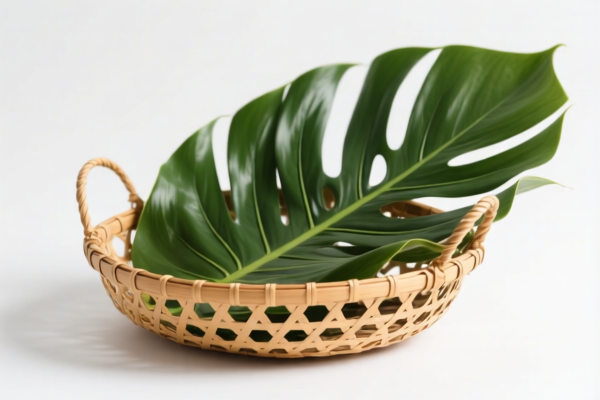
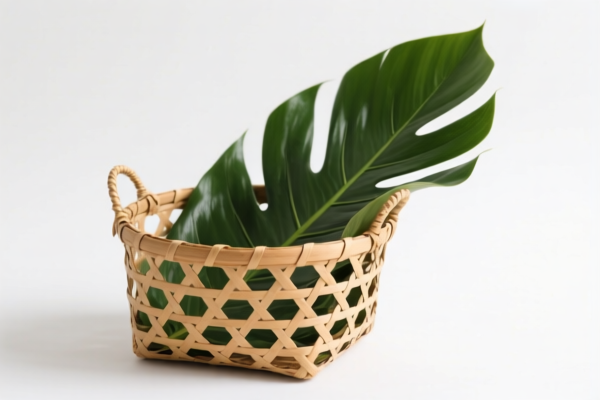
AI Analysis
🌿 Palm Leaf Woven Baskets (Woven Articles of Vegetable Plaiting Materials)
🌐 HS Code Reference & Customs Clearance Guide | 2026 Latest Tariff Analysis | Strategic Classification for US Imports
📌 I. Product Definition & Classification: What Exactly is a "Palm Leaf Basket"?
Palm leaf woven baskets are versatile household and retail items, commonly used for storage, shopping, or decorative purposes. In international trade, their classification hinges on two critical factors: 1. Material Composition: Are they made from raw vegetable materials (Chapter 14) or processed into woven articles (Chapter 46)? 2. End-Use/Shape: Is it classified as a generic woven article, a specific basket type, or a miscellaneous plant product?
⚠️ Key Distinction Point:
- If the palm leaves are simply processed into fibers or strips without complex weaving techniques typical of "woven articles," they may fall under Chapter 14 (Miscellaneous Products of Vegetables).
- If they are intricately woven into a structured item (like a basket) using traditional plaiting techniques, they fall under Chapter 46 (Woven Articles of Plaiting Materials).
📦 II. HS Code Classification Details (2026 Latest Tariff Reference)
| HS Code | Product Description | Application Scenario | Material/Shape Logic |
|---|---|---|---|
4602.19.16.00 |
Baskets and other woven articles, of palm leaf, not incorporating an outer surface of plastic, paper, metal, etc. | Premium decorative baskets, high-end storage | ✅ Woven Article: Explicitly "Basket" + "Palm Leaf" |
1404.90.90.90 |
Other vegetable products, not elsewhere specified or included | Raw or minimally processed palm leaf shopping bags | ✅ Plant Product: "Shopping Basket" treated as generic vegetable product |
1404.90.40.00 |
Other vegetable products (specific sub-category for plant fibers) | Palm leaf mats or loosely constructed fiber baskets | ✅ Plant Fiber: No material conflict, treated as fiber product |
4602.19.14.00 |
Baskets and other woven articles, of palm leaf (other than grocery baskets) | Picnic baskets, decorative items, non-grocery use | ✅ Woven Article: "Basket" + "Palm Leaf" (General woven category) |
4601.92.20.00 |
Plaited materials and products thereof (e.g., mats, matting), other than goods of heading 4602 | Large woven palm leaf sheets or loosely woven storage liners | ⚠️ Woven Material: "Other" woven products, less specific to "basket" shape |
🔍 Key Reminder:
- Chapter 46 (Woven Articles) is generally preferred for finished, structured baskets because it recognizes the craftsmanship of weaving.
- Chapter 14 (Vegetable Products) is often used as a fallback if the weaving is deemed "loose" or if customs authorities view the item primarily as a processed plant material.
- Do NOT split申报: A complete basket must be declared as a single unit. Do not declare the handle separately.
💰 III. 2026 Latest Tariff Rate Breakdown (Including Surtaxes & Policy Add-ons)
✅ Applicable Country: United States (US)
✅ Origin: China (CN)
✅ Effective Date: November 10, 2025 (and subsequent imports)
🎯 1. 4602.19.16.00 —— Baskets of Palm Leaf (Specific Basket Category)
| Item | Details |
|---|---|
| Base Duty | 5.0% (ad valorem) |
| Section 301 Surtax | +25.0% (USITC Footnote 9903.88.01) |
| IEEPA Surtax | +10.0% (Targeted China/HK products, effective Nov 10, 2025) |
| Total Rate | 40.0% |
| Calculation Basis | CIF Value × 40% |
| De Minimis Exemption | ❌ NOT Eligible (deny_de_minimis) |
| Legal Path | IEEPA:9903.01.25 → IEEPA:9903.01.24 → USITC:4602.19.16.00 → FOOTNOTE:9903.88.01 |
📌 Interpretation:
- The 5% base duty is for woven goods of vegetable materials.
- The 25% is the standard Section 301 penalty on Chinese goods.
- The 10% is the new IEEPA surcharge added to specific product categories.
- Total 40% is a significant cost driver. This code is best for high-value, durable woven baskets.
🎯 2. 1404.90.90.90 —— Other Vegetable Products (Shopping Basket as Plant Product)
| Item | Details |
|---|---|
| Base Duty | 0.0% |
| Section 301 Surtax | +25.0% |
| IEEPA Surtax | +10.0% |
| Total Rate | 35.0% |
| Calculation Basis | CIF Value × 35% |
| De Minimis Exemption | ❌ NOT Eligible (deny_de_minimis) |
| Legal Path | IEEPA:9903.01.25 → IEEPA:9903.01.24 → USITC:1404.90.90.90 → FOOTNOTE:9903.88.01 |
📌 Interpretation:
- This is the lowest total rate (35%) among the options.
- It treats the basket as a "miscellaneous vegetable product" rather than a woven good.
- Risk: Customs may challenge this if the weaving is too structured, arguing it should be under Chapter 46. Use only if the product is loosely constructed or clearly marketed as a "plant fiber bag."
🎯 3. 1404.90.40.00 —— Other Vegetable Products (Plant Fiber Category)
| Item | Details |
|---|---|
| Base Duty | 2.3% |
| Section 301 Surtax | +25.0% |
| IEEPA Surtax | +10.0% |
| Total Rate | 37.3% |
| Calculation Basis | CIF Value × 37.3% |
| De Minimis Exemption | ❌ NOT Eligible (deny_de_minimis) |
| Legal Path | IEEPA:9903.01.25 → IEEPA:9903.01.24 → USITC:1404.90.40.00 → FOOTNOTE:9903.88.01 |
📌 Interpretation:
- A middle-ground option. Higher base duty than1404.90.90.90but lower than Chapter 46 codes.
- Suitable for products that are clearly plant-based but don't fit the strict "basket" definition of Chapter 46.
🎯 4. 4602.19.14.00 —— Baskets of Palm Leaf (General Woven Basket)
| Item | Details |
|---|---|
| Base Duty | 0.0% |
| Section 301 Surtax | +25.0% |
| IEEPA Surtax | +10.0% |
| Total Rate | 35.0% |
| Calculation Basis | CIF Value × 35% |
| De Minimis Exemption | ❌ NOT Eligible (deny_de_minimis) |
| Legal Path | IEEPA:9903.01.25 → IEEPA:9903.01.24 → USITC:4602.19.14.00 → FOOTNOTE:9903.88.01 |
📌 Interpretation:
- Same total rate as1404.90.90.90(35%).
- This is the safest Chapter 46 classification for generic palm leaf baskets (picnic baskets, general storage).
- Preferred over4602.19.16.00if you want to avoid the higher 5% base duty.
🎯 5. 4601.92.20.00 —— Plaited Materials/Products (Loose Weave)
| Item | Details |
|---|---|
| Base Duty | 6.6% |
| Section 301 Surtax | +25.0% |
| IEEPA Surtax | +10.0% |
| Total Rate | 41.6% |
| Calculation Basis | CIF Value × 41.6% |
| De Minimis Exemption | ❌ NOT Eligible (deny_de_minimis) |
| Legal Path | IEEPA:9903.01.25 → IEEPA:9903.01.24 → USITC:4601.92.20.00 → FOOTNOTE:9903.88.01 |
📌 Interpretation:
- Highest total rate (41.6%).
- This code is for "other plaited materials" (e.g., mats, screens) and is not ideal for baskets.
- Only use if the item is a flat or semi-flat woven sheet, not a 3D basket structure.
🛠️ IV. Customs Clearance Practical Advice (Avoiding Pitfalls)
✅ 1. Documentation Checklist (Non-negotiable)
| Document | Required | Notes |
|---|---|---|
| ✅ Product Specification Sheet | ✔️ | Detail: Material (100% Palm Leaf), Weaving Technique, Dimensions |
| ✅ Product Photos | ✔️ | Show structure, weave tightness, and any handles/lids |
| ✅ Commercial Invoice | ✔️ | Describe as "Palm Leaf Woven Basket" or "Vegetable Fiber Shopping Bag" |
| ✅ Packing List | ✔️ | Indicate quantity per carton; avoid splitting basket parts |
| ✅ Origin Certificate (CO) | ✔️ | Confirm China origin for surtax calculation |
✅ 2. Declaration Strategy (Key Mantra)
🔥 "Structure Dictates Code, Weaving Defines Chapter, Name Must Match, Tax Saves!"
| Scenario | Recommended HS Code | Reason |
|---|---|---|
| Tightly woven, structured basket (Picnic, Storage) | 4602.19.14.00 |
Best balance of 35% total duty & clear "Basket" classification |
| Loose shopping bag/grocery basket (Plant material focus) | 1404.90.90.90 |
Lowest base duty (0%) if deemed "vegetable product" |
| Premium decorative basket (High-end weave) | 4602.19.16.00 |
Use only if marketing justifies premium, accept 40% duty |
| Flat woven mat/sheet | 4601.92.20.00 |
Only for non-basket shapes (avoid if possible due to high tax) |
✅ 3. Special Case Handling
| Situation | Advice |
|---|---|
| OEM Custom Baskets | Provide design sketches to prove "Basket" structure vs. "Mat" structure |
| Mixed Materials | If handle is plastic, ensure palm leaf is the principal material (>50% by weight) to stay in Chapter 46/14 |
| Sample Shipments | Even small samples are subject to 35-41.6% duty; no de minimis exemption |
🌍 V. Global Market Comparison (2026 Latest)
| Country/Region | Recommended HS Code | Total Duty (China Origin) | Notes |
|---|---|---|---|
| 🇺🇸 USA | 4602.19.14.00 or 1404.90.90.90 |
35% | Avoid 4602.19.16.00 (40%) if possible |
| 🇨🇳 China | 4602.19.14.00 |
5% | No surtaxes |
| 🇪🇺 EU | 4602.19.00 |
0-6% | Varies by country; no Section 301/IEEPA |
| 🇬🇧 UK | 4602.19.00 |
0-6% | Post-Brexit rules apply |
| 🇨🇦 Canada | 4602.19.00 |
0-15% | Check CUSMA eligibility |
📌 Conclusion:
- The US market is the most challenging due to the 35-41.6% effective tariff.
- Choose4602.19.14.00for a safe, widely accepted classification with a 35% total duty.
- Avoid4601.92.20.00unless the product is clearly not a basket, as it carries the highest tax burden.
📌 VI. Common Mistakes & Pitfalls (Lessons Learned)
❌ Mistake 1: Declaring a structured basket as a "Plant Fiber Mat" (4601.92.20.00)
👉 Result: Customs rejects it for misclassification; may impose penalties or force re-classification to 4602.19.16.00 (40%).
❌ Mistake 2: Using "Woven Basket" description but declaring under Chapter 14 (1404.90.90.90) for a highly structured item
👉 Result: Customs may audit and re-classify to Chapter 46, leading to back taxes and delays.
❌ Mistake 3: Ignoring the IEEPA 10% surcharge in cost calculations
👉 Result: Underquoting CIF value leads to unexpected $3,500+ bills on a $10k shipment.
❌ Mistake 4: Assuming de minimis exemption for small packages
👉 Result: $0 savings. All these HS codes are explicitly denied de minimis for Chinese origins.
✅ Correct Approach:
"Palm Leaf Woven Storage Basket, 100% Natural Palm Leaf, Hand-woven, 12x12x10 inches, Model PLB-001"
🎯 VII. Conclusion: Smart Classification, Smarter Profits!
🎯 Remember the Mantra:
🔹 "Chapter 46 for Baskets, Chapter 14 for Fibers, 35% is the Sweet Spot, 40%+ is the Risk!"
🔹 "IEEPA 10% is New, 301 25% is Old, Total Cost Must Be Counted Before You Sell!"
📌 Pro Tip:
If your palm leaf baskets are originating from Vietnam, India, or Indonesia, you may qualify for lower or zero surtaxes.
Recommend Advance Ruling (Pre-classification) with US CBP if shipping large volumes to avoid post-clearance audits.
📣 Immediate Action:
📞 Consult a Customs Broker + Provide Product Photos + Apply for HS Code Pre-ruling
🚀 Ensure your palm leaf baskets clear smoothly, legally, and profitably!
✨ Precision in Classification, Power in Profit!
💼 Your bottom line depends on the first 8 digits!
Customer Reviews
About HS Code Classification
The Harmonized System (HS) is an internationally standardized nomenclature developed by the World Customs Organization (WCO) to classify traded products. Over 200 countries use the HS system as the basis for customs tariffs, trade statistics, and import/export regulations.
Each HS code follows a hierarchical structure:
- Chapter (2 digits) — Broad category of goods (e.g., Chapter 84: Machinery and Mechanical Appliances)
- Heading (4 digits) — More specific grouping within the chapter
- Subheading (6 digits) — Internationally standardized breakdown, used by all WCO member countries
- National subdivisions (8-10 digits) — Country-specific extensions for further classification, such as US HTSUS 10-digit codes
Correct HS code classification is essential for smooth customs clearance, accurate duty payment, and compliance with trade regulations. Misclassification can lead to customs delays, overpayment of duties, or penalties.
When importing from CN to US, the applicable tariff rates may include:
- Most-Favored-Nation (MFN) rate — The standard duty rate applied to WTO members
- General rate — Applied to countries without trade agreements
- Trade remedy duties — Additional tariffs such as Section 301 (anti-dumping), Section 232 (national security), or countervailing duties
The information provided on this page is for reference purposes only. For official classification, please consult with your local customs authority or a licensed customs broker.