Palm Leaf Woven Beach Bag
CN → US| HS Code | Tariff Rate | Origin | Destination | Doc |
|---|---|---|---|---|
| 4602192500 | 53.0% | CN | US | Official Doc |
| 4202921500 | 41.3% | CN | US | Official Doc |
| 4202922000 | 40.7% | CN | US | Official Doc |
| 4602192300 | 44.0% | CN | US | Official Doc |
Product Images
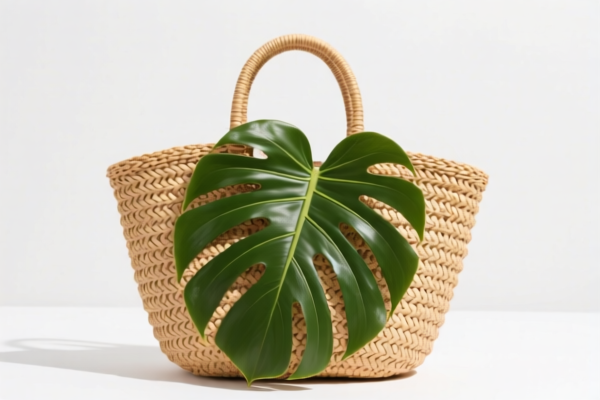
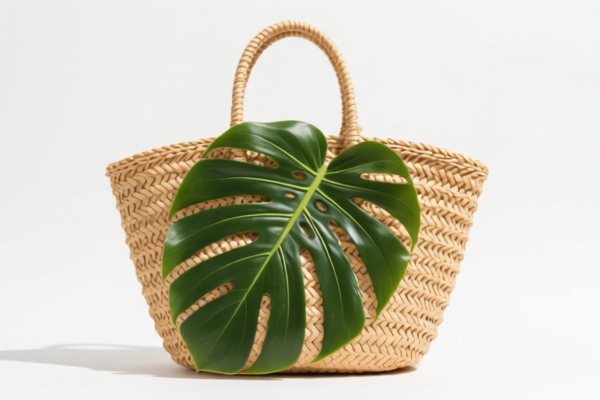
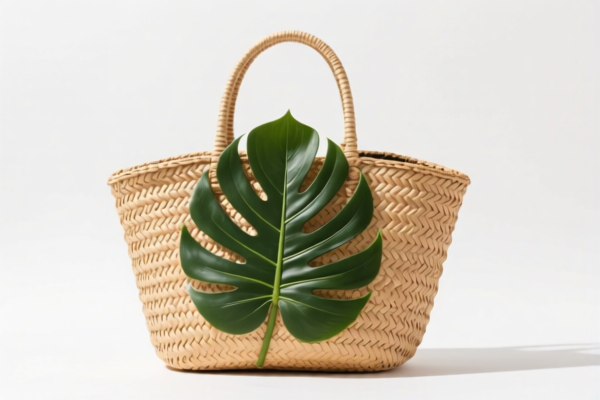
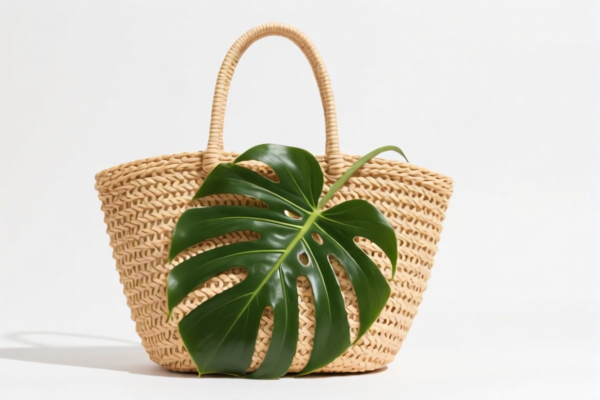
AI Analysis
🌴 Palm Leaf Woven Beach Bag (棕榈叶编织海滩包)
🌐 HS Code Reference & Customs Clearance Guide | 2026 Latest Tariff Analysis | Professional Clearance Strategy
📌 I. Product Definition & Classification: What is a "Palm Leaf Woven Beach Bag"?
A Palm Leaf Woven Beach Bag is a hand-carry accessory made from natural plant fibers (specifically palm leaves). In international trade, its classification depends heavily on whether it is viewed as a "Woven Article of Plant Material" or a "Bag/Container."
This distinction is critical because it shifts the HS Code between Chapter 46 (Woven materials, articles of basketry or plaiting) and Chapter 42 (Articles of leather or similar materials, travel goods, handbags).
⚠️ Key Distinction Point:
- If classified as a woven article (Basketry/Plaiting): Falls under Chapter 46 (typically higher base tariffs, but varies by specific weave structure).
- If classified as a bag (Travel goods/Handbags): Falls under Chapter 42 (specifically subheadings for other containers or bags).
📦 II. HS Code Classification Details (2026 Latest Tariff Authority对照)
| HS Code | Product Description | Application Scenario | Total Tax Rate (US/CN) | Tax Breakdown |
|---|---|---|---|---|
4602.19.25.00 |
Woven articles of palm leaf, other than basketry wares | Palm leaf woven beach bag, viewed as a finished woven article. Fits classification for woven goods. | 53.0% | Base: 18.0% Section 301 (Add-on): 25.0% Section 122: 10% |
4202.92.15.00 |
Other bags/containers, with outer surface of vegetable textile materials | Palm leaf beach bag, classified as a "bag" made of plant fiber. Fits "bag" utility and "vegetable fiber" material attribute. | 41.3% | Base: 6.3% Section 301 (Add-on): 25.0% Section 122: 10% |
4202.92.20.00 |
Other bags/containers, with outer surface of vegetable textile materials | Palm leaf beach bag, shape conforms to bags, material is plant fiber, non-shagreen or tufted structure. | 40.7% | Base: 5.7% Section 301 (Add-on): 25.0% Section 122: 10% |
4602.19.23.00 |
Woven articles of palm leaf, other than basketry wares | Palm leaf woven beach bag, material is palm leaf, shape is handbag, fully fits classification requirements for woven items. | 44.0% | Base: 9.0% Section 301 (Add-on): 25.0% Section 122: 10% |
🔍 Key Reminder:
- Chapter 46 Codes (4602...): Treat the item primarily as a woven good. The base tariff is higher (9-18%), but the total tax is still impacted by the fixed 35% (25+10) add-ons.
- Chapter 42 Codes (4202...): Treat the item primarily as a bag. The base tariff is significantly lower (5.7-6.3%), resulting in a lower total effective tax rate compared to Chapter 46.
- Strategic Choice: Declaring as4202.92.20.00yields the lowest total tax (40.7%) among the options provided.
💰 III. 2026 Latest Tariff Rate Details (Including Surtaxes & Policy Add-ons)
✅ Applicable Country: United States (US)
✅ Origin: China (CN)
✅ Effective Time: Ongoing (Includes subsequent imports)
🎯 1. 4602.19.25.00 —— Woven Articles of Palm Leaf (Highest Tax)
| Item | Content |
|---|---|
| Base Tariff | 18.0% (ad valorem) |
| USITC Surtax (Section 301) | +25% |
| IEEPA/Section 122 Surtax | +10% |
| Total Tax Rate | 53.0% |
| Tax Calculation | CIF Value × 53.0% |
| De Minimis Eligibility | ❌ No (Not eligible for Section 321 de minimis exemption due to high tariff structure) |
| Legal Basis Path | USITC:4602.19.25.00 → FOOTNOTE:301 (25%) → IEEPA:122 (10%) |
📌 Explanation:
- This classification treats the bag as a generic "woven article." The high base rate of 18% makes this the most expensive option.
- Total 53% is extremely high, eroding profit margins significantly.
🎯 2. 4602.19.23.00 —— Woven Articles of Palm Leaf (Medium Tax)
| Item | Content |
|---|---|
| Base Tariff | 9.0% (ad valorem) |
| USITC Surtax (Section 301) | +25% |
| IEEPA/Section 122 Surtax | +10% |
| Total Tax Rate | 44.0% |
| Tax Calculation | CIF Value × 44.0% |
| De Minimis Eligibility | ❌ No |
| Legal Basis Path | USITC:4602.19.23.00 → FOOTNOTE:301 (25%) → IEEPA:122 (10%) |
📌 Note:
- Specific subheading for palm leaf woven items. Lower base rate than25but still subject to the full 35% add-on.
🎯 3. 4202.92.15.00 —— Bags of Vegetable Textile Materials (Low-Medium Tax)
| Item | Content |
|---|---|
| Base Tariff | 6.3% (ad valorem) |
| USITC Surtax (Section 301) | +25% |
| IEEPA/Section 122 Surtax | +10% |
| Total Tax Rate | 41.3% |
| Tax Calculation | CIF Value × 41.3% |
| De Minimis Eligibility | ❌ No |
| Legal Basis Path | USITC:4202.92.15.00 → FOOTNOTE:301 (25%) → IEEPA:122 (10%) |
📌 Explanation:
- Classified as a "bag" with vegetable fiber outer surface. The base rate is much lower (6.3%).
🎯 4. 4202.92.20.00 —— Bags of Vegetable Textile Materials (Lowest Tax)
| Item | Content |
|---|---|
| Base Tariff | 5.7% (ad valorem) |
| USITC Surtax (Section 301) | +25% |
| IEEPA/Section 122 Surtax | +10% |
| Total Tax Rate | 40.7% |
| Tax Calculation | CIF Value × 40.7% |
| De Minimis Eligibility | ❌ No |
| Legal Basis Path | USITC:4202.92.20.00 → FOOTNOTE:301 (25%) → IEEPA:122 (10%) |
📌 Key Advantage:
- This is the most cost-effective classification among the provided options.
- By defining the item as a "bag" (Chapter 42) rather than a "woven article" (Chapter 46), you save nearly 12.3% in total duties compared to the most expensive option.
🛠️ IV. Customs Clearance Practical Advice (Battle-Tested Pitfall Avoidance)
✅ 1. Required Documentation List (Non-negotiable)
| Document | Mandatory | Description |
|---|---|---|
| ✅ Product Specification Sheet | ✔️ | Must detail material: "100% Dried Palm Leaf," weave type, lining (if any), dimensions. |
| ✅ Product Photos (Clear) | ✔️ | Must show the bag from multiple angles, highlighting the palm leaf material and bag shape (handles, zipper, etc.). |
| ✅ Material Test Report | ✔️ | Proof that the material is natural vegetable fiber (palm leaf) and not synthetic plastic imitation. |
| ✅ Commercial Invoice | ✔️ | Must clearly state: "Handbag, Palm Leaf Woven, For Beach Use." Avoid vague terms like "Woven Mat." |
| ✅ Packing List | ✔️ | Detail contents, weight, and volume. |
✅ 2. Declaration Tips (Key Mantra)
🔥 “Shape Dictates Chapter, Material Dictates Subheading! Claim ‘Bag’, Save 12%!”
| Situation | Correct Declaration Strategy | Wrong Practice |
|---|---|---|
| Palm Leaf Beach Bag | 4202.92.20.00 (Bag) |
Declaring as 4602.19.25.00 (Woven Article) → Pays 53% |
| Palm Leaf Basket | 4602.19.25.00 (Woven Article) |
Declaring as a "Bag" → May be rejected if no handles/closure |
| Synthetic Imitation | 4202.92.90.00 (Synthetic) |
Claiming "Natural Palm" → Fraud risk, severe penalties |
| Mixed Material | Check Main Material | If palm leaf is <50%, may not qualify for plant fiber subheadings |
✅ 3. Special Handling Scenarios
| Scenario | Handling Advice |
|---|---|
| Lined vs. Unlined | If lined with fabric, it is still a "bag of vegetable textile material" for the outer surface. Keep description focused on outer material. |
| Handles are Rope | If handles are made of rope/jute, still classifies under 4202.92.xxxx as long as the outer surface is vegetable fiber. |
| Customs Audit Risk | Customs may suspect "plastic wicker." Provide burn tests or lab reports proving natural fiber content to avoid misclassification penalties. |
| Country of Origin | If assembled in a third country but material is from China, rules of origin apply. Ensure CO (Certificate of Origin) matches. |
🌍 V. Global Market Comparison (2026 Latest)
| Country/Region | Recommended HS Code | Tariff (China Origin) | Certification Required | Notes |
|---|---|---|---|---|
| 🇺🇸 USA | 4202.92.20.00 |
40.7% | None specific | High taxes due to 301 & 122 clauses. Best to use Chapter 42. |
| 🇨🇳 China | 4202.92.20.00 |
~5-6% | N/A | Low entry tariff. |
| 🇪🇺 EU | 4202.92.20.00 |
~0-4% | CE (if applicable accessories) | No Section 301/122 equivalents. |
| 🇬🇧 UK | 4202.92.20.00 |
~5% | N/A | Post-Brexit tariffs similar to EU. |
📌 Conclusion:
- The US is the most challenging market due to the cumulative 35% add-on tariffs.
- Strategy: Always aim for4202.92.20.00to minimize the base rate before the add-ons are applied.
- Chapter 46 is only appropriate if the item is not considered a "bag" (e.g., a flat woven mat or basket without bag-like structure).
📌 VI. Common Mistakes & Pitfalls (Blood-Soaked Lessons)
❌ Mistake 1: Declaring as "Woven Basket" (4602) when it has handles and a closure.
👉 Consequence: Customs reclassifies to Chapter 42, but you paid higher base duty initially. Potential penalties for incorrect declaration.
❌ Mistake 2: Claiming "Plastic Imitation Palm" but declaring as "Natural Palm."
👉 Consequence: Customs inspection reveals plastic. Fines for fraud. HS Code becomes 4202.92.90 or 3923.21, changing tax liability.
❌ Mistake 3: Ignoring Section 122 / 301 implications.
👉 Consequence: Budgeting only for base duty (5.7%) and failing to account for the extra 35%, leading to cash flow crisis.
✅ Correct Action:
"Beach Bag, Hand-woven from Natural Dried Palm Leaves, with Jute Rope Handles, Lined, For Leisure Use."
🎯 VII. Conclusion: Precision Classification, Profit Maximization!
🎯 Remember the Mantra:
🔹 “Bags Beat Baskets on Tax! Chapter 42 is the Way!”
🔹 “Base Rate 5.7% + 35% Add-on = 40.7%. Don’t pay 53%!”
🔹 “Natural Fiber Proof is Key! Avoid Fraud Flags!”
📌 Pro Tip:
If your palm leaf bag is sourced from Vietnam or Indonesia, you may avoid some US China-specific tariffs (Section 301), potentially lowering the total tax to ~15-20%.
Recommend Advance Ruling with US CBP if importing large volumes to confirm 4202.92.20.00 eligibility.
📣 Immediate Action:
📞 Contact your freight forwarder + Provide material test report + Request HS Code Pre-ruling
🚀 Let your beach bags clear smoothly, maximize margin, and reach the beach!
✨ Professional clearance starts with accurate classification!
💼 Every percentage point of duty saved is pure profit!
Customer Reviews
About HS Code Classification
The Harmonized System (HS) is an internationally standardized nomenclature developed by the World Customs Organization (WCO) to classify traded products. Over 200 countries use the HS system as the basis for customs tariffs, trade statistics, and import/export regulations.
Each HS code follows a hierarchical structure:
- Chapter (2 digits) — Broad category of goods (e.g., Chapter 84: Machinery and Mechanical Appliances)
- Heading (4 digits) — More specific grouping within the chapter
- Subheading (6 digits) — Internationally standardized breakdown, used by all WCO member countries
- National subdivisions (8-10 digits) — Country-specific extensions for further classification, such as US HTSUS 10-digit codes
Correct HS code classification is essential for smooth customs clearance, accurate duty payment, and compliance with trade regulations. Misclassification can lead to customs delays, overpayment of duties, or penalties.
When importing from CN to US, the applicable tariff rates may include:
- Most-Favored-Nation (MFN) rate — The standard duty rate applied to WTO members
- General rate — Applied to countries without trade agreements
- Trade remedy duties — Additional tariffs such as Section 301 (anti-dumping), Section 232 (national security), or countervailing duties
The information provided on this page is for reference purposes only. For official classification, please consult with your local customs authority or a licensed customs broker.