Palm Leaf Woven Storage Basket
CN → US| HS Code | Tariff Rate | Origin | Destination | Doc |
|---|---|---|---|---|
| 4602191600 | 40.0% | CN | US | Official Doc |
| 1404909090 | 35.0% | CN | US | Official Doc |
| 1404904000 | 37.3% | CN | US | Official Doc |
| 4602191400 | 35.0% | CN | US | Official Doc |
| 4601922000 | 41.6% | CN | US | Official Doc |
Product Images
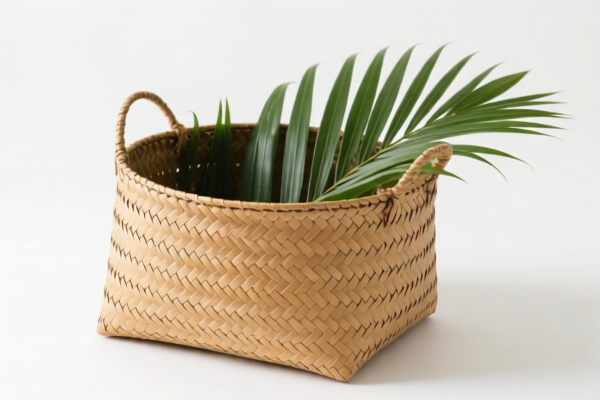

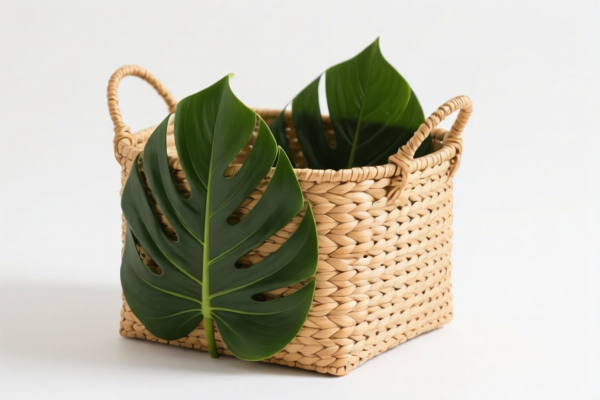
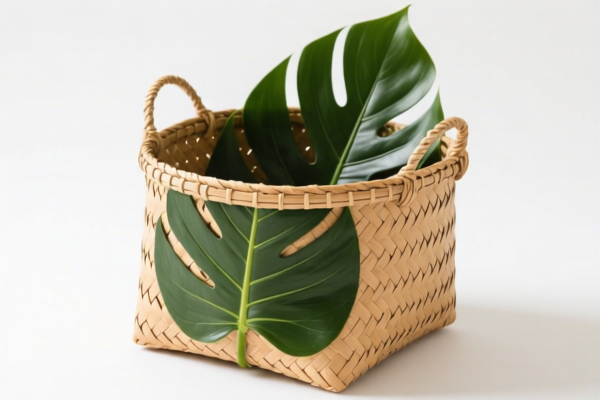
AI Analysis
🌿 Palm Leaf Woven Storage Basket: HS Code Classification & Customs Clearance Guide (2024/2025)
🌐 HS Code Reference & Customs Strategy | Detailed Tax Breakdown | Professional Clearance Protocol
📌 I. Product Definition: What is a "Palm Leaf Woven Storage Basket"?
A Palm Leaf Woven Storage Basket is a container made from natural palm leaves, woven into a basket shape for storage purposes. In international trade, the classification of this product depends heavily on: 1. Material: Is it classified as "plaiting materials" (Chapter 14) or "woven articles" (Chapter 46)? 2. Form: Is it considered a simple basket (Chapter 46) or an unprocessed plant product (Chapter 14)? 3. Processing Level: Has it undergone significant manufacturing to become a finished good, or is it just cut and woven plant material?
⚠️ Critical Distinction: - Chapter 46 (Woven Materials): Applies if the palm leaves are processed into plaits or woven into a structured article like a basket. - Chapter 14 (Plaiting Materials/Other Plant Products): Applies if the item is considered primarily as raw or semi-processed plant material, or if it does not fit the specific definition of a "basket" in Chapter 46.
📦 II. HS Code Classification Matrix (Based on Provided Data)
Below are the 5 possible HS Codes for this product, along with their tax implications. These codes represent different interpretations by customs officials regarding the material and form.
| HS Code | Summary Description | Total Tax Rate | Tax Detail Breakdown |
|---|---|---|---|
| 4602.19.16.00 | Palm Leaf Basket: Classified as a basket made of palm leaves. Fits the "Baskets & Bags" category. | 40.0% | Base: 5.0% + Section 301: 25.0% + Section 122: 10.0% |
| 1404.90.90.90 | Other Plant Products: Classified as a general plant product (fallback category). | 35.0% | Base: 0.0% + Section 301: 25.0% + Section 122: 10.0% |
| 1404.90.40.00 | Plant Fibers/Other: Classified as other plant products/fibers. | 37.3% | Base: 2.3% + Section 301: 25.0% + Section 122: 10.0% |
| 4602.19.14.00 | Palm Leaf Basket (Alternative): Another classification for palm leaf baskets. | 35.0% | Base: 0.0% + Section 301: 25.0% + Section 122: 10.0% |
| 4601.92.20.00 | Woven Articles: Classified as woven articles of other plaiting materials. | 41.6% | Base: 6.6% + Section 301: 25.0% + Section 122: 10.0% |
🔍 Key Observation: - The highest tax rate is 41.6% (HS Code
4601.92.20.00). - The lowest tax rates are 35.0% (HS Codes1404.90.90.90and4602.19.14.00). - All codes include significant附加 tariffs: 25% (Section 301) and 10% (Section 122), indicating this product is likely imported from China to the US.
💰 III. Detailed Tax Rate Analysis
✅ Applicable Country: United States (US)
✅ Origin: China (CN)
✅ Tariff Structure: Base Duty + Section 301 Tariff + Section 122 Tariff
🎯 1. Best Case: 35.0% Total Duty
HS Codes: 1404.90.90.90 & 4602.19.14.00
| Item | Rate | Legal Basis |
|---|---|---|
| Base Duty | 0.0% | HTSUS Heading 1404 or 4602 (specific subheading) |
| Section 301 Tariff | +25.0% | USITC Footnote 9903.88.01 (China-specific) |
| Section 122 Tariff | +10.0% | IEEPA Executive Order (China-specific) |
| Total | 35.0% |
📌 Why this matters: Choosing
1404.90.90.90(as "other plant product") or4602.19.14.00(as a specific basket type) minimizes the base duty to 0%, reducing the total burden.
🎯 2. Middle Case: 37.3% Total Duty
HS Code: 1404.90.40.00
| Item | Rate | Legal Basis |
|---|---|---|
| Base Duty | 2.3% | HTSUS Heading 1404 (specific subheading for other plant products/fibers) |
| Section 301 Tariff | +25.0% | USITC Footnote 9903.88.01 |
| Section 122 Tariff | +10.0% | IEEPA Executive Order |
| Total | 37.3% |
📌 Why this matters: If customs views the product as "plant fibers" rather than a finished basket, a small base duty (2.3%) is added on top of the high附加 tariffs.
🎯 3. High Case: 40.0% – 41.6% Total Duty
HS Codes: 4602.19.16.00 & 4601.92.20.00
| Item | Rate | Legal Basis |
|---|---|---|
| Base Duty | 5.0% or 6.6% | HTSUS Heading 4602 (higher base for certain woven baskets) |
| Section 301 Tariff | +25.0% | USITC Footnote 9903.88.01 |
| Section 122 Tariff | +10.0% | IEEPA Executive Order |
| Total | 40.0% or 41.6% |
📌 Why this matters: These classifications treat the product as a more specific woven article, attracting higher base duties. The 41.6% rate is the most expensive scenario.
🛠️ IV. Customs Clearance Recommendations
✅ 1. Optimal Classification Strategy
To minimize costs, aim for HS Codes 1404.90.90.90 or 4602.19.14.00 (35.0% total duty).
| Strategy | Action |
|---|---|
| Material Description | Emphasize "Palm Leaf" and "Plant Product" in documentation. Avoid overly technical terms that imply complex weaving (which might push it to 4601.92.20.00). |
| Form Description | Describe as "Storage Container" or "Basket" but highlight its natural, unprocessed nature if possible to align with 1404.90.90.90. |
| Documentation | Ensure the commercial invoice clearly states: "Palm Leaf Woven Basket, Material: 100% Palm Leaves, Usage: Storage." |
✅ 2. Required Documents for Clearance
| Document | Purpose |
|---|---|
| Commercial Invoice | Must match the declared HS Code and value. |
| Packing List | Details quantity, weight, and dimensions. |
| Product Photos | Show the basket's structure, material texture, and any branding. |
| Certificate of Origin (CO) | Required to prove Chinese origin (and thus apply Section 301/122 tariffs correctly). |
| Material Declaration | Confirm no prohibited pests or soil contamination (USDA requirement). |
✅ 3. Common Pitfalls & Avoidance
❌ Pitfall 1: Misclassification as "Household Goods" (e.g., 7323.93) - Consequence: Wrong HS Code, potential fines, and delays. - Solution: Do not use generic codes. Stick to Chapter 14 or 46 as provided in the data.
❌ Pitfall 2: Ignoring Section 122 Tariff - Consequence: Underpayment of duties. Section 122 (10%) is currently applicable to Chinese goods. - Solution: Always include the 10% in cost calculations.
❌ Pitfall 3: Incorrect Base Duty Assumption
- Consequence: Paying 5-6.6% base duty when 0% might be available.
- Solution: Argue for 1404.90.90.90 if the basket is simple and primarily valued as a plant product.
🌍 V. Global Comparison (Contextual Note)
While the data provided is specific to US imports from China, here’s how it might differ elsewhere:
| Region | Typical Duty | Notes |
|---|---|---|
| USA (from China) | 35.0% - 41.6% | High due to 301 + 122 tariffs. |
| EU | ~2.5% - 4.5% | Lower base duty, no 301/122 equivalents. |
| China (Imported from US) | ~5% - 10% | Reciprocal tariffs may apply. |
📌 Conclusion: The US market is the most costly for this product due to political tariffs. Exporters should consider supply chain diversification (e.g., manufacturing in Vietnam or India) to avoid these specific Chinese-origin tariffs.
📌 VI. Final Checklist for Shippers
- [ ] Verify Material: Ensure the basket is 100% palm leaf or clearly state blend.
- [ ] Choose HS Code: Prefer
1404.90.90.90or4602.19.14.00for lowest duty (35%). - [ ] Calculate Landed Cost: Include 35% - 41.6% total duty in pricing.
- [ ] Prepare USDA Docs: Phytosanitary certificate is crucial for plant-based products.
- [ ] Consult Customs Broker: Confirm the latest status of Section 122 tariffs before shipment.
🎯 Pro Tip:
"Low Base Duty, High附加 Tariffs = 35% Sweet Spot" Avoid complex weaving classifications (
4601.92.20.00) that attract higher base duties. Opt for the "Other Plant Products" or specific Basket codes with 0% base duty to minimize total cost.
📣 Disclaimer: This guide is based on the provided data and general customs principles. Tariff rates and regulations change frequently. Always consult a licensed customs broker or check the latest HTSUS database before finalizing declarations.
✨ Clearance Success = Accurate HS Code + Complete Documentation ✨
Customer Reviews
About HS Code Classification
The Harmonized System (HS) is an internationally standardized nomenclature developed by the World Customs Organization (WCO) to classify traded products. Over 200 countries use the HS system as the basis for customs tariffs, trade statistics, and import/export regulations.
Each HS code follows a hierarchical structure:
- Chapter (2 digits) — Broad category of goods (e.g., Chapter 84: Machinery and Mechanical Appliances)
- Heading (4 digits) — More specific grouping within the chapter
- Subheading (6 digits) — Internationally standardized breakdown, used by all WCO member countries
- National subdivisions (8-10 digits) — Country-specific extensions for further classification, such as US HTSUS 10-digit codes
Correct HS code classification is essential for smooth customs clearance, accurate duty payment, and compliance with trade regulations. Misclassification can lead to customs delays, overpayment of duties, or penalties.
When importing from CN to US, the applicable tariff rates may include:
- Most-Favored-Nation (MFN) rate — The standard duty rate applied to WTO members
- General rate — Applied to countries without trade agreements
- Trade remedy duties — Additional tariffs such as Section 301 (anti-dumping), Section 232 (national security), or countervailing duties
The information provided on this page is for reference purposes only. For official classification, please consult with your local customs authority or a licensed customs broker.