Palm Oil Fatty Acid Mixture
CN → US| HS Code | Tariff Rate | Origin | Destination | Doc |
|---|---|---|---|---|
| 1518004000 | 25.5% | CN | US | Official Doc |
| 1517902080 | 25.5% | CN | US | Official Doc |
| 1518002000 | 0.0% | CN | US | Official Doc |
| 1517909090 | 0.0% | CN | US | Official Doc |
Product Images
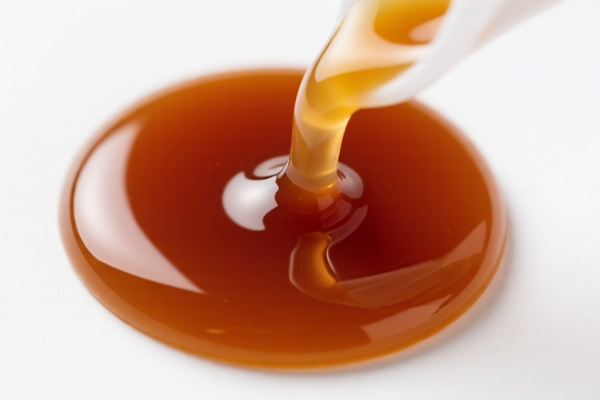
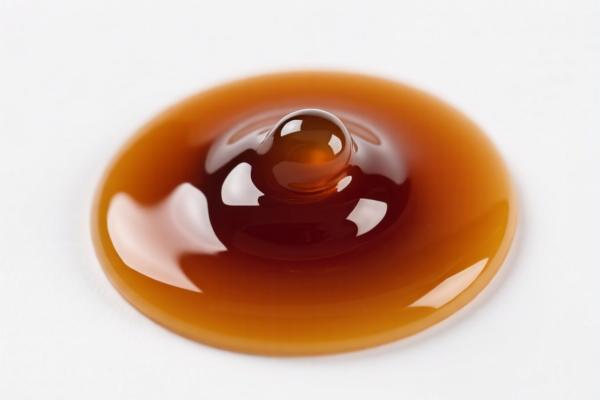
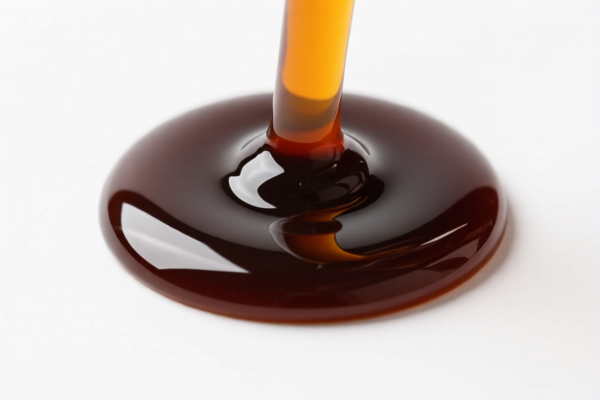
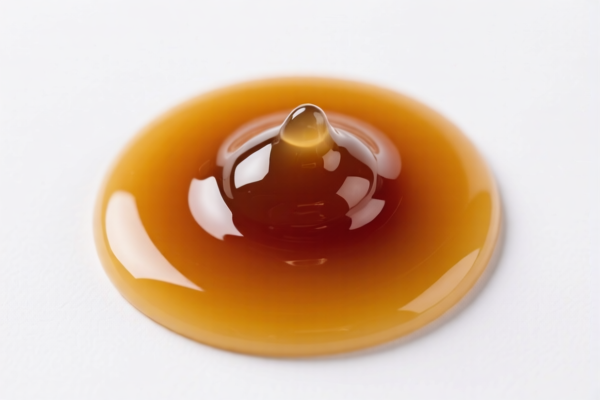
AI Analysis
🌴 Palm Oil Fatty Acid Mixture (POFAM)
🌐 HS Code Reference & Customs Clearance Guide | 2026 Latest Tariff Analysis | Professional Entry Strategy
📌 I. Product Definition & Classification: What Exactly is "Palm Oil Fatty Acid Mixture"?
Palm Oil Fatty Acid Mixture is a crucial intermediate product in the oleochemical industry, derived from the fractionation or refining of palm oil. It is primarily used as a raw material for surfactants, cosmetics, soaps, and food ingredients. In international trade, it is strictly regulated under Chapter 15 (Animal or Vegetable Fats and Oils and Their Cleavage Products).
Key Classification Distinctions: * Edible vs. Industrial: Whether the mixture is intended for human consumption (e.g., food additives) or industrial use (e.g., soap making, surfactant production) significantly impacts its sub-heading. * Form: Is it a pure mixture of fatty acids, or does it contain other fats/oils? * Processing Level: Is it a simple mechanical fractionation product or a chemically modified derivative?
⚠️ Critical Distinction Point:
- If classified as an "edible mixture or preparation" → Likely 1517.90.90.90
- If classified as a "fat or oil and its fractions" (industrial/derivative) → Likely 1518.00.40.00 or 1518.00.20.00
- If a specific "other" edible category applies → 1517.90.20.80
📦 II. HS Code Classification Details (2026 Latest Tariff Authority Comparison)
| HS Code | Product Description | Application Scenario | Tax Structure |
|---|---|---|---|
1517.90.90.90 |
Palm oil fatty acid mixture, classified under "edible mixtures or preparations" | Food-grade additives, edible shortening bases | 8.8¢/kg + 17.5% |
1518.00.40.00 |
Palm oil-derived fatty acid mixture, classified as "fats/oils and their fractions" | Industrial surfactants, cosmetic bases, non-edible derivatives | 25.5% |
1517.90.20.80 |
Palm oil fatty acid mixture, classified as "other" edible mixtures | Specific edible preparations not covered by primary headings | 25.5% |
1518.00.20.00 |
Plant fat oil and its fractions mixture, meeting mixture/preparation criteria | General industrial plant oil fractions, non-edible | 6.3¢/kg + 17.5% |
🔍 Key Reminder:
- The distinction between 1517 (Edible preparations/mixtures) and 1518 (Non-edible fats/oils/fractions) is critical for tariff calculation.
- 1518.00.40.00 and 1517.90.20.80 both result in a 25.5% ad valorem rate, but the legal basis differs.
- Weighted duties (¢/kg) apply to specific sub-headings in 1517 and 1518, which must be added to the percentage tariffs.
💰 III. 2026 Latest Tariff Rate Details (Including Surcharges & Policy Add-ons)
✅ Applicable Country: United States (US)
✅ Origin: China (CN)
✅ Effective Time: Current ongoing trade measures (including Section 301 and Section 232/122)
🎯 1. 1517.90.90.90 —— Edible Palm Oil Fatty Acid Mixture
| Item | Content |
|---|---|
| Base Tariff | 8.8 ¢/kg (Specific Duty) |
| Section 301 Surcharge | +7.5% (Ad Valorem) |
| Section 122 Tariff | +10% (Ad Valorem, if applicable under current enforcement) |
| Total Effective Rate | 8.8 ¢/kg + 17.5% |
| Calculation Method | (Weight in kg × 0.088) + (CIF Value × 17.5%) |
| De Minimis Exemption | ❌ Not Applicable (High-value industrial/agricultural goods excluded) |
| Legal Path | HTSUS:1517.90.90.90 → USITC:301 → USTR:122 |
📌 Explanation:
- The 8.8 ¢/kg is a specific duty based on weight.
- The 17.5% is the sum of the 7.5% Section 301 tariff and the 10% Section 122 tariff.
- Total Cost Impact: For high-volume shipments, the specific duty accumulates quickly. Ensure accurate weight declaration.
🎯 2. 1518.00.40.00 —— Industrial Palm Oil Derivative (Fatty Acid Mixture)
| Item | Content |
|---|---|
| Base Tariff | 8.0% (Ad Valorem) |
| Section 301 Surcharge | +7.5% |
| Section 122 Tariff | +10% |
| Total Rate | 25.5% |
| Calculation Method | CIF Value × 25.5% |
| De Minimis Exemption | ❌ Not Applicable |
| Legal Path | HTSUS:1518.00.40.00 → USITC:301 → USTR:122 |
📌 Note:
- This classification assumes the product is not primarily for edible use or falls outside specific edible preparations.
- The 25.5% is a pure ad valorem rate. No specific duty per kg.
🎯 3. 1517.90.20.80 —— Other Edible Mixtures
| Item | Content |
|---|---|
| Base Tariff | 8.0% |
| Section 301 Surcharge | +7.5% |
| Section 122 Tariff | +10% |
| Total Rate | 25.5% |
| Calculation Method | CIF Value × 25.5% |
| De Minimis Exemption | ❌ Not Applicable |
| Legal Path | HTSUS:1517.90.20.80 → USITC:301 → USTR:122 |
📌 Note:
- Similar to1518.00.40.00, this results in 25.5%.
- The difference lies in the description: "Other" edible mixtures vs. "Fat/Oil Fractions". Misclassification can lead to penalties.
🎯 4. 1518.00.20.00 —— Plant Oil Fractions Mixture
| Item | Content |
|---|---|
| Base Tariff | 6.3 ¢/kg |
| Section 301 Surcharge | +7.5% |
| Section 122 Tariff | +10% |
| Total Effective Rate | 6.3 ¢/kg + 17.5% |
| Calculation Method | (Weight in kg × 0.063) + (CIF Value × 17.5%) |
| De Minimis Exemption | ❌ Not Applicable |
| Legal Path | HTSUS:1518.00.20.00 → USITC:301 → USTR:122 |
📌 Note:
- This is a mixed duty structure (specific + ad valorem).
- The specific duty (6.3 ¢/kg) is lower than1517.90.90.90(8.8 ¢/kg).
- Suitable for plant oil derivatives that meet the definition of "fractions" but not "edible preparations."
🛠️ IV. Customs Clearance Practical Advice (Real-World Pitfall Avoidance)
✅ 1. Required Documentation Checklist (Non-Negotiable)
| Document | Mandatory? | Purpose |
|---|---|---|
| ✅ Product Specification Sheet | ✔️ | Must detail fatty acid composition (e.g., C16, C18 ratios), origin, and processing method. |
| ✅ Certificate of Origin (CO) | ✔️ | Critical for proving Chinese origin and applying (or avoiding) specific tariffs. |
| ✅ Commercial Invoice | ✔️ | Must clearly state HS Code, CIF value, and weight. |
| ✅ Packing List | ✔️ | Accurate weight is essential for specific duty calculations (¢/kg). |
| ✅ Non-Edible Declaration | ✔️ | If claiming 1518, provide a declaration that the product is not for human consumption. |
| ✅ Safety Data Sheet (SDS) | ✔️ | Required for chemical safety compliance. |
| ✅ Labeling Proof | ✔️ | Labels must not imply "edible" if classified under 1518. |
✅ 2. Declaration Tips (Key Mnemonics)
🔥 "Specify Use, Declare Weight, Avoid Edible Claims for 1518!"
| Scenario | Correct Declaration | Wrong Practice |
|---|---|---|
| Edible Grade | 1517.90.90.90 + 8.8¢/kg+17.5% |
Misdeclaring as industrial → Audit Risk |
| Industrial Grade | 1518.00.40.00 + 25.5% |
Claiming "edible" to get lower %? → Penalty |
| Mixed Use | Clarify primary use in specs | Ambiguous "for general use" → Delay |
| Weight Declaration | Exact net/gross weight in kg | Estimating weight → Incorrect specific duty |
✅ 3. Special Case Handling
| Scenario | Recommendation |
|---|---|
| OEM for Cosmetics | Ensure invoice says "For Cosmetic Use Only" to support 1518 classification if applicable. |
| Food Additive Supplier | Must provide FDA compliance docs. Use 1517 codes. |
| Blended Fatty Acids | If blend contains non-palm oils, declare full composition to avoid misclassification. |
| Section 122 Applicability | Verify if Section 122 tariffs are currently enforced for your specific entry type. |
🌍 V. Global Market Comparison (2026 Latest)
| Country/Region | Recommended HS Code | Tariff | Certification | Notes |
|---|---|---|---|---|
| 🇺🇸 USA | 1517.90.90.90 or 1518.00.40.00 |
8.8¢/kg+17.5% or 25.5% | FDA (if edible), SDS | High compliance cost due to specific duties. |
| 🇨🇳 China | 1517.90.90.90 |
~5-10% | CCC (if applicable) | Lower tariffs for import; export from China faces US tariffs. |
| 🇪🇺 EU | 1518.00 or 1517.90 |
0-6.5% | REACH, COSMOS | No specific duties per kg; ad valorem only. |
| 🇦🇺 Australia | 1518.00 |
5% | SAA | Standard import tariffs. |
| 🇯🇵 Japan | 1518.00 |
0-3% | FSC | Free Trade Agreement (JAEPA) may apply. |
📌 Conclusion:
- USA imposes the most complex tariff structure (specific + ad valorem + surcharges).
- Accuracy in weight and classification is paramount to avoid over/under-payment.
- Edible vs. Industrial distinction is the biggest risk factor.
📌 VI. Common Mistakes & Pitfall Guide (Lessons Learned)
❌ Mistake 1: Declaring "Palm Oil Fatty Acid" as 1516 (Hydrogenated oils) without proper processing proof.
👉 Consequence: Misclassification → Penalty + Back Duties.
❌ Mistake 2: Ignoring the specific duty (¢/kg) for 1517.90.90.90.
👉 Consequence: Underpayment of duties → Audit + Interest.
❌ Mistake 3: Using "Edible" labels on 1518 shipments.
👉 Consequence: Customs seizure → Rejection as non-compliant.
❌ Mistake 4: Inconsistent weight between Packing List and Commercial Invoice.
👉 Consequence: Customs rejection → Delays + Storage Fees.
✅ Correct Practice:
"Palm Oil Fatty Acid Mixture, Industrial Grade, For Surfactant Production Only, Model XYZ, Non-Edible, Net Weight: 10,000 kg, CIF Value: $50,000"
🎯 VII. Conclusion: Precise Classification Saves Money
🎯 Remember the Mantra:
🔹 "Edible is 1517, Industrial is 1518. Weight matters for specific duties. Declare use clearly."
🔹 "Misclassify once, pay double. Specific duties add up fast."
📌 Pro Tip:
If your product is originating from Vietnam, Malaysia, or Indonesia, check for FTA benefits (e.g., CPTPP, ASEAN-US discussions). However, Chinese origin is subject to the Section 301/122 tariffs mentioned above.
Recommendation: Apply for a Pre-Ruling (Binding Ruling) from US Customs (CBP) before first shipment to lock in HS Code and tariff liability.
📣 Immediate Action:
📞 Consult with a Licensed Customs Broker + Provide Technical Specs + Request CBP Pre-Ruling
🚀 Ensure your Palm Oil Fatty Acid Mixture clears customs smoothly, avoids penalties, and maximizes profit margins!
✨ Professional Customs Clearance Starts with Accurate Classification!
💼 Every Cent Counts in Oleochemical Trade!
Customer Reviews
About HS Code Classification
The Harmonized System (HS) is an internationally standardized nomenclature developed by the World Customs Organization (WCO) to classify traded products. Over 200 countries use the HS system as the basis for customs tariffs, trade statistics, and import/export regulations.
Each HS code follows a hierarchical structure:
- Chapter (2 digits) — Broad category of goods (e.g., Chapter 84: Machinery and Mechanical Appliances)
- Heading (4 digits) — More specific grouping within the chapter
- Subheading (6 digits) — Internationally standardized breakdown, used by all WCO member countries
- National subdivisions (8-10 digits) — Country-specific extensions for further classification, such as US HTSUS 10-digit codes
Correct HS code classification is essential for smooth customs clearance, accurate duty payment, and compliance with trade regulations. Misclassification can lead to customs delays, overpayment of duties, or penalties.
When importing from CN to US, the applicable tariff rates may include:
- Most-Favored-Nation (MFN) rate — The standard duty rate applied to WTO members
- General rate — Applied to countries without trade agreements
- Trade remedy duties — Additional tariffs such as Section 301 (anti-dumping), Section 232 (national security), or countervailing duties
The information provided on this page is for reference purposes only. For official classification, please consult with your local customs authority or a licensed customs broker.