Panda Patch Sticker
CN → US| HS Code | Tariff Rate | Origin | Destination | Doc |
|---|---|---|---|---|
| 4821902000 | 35.0% | CN | US | Official Doc |
| 4821102000 | 35.0% | CN | US | Official Doc |
| 3919101010 | 41.5% | CN | US | Official Doc |
| 3919905010 | 40.8% | CN | US | Official Doc |
Product Images
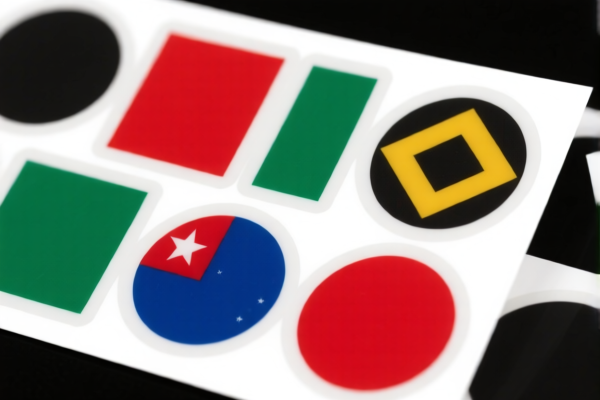


AI Analysis
🐼 Panda Patch Stickers (Textile Patches & Adhesive Labels)
🌐 HS Code Reference & Customs Clearance Guide | 2026 Latest Tariff Analysis | Professional Clearance Strategy
📌 I. Product Definition & Classification: Do You Really Know "Panda Patch Sticker"?
"Panda Patch Sticker" is a colloquial term that can refer to two distinct types of products in international trade, depending on its material and application method. Clarifying this distinction is critical for accurate HS Code classification, as it directly impacts tariff rates and compliance requirements.
1. Textile Patches (Iron-on/Embroidered):
Fabric-based patches (embroidered, woven, or printed) with an adhesive or heat-activated backing, intended to be attached to clothing, bags, or hats. These fall under Chapter 62 or 63 (Articles of Apparel/Clothing Accessories).
2. Self-Adhesive Paper/Plastic Stickers (Labels):
Paper, paperboard, or plastic stickers used for labeling, decoration, or identification, often with a self-adhesive backing. These fall under Chapter 48 (Paper/Paperboard Labels) or Chapter 39 (Plastics).
⚠️ Key Distinction Point:
- If it is a fabric patch for clothing decoration → It is NOT a "label" in the customs sense; it is an accessory.
- If it is a paper/plastic sticker for labeling or general adhesion → It is classified under 4821.90 or 3919.
- Note: The provided only contains HS Codes for Paper/Plastic Labels/Stickers. It does not contain codes for textile patches. Therefore, the following analysis focuses strictly on the Label/Sticker interpretation based on the provided data.
📦 II. HS Code Classification Details (Based on Provided )
Since the user input "Panda Patch Sticker" often implies a self-adhesive item, we map it to the available codes in . Note that textile patches are excluded from this specific dataset.
| HS Code | Product Description | Applicable Scenario | Material Type | Tax Rate (China to US) |
|---|---|---|---|---|
4821.90.20.00 |
Paper and paperboard labels: Other: Self-adhesive | Paper stickers, self-adhesive labels for products, decorative paper stickers | Paper/Paperboard | 25.0% |
4821.10.20.00 |
Paper and paperboard labels: Printed: Lithographic process | Printed paper labels (not necessarily self-adhesive, but printed) | Paper/Paperboard | 25.0% |
3919.10.10.10 |
Self-adhesive plastics: Width ≤ 20cm: Pavement marking tape (reflectorized) | NOT Applicable for typical "Panda Stickers" | Plastic (Reflective Tape) | 0.0% |
3919.90.50.10 |
Self-adhesive plastics: Other: Reflectorized sheeting | NOT Applicable for typical "Panda Stickers" | Plastic (Reflective Sheet) | 0.0% |
🔍 Critical Analysis:
- Most Likely Code:4821.90.20.00(Self-adhesive paper labels). Most "Panda Stickers" are paper-based with adhesive.
- Incorrect Codes:3919.10.10.10and3919.90.50.10are for highway marking tapes and reflective sheeting, not decorative stickers. Misclassifying decorative stickers as pavement marking tape will lead to customs rejection or penalties.
- Textile Patches: If your "Panda Patch" is made of fabric (e.g., embroidered with iron-on backing), it DOES NOT fit any code in . You would need codes from Chapter 62/63 (e.g.,6217.10), which are not provided in the current data.
💰 III. 2026 Latest Tariff Rate Details (Detailed Breakdown)
✅ Applicable Country: United States (US)
✅ Origin: China (CN)
✅ Effective Date: Current rates apply (2025-2026)
🎯 1. 4821.90.20.00 —— Self-Adhesive Paper Labels (Most Likely for "Stickers")
| Item | Detail |
|---|---|
| Product | Self-adhesive labels, printed or unprinted, of paper/paperboard |
| Base Tariff | 0.0% (General Rate) |
| Section 301 Additional Tariff | +25.0% |
| Total Tariff | 25.0% |
| Tax Calculation | CIF Value × 25% |
| De Minimis Exemption | ❌ Not Eligible for Section 301 goods if value exceeds $800 (but Section 301 applies regardless of de minimis if classified correctly; note: $800 de minimis does not exempt from Section 301 duties for most Chinese goods post-2025 updates, but often $800 shipments are exempt from regular duties, not Section 301. Check latest CBP guidance). |
| Legal Basis | Section 301: 9903.01.25 → USITC: 4821.90.20.00 |
📌 Explanation:
- 0% Base Rate: Paper labels are generally free of base duties.
- 25% Section 301 Tariff: All goods under HS 4821 from China are subject to the 25% additional tariff due to trade tensions.
- Total Cost Impact: For every $100 of goods, you pay $25 in duties.
🎯 2. 4821.10.20.00 —— Printed Paper Labels (Lithographic)
| Item | Detail |
|---|---|
| Product | Printed paper labels (lithographic) |
| Base Tariff | 0.0% |
| Section 301 Additional Tariff | +25.0% |
| Total Tariff | 25.0% |
| Tax Calculation | CIF Value × 25% |
📌 Note: If the "Panda Sticker" is a printed paper label (even if not self-adhesive), it falls here with the same 25% rate.
⛔ Codes 3919.xxxxxx – Why They Are Likely WRONG
| Code | Reason for Rejection |
|---|---|
3919.10.10.10 |
Specifically for pavement marking tape (road markings). A panda sticker is not for roads. |
3919.90.50.10 |
Specifically for reflectorized sheeting (highway safety signs). A panda sticker is not reflective safety gear. |
❌ Warning: Do not misclassify decorative stickers as "reflective sheeting" to claim 0% tax. Customs will detect this mismatch between product appearance and HS Code description, leading to seizure, fines, or forced reclassification.
🛠️ IV. Customs Clearance Practical Advice (Real-World Pitfall Guide)
✅ 1. Document Checklist (Essential for Smooth Clearance)
| Document | Required? | Purpose |
|---|---|---|
| ✅ Product Photos | ✔️ | Must show material (paper vs. plastic vs. fabric) and self-adhesive backing. |
| ✅ Commercial Invoice | ✔️ | Clearly state: "Self-Adhesive Paper Sticker, Decorative, Panda Design" — Avoid vague terms like "Patch" if it’s paper. |
| ✅ Material Specification | ✔️ | Confirm: Is it paper (HS 4821) or plastic (HS 3919)? |
| ✅ HTS Code Declaration | ✔️ | Declare 4821.90.20.00 if self-adhesive paper. |
| ❌ If Fabric Patch | N/A | This data does not cover fabric patches. Use Chapter 62/63 codes. |
✅ 2. Classification Tips (Key Mnemonics)
🔥 "Paper Stick? 25% Tax! Fabric Patch? Not Here! Plastic Tape? Check Material!"
| Scenario | Correct HS Code | Tariff | Common Mistake |
|---|---|---|---|
| Paper-based, self-adhesive "Panda Sticker" | 4821.90.20.00 |
25% | Mistaking for 0% tax |
| Plastic-based, self-adhesive "Panda Sticker" | 3919.90.xxxx (Other Plastic) |
0% if not reflective | Misclassifying as pavement tape (3919.10.10.10) |
| Fabric/Iron-on "Panda Patch" | Not in Data (e.g., 6217.10) |
0-10% (varies) | Forcing into 4821 → Wrong |
| Reflective Plastic Sticker | 3919.90.50.10 |
0% | Only if truly reflective safety gear |
✅ 3. Special Handling
| Situation | Advice |
|---|---|
| "Patch" vs. "Sticker" | If it’s fabric, do not use 4821. Use textile codes. If paper/plastic, use 4821 or 3919. |
| Small Quantities (De Minimis) | Even if under $800, Section 301 tariffs may still apply depending on CBP enforcement. Assume 25% for paper labels. |
| Reflective Features | If the panda sticker has reflective elements, it may be scrutinized. Ensure it’s not "pavement marking tape." |
🌍 V. Global Market Comparison (2026)
| Country/Region | Recommended HS Code (Paper Sticker) | Tariff | Notes |
|---|---|---|---|
| 🇺🇸 USA | 4821.90.20.00 |
25% | High tariff due to Section 301 |
| 🇨🇳 China | 4821.90.20.00 |
0-5% | Low import duty |
| 🇪🇺 EU | 4821.10.00 |
0% | Generally no duty for paper labels |
| 🇬🇧 UK | 4821.10.00 |
0% | Post-Brexit, generally 0% |
| 🇨🇦 Canada | 4821.90.20.00 |
0% | No major tariffs |
📌 Conclusion:
- USA is the only market with high tariffs (25%) for these items.
- EU/UK/Canada are more favorable (0% tariff).
- Cost-Saving Tip: If exporting to the US, consider fabric patches (different HS Code, potentially lower tariff) if the product allows.
📌 VI. Common Errors & Pitfall Guide (Lessons Learned)
❌ Error 1: Using 3919.10.10.10 (Pavement Tape) for a panda sticker.
👉 Consequence: Customs will reject as "misdescription," leading to delays, fines, and product seizure.
❌ Error 2: Calling a fabric patch a "paper sticker."
👉 Consequence: Incorrect HS Code (4821 instead of 6217), leading to incorrect duty payment and potential penalties.
❌ Error 3: Assuming 0% tax because it’s "small."
👉 Consequence: Section 301 25% tariff still applies to paper labels from China. Budget for 25% duty.
✅ Correct Approach:
If Paper: Declare as
4821.90.20.00(Self-adhesive paper label). Expect 25% tax.
If Fabric: Use textile codes (not in this data).
If Plastic (Non-Reflective): Use3919.90.90(Other plastic sheets, 0% tax).
If Reflective Safety Gear: Use3919.90.50.10(0% tax).
🎯 VII. Conclusion: Professional Classification Saves Money!
🎯 Remember:
🔹 "Paper Sticker = 25% US Tax! Fabric Patch = Check Chapter 62! Plastic = Check Reflectivity!"
🔹 "Don’t misclassify as pavement tape – it’s for roads, not pandas!"
📌 Pro Tip:
If your "Panda Patch" is fabric-based (embroidered iron-on), this data does not apply. You must consult Chapter 62/63 for textile accessories. If it is paper/plastic, use 4821.90.20.00 for stickers and budget for 25% US tariff.
📣 Immediate Action:
📞 Verify material (Paper vs. Plastic vs. Fabric).
🚀 Declare correctly to avoid customs holds.
💼 Accurate classification is the key to smooth clearance!
✨ Professional Clearance Starts with Accurate HS Codes!
💼 Your every cent of cost deserves precise calculation!
Customer Reviews
About HS Code Classification
The Harmonized System (HS) is an internationally standardized nomenclature developed by the World Customs Organization (WCO) to classify traded products. Over 200 countries use the HS system as the basis for customs tariffs, trade statistics, and import/export regulations.
Each HS code follows a hierarchical structure:
- Chapter (2 digits) — Broad category of goods (e.g., Chapter 84: Machinery and Mechanical Appliances)
- Heading (4 digits) — More specific grouping within the chapter
- Subheading (6 digits) — Internationally standardized breakdown, used by all WCO member countries
- National subdivisions (8-10 digits) — Country-specific extensions for further classification, such as US HTSUS 10-digit codes
Correct HS code classification is essential for smooth customs clearance, accurate duty payment, and compliance with trade regulations. Misclassification can lead to customs delays, overpayment of duties, or penalties.
When importing from CN to US, the applicable tariff rates may include:
- Most-Favored-Nation (MFN) rate — The standard duty rate applied to WTO members
- General rate — Applied to countries without trade agreements
- Trade remedy duties — Additional tariffs such as Section 301 (anti-dumping), Section 232 (national security), or countervailing duties
The information provided on this page is for reference purposes only. For official classification, please consult with your local customs authority or a licensed customs broker.