Pant Rack
CN → US| HS Code | Tariff Rate | Origin | Destination | Doc |
|---|---|---|---|---|
| 4421100000 | 13.2% | CN | US | Official Doc |
| 3926301000 | 24.0% | CN | US | Official Doc |
| 7326200020 | 88.9% | CN | US | Official Doc |
| 4421999880 | 38.3% | CN | US | Official Doc |
| 7326908688 | 87.9% | CN | US | Official Doc |
| 3926305000 | 22.8% | CN | US | Official Doc |
Product Images


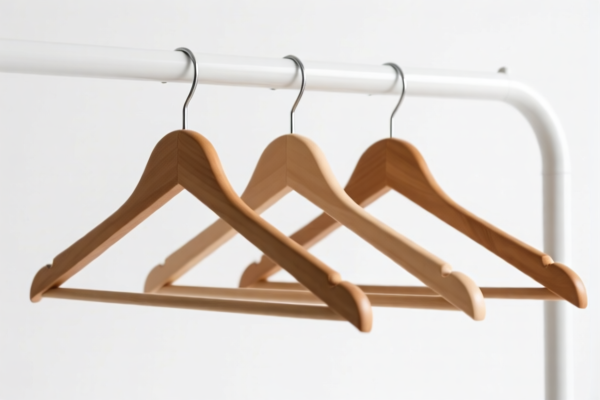

AI Analysis
👖 Pant Rack (Trousers Hanger) | Material-Based HS Classification & US Customs Strategy
🌐 HS Code Reference & Customs Clearance Guide | 2026 Latest Tariff Analysis | Professional Clearance Strategy
📌 I. Product Definition: What is a "Pant Rack"?
A Pant Rack is a specialized storage fixture designed to hold trousers, jeans, skirts, or ties. Unlike standard hangers, these often feature: * Clips/Clamps: For holding waistbands without creasing. * Bars/Rods: Horizontal bars for folding or hanging multiple pairs. * Stands/Racks: Freestanding units with multiple arms or hooks.
In international trade, the HS Code classification depends entirely on the primary material (Wood, Iron/Steel, Plastic, etc.). Misclassification can lead to severe tariff differences due to US Section 301 and IEEPA penalties on Chinese goods.
⚠️ Key Distinction:
- Wooden Pant Racks → Generally lower additional tariffs (Section 122/301 exemptions may apply).
- Iron/Steel Pant Racks → Subject to highest additional tariffs (Steel/Aluminum Section 232 + Section 301).
- Plastic Pant Racks → Moderate additional tariffs.
📦 II. HS Code Classification Matrix (2026 Latest Tariff Data)
| HS Code | Material | Product Description | Total Tariff Rate (CN Origin) | Key Tax Components |
|---|---|---|---|---|
| 4421.10.00.00 | 🪵 Wood | Clothes Hangers (incl. Pant Racks). | 13.2% | Base: 3.2% Sec 301: 0% Sec 122: 10% |
| 3926.30.50.00 | 💠 Plastic | Other plastic articles (connectors/fittings). | 22.8% | Base: 5.3% Sec 301: 7.5% Sec 122: 10% |
| 4421.99.98.80 | 🪵 Wood | Other wooden articles (non-specific). | 38.3% | Base: 3.3% Sec 301: 25.0% Sec 122: 10% |
| 7326.90.86.88 | 🦾 Iron/Steel | Other articles of iron/steel. | 87.9% | Base: 2.9% Sec 301: 25.0% Sec 232: 50% Sec 122: 10% |
| 7326.20.00.20 | 🦾 Iron/Steel | Wire work; clothes hangers. | 88.9% | Base: 3.9% Sec 301: 25.0% Sec 232: 50% Sec 122: 10% |
🔍 Critical Insight:
- Wooden hangers (4421.10.00.00) are the most tax-efficient option for US imports from China, with only a 10% Section 122 tax.
- Iron/Steel hangers face a catastrophic effective rate (~88%) due to the叠加 (stacking) of Section 301 (25%) and Section 232 (50%) on steel products.
💰 III. Detailed Tariff Breakdown by HS Code
🎯 1. HS Code 4421.10.00.00 (Wooden Clothes Hangers & Pant Racks)
- Summary: Pant racks made of wood, classified specifically as "Clothes Hangers."
- Tax Details:
- Base Duty: 3.2%
- Section 301 (Trade War): 0.0% (Exempted)
- Section 122 (Retaliatory): 10.0%
- Total Effective Rate: 13.2%
- Why this code? This is the specific subheading for "Clothes Hangers" of wood. It avoids the broader "Other Wood Articles" category which attracts higher Section 301 taxes.
🎯 2. HS Code 3926.30.50.00 (Plastic Pant Racks)
- Summary: Plastic pant racks, classified under "Other plastic articles."
- Tax Details:
- Base Duty: 5.3%
- Section 301 (Trade War): 7.5%
- Section 122 (Retaliatory): 10.0%
- Total Effective Rate: 22.8%
- Why this code? Plastic household articles often fall here. The Section 301 rate is lower than wood (non-specific) or steel.
🎯 3. HS Code 4421.99.98.80 (Other Wooden Articles)
- Summary: Wooden pant racks not classified as standard hangers (e.g., complex freestanding wooden stands not explicitly defined as hangers).
- Tax Details:
- Base Duty: 3.3%
- Section 301 (Trade War): 25.0%
- Section 122 (Retaliatory): 10.0%
- Total Effective Rate: 38.3%
- Why this code? If the item is considered an "article of wood" rather than a specific "clothes hanger," it falls into the basket category taxed at 25% under Section 301. Avoid this if possible by using
4421.10.00.00.
🎯 4. HS Code 7326.20.00.20 (Iron/Steel Wire Hangers)
- Summary: Wire pant racks or hangers made of iron or steel.
- Tax Details:
- Base Duty: 3.9%
- Section 301 (Trade War): 25.0%
- Section 232 (Steel/Aluminum): 50.0%
- Section 122 (Retaliatory): 10.0%
- Total Effective Rate: 88.9%
- Why this code? Specific for wire work. The 50% Section 232 tax on steel products makes this extremely expensive.
🎯 5. HS Code 7326.90.86.88 (Other Iron/Steel Articles)
- Summary: Pant racks made of iron/steel that do not fit the "wire" definition (e.g., bent rod structures).
- Tax Details:
- Base Duty: 2.9%
- Section 301 (Trade War): 25.0%
- Section 232 (Steel/Aluminum): 50.0%
- Section 122 (Retaliatory): 10.0%
- Total Effective Rate: 87.9%
- Why this code? General basket for steel articles. Still subject to the crippling 50% Section 232 steel tariff.
🛠️ IV. Customs Clearance Practical Advice (Risk Mitigation)
✅ 1. Material Declaration is Critical
- Do NOT simply write "Pant Rack" on the invoice.
- Must Specify: "Wooden Pant Rack," "Plastic Coat Hanger," or "Steel Wire Rack."
- Risk: If you mislabel a steel rack as plastic to avoid Section 232, Customs will seize the goods, impose penalties, and potentially charge fraud rates.
✅ 2. Strategy for Cost Reduction
- Best Option: Switch to Wooden (4421.10.00.00) or Plastic (3926.30.50.00) pant racks. The tax savings compared to steel (~75% difference) are massive.
- Wooden Specifics: Ensure the product description explicitly states "Clothes Hanger" to qualify for
4421.10.00.00(13.2%) rather than4421.99...(38.3%). The US HTSUS specifically exempts wooden hangers from Section 301.
✅ 3. Required Documentation for Clearance
| Document | Requirement | Notes |
|---|---|---|
| Commercial Invoice | Must list HS Code & Material | Explicitly state material (e.g., "100% Pine Wood"). |
| Packing List | Weight & Dimensions | Ensure weight matches invoice. |
| Material Certificate | If requested | Proof of wood/plastic/steel content. |
| Labeling | "Made in China" | Mandatory origin marking. |
✅ 4. Common Mistakes & Pitfalls
- ❌ Mistake 1: Classifying a Steel Pant Rack as "Other Metal Articles" without applying Section 232.
- Result: 50% penalty + back duties.
- ❌ Mistake 2: Classifying a Wooden Hanger under
4421.99.98.80.- Result: Paying 38.3% instead of 13.2%. Loss of ~25% savings.
- ❌ Mistake 3: Ignoring Section 122 taxes.
- Note: Almost all Chinese goods now face an additional 10% "Section 122" tax. Factor this into all calculations above.
🌍 V. Global Market Comparison (2026)
| Market | Recommended HS Code (Wood) | Rate | Notes |
|---|---|---|---|
| 🇺🇸 USA | 4421.10.00.00 |
13.2% | Best for cost efficiency. Avoid Steel. |
| 🇪🇺 EU | 8302.41.00 |
0% - 2% | Lower tariffs generally, but check anti-dumping. |
| 🇨🇳 China (Export) | N/A | 0% | Export duty is usually 0 for these items. |
📌 Conclusion for US Importers:
If you must import from China, avoid Iron/Steel Pant Racks unless the profit margin exceeds 80%. Wooden and Plastic are the only viable options due to Section 232 and 301 tariffs.
📌 VI. Final Checklist for Shipments
- [ ] Identify Material: Is it Wood, Plastic, or Steel?
- [ ] Select Correct HS Code:
- Wood Hanger →
4421.10.00.00(13.2%) - Plastic →
3926.30.50.00(22.8%) - Steel →
7326.20.00.20or7326.90.86.88(~88%)
- Wood Hanger →
- [ ] Verify Description: Use "Clothes Hanger" for wood to avoid higher "Other Wood" tariffs.
- [ ] Prepare Documents: Invoice, Packing List, Origin Label.
🎯 Pro Tip:
"Wood wins, Steel stings. Check the label, save the cents."
Always confirm if your supplier can provide wooden or plastic alternatives to bypass the ~88% steel tariff wall.
📣 Disclaimer:
This guide is for informational purposes only. Tariff rates and HS codes are subject to change by US Customs and Border Protection (CBP). Always consult a licensed customs broker for final classification and clearance.
Customer Reviews
About HS Code Classification
The Harmonized System (HS) is an internationally standardized nomenclature developed by the World Customs Organization (WCO) to classify traded products. Over 200 countries use the HS system as the basis for customs tariffs, trade statistics, and import/export regulations.
Each HS code follows a hierarchical structure:
- Chapter (2 digits) — Broad category of goods (e.g., Chapter 84: Machinery and Mechanical Appliances)
- Heading (4 digits) — More specific grouping within the chapter
- Subheading (6 digits) — Internationally standardized breakdown, used by all WCO member countries
- National subdivisions (8-10 digits) — Country-specific extensions for further classification, such as US HTSUS 10-digit codes
Correct HS code classification is essential for smooth customs clearance, accurate duty payment, and compliance with trade regulations. Misclassification can lead to customs delays, overpayment of duties, or penalties.
When importing from CN to US, the applicable tariff rates may include:
- Most-Favored-Nation (MFN) rate — The standard duty rate applied to WTO members
- General rate — Applied to countries without trade agreements
- Trade remedy duties — Additional tariffs such as Section 301 (anti-dumping), Section 232 (national security), or countervailing duties
The information provided on this page is for reference purposes only. For official classification, please consult with your local customs authority or a licensed customs broker.