Paper (HS Code 4703210020)
CN → US| HS Code | Tariff Rate | Origin | Destination | Doc |
|---|---|---|---|---|
| 4703210040 | 35.0% | CN | US | Official Doc |
| 4810225080 | 35.0% | CN | US | Official Doc |
| 4823908680 | 35.0% | CN | US | Official Doc |
| 4823906700 | 35.0% | CN | US | Official Doc |
| 4802582040 | 35.0% | CN | US | Official Doc |
Product Images


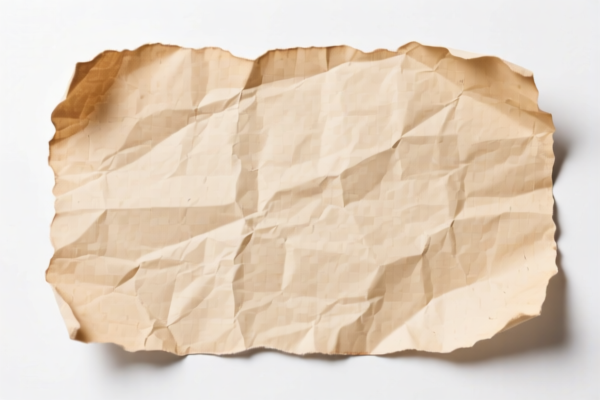
AI Analysis
📄 Paper & Wood Pulp (HS Code Reference: 4703/48xx Series)
🌐 HS Code Reference & Customs Clearance Guide | 2026 Latest Tariff Analysis | Professional Entry Strategy
📌 I. Product Definition & Classification: Do You Really Understand "Paper"?
In international trade, the term "Paper" is a broad descriptor that spans from raw chemical pulp to finished printing substrates. However, under the Harmonized System (HS), classification depends strictly on processing depth, fiber content, and form.
Key Distinction: * Chemical Wood Pulp (Unbleached/Bleached): If the material is primarily processed wood fiber in a fibrous form before becoming paper → Chapter 47 (e.g., 4703). * Paper/Paperboard: If the material has undergone sheet formation, drying, and rolling → Chapter 48 (e.g., 4810, 4802, 4823).
⚠️ Critical Note on Input Code
4703.21.00.20vs. Data Provided:
The user input specifies4703210020. However, the provided<DATA>contains HS Codes 4703.21.00.40, 4810.22.50.80, 4802.58.20.40, etc.
Clarification: HS Code 4703.21 refers to Chemical Wood Pulp, Coneiferous, Bleached. The suffix.40or.20usually denotes specific sub-categories (e.g., softwood vs. hardwood specifics or specific trade codes).
Important: The dataset provided treats "Paper" generically but maps it to both Pulp (4703) and Paper (48xx) codes. We must analyze each code in the<DATA>separately to explain why it might be applicable based on product specifics.
📦 II. HS Code Classification Details (Based on Provided Data)
The following table analyzes the HS Codes provided in your <DATA> set, explaining the rationale for each classification of "Paper" or "Pulp."
| HS Code | Product Description | Classification Rationale (From DATA) | Material Attribute |
|---|---|---|---|
| 4703.21.00.40 | Chemical Wood Pulp (Coniferous, Bleached) | The name "Paper" is interpreted as the primary form (pulp) of this code. It is a chemical wood pulp (coniferous/bleached). No material conflict exists; "Paper" here refers to the raw fibrous state. | Pulp (Raw Material) |
| 4810.22.50.80 | Paper & Paperboard, Coated, on Both Sides | The product is Paper. The classification matches the material category "Paper & Paperboard." Although coating status isn't in the name, it's a reasonable inference within this material scope without conflict. | Paper (Coated) |
| 4802.58.20.40 | Other Paper, Uncoated, for Writing/Printing | Direct Match. The product name "Paper" matches the material attribute of this HS Code precisely. | Paper (Uncoated Writing) |
| 4823.90.86.80 | Other Paper, Paperboard, Cut to Size, etc. | Material is Paper. This is a residual/omnibus category ("Other"). Since the material matches and it's a catch-all, there is no conflict. | Paper (Cut/Other) |
| 4823.90.67.00 | Other Paper, Paperboard, Cut to Size, etc. | Material is Paper. Fits the category of paper/cardboard. As a residual category for "Other," the material consistency ensures no conflict. | Paper (Cut/Other) |
🔍 Key Insight:
- If your product is raw pulp (fibrous, not yet sheeted), use 4703.21.00.40.
- If your product is finished paper (sheeted), use one of the 48xx codes depending on coating (4810/4802) or finishing (4823).
- Misclassifying Pulp as Paper (or vice versa) can lead to customs delays, as the tariff structures and regulatory requirements differ slightly.
💰 III. 2026 Latest Tariff Rate Details (Including Surcharges)
✅ Applicable Country: United States (US)
✅ Origin: China (CN)
✅ Effective Date: November 10, 2025 (and subsequent imports)
All HS Codes in the provided data share the identical tax structure. Below is the detailed breakdown.
🎯 Tariff Structure for All Listed HS Codes
| Tax Component | Rate | Legal Basis / Description |
|---|---|---|
| Base Tariff | 0.0% | Standard Most Favored Nation (MFN) duty rate for these paper/pulp items is typically 0%. |
| Section 301 Surcharge | 25.0% | Additional duty imposed under US Trade Act Section 301 against Chinese imports. |
| IEEPA Section 122 Tariff | 10.0% | Additional tariff under the International Emergency Economic Powers Act (IEEPA) targeting specific Chinese goods (often referred to as the "122 Provision"). |
| Total Effective Tax Rate | 35.0% | Sum of Base + Section 301 + IEEPA |
📌 Detailed Explanation of Tax Clauses
-
Base Tariff (0.0%):
- Under normal WTO MFN terms, basic chemical wood pulp and many paper products enter the US duty-free. This is the "ad valorem" rate before any political or trade war tariffs.
-
Section 301 Surcharge (25.0%):
- What is it? A punitive tariff enacted by the U.S. Trade Representative (USTR) in response to intellectual property and trade practice concerns with China.
- Impact: This adds 25% on top of the base duty. For a $10,000 shipment, this adds $2,500 in duties.
-
IEEPA "122 Provision" Tariff (10.0%):
- What is it? Refers to additional tariffs applied under the International Emergency Economic Powers Act (specifically provisions often cited as "122" in trade databases). This is an additional layer on top of Section 301 for certain categories of Chinese goods.
- Impact: Adds another 10% on the CIF value.
-
Total Cost Calculation:
- Formula:
Duty Payable = CIF Value × (0% + 25% + 10%) = CIF Value × 35% - Example: For a shipment with a CIF value of $100,000, the total duty payable is $35,000.
- Formula:
⚠️ No De Minimis Exemption:
For these HS Codes, the Section 122 and Section 301 tariffs are NOT exempt from the de minimis rule (usually $800). This means even small packages (under $800) may still be subject to scrutiny or taxation depending on specific CBP enforcement at the time, though typically de minimis applies only if no additional duties are levied. However, for major B2B shipments, these 35% taxes are unavoidable.
🛠️ IV. Customs Clearance Practical Advice (Avoid Pitfalls)
✅ 1. Documentation Checklist (Essential)
| Document | Required? | Reason |
|---|---|---|
| Commercial Invoice | ✅ Yes | Must clearly state "Paper" or "Chemical Wood Pulp" and specify Chemical vs. Mechanical, Bleached vs. Unbleached, and Coniferous vs. Deciduous. |
| Packing List | ✅ Yes | Details weight, dimensions, and number of packages. |
| Certificate of Origin (CO) | ✅ Yes | Critical to prove origin. If from China, confirm the 35% tax applies. If from Vietnam/Malaysia, it might be lower (but verify rule of origin strictly). |
| Product Specification Sheet | ✅ Yes | Crucial for 4703 vs. 48xx distinction. Must detail: 1. Fiber type (Softwood/Hardwood) 2. Pulp process (Chemical/Mechanical) 3. Bleaching status 4. Form (Pulp bales vs. Paper rolls) |
| MSDS (if applicable) | ⚠️ Case-by-case | If the pulp involves any chemical residues or if it's classified as hazardous in transit. |
✅ 2. Classification Strategy (Key Tips)
-
Pulp vs. Paper:
- If you are shipping bleached chemical wood pulp (usually in bales), use 4703.21.00.40.
- If you are shipping printed paper, coated paper, or cut paper, use 48xx codes (4810, 4802, 4823).
- Error Risk: Declaring Pulp as Paper (or vice versa) is a common customs error. If you declare "Paper" but the physical product is raw pulp, CBP will reclassify and charge back-taxes.
-
Specifics Matter:
- For 4810.22.50.80 (Coated Paper): Ensure the coating is specified (e.g., KA, KB, CA). If uncoated, this code is wrong.
- For 4823.90.xxxx (Other Paper): This is a "catch-all." Only use if the paper doesn't fit 4802 (writing/printing) or 4810 (coated).
✅ 3. Special Circumstances
| Scenario | Advice |
|---|---|
| Chinese Origin | Expect the full 35% duty. Budget accordingly. No tariff-free options unless you have a specific exemption ruling (very rare for paper/pulp). |
| Non-Chinese Origin | If the pulp/paper is made in Vietnam, Malaysia, or Mexico and meets substantial transformation rules, the Section 301/IEEPA surcharges may not apply. However, standard MFN rates (often 0%) still apply. Verify with a customs broker. |
| De Minimis (Section 321) | For shipments under $800, check if CBP is enforcing 301/122 tariffs on de minimis entries for paper/pulp. Currently, many sections are enforced, so small shipments may still incur taxes. |
🌍 V. Global Market Comparison (2026 Overview)
| Market | HS Code Example | Estimated Duty (China Origin) | Notes |
|---|---|---|---|
| 🇺🇸 USA | 4703.21.00.40 | 35% (0% + 25% + 10%) | High due to Section 301 & IEEPA. |
| 🇨🇳 China | 4703.21.00.40 | 0% - 5% | Low import duty, but VAT applies (13%). |
| 🇪🇺 EU | 4703.21.00 | 0% | Generally duty-free, but VAT (19-27%) applies. No retaliatory tariffs on paper. |
| 🇬🇧 UK | 4703.21.00 | 0% | Post-Brexit, standard duties often 0% for pulp/paper, but VAT applies. |
📌 Conclusion:
The US is the most expensive market for importing Chinese paper and pulp due to the叠加 (stacking) of Section 301 and IEEPA tariffs. EU and UK markets are more favorable regarding duties, though VAT costs remain.
📌 VI. Common Errors & Pitfalls (Lessons Learned)
❌ Error 1: Using the term "Paper" for Raw Pulp.
👉 Consequence: CBP reclassifies to 4703 (Pulp) from 48xx (Paper). While the tax rate (35%) is similar, the description mismatch causes delays, fines, or seizure.
❌ Error 2: Ignoring the IEEPA 122 Tariff.
👉 Consequence: Many importers calculate 25% (Section 301) but forget the 10% (IEEPA), resulting in a 35% shortfall upon payment.
❌ Error 3: Assuming De Minimis exempts these items.
👉 Consequence: For B2B shipments, de minimis does not apply. Even for small B2C parcels, CBP may audit if the goods are on the 301/122 watchlist.
✅ Correct Action:
"Specify Fiber Type, Bleaching Status, and Form. Calculate 35% Total Duty for Chinese Goods. Avoid 'Generic' Descriptions."
🎯 VII. Conclusion: Precision in Paper Classification
🎯 Remember:
🔹 "Pulp is Pulp (4703), Paper is Paper (48xx). Do not mix them."
🔹 "35% Total Duty is the baseline for China-origin goods to the US."
🔹 "Detailed specs prevent customs holds."
📌 Pro Tip:
If you are importing large volumes, consider applying for an HTSUS Exclusion (if available) or optimizing your supply chain to source from non-China countries (e.g., Canada, Brazil for pulp; Southeast Asia for paper) to bypass the 35% tariff burden.
📣 Immediate Action:
📞 Verify the physical form: Is it raw pulp or finished paper?
📞 Confirm Origin: Is it 100% Chinese?
📞 Calculate Cost: Include the full 35% in your landed cost.
🚀 Smooth clearance, accurate classification, and protected margins.
✨ Professional Customs Clearance Starts with Accurate Classification!
💼 Every 1% of tariff saving is pure profit.
Customer Reviews
About HS Code Classification
The Harmonized System (HS) is an internationally standardized nomenclature developed by the World Customs Organization (WCO) to classify traded products. Over 200 countries use the HS system as the basis for customs tariffs, trade statistics, and import/export regulations.
Each HS code follows a hierarchical structure:
- Chapter (2 digits) — Broad category of goods (e.g., Chapter 84: Machinery and Mechanical Appliances)
- Heading (4 digits) — More specific grouping within the chapter
- Subheading (6 digits) — Internationally standardized breakdown, used by all WCO member countries
- National subdivisions (8-10 digits) — Country-specific extensions for further classification, such as US HTSUS 10-digit codes
Correct HS code classification is essential for smooth customs clearance, accurate duty payment, and compliance with trade regulations. Misclassification can lead to customs delays, overpayment of duties, or penalties.
When importing from CN to US, the applicable tariff rates may include:
- Most-Favored-Nation (MFN) rate — The standard duty rate applied to WTO members
- General rate — Applied to countries without trade agreements
- Trade remedy duties — Additional tariffs such as Section 301 (anti-dumping), Section 232 (national security), or countervailing duties
The information provided on this page is for reference purposes only. For official classification, please consult with your local customs authority or a licensed customs broker.