Paper (HS Code 4801000120)
CN → US| HS Code | Tariff Rate | Origin | Destination | Doc |
|---|---|---|---|---|
| 4801000120 | 35.0% | CN | US | Official Doc |
| 4802552000 | 35.0% | CN | US | Official Doc |
| 4810225080 | 35.0% | CN | US | Official Doc |
| 4823908680 | 35.0% | CN | US | Official Doc |
| 4823906700 | 35.0% | CN | US | Official Doc |
| 4802582040 | 35.0% | CN | US | Official Doc |
| 4810227040 | 35.0% | CN | US | Official Doc |
Product Images



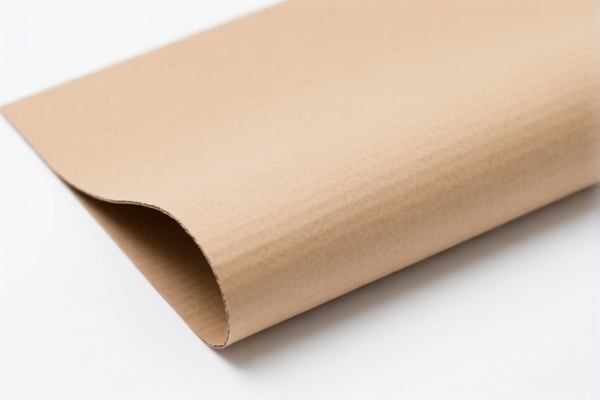
AI Analysis
📄 Paper (Based on HS Code Context: 4802/4810/4823 Categories)
🌐 HS Code Reference & Customs Clearance Guide | 2026 Latest Tariff Analysis | Professional Clearance Strategy
📌 I. Product Definition and Classification: Do You Really Understand "Paper"?
"Paper" in international trade is a broad category. While the user input mentions 4801.00.01.20 (likely uncoated printing/writing paper), the provided contains a specific set of codes for Paper (Paper Products). It is crucial to distinguish between the type of paper to avoid misclassification.
The provided data reflects Paper with a 35% Total Tax Rate, consisting of: 1. Base Tariff: 0.0% 2. Additional Tariff (Section 301): 25.0% 3. Section 122 Tariff: 10.0%
⚠️ Key Distinction:
- If it is standard uncoated paper for writing/printing → Look at 4802 codes.
- If it is lightly coated paper → Look at 4810 codes.
- If it is cut, folded, or other shaped paper (not for writing) → Look at 4823 codes (Fallback categories).
📦 II. HS Code Classification Details (From Provided )
The following HS Codes are matched to "Paper" in the provided dataset. All carry the same 35% total tax burden.
| HS Code | Product Description | Application Scenario | Tax Rate Breakdown |
|---|---|---|---|
4802.55.20.00 |
Drawing Paper (绘图纸) | Technical drawings, architectural plans, graphic design drafts | 35% (0% + 25% + 10%) |
4810.22.50.80 |
Lightly Coated Paper (轻涂纸) | High-quality printed materials, magazines, brochures. Fiber content >10% mechanical | 35% (0% + 25% + 10%) |
4823.90.86.80 |
Fallback Category (兜底类目) | General paper products not elsewhere specified, generic paper goods | 35% (0% + 25% + 10%) |
4823.90.67.00 |
Other Fallback Category (其他兜底项) | Other shaped/cut paper items, miscellaneous paper products | 35% (0% + 25% + 10%) |
4802.58.20.40 |
Direct Match Paper (直接匹配) | Specific uncoated paper variants matching this precise code | 35% (0% + 25% + 10%) |
4810.22.70.40 |
Mechanical Fiber Paper (>10%) | Paper with >10% mechanical fiber content, lightly coated | 35% (0% + 25% + 10%) |
🔍 Critical Note:
- The user input4801.00.01.20is NOT in the provided<DATA>.
- The provided data focuses on 4802, 4810, and 4823 subheadings.
- Do not assume4801applies if your product matches the descriptions above. Misclassification leads to delays.
- All codes in the provided data are treated as "Paper" generally but differentiated by use (Drawing, Coated, General).
💰 III. 2026 Latest Tariff Rate Details (Detailed Tax Clause Explanation)
✅ Applicable Market: United States (US)
✅ Origin: China (CN)
✅ Effective Date: Post-2025 policies (Section 301 & Section 122)
🎯 Unified Tariff Structure for All Listed Codes
For all HS Codes listed in the <DATA> (4802.55.20.00, 4810.22.50.80, etc.), the tariff structure is identical:
| Item | Content | Explanation |
|---|---|---|
| Base Tariff | 0.0% | The standard Most Favored Nation (MFN) rate for many paper products is 0%. |
| Section 301 Additional Tariff | +25.0% | Imposed under US Trade Law Section 301 against Chinese goods. Applies to most paper categories. |
| Section 122 Tariff | +10.0% | Specific 10% surcharge applied under Section 122 provisions (often related to national security or specific trade remedies). |
| Total Tax Rate | 35.0% | Sum of Base + Section 301 + Section 122. |
| Tax Calculation | CIF Value × 35% | Duty is calculated on the Cost, Insurance, and Freight value. |
| De Minimis Eligibility | ❌ None | No exemption for low-value shipments. All imports are subject to the full 35%. |
| Legal Basis | Section 301: 25% + Section 122: 10% |
High tariff burden; no offsetting benefits. |
📌 Interpretation:
- 0% Base means the underlying WTO rate is free, but US-specific punitive/additional tariffs dominate.
- 35% is a very high cost for paper products, which are typically low-margin goods.
- No De Minimis: Even small shipments (e.g., <$800) may not benefit from $800 de minimis exemption if specific Section 122/301 rules apply strictly to the HS code, or if customs scrutinizes the origin. Check with customs broker.
🛠️ IV. Customs Clearance Practical Advice (Avoid Pitfalls)
✅ 1. Required Documentation Checklist
| Document | Mandatory | Notes |
|---|---|---|
| ✅ Commercial Invoice | ✔️ | Must clearly state "Paper" and specific type (e.g., "Drawing Paper," "Coated Paper"). |
| ✅ Packing List | ✔️ | Detail net/gross weight. Paper is heavy; weight accuracy is critical for freight and duty. |
| ✅ Product Specification | ✔️ | Describe: Coating status, fiber content (% mechanical), weight (GSM), size. |
| ✅ Material Composition | ✔️ | For 4810 codes, prove if mechanical fiber content >10%. |
| ✅ Origin Certificate | ✔️ | Required to prove China origin (triggers tariffs). If from Vietnam/Mexico, claim preference. |
✅ 2. Classification Strategy (Key Mnemonic)
🔥 “Check Coating, Check Use, Check Fiber!”
| Scenario | Correct HS Code Range | Why? |
|---|---|---|
| Uncoated, for writing/drawing | 4802.xx.xx |
Primary use is printing/writing. |
| Coated (Lightly) | 4810.xx.xx |
Surface treatment defines this category. |
| Cut/Folded/Other Use | 4823.xx.xx |
Fallback if not for writing/printing. |
| Unknown/Generic | 4823.90 (Fallback) |
Use only if no specific fit found in 4802/4810. |
⚠️ Warning: Do not use
4823(Fallback) if your product clearly fits4802or4810. While the tax rate is the same in this dataset, incorrect classification can lead to audit risks and penalties.
✅ 3. Special Handling Tips
| Situation | Advice |
|---|---|
| Mixed Shipments | If shipping both coated and uncoated paper, declare separately to avoid ambiguity. |
| High-Value Specialty Paper | Ensure detailed specs to justify the specific subheading (e.g., technical drawing paper vs. regular paper). |
| Cost Sensitivity | With a 35% tariff, consider sourcing from non-China origins (e.g., Malaysia, Indonesia) if possible to avoid Section 301/122 tariffs. |
| Section 122 Scrutiny | Customs may scrutinize Section 122 tariffs more heavily. Ensure all paperwork is flawless. |
🌍 V. Global Market Comparison (2026)
| Country/Region | Recommended HS Code | Tariff (China Origin) | Notes |
|---|---|---|---|
| 🇺🇸 USA | 4802/4810/4823 |
35% (0% + 25% + 10%) | High cost due to 301 & 122 tariffs. |
| 🇨🇳 China | 4801/4802/4810 |
~5-10% | Lower duty, but export restrictions may apply. |
| 🇪🇺 EU | 4802/4810/4823 |
~6.5% | No Section 301/122 equivalent. |
| 🇯🇵 Japan | 4802/4810/4823 |
~5-8% | Moderate tariff. |
| 🇲🇽 Mexico | 4802/4810/4823 |
~0-5% | USMCA benefits may apply if produced in Mexico. |
📌 Conclusion:
- The US is the most expensive market for Chinese paper due to the 35% combined tariff.
- Strategy: Consider transshipment avoidance and supply chain diversification to non-China origins for US-bound shipments.
📌 VI. Common Mistakes & Pitfalls
❌ Mistake 1: Using 4801.00.01.20 when the product is actually coated paper.
👉 Result: Misclassification. Should be 4810.xx.xx. Tax rate might differ in reality (though here it's 35%, accuracy matters for compliance).
❌ Mistake 2: Assuming De Minimis applies to all shipments.
👉 Result: Section 122/301 tariffs often override de minimis exemptions for Chinese goods. Expect full duty.
❌ Mistake 3: Vague description "Paper" on Invoice.
👉 Result: Customs may select the highest fallback code or request further documentation, causing delays.
✅ Correct Approach:
Specify: "Uncoated Drawing Paper, 80gsm, A3 Size, 100% Chemical Fiber" or "Lightly Coated Print Paper, 50gsm, 20% Mechanical Fiber".
🎯 VII. Conclusion: Professional Clearance, Cost Control
🎯 Remember the Mnemonic:
🔹 "Base 0%, Add 25%, Add 10%, Total 35%!"
🔹 "Coating? Check 4810. Drawing? Check 4802. Other? Check 4823."
🔹 "China Origin + US = 35% Tax. Plan Ahead!"
📌 Pro Tip:
If your paper is produced in Vietnam, Malaysia, or Indonesia, it may qualify for lower or 0% tariffs under FTAs (e.g., CPTPP, ASEAN-US).
Recommendation: Conduct a Supply Chain Review to determine if origin adjustment is feasible.
📣 Immediate Action:
📞 Consult a licensed customs broker.
📄 Prepare precise product specs.
🚀 Optimize supply chain to mitigate 35% tariff impact.
✨ Precise Classification Saves Money!
💼 Every Percent Counts in Paper Trading!
Customer Reviews
About HS Code Classification
The Harmonized System (HS) is an internationally standardized nomenclature developed by the World Customs Organization (WCO) to classify traded products. Over 200 countries use the HS system as the basis for customs tariffs, trade statistics, and import/export regulations.
Each HS code follows a hierarchical structure:
- Chapter (2 digits) — Broad category of goods (e.g., Chapter 84: Machinery and Mechanical Appliances)
- Heading (4 digits) — More specific grouping within the chapter
- Subheading (6 digits) — Internationally standardized breakdown, used by all WCO member countries
- National subdivisions (8-10 digits) — Country-specific extensions for further classification, such as US HTSUS 10-digit codes
Correct HS code classification is essential for smooth customs clearance, accurate duty payment, and compliance with trade regulations. Misclassification can lead to customs delays, overpayment of duties, or penalties.
When importing from CN to US, the applicable tariff rates may include:
- Most-Favored-Nation (MFN) rate — The standard duty rate applied to WTO members
- General rate — Applied to countries without trade agreements
- Trade remedy duties — Additional tariffs such as Section 301 (anti-dumping), Section 232 (national security), or countervailing duties
The information provided on this page is for reference purposes only. For official classification, please consult with your local customs authority or a licensed customs broker.