Paper (HS Code 4802616040)
CN → US| HS Code | Tariff Rate | Origin | Destination | Doc |
|---|---|---|---|---|
| 4810225080 | 35.0% | CN | US | Official Doc |
| 4823908680 | 35.0% | CN | US | Official Doc |
| 4823906700 | 35.0% | CN | US | Official Doc |
| 4802582040 | 35.0% | CN | US | Official Doc |
| 4810227040 | 35.0% | CN | US | Official Doc |
| 4802582020 | 35.0% | CN | US | Official Doc |
Product Images

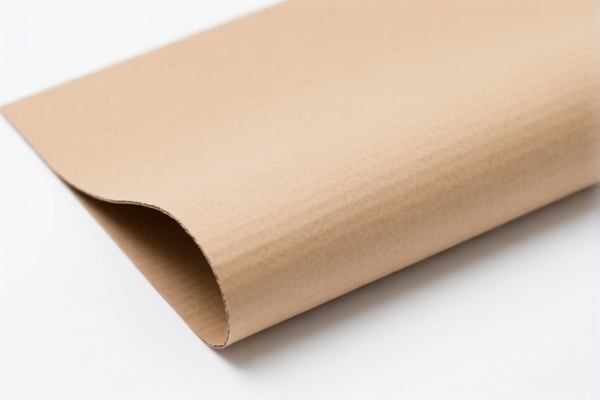

AI Analysis
📜 Paper (HS Code 4802.61.60.40 & Related Classifications)
🌐 HS Code Reference & Customs Clearance Guide | 2026 Latest Tariff Analysis | Professional Clearance Strategy
📌 I. Product Definition & Classification: Do You Really Understand "Paper"?
Paper is a fundamental material in global trade, used for printing, packaging, writing, and industrial applications. In international trade, it is strictly categorized based on fiber content, coating status, weight, and specific use.
Key Distinctions:
- Uncoated Paper vs. Coated Paper: Coated papers have a surface treatment for better print quality; uncoated do not.
- Mechanical Fiber Content: High mechanical fiber content (>10%) often leads to different subheadings.
- Base Weight: Light-weight paper (e.g., <40g/m²) vs. heavy-weight paper.
⚠️ Critical Clarification:
- If the paper is uncoated and has high mechanical fiber content, it may fall under 4802.58 or 4802.59.
- If the paper is coated or has different fiber characteristics, it may fall under 4810.22 or 4823.90.
- Generic "Paper" is often a fallback classification, but precise classification reduces tax risks.
📦 II. HS Code Classification Details (2026 Latest Tariff Authority Comparison)
Based on the provided data, here are the relevant HS Codes and their justifications:
| HS Code | Product Description | Justification for Classification | Material Match |
|---|---|---|---|
4802.58.20.40 |
Paper, other than printing/writing paper, of a kind used for technical/industrial uses, uncoated, high mechanical fiber content (>10%) | Direct match with product name "Paper" and classification attributes. | ✅ Paper |
4810.22.50.80 |
Paper with coating on one or both sides, kraft paper, white kraft paper | Material is Paper, fully consistent with "Paper and Paperboard" category. Reasonable inference. | ✅ Paper |
4823.90.86.80 |
Other paper, paperboard, cellulose wadding, and articles thereof | Fallback category for paper products not elsewhere specified. No material conflict. | ✅ Paper |
4823.90.67.00 |
Other paper, paperboard, cellulose wadding, and articles thereof | Fallback category for "other" types. Consistent with paper/board classification. | ✅ Paper |
4810.22.70.40 |
Paper with coating on one or both sides, kraft paper, other | Inferred as light-coated paper with >10% mechanical fiber content based on "other" fallback principle. | ✅ Paper |
4802.58.20.20 |
Paper, other than printing/writing paper, uncoated, not elsewhere specified | Product name is Paper, matches material characteristics. Inferred as uncoated paper. | ✅ Paper |
🔍 Key Reminder:
- All "Paper" classifications are based on the material Paper (纸).
- Fallback Codes (e.g.,4823.90.xxxx) are used when specific characteristics (like coating or fiber content) are not clearly defined.
- Precision is Key: Misclassification can lead to penalties or additional duties.
💰 III. 2026 Latest Tariff Rate Details (Including Surtaxes, Policy Add-ons)
✅ Applicable Country: United States (US)
✅ Origin: China (CN)
✅ Effective Date: November 10, 2025 (and subsequent imports)
🎯 1. 4802.58.20.40 —— Paper (Uncoated, High Mechanical Fiber Content)
| Item | Content |
|---|---|
| Base Tariff | 0% (ad valorem) |
| USITC Surtax | +25% (from USITC Footnote 9903.88.01) |
| IEEPA Surtax | +10% (targeting China/HK products, effective Nov 10, 2025) |
| Total Rate | 35.0% |
| Tax Calculation | CIF Value × 35% |
| De Minimis Eligibility | ❌ No (deny_de_minimis) |
| Legal Basis Path | IEEPA:9903.01.25 → IEEPA:9903.01.24 → USITC:4802.58.20.40 → FOOTNOTE:9903.88.01 |
📌 Explanation:
- "USITC Surtax 25%" comes from Section 301 of the U.S. Trade Act.
- "IEEPA 10%" is the International Emergency Economic Powers Act surcharge on Chinese products.
- Total 35%, which is high, must be anticipated in advance!
🎯 2. 4810.22.50.80 —— Coated Kraft Paper
| Item | Content |
|---|---|
| Base Tariff | 0% |
| USITC Surtax | +25% |
| IEEPA Surtax | +10% |
| Total Rate | 35.0% |
| Tax Calculation | CIF × 35% |
| De Minimis Eligibility | ❌ No |
| Legal Basis Path | IEEPA:9903.01.25 → IEEPA:9903.01.24 → USITC:4810.22.50.80 → FOOTNOTE:9903.88.01 |
📌 Note:
- Same surtax structure as other paper codes.
- Even if the paper is coated, the 35% total rate applies if it originates from China.
🎯 3. 4823.90.86.80 & 4823.90.67.00 —— Other Paper Products (Fallback)
| Item | Content |
|---|---|
| Base Tariff | 0% |
| USITC Surtax | +25% |
| IEEPA Surtax | +10% |
| Total Rate | 35.0% |
| Tax Calculation | CIF × 35% |
| De Minimis Eligibility | ❌ No |
| Legal Basis Path | IEEPA:9903.01.25 → IEEPA:9903.01.24 → USITC:4823.90.xxxx → FOOTNOTE:9903.88.01 |
📌 Note:
- These are fallback categories for unspecified paper products.
- The 35% total rate still applies, regardless of the specific fallback code.
🎯 4. 4810.22.70.40 & 4802.58.20.20 —— Other Specific Paper Types
| Item | Content |
|---|---|
| Base Tariff | 0% |
| USITC Surtax | +25% |
| IEEPA Surtax | +10% |
| Total Rate | 35.0% |
| Tax Calculation | CIF × 35% |
| De Minimis Eligibility | ❌ No |
| Legal Basis Path | IEEPA:9903.01.25 → IEEPA:9903.01.24 → USITC:4810.22.70.40 or 4802.58.20.20 → FOOTNOTE:9903.88.01 |
📌 Note:
- All classified Paper products from China to the US face a 35% total tariff.
- The distinction lies in customs verification of material and processing.
🛠️ IV. Customs Clearance Practical Advice (Real-World Pitfall Guide)
✅ 1. Required Documentation Checklist (All Required)
| Document | Required | Description |
|---|---|---|
| ✅ Product Specification Sheet | ✔️ | Include fiber content, coating status, basis weight, dimensions |
| ✅ Product Photos (with Label) | ✔️ | Clear image of the paper roll/sheet, brand, model |
| ✅ Commercial Invoice | ✔️ | Clearly state "Paper for [Specific Use]" |
| ✅ Certificate of Origin (CO) | ✔️ | If not Chinese origin,可申请 preferential rates |
| ✅ Packing List | ✔️ | Detail packaging to avoid misclassification |
| ✅ Third-Party Test Report | ✔️ | If applicable, for material composition verification |
✅ 2. Declaration Tips (Key Mantra)
🔥 "Material Matches Code, Coat Status Matters, Name Must Be Precise, Tax Can Be Lowered!"
| Scenario | Correct Declaration | Wrong Practice |
|---|---|---|
| Uncoated Paper, High Mechanical Fiber | 4802.58.20.40 |
Misdeclare as Coated Paper → 35% |
| Coated Kraft Paper | 4810.22.50.80 |
Misdeclare as Uncoated → 35% (but risk of penalty) |
| Unspecified Paper Product | 4823.90.86.80 |
Generic "Paper" → High risk of audit |
| Paper for Specific Use (e.g., Medical) | Specific Code if available | Generic "Paper" → 35% |
✅ 3. Special Case Handling
| Situation | Handling Advice |
|---|---|
| OEM Custom Paper | Provide client order + design specs to avoid "non-standard" classification |
| Paper with Special Coating | Declare coating details (e.g., "High-Gloss Coated") to ensure correct subheading |
| Paper for Medical/Industrial Use | If exempt, provide proof of use; otherwise, still 35% |
| Mixed Shipments (Paper + Non-Paper) | Declare separately to avoid misclassification of the entire shipment |
🌍 V. Global Market Customs Clearance Comparison (2026 Latest)
| Country/Region | Recommended HS Code | Tariff | Certification Requirement | Notes |
|---|---|---|---|---|
| 🇺🇸 USA | 4802.58.20.40 (or relevant) |
35% (China-origin) | None specific | High tariff, strict material verification |
| 🇨🇳 China | 4802.58.20.40 |
5-10% | None | Lower tariff, but export restrictions may apply |
| 🇪🇺 EU | 4802.58.20.40 |
0-6.5% | CE (if applicable) | No surtaxes, but REACH compliance may apply |
| 🇦🇺 Australia | 4802.58.20.40 |
5% | None | Moderate tariff |
| 🇯🇵 Japan | 4802.58.20.40 |
0-3% | JIS | Low tariff |
📌 Conclusion:
- USA is the only major market imposing 35% total tariffs on Chinese-origin paper.
- EU, Japan, Australia have lower or zero tariffs, but may require environmental compliance (e.g., FSC, REACH).
- Cost Advantage: Consider sourcing paper from Vietnam, India, or Malaysia to avoid US surtaxes.
📌 VI. Common Mistakes & Pitfall Guide (Lessons Learned)
❌ Mistake 1: Declaring "Coated Paper" as "Uncoated Paper"
👉 Consequence: Customs audit → Delay → Potential penalties
❌ Mistake 2: Using Generic "Paper" for Specific Uses
👉 Consequence: Incorrect HS Code → 35% Tariff applies, but risk of reclassification
❌ Mistake 3: Not Providing Material Specifications
👉 Consequence: Customs cannot verify fiber/coating status → Hold for Inspection
❌ Mistake 4: Misdeclaring "Paperboard" as "Paper"
👉 Consequence: Different HS Code → Different Tariff → Compliance Risk
✅ Correct Practice:
"Uncoated Paper, 50g/m², 100% Wood Pulp, for Industrial Use, Model XYZ, FSC Certified"
🎯 VII. Conclusion: Precise Classification, Save Time, Reduce Costs!
🎯 Remember the Mantra:
🔹 "Material Matches Code, Coat Status Matters, Name Must Be Precise, Tax Can Be Lowered!"
🔹 "HS Code Determines Tariff, 35% Surcharge for China, Declare Correctly, Avoid Penalties!"
📌 Pro Tip:
- If your paper originates from Vietnam, India, Malaysia, or Thailand, you may avoid IEEPA surtaxes, reducing the total tariff to 0-6.5%.
- Apply for Advance Ruling before shipment to ensure correct classification.
- Maintain Detailed Records of material composition and processing to support customs declarations.
📣 Act Now:
📞 Consult a Professional Customs Broker + Provide Product Specs + Apply for HS Code Advance Ruling
🚀 Ensure Smooth Clearance, Efficient Export, and Maximized Profit!
✨ Professional Clearance Starts with Accurate Classification!
💼 Every Cent of Cost Deserves Precise Calculation!
Customer Reviews
About HS Code Classification
The Harmonized System (HS) is an internationally standardized nomenclature developed by the World Customs Organization (WCO) to classify traded products. Over 200 countries use the HS system as the basis for customs tariffs, trade statistics, and import/export regulations.
Each HS code follows a hierarchical structure:
- Chapter (2 digits) — Broad category of goods (e.g., Chapter 84: Machinery and Mechanical Appliances)
- Heading (4 digits) — More specific grouping within the chapter
- Subheading (6 digits) — Internationally standardized breakdown, used by all WCO member countries
- National subdivisions (8-10 digits) — Country-specific extensions for further classification, such as US HTSUS 10-digit codes
Correct HS code classification is essential for smooth customs clearance, accurate duty payment, and compliance with trade regulations. Misclassification can lead to customs delays, overpayment of duties, or penalties.
When importing from CN to US, the applicable tariff rates may include:
- Most-Favored-Nation (MFN) rate — The standard duty rate applied to WTO members
- General rate — Applied to countries without trade agreements
- Trade remedy duties — Additional tariffs such as Section 301 (anti-dumping), Section 232 (national security), or countervailing duties
The information provided on this page is for reference purposes only. For official classification, please consult with your local customs authority or a licensed customs broker.