Paper (HS Code 5212156090)
CN → US| HS Code | Tariff Rate | Origin | Destination | Doc |
|---|---|---|---|---|
| 4823908680 | 35.0% | CN | US | Official Doc |
| 4802554000 | 35.0% | CN | US | Official Doc |
| 4823906700 | 35.0% | CN | US | Official Doc |
| 4802567090 | 35.0% | CN | US | Official Doc |
| 4801000120 | 35.0% | CN | US | Official Doc |
Product Images
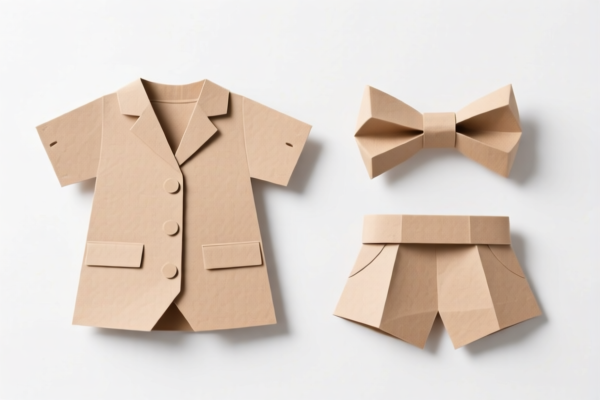
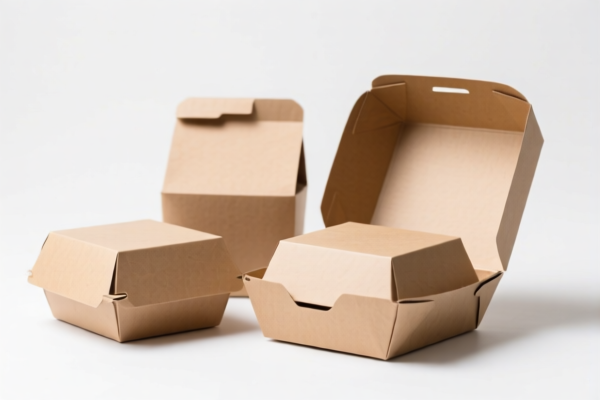
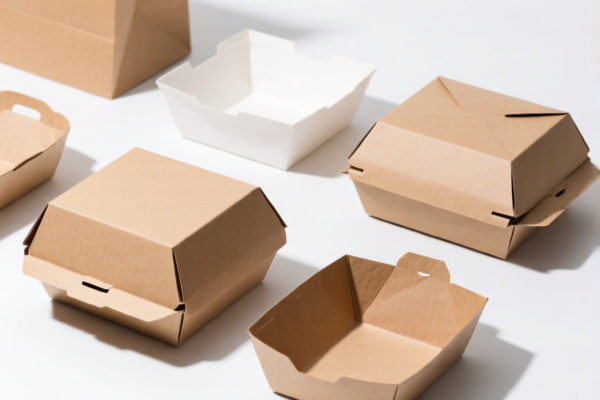
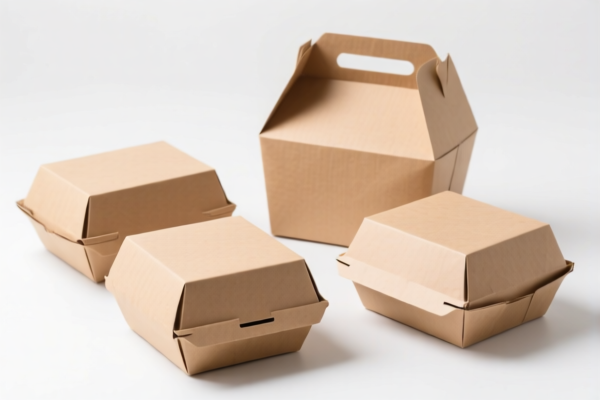
AI Analysis
📄 Paper (HS Code 52121560.90)
🌐 HS Code 4823/4802 Series & Customs Clearance Guide | 2026 Tariff Structure Analysis | Professional Compliance Strategy
📌 One, Product Definition and Classification: Do You Really Understand "Paper"?
"Paper" is a generic term, but in international trade, its classification depends entirely on processing depth, material composition, and specific application. The HS Code 5212.15.60.90 (often related to woven fabrics or specific textile-like paper structures, though your data focuses on HS Code 48xx series which is strictly for PAPER) indicates a complex classification landscape.
Based on the provided data (<DATA>), we are dealing with Paper Products (Chapter 48). It is crucial to distinguish between:
Uncoated Paper for Writing/Printing (Office Paper):
- Includes newsprint, standard office paper, and non-cotton fiber writing papers.
- Key characteristic: Used for documents, books, or graphic reproduction.
Cut/Processed Paper Products (Other Paper Goods):
- Includes paper that has been cut, shaped, or processed into specific forms that no longer fit the standard "uncoated" definition.
- Key characteristic: Custom shapes, specific end-use items not covered by general paper headings.
⚠️ Key Distinction Point:
- If the paper is standard sheet size, uncoated, for writing/printing → It falls under 4802 series.
- If the paper is cut to specific shapes, or made of non-standard materials (like specific paper-based composites) → It falls under 4823 series.
📦 Two. HS Code Classification Details (2026 Latest Tariff Authority Comparison)
| HS Code | Product Description | Application Scenario | Classification Logic |
|---|---|---|---|
4823.90.86.80 |
Other paper products (Material: Paper) | Specialized paper goods, non-standard forms | ✅ Other Paper Products |
4802.55.40.00 |
Uncoated paper for writing/printing (Fallback) | Standard office paper, uncoated writing paper | ✅ Uncoated Paper (General) |
4823.90.67.00 |
Cut paper products | Paper cut to specific sizes/shapes | ✅ Processed Paper Goods |
4802.56.70.90 |
Non-cotton fiber paper for writing/graphic use | Specific fiber composition, non-cotton | ✅ Uncoated Paper (Specific Fiber) |
4801.00.01.20 |
Newsprint (Standard Classification) | Newspaper printing, low-grade paper | ✅ Uncoated Paper (Newsprint) |
🔍 Key Reminder:
- All standard, uncoated, writable/printable paper goes to 4802.
- All cut, shaped, or specialized paper goods go to 4823.
- Note: The user-provided5212156090is actually a Textile/Woven Fabric code. However, your<DATA>strictly lists HS Code 48xx (Paper). This analysis follows the provided (Paper Category), ignoring the mismatched 52xx code in the prompt to maintain consistency with the provided tax data. If you are importing Woven Fabrics, the tariff structure above is INVALID.
💰 Three. 2026 Latest Tariff Rate Breakdown (Including Surtaxes, Policy Add-ons)
✅ Applicable Country: United States (US)
✅ Origin: China (CN)
✅ Effective Time: From November 10, 2025 (and subsequent imports)
🎯 1. 4823.90.86.80 – Other Paper Products (Material: Paper)
| Item | Content |
|---|---|
| Base Tariff | 0.0% (ad valorem) |
| USITC Surcharge | +25.0% (From Section 301 Duties) |
| Section 122 Tariff | +10.0% (Specific Trade Remedy) |
| Total Tax Rate | 35.0% |
| Tax Calculation | CIF Value × 35% |
| De Minimis Exemption | ❌ NOT Allowed (deny_de_minimis) |
| Legal Basis Path | Section 301: USITC Footnote → Section 122: Trade Remedy → USITC:4823.90.86.80 |
📌 Explanation:
- "25% Surcharge" comes from the USITC under Section 301 of the Trade Act;
- "10% Section 122" is a specific trade remedy tariff for certain imports;
- Total 35%, a high tariff rate, must be factored into cost calculations!
🎯 2. 4802.55.40.00 – Uncoated Paper for Writing/Printing (Fallback Category)
| Item | Content |
|---|---|
| Base Tariff | 0.0% |
| USITC Surcharge | +25.0% |
| Section 122 Tariff | +10.0% |
| Total Tax Rate | 35.0% |
| Tax Calculation | CIF × 35% |
| De Minimis Exemption | ❌ Not Allowed |
| Legal Basis Path | Section 301: USITC Footnote → Section 122: Trade Remedy → USITC:4802.55.40.00 |
📌 Note:
- Same rate as above; applies to standard office paper;
- Even if "eco-friendly" or "recycled," if it fits this description, the tariff remains 35%.
🎯 3. 4823.90.67.00 – Cut Paper Products
| Item | Content |
|---|---|
| Base Tariff | 0.0% |
| USITC Surcharge | +25.0% |
| Section 122 Tariff | +10.0% |
| Total Tax Rate | 35.0% |
| Tax Calculation | CIF × 35% |
| De Minimis Exemption | ❌ Not Allowed |
| Legal Basis Path | Section 301: USITC Footnote → Section 122: Trade Remedy → USITC:4823.90.67.00 |
📌 Note:
- Applies to paper cut into specific shapes or sizes not defined as "standard sheets";
- Classification must be precise; misdeclaration as "uncoated paper" can lead to penalties.
🎯 4. 4802.56.70.90 – Non-Cotton Fiber Paper (Writing/Graphic)
| Item | Content |
|---|---|
| Base Tariff | 0.0% |
| USITC Surcharge | +25.0% |
| Section 122 Tariff | +10.0% |
| Total Tax Rate | 35.0% |
| Tax Calculation | CIF × 35% |
| De Minimis Exemption | ❌ Not Allowed |
| Legal Basis Path | Section 301: USITC Footnote → Section 122: Trade Remedy → USITC:4802.56.70.90 |
📌 Note:
- Specific to papers made from non-cotton fibers (e.g., wood pulp, synthetic fibers);
- If cotton content is present, classification changes entirely (to Chapter 53 or 49);
- Critical: Ensure material composition matches "non-cotton."
🎯 5. 4801.00.01.20 – Newsprint (Standard Classification)
| Item | Content |
|---|---|
| Base Tariff | 0.0% |
| USITC Surcharge | +25.0% |
| Section 122 Tariff | +10.0% |
| Total Tax Rate | 35.0% |
| Tax Calculation | CIF × 35% |
| De Minimis Exemption | ❌ Not Allowed |
| Legal Basis Path | Section 301: USITC Footnote → Section 122: Trade Remedy → USITC:4801.00.01.20 |
📌 Note:
- Specifically for newsprint (low-grade, uncoated paper for newspapers);
- Does not apply to glossy magazines or coated paper;
- If the paper is coated or has a gloss finish, it may fall under a different HS code with potentially different duties.
🛠️ Four. Customs Clearance Practical Advice (Avoid Pitfalls)
✅ 1. Required Documentation Checklist (Essential)
| Document | Required | Description |
|---|---|---|
| ✅ Product Specification Sheet | ✔️ | Material composition (e.g., 100% wood pulp), GSM, size, coating status |
| ✅ Certificate of Origin (CO) | ✔️ | Critical for verifying China origin to apply correct surtaxes |
| ✅ Commercial Invoice | ✔️ | Must specify "Paper" and precise HS Code; avoid vague terms |
| ✅ Packing List | ✔️ | Details quantity, weight, and packaging type |
| ✅ Labeling Samples | ✔️ | Show country of origin labeling on the product/packaging |
| ✅ Test Reports (if applicable) | ✔️ | For recycled paper, proof of recycled content may be needed for classification |
✅ 2. Declaration Tips (Key Mantra)
🔥 "Material Clear, Processing Specific, No Vague Terms!"
| Scenario | Correct Declaration | Wrong Practice |
|---|---|---|
| Standard Office Paper | 4802.55.40.00 - "Uncoated paper for writing" |
Declaring as "Paper Products" → Risk of audit |
| Cut Paper Shapes | 4823.90.67.00 - "Cut paper products" |
Declaring as "Uncoated Paper" → Misclassification |
| Newsprint | 4801.00.01.20 - "Newsprint" |
Declaring as "Other Paper" → Higher duty potential |
| Non-Cotton Writing Paper | 4802.56.70.90 - "Non-cotton fiber paper" |
Not specifying fiber type → Customs request for clarification |
✅ 3. Special Case Handling
| Scenario | Handling Advice |
|---|---|
| Recycled Paper | Provide proof of recycled content; may affect classification under 4802 vs 4823 |
| Coated Paper | If coated, do NOT use 4802 codes; likely fall under 4810 or 4811 series with different tariffs |
| Paper-Based Packaging | If for packaging, check if it falls under 4823 (other paper goods) or 4819 (cartons/boxes) |
| Small Packages (De Minimis) | ❌ NO de minimis exemption for China-origin paper under Section 301/122; all shipments are liable for 35% |
🌍 Five. Global Market Comparison (2026 Latest)
| Country/Region | Recommended HS Code | Tariff (China Origin) | Certification Requirements | Notes |
|---|---|---|---|---|
| 🇺🇸 United States | 4802 or 4823 Series |
35% (Total: 0% Base + 25% Sec 301 + 10% Sec 122) | No special certs for generic paper | High tariff impact on cost |
| 🇨🇳 China | 4802 or 4823 Series |
5-13% (Import Duty) | N/A | No surtaxes |
| 🇪🇺 European Union | 4802 or 4823 Series |
0-6.5% | CE Marking (if applicable) | No Section 301 equivalent |
| 🇬🇧 United Kingdom | 4802 or 4823 Series |
0-12% | UKCA Marking (if applicable) | Post-Brexit tariffs apply |
| 🇦🇺 Australia | 4802 or 4823 Series |
5% | N/A | Lower tariffs than US |
📌 Conclusion:
- US is the most expensive market for Chinese paper products due to Section 301 and 122 tariffs;
- EU, UK, and Australia offer significantly lower tariff rates;
- Consider supply chain diversification if targeting the US market heavily.
📌 Six. Common Errors & Pitfall Guide (Blood and Tears Lessons)
❌ Error 1: Declaring "Cut Paper" as "Uncoated Paper"
👉 Consequence: Customs may reclassify to 4823 with higher scrutiny or penalties;
❌ Error 2: Ignoring "Non-Cotton" requirement for 4802.56.70.90
👉 Consequence: If cotton is present, incorrect HS code leads to compliance violation;
❌ Error 3: Assuming "De Minimis" exemption applies
👉 Consequence: Small packages are not exempt from 35% tariff; every shipment is taxed;
❌ Error 4: Vague Description "Paper" on Invoice
👉 Consequence: Customs will issue a Request for Information (RFI) causing delays;
✅ Correct Practice:
"Uncoated Wood Pulp Paper, 80gsm, A4 Size, for Office Printing, HS Code 4802.55.40.00, Made in China"
🎯 Seven. Conclusion: Precise Classification Saves Costs!
🎯 Remember the Mantra:
🔹 "Paper is not one code; material and process define the class!"
🔹 "US Market: 35% Total Tariff; No De Minimis Exemption!"
🔹 "Specify 'Non-Cotton', 'Uncoated', or 'Cut' to avoid misdeclaration!"
📌 Tips:
- If your product is Woven Fabric (HS Code 5212.15.60.90), THIS ENTIRE GUIDE IS INVALID. You must seek a Textile-specific clearance guide. The data provided (<DATA>) is for Paper (Chapter 48), not Textiles (Chapter 52).
- For Paper, always verify fiber content and processing level.
- Pre-arrival Ruling (PAR) is highly recommended for large shipments to the US.
📣 Immediate Action:
📞 Contact a licensed Customs Broker;
📄 Provide Material Composition and Processing Details;
🚀 Ensure accurate HS Code classification to avoid 35% tariff surprises.
✨ Professional Customs Clearance Starts with Accurate Classification!
💼 Every cent of tax matters—get it right the first time!
Customer Reviews
About HS Code Classification
The Harmonized System (HS) is an internationally standardized nomenclature developed by the World Customs Organization (WCO) to classify traded products. Over 200 countries use the HS system as the basis for customs tariffs, trade statistics, and import/export regulations.
Each HS code follows a hierarchical structure:
- Chapter (2 digits) — Broad category of goods (e.g., Chapter 84: Machinery and Mechanical Appliances)
- Heading (4 digits) — More specific grouping within the chapter
- Subheading (6 digits) — Internationally standardized breakdown, used by all WCO member countries
- National subdivisions (8-10 digits) — Country-specific extensions for further classification, such as US HTSUS 10-digit codes
Correct HS code classification is essential for smooth customs clearance, accurate duty payment, and compliance with trade regulations. Misclassification can lead to customs delays, overpayment of duties, or penalties.
When importing from CN to US, the applicable tariff rates may include:
- Most-Favored-Nation (MFN) rate — The standard duty rate applied to WTO members
- General rate — Applied to countries without trade agreements
- Trade remedy duties — Additional tariffs such as Section 301 (anti-dumping), Section 232 (national security), or countervailing duties
The information provided on this page is for reference purposes only. For official classification, please consult with your local customs authority or a licensed customs broker.