Paper 70g/m² or less
CN → US| HS Code | Tariff Rate | Origin | Destination | Doc |
|---|---|---|---|---|
| 4811904090 | 35.0% | CN | US | Official Doc |
| 4811906010 | 35.0% | CN | US | Official Doc |
| 4801000120 | 35.0% | CN | US | Official Doc |
| 4801000140 | 35.0% | CN | US | Official Doc |
| 4802541000 | 35.0% | CN | US | Official Doc |
Product Images

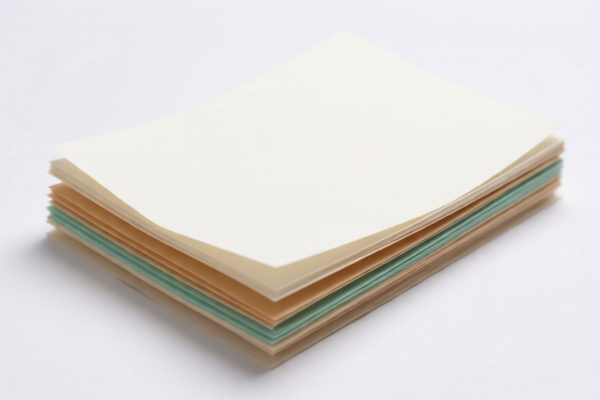

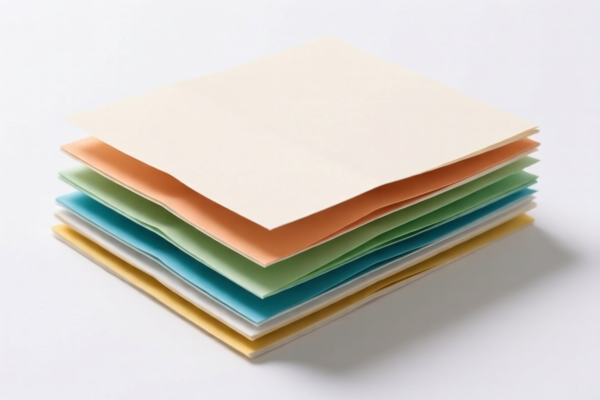
AI Analysis
📄 Paper (70g/m² or Less) | Global Customs Classification & Tax Guide 2026
🌐 HS Code Reference & Customs Clearance Guide | 2026 Latest Tariff Analysis | Professional Strategy for US Imports
📌 I. Product Definition & Classification: Understanding "Paper"
Paper, defined here with a weight of 70 grams per square meter (gsm) or less, falls under the broad category of paper products subject to specific US trade restrictions. In international trade, paper is classified based on its material composition, weight (grammage), coating status, and specific use (e.g., newsprint, writing, coated).
⚠️ Critical Distinction:
- 70gsm or less is considered lightweight/thin paper.
- The classification depends heavily on whether the paper is uncoated, coated, or used for newsprint.
- All listed HS Codes below attract significant additional tariffs due to US-China trade policies.
📦 II. HS Code Classification Details (2026 Latest Tariff Authoritative Comparison)
Based on the provided data, the following HS Codes are matched for "Paper 70g/m² or less". Each entry includes the rationale for classification and the specific tax structure.
| HS Code | Product Description | Matching Rationale | Key Attributes |
|---|---|---|---|
4811.90.40.90 |
Paper products, coated/treated, light weight | Matches paper material; 70gsm fits the "lightweight/thin" profile; falls under Chapter 48 (Paper) for coated/treated paper after processing. | Thin paper, coated/treated |
4811.90.60.10 |
Thin coated paper (15-30gsm range applicable) | Material: Paper; Form: Thin (70gsm or less); Category: Coated/printed paper. Fits the "thin paper" descriptor within Chapter 48. | Coated paper, thin form |
4801.00.01.20 |
Newsprint | Material: Paper; Form: Sheet/Roll (inferred); Matches basic material requirements for newsprint category. | Newsprint, uncoated |
4801.00.01.40 |
Other paper (Newsprint category) | Name includes "Paper"; Weight 70gsm fits paper category attributes; "Other" subcategory logic applies with no material conflict. | Uncoated paper, newsprint type |
4802.54.10.00 |
Uncoated writing/printing paper | Material: Paper; Weight: ≤70gsm; Category: Uncoated paper (writing/printing); No material conflict, fits writing paper characteristics. | Uncoated, writing/printing paper |
🔍 Key Insight:
- All listed HS Codes relate to Chapter 48 (Paper and Paperboard).
- The distinction lies in sub-categories: Newsprint (4801) vs. Other Paper (4802,4811).
- Weight (≤70gsm) is a critical factor for4811.90(thin/coated papers) and4802.54(light uncoated paper).
💰 III. 2026 Latest Tariff Rate Breakdown (Including Additional Taxes)
✅ Applicable Country: United States (US)
✅ Origin: China (CN)
✅ Effective Date: November 10, 2025 (including subsequent imports)
✅ Total Tax Rate: 35.0% for all listed HS Codes
🎯 1. Tax Structure for All Listed HS Codes (4811.90.40.90, 4811.90.60.10, 4801.00.01.20, 4801.00.01.40, 4802.54.10.00)
| Item | Content |
|---|---|
| Base Tariff | 0.0% (ad valorem) |
| Section 301 Tariff (Additional) | +25.0% |
| Section 122 Tariff (Additional) | +10.0% |
| Total Tariff Rate | 35.0% |
| Tax Calculation | CIF Value × 35% |
| De Minimis Eligibility | ❌ Not Eligible (High tariff rates exclude low-value shipments from de minimis exemption under current US enforcement trends for Chinese goods) |
| Legal Basis Path | USITC:48xx.xx.xx.xx → Section 301 (Footnote 9903.88.01) → Section 122 (IEEPA) |
📌 Explanation:
- "Base Tariff 0%": The standard MFN (Most Favored Nation) duty for many paper products is 0%.
- "Section 301 Tariff 25%": Imposed under US Trade Law Section 301 against Chinese goods, targeting strategic sectors including paper products in certain subheadings.
- "Section 122 Tariff 10%": Imposed under the International Emergency Economic Powers Act (IEEPA) as a separate punitive measure.
- Total 35%: This is a high tariff burden, significantly impacting profit margins. Pre-clearance planning is essential.
🛠️ IV. Customs Clearance Operational Advice (Practical Pitfall Avoidance)
✅ 1. Required Documentation Checklist (All Must Be Provided)
| Document | Mandatory? | Explanation |
|---|---|---|
| ✅ Product Specification Sheet | ✔️ | Must specify weight (gsm), coating status (coated/uncoated), brightness, opacity, and intended use (newsprint vs. writing paper). |
| ✅ Material Composition Certificate | ✔️ | Confirms 100% paper content; no mixed materials (e.g., plastic laminates) that could shift classification to Chapter 39. |
| ✅ Commercial Invoice | ✔️ | Must clearly state: "Paper, 70gsm or Less, [Specific Type: Newsprint/Coated/Uncoated]", HS Code, and Country of Origin (China). |
| ✅ Packing List | ✔️ | Details net weight, gross weight, and number of rolls/sheets to verify weight consistency with declared gsm. |
| ✅ Certificate of Origin (CO) | ✔️ | Required to confirm Chinese origin and apply correct tariff rates. |
| ✅ Photos of Product & Labels | ✔️ | Show roll/sheet form, label details, and any logos/text to aid customs verification. |
✅ 2. Declaration Tips (Key Mnemonic)
🔥 “Weight Defines Form, Coating Defines Chapter, Origin Defines Tax!”
| Scenario | Correct Declaration Approach | Wrong Approach |
|---|---|---|
| Uncoated Paper (Writing/Printing) | Declare as 4802.54.10.00 |
Misdeclare as coated paper → Higher scrutiny |
| Coated Paper (Thin, ≤70gsm) | Declare as 4811.90.60.10 or 4811.90.40.90 |
Declare as uncoated → Classification error |
| Newsprint | Declare as 4801.00.01.20 or 4801.00.01.40 |
Declare as general paper → Delayed inspection |
| Mixed Bundles (Paper + Plastic) | Split declaration or reclassify to Chapter 39 | Declare only as paper → Risk of penalty |
⚠️ Critical Note:
- Ensure the gsm (grams per square meter) is explicitly stated on the invoice and specification sheet.
- Customs may request lab tests to verify weight and coating status. Have test reports ready.
✅ 3. Special Case Handling
| Scenario | Handling Advice |
|---|---|
| Custom Printed Paper | Clearly indicate if printing affects classification. Usually still 4811 if coated/treated. |
| Recycled Paper | Provide Certificate of Recycled Content; may affect environmental compliance but not HS code. |
| Small Sample Shipments | Even if low value, do not rely on de minimis for Chinese-origin paper due to 35% tariff and enforcement strictness. Declare fully. |
| Paper with Non-Paper Layers | If laminated with plastic/metal, may shift to Chapter 39 (Plastics) or Chapter 76/79 (Metals). Consult specialist. |
🌍 V. Global Market Customs Comparison (2026 Latest)
| Country/Region | Recommended HS Code | Tariff (China Origin) | Certification/Requirements | Notes |
|---|---|---|---|---|
| 🇺🇸 USA | 4811.90.40.90 / 4802.54.10.00 etc. |
35% (0% Base + 25% Sec 301 + 10% Sec 122) | None specific, but strict documentation | High tariff burden; verify gsm and coating |
| 🇨🇳 China | 4811.90.40.90 / 4802.54.10.00 etc. |
5% - 10% (varies) | CCC (if applicable) | Lower tariffs; standard import procedures |
| 🇪🇺 EU | 4811.90 / 4802.54 |
0% - 6.5% | CE (if applicable), REACH | No additional punitive tariffs |
| 🇬🇧 UK | 4811.90 / 4802.54 |
0% - 6.5% | UKCA (if applicable) | Post-Brexit rules apply; similar to EU |
| 🇯🇵 Japan | 4811.90 / 4802.54 |
3.2% - 7.7% | PSE (if applicable) | Moderate tariffs; no US-style punitive taxes |
📌 Conclusion:
- USA is the most challenging market due to the 35% total tariff.
- EU, UK, Japan, and China have significantly lower tariffs, making them more cost-effective alternatives if supply chain flexibility allows.
- Pre-clearance HS Code validation is crucial for US imports to avoid unexpected costs.
📌 VI. Common Errors & Pitfall Avoidance (Lessons Learned)
❌ Error 1: Misdeclaring coated paper as uncoated (or vice versa)
👉 Consequence: Classification error → Customs audit → Back taxes + Penalties
❌ Error 2: Ignoring the "70gsm or less" specification
👉 Consequence: If gsm >70, code may shift (e.g., to 4810.13 for heavier uncoated paper) → Different tariff application
❌ Error 3: Failing to disclose Chinese origin
👉 Consequence: Attempt to evade Section 301/122 tariffs → Severe penalties, seizure, blacklisting
❌ Error 4: Using vague descriptions like "Paper Products"
👉 Consequence: Customs request additional information → Delay in clearance, storage fees
✅ Correct Practice:
“Paper, 70gsm, Uncoated, Unbleached, Roll Form, Chinese Origin, HS Code: 4802.54.10.00”
🎯 VII. Conclusion: Precise Classification Saves Money!
🎯 Remember the Mnemonic:
🔹 “70gsm is thin, coating matters, origin defines tax!”
🔹 “35% Total Tax in the US, plan ahead or pay dearly!”
🔹 “Document gsm, coating, and origin clearly!”
📌 Pro Tip:
- If your paper is coated, ensure the coating material is declared (e.g., clay, polymer).
- For uncoated writing paper, verify if it falls under 4802.54 (standard) or 4801 (newsprint).
- Always apply for an Advance Ruling (US CBP Form 5400) to confirm HS Code and tariff liability before shipment.
📣 Immediate Action Required:
📞 Contact your customs broker + Provide product specs + Confirm HS Code pre-shipment
🚀 Ensure smooth US customs clearance and cost control!
✨ Professional clearance starts with accurate classification!
💼 Every percentage point of tariff affects your bottom line!
Customer Reviews
About HS Code Classification
The Harmonized System (HS) is an internationally standardized nomenclature developed by the World Customs Organization (WCO) to classify traded products. Over 200 countries use the HS system as the basis for customs tariffs, trade statistics, and import/export regulations.
Each HS code follows a hierarchical structure:
- Chapter (2 digits) — Broad category of goods (e.g., Chapter 84: Machinery and Mechanical Appliances)
- Heading (4 digits) — More specific grouping within the chapter
- Subheading (6 digits) — Internationally standardized breakdown, used by all WCO member countries
- National subdivisions (8-10 digits) — Country-specific extensions for further classification, such as US HTSUS 10-digit codes
Correct HS code classification is essential for smooth customs clearance, accurate duty payment, and compliance with trade regulations. Misclassification can lead to customs delays, overpayment of duties, or penalties.
When importing from CN to US, the applicable tariff rates may include:
- Most-Favored-Nation (MFN) rate — The standard duty rate applied to WTO members
- General rate — Applied to countries without trade agreements
- Trade remedy duties — Additional tariffs such as Section 301 (anti-dumping), Section 232 (national security), or countervailing duties
The information provided on this page is for reference purposes only. For official classification, please consult with your local customs authority or a licensed customs broker.