Paper Anti seepage Agent
CN → US| HS Code | Tariff Rate | Origin | Destination | Doc |
|---|---|---|---|---|
| 3824999397 | 40.0% | CN | US | Official Doc |
| 3824997510 | 38.7% | CN | US | Official Doc |
| 3824997510 | 38.7% | CN | US | Official Doc |
| 3824999397 | 40.0% | CN | US | Official Doc |
| 3824999397 | 40.0% | CN | US | Official Doc |
Product Images
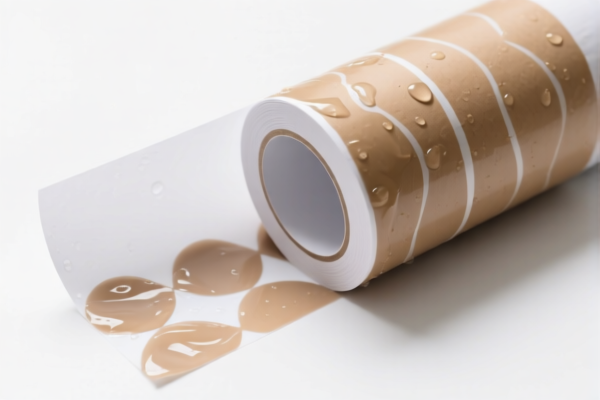

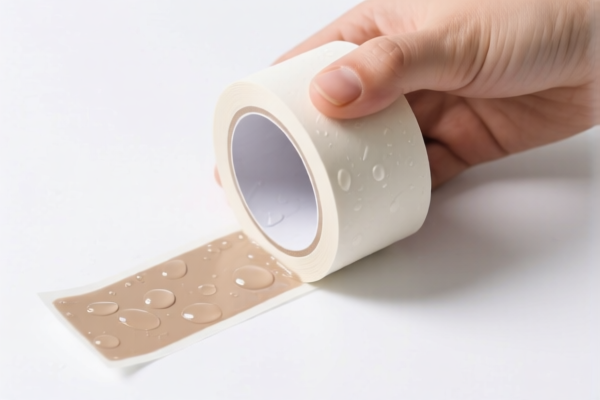
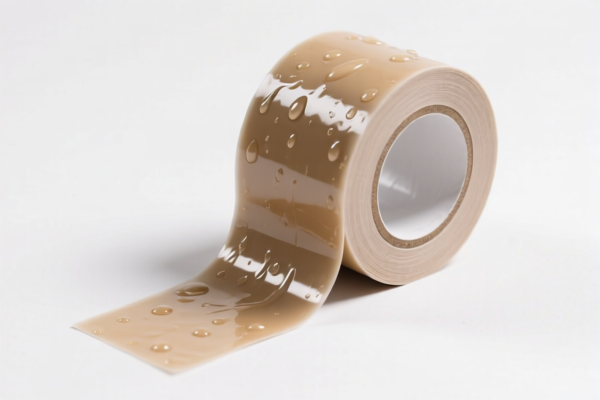
AI Analysis
💧 Paper Anti-Seepage Agent (Waterproofing Agent)
🌐 HS Code Reference & Customs Clearance Guide | 2026 Latest Tariff Analysis | Professional Clearance Strategy
📌 I. Product Definition & Classification: What is "Paper Anti-Seepage Agent"?
Paper Anti-Seepage Agents, commonly known as Paper Waterproofing Agents or Waterproofing Treatments, are chemical formulations applied to paper or paperboard to repel water, oil, or other liquids. They are critical in packaging, hygiene products, and industrial papers.
In international trade, these agents fall under Chapter 38: Miscellaneous Chemical Products. Specifically, they are classified based on their function as chemical additives or treating agents for paper manufacturing.
⚠️ Key Classification Logic:
- If the product is a chemical mixture used to treat paper (not the paper itself), it is classified under Heading 3824 ("Chemical products and preparations of the chemical or allied industries...").
- It is NOT classified as paper (Chapter 48) because it is a processing aid, not the final material.
📦 II. HS Code Classification Details (2026 Latest Tariff Authority Comparison)
| HS Code | Product Description | Application Scenario | Material Nature |
|---|---|---|---|
3824.99.93.97 |
Chemical preparations and products not elsewhere specified or included (兜底/Other) | Generic waterproofing agents where specific sub-headings do not apply perfectly; often used for broad "chemical preparations" | Chemical preparation/mixture |
3824.99.75.10 |
Paper waterproofing agents or finishing agents (Specific to paper treatment) | Agents specifically formulated for paper waterproofing, sizing, or finishing | Chemical additive/auxiliary for paper |
🔍 Critical Distinction:
-3824.99.75.10is the more specific code for "Paper Waterproofing Agents." It explicitly mentions paper treatment.
-3824.99.93.97is a general residual category for chemical preparations. It is used if the agent is not exclusively for paper or if customs requires a broader classification.
- Recommendation: Use3824.99.75.10if the product is explicitly labeled for paper application to ensure precision.
💰 III. 2026 Latest Tariff Rate Breakdown (Including Additional Duties & Policy Surcharges)
✅ Applicable Country: United States (US)
✅ Origin: China (CN)
✅ Effective Date: November 10, 2025 (for imports thereafter)
🎯 1. 3824.99.75.10 —— Paper Waterproofing/Finishing Agents (Specific)
| Item | Detail |
|---|---|
| Base Tariff Rate | 3.7% (Ad Valorem) |
| Section 301 Additional Duty | +25% (USITC Footnote) |
| Section 122 / IEEPA Surcharge | +10% (Specific Chinese goods surcharge) |
| Total Effective Tariff | 38.7% |
| Tax Calculation | CIF Value × 38.7% |
| De Minimis Exemption Eligible? | ❌ NO (Subject to high tariffs) |
| Legal Basis Path | IEEPA:9903.01.24 → USITC:3824.99.75.10 → FOOTNOTE:3824.99.75.10 |
📌 Explanation:
- The 3.7% base rate is standard for many chemical preparations.
- The 25% is the standard Section 301 tariff on Chinese goods.
- The 10% is an additional surcharge applicable to specific chemical categories from China.
- Total: 38.7%. This is a high-cost item for importers.
🎯 2. 3824.99.93.97 —— Other Chemical Preparations (General/Residual)
| Item | Detail |
|---|---|
| Base Tariff Rate | 5.0% (Ad Valorem) |
| Section 301 Additional Duty | +25% (USITC Footnote) |
| Section 122 / IEEPA Surcharge | +10% (Specific Chinese goods surcharge) |
| Total Effective Tariff | 40.0% |
| Tax Calculation | CIF Value × 40.0% |
| De Minimis Exemption Eligible? | ❌ NO (Subject to high tariffs) |
| Legal Basis Path | IEEPA:9903.01.25 → USITC:3824.99.93.97 → FOOTNOTE:3824.99.93.97 |
📌 Explanation:
- The 5.0% base rate is slightly higher than the specific paper agent rate.
- The 25% and 10% additional duties remain the same.
- Total: 40.0%.
- Note: Using this general code often results in a 1.3% higher total tax compared to the specific75.10code. Precision in classification saves money.
🛠️ IV. Customs Clearance Practical Advice (Operational Pitfall Avoidance)
✅ 1. Required Documentation Checklist (Mandatory)
| Document | Must Provide | Description |
|---|---|---|
| ✅ Product Specification Sheet | ✔️ | Must state composition, CAS numbers (if any), and intended use (e.g., "For Paper Waterproofing"). |
| ✅ Safety Data Sheet (SDS) | ✔️ | Required for chemical imports. Must comply with OSHA/GHS standards. |
| ✅ Commercial Invoice | ✔️ | Clearly describe product as "Paper Waterproofing Agent" or "Chemical Preparation for Paper Treatment." |
| ✅ Packing List | ✔️ | Detail net/gross weight, volume, and container number. |
| ✅ Certificate of Origin (CO) | ✔️ | To prove Chinese origin (triggering the 25% + 10% duties). |
| ✅ EPA Registration (If Applicable) | ✔️ | Some anti-seepage agents may require EPA registration if they contain antimicrobial or pesticide components. |
✅ 2. Declaration Strategy (Key Mantra)
🔥 “Specify the Use! 'Paper Treatment' is Key to Lowering the Base Rate!”
| Scenario | Correct Declaration | Wrong Practice |
|---|---|---|
| Agent for Paper Waterproofing | HS: 3824.99.75.10 |
Misdeclare as 3824.99.93.97 → Higher Base Tax (5% vs 3.7%) |
| Generic Chemical Solvent | HS: 3824.99.93.97 |
Misdeclare as Paper Agent → Risk of Penalty for Misclassification |
| Finished Waterproof Paper | HS: Chapter 48 (e.g., 4823.90) | Declare as Agent → Major Compliance Violation |
📌 Warning:
- Do NOT declare as "Paper" (Chapter 48). The agent is a chemical preparation, not the paper substrate.
- Ensure the product name in the invoice matches the HS code description (e.g., use "Finishing Agent" for75.10).
✅ 3. Special Case Handling
| Situation | Handling Advice |
|---|---|
| Mixed Chemicals | If the product contains multiple active ingredients, provide a detailed chemical breakdown. Customs may request SDS. |
| EPA-Regulated Ingredients | If the agent contains biocides or antimicrobials, ensure EPA registration is provided before shipment. |
| Liquid vs. Powder | Both are classified under 3824. Ensure packaging (drums, bags) is properly declared to avoid damage claims. |
| Small Samples | Even small quantities are subject to the 38.7% or 40% tariff. No de minimis exemption for these codes. |
🌍 V. Global Market Comparison (2026 Latest)
| Country/Region | Recommended HS Code | Tariff Rate | Certification Required | Notes |
|---|---|---|---|---|
| 🇺🇸 USA | 3824.99.75.10 |
38.7% | SDS, EPA (if applicable) | High tariff due to 301 + 122 surcharges. |
| 🇺🇸 USA | 3824.99.93.97 |
40.0% | SDS, EPA (if applicable) | Higher base rate, not recommended if specific code applies. |
| 🇨🇳 China | 3824.99.75.10 |
5-6% | Standard Chemical Import License | Lower tax burden for domestic sales. |
| 🇪🇺 EU | 3824.99.95 |
6.5% | REACH Registration | REACH compliance is critical for chemical imports into Europe. |
| 🇬🇧 UK | 3824.99.95 |
6.5% | UK REACH | Post-Brexit, UK REACH applies. |
📌 Conclusion:
- USA has the highest barrier due to political tariffs.
- EU/UK require REACH compliance, which is a significant cost and time factor.
- China has moderate tariffs but strict chemical import regulations.
📌 VI. Common Mistakes & Pitfall Guide (Blood Lessons)
❌ Mistake 1: Declaring as "Paper Accessories" or "Paper Additives" under Chapter 48
👉 Consequence: Customs rejects classification, demands re-declaration, and imposes penalties.
👉 Correct: Always use Chapter 38 for chemical treatments.
❌ Mistake 2: Using Generic "Chemical Preparation" (3824.99.93.97) when a Specific Code (3824.99.75.10) Exists
👉 Consequence: Overpaying 1.3% in base tariffs (5% vs 3.7%).
👉 Correct: Use the most specific code available.
❌ Mistake 3: Ignoring EPA Requirements for Antibacterial Agents
👉 Consequence: Shipment detained at port for lack of EPA registration.
👉 Correct: Check if the agent contains biocides. If yes, ensure EPA registration is provided.
❌ Mistake 4: Assuming De Minimis Exemption Applies
👉 Consequence: No exemption for these HS codes. All shipments are taxed.
👉 Correct: Plan for full tariff payment regardless of shipment size.
🎯 VII. Conclusion: Precision in Classification, Savings in Costs!
🎯 Key Takeaways:
🔹 "Use
3824.99.75.10for Paper Agents!" → Saves 1.3% base tariff.
🔹 "Expect 38.7% Total Duty for US Imports from China." → Budget accordingly.
🔹 "SDS is Mandatory." → No SDS, no entry.
🔹 "No De Minimis Exemption." → Even small samples are taxed.
📌 Pro Tip:
If your product is used for non-paper applications (e.g., fabric, wood), ensure the documentation clearly states the primary use. Misdeclaration can lead to severe penalties.
📣 Immediate Action:
📞 Contact a licensed customs broker.
📄 Prepare SDS and detailed product specifications.
🚀 Apply for an Advance Ruling if unsure about classification to mitigate risk.
✨ Professional Clearance Starts with Accurate Classification!
💼 Your Every Dollar of Cost Should Be Precisely Calculated!
Customer Reviews
About HS Code Classification
The Harmonized System (HS) is an internationally standardized nomenclature developed by the World Customs Organization (WCO) to classify traded products. Over 200 countries use the HS system as the basis for customs tariffs, trade statistics, and import/export regulations.
Each HS code follows a hierarchical structure:
- Chapter (2 digits) — Broad category of goods (e.g., Chapter 84: Machinery and Mechanical Appliances)
- Heading (4 digits) — More specific grouping within the chapter
- Subheading (6 digits) — Internationally standardized breakdown, used by all WCO member countries
- National subdivisions (8-10 digits) — Country-specific extensions for further classification, such as US HTSUS 10-digit codes
Correct HS code classification is essential for smooth customs clearance, accurate duty payment, and compliance with trade regulations. Misclassification can lead to customs delays, overpayment of duties, or penalties.
When importing from CN to US, the applicable tariff rates may include:
- Most-Favored-Nation (MFN) rate — The standard duty rate applied to WTO members
- General rate — Applied to countries without trade agreements
- Trade remedy duties — Additional tariffs such as Section 301 (anti-dumping), Section 232 (national security), or countervailing duties
The information provided on this page is for reference purposes only. For official classification, please consult with your local customs authority or a licensed customs broker.