Paper Boxes
CN → US| HS Code | Tariff Rate | Origin | Destination | Doc |
|---|---|---|---|---|
| 4819100040 | 35.0% | CN | US | Official Doc |
| 4805924010 | 35.0% | CN | US | Official Doc |
| 4805934010 | 35.0% | CN | US | Official Doc |
| 4819400040 | 35.0% | CN | US | Official Doc |
| 4823908680 | 35.0% | CN | US | Official Doc |
Product Images
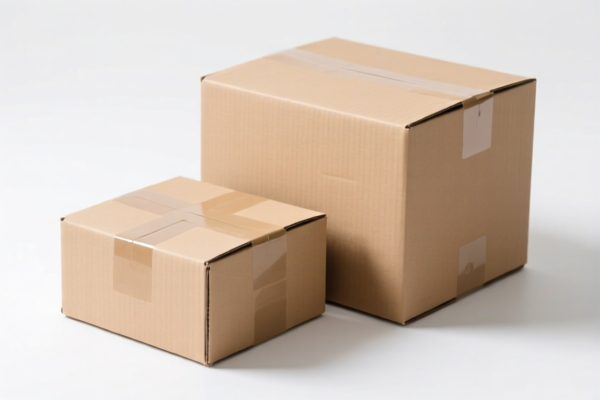
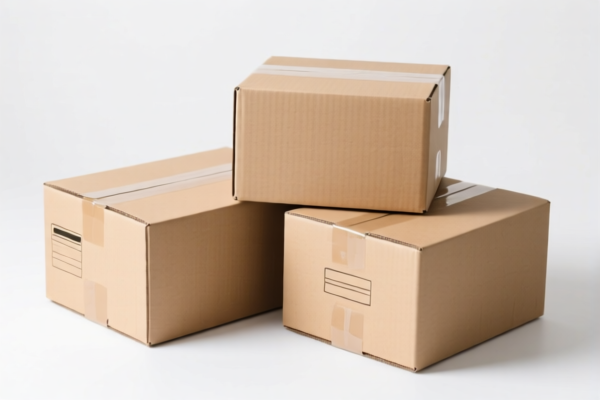


AI Analysis
📦 Paper Boxes (Packaging & Containers)
🌐 HS Code Reference & Customs Clearance Guide | 2026 Latest Tariff Analysis | Professional Clearance Strategy
📌 1. Product Definition: What Are "Paper Boxes"?
"Paper boxes" is a general commercial term that typically refers to various types of packaging made primarily from paper or paperboard. In international trade, these are not classified under a single HS code but depend on their material thickness, structure, and intended use.
⚠️ Key Distinction:
- Are they rigid cardboard boxes for shipping? → 4819.10
- Are they folding cartons for consumer goods? → 4805.92 / 4805.93
- Are they paper bags or other paper articles? → 4819.40 / 4823.90
📦 2. HS Code Classification Details (2026 Latest Tariff Mapping)
Based on the provided data, here are the precise classifications for different types of "paper boxes":
| HS Code | Product Description | Material & Use Characteristics | Summary from Data |
|---|---|---|---|
4819.10.00.40 |
Cartons, of corrugated paper or paperboard | Rigid, corrugated structure; used for shipping/outer packaging | "Cartons conform to characteristics of boxes made of paper or paperboard" |
4805.92.40.10 |
Folding board (Folding carton board) | Flexible, foldable material; used for inner packaging, cosmetics, food boxes | "Cartons conform to material and use characteristics of folding board" |
4805.93.40.10 |
Folding carton board | High-quality folding board; used for premium consumer packaging | "Cartons conform to material and use characteristics of Folding carton board" |
4819.40.00.40 |
Other paper or paperboard containers | Includes paper bags, sacks, and similar flexible containers | "Paper bags conform to paper material and bag shape characteristics" |
4823.90.86.80 |
Other articles of paper, pulp, paperboard, cellulose wadding or webs of cellulose fibers | Miscellaneous paper products not specified elsewhere (e.g., paper plates, paper filters, decorative paper items) | "Paper products conform to paper/paperboard material requirements and belong to other paper products" |
🔍 Critical Note:
- Corrugated vs. Folding: If the box is corrugated (wave-like inner layer), use 4819.10. If it is single-layer or multi-layer flat board that folds (like a cereal box), use 4805.92 or 4805.93. - Bags vs. Boxes: If the item is a paper bag (handle type, sack, etc.), use 4819.40. - Other Paper Goods: If it’s not a box or bag but still paper-based (e.g., paper cups, plates), use 4823.90.
💰 3. 2026 Latest Tariff Rate Breakdown (Including Surtaxes & Policy Add-ons)
✅ Applicable Country: United States (US)
✅ Origin: China (CN)
✅ Effective Date: Post-2025 (Current tariffs include Section 301 & 122 Clause additions)
🎯 1. 4819.10.00.40 – Corrugated Cartons (Shipping Boxes)
| Item | Detail |
|---|---|
| Base Tariff | 0.0% |
| Section 301 Surtax | +25.0% |
| Section 122 Clause Surtax | +10.0% |
| Total Tariff Rate | 35.0% |
| Tax Calculation | CIF Value × 35% |
| De Minimis Exemption? | ❌ No (Deny de minimis) |
| Legal Basis Path | USITC:4819.10.00.40 → Section 301: 25% → Section 122: 10% |
📌 Explanation:
- 0% Base: Corrugated boxes have no base duty under US Harmonized Tariff Schedule. - 25% Section 301: Retaliatory tariff on Chinese goods. - 10% Section 122: Additional surcharge on specific Chinese imports. - Total: 35% – High impact on packaging costs for Chinese exporters.
🎯 2. 4805.92.40.10 & 4805.93.40.10 – Folding Carton Boards
| Item | Detail |
|---|---|
| Base Tariff | 0.0% |
| Section 301 Surtax | +25.0% |
| Section 122 Clause Surtax | +10.0% |
| Total Tariff Rate | 35.0% |
| Tax Calculation | CIF Value × 35% |
| De Minimis Exemption? | ❌ No |
| Legal Basis Path | USITC:4805.92/93 → Section 301: 25% → Section 122: 10% |
📌 Note:
- Both 4805.92 and 4805.93 carry the same tariff structure. - These are commonly used for consumer goods packaging (e.g., electronics, cosmetics, pharmaceuticals). - Total 35% applies uniformly.
🎯 3. 4819.40.00.40 – Paper Bags / Containers
| Item | Detail |
|---|---|
| Base Tariff | 0.0% |
| Section 301 Surtax | +25.0% |
| Section 122 Clause Surtax | +10.0% |
| Total Tariff Rate | 35.0% |
| Tax Calculation | CIF Value × 35% |
| De Minimis Exemption? | ❌ No |
| Legal Basis Path | USITC:4819.40.00.40 → Section 301: 25% → Section 122: 10% |
📌 Note:
- Includes paper bags, sacks, and similar flexible containers. - Commonly used for retail packaging (e.g., shopping bags, food packaging).
🎯 4. 4823.90.86.80 – Other Paper Products
| Item | Detail |
|---|---|
| Base Tariff | 0.0% |
| Section 301 Surtax | +25.0% |
| Section 122 Clause Surtax | +10.0% |
| Total Tariff Rate | 35.0% |
| Tax Calculation | CIF Value × 35% |
| De Minimis Exemption? | ❌ No |
| Legal Basis Path | USITC:4823.90.86.80 → Section 301: 25% → Section 122: 10% |
📌 Note:
- This is a catch-all for paper products not classified elsewhere (e.g., paper plates, paper filters, decorative paper). - Ensure the product does not fit into boxes (4819) or bags (4819.40) to avoid misclassification.
🛠️ 4. Customs Clearance Practical Advice (Real-World Pitfall Avoidance)
✅ 1. Documentation Checklist (Mandatory)
| Document | Required | Description |
|---|---|---|
| ✅ Product Specification Sheet | ✔️ | Dimensions, material type (corrugated, folding board), number of plies |
| ✅ Material Composition Certificate | ✔️ | Confirm % of paper/paperboard, ink type, adhesive |
| ✅ Product Photos | ✔️ | Show structure, folds, handles (if bags), and any branding |
| ✅ Commercial Invoice | ✔️ | Clearly state "Corrugated Carton," "Folding Carton Box," or "Paper Bag" |
| ✅ Packing List | ✔️ | Detail quantity, weight, and packaging units |
| ✅ ISF Filing (if US import) | ✔️ | Must be filed 24 hours before loading |
✅ 2. Classification Tips (Key Rules)
🔥 “Shape Defines Code, Material Confirms It!”
| Situation | Correct HS Code | Common Mistake |
|---|---|---|
| Rigid, wavy, shipping boxes | 4819.10.00.40 |
Misclassified as 4805 → Higher scrutiny |
| Foldable, flat, consumer boxes | 4805.92.40.10 or 4805.93.40.10 |
Misclassified as 4819 → 35% vs 35% (no difference, but audit risk) |
| Paper bags with handles | 4819.40.00.40 |
Misclassified as 4805 → Incorrect description |
| Paper plates/cups | 4823.90.86.80 |
Misclassified as 4819 → Wrong category |
📌 Rule of Thumb:
- Corrugated =4819.10
- Folding Board =4805.92/93
- Bags/Sacks =4819.40
- Other Paper =4823.90
✅ 3. Special Circumstances Handling
| Situation | Handling Advice |
|---|---|
| Mixed Shipment (Boxes + Bags) | Declare separately with distinct HS codes. Do not lump together. |
| OEM Custom Boxes | Provide design blueprints or samples to prove material structure. |
| Packaging with Non-Paper Parts | If >50% paper, classify under 48xx. If dominated by plastic/metal, may fall under different chapter (e.g., 39, 73). |
| De Minimis (Section 321) | ❌ Not applicable. All 35% taxed items are excluded from $800 de minimis exemption for Chinese goods. |
🌍 5. Global Market Comparison (2026 Latest)
| Country/Region | Recommended HS Code | Tariff Rate | Notes |
|---|---|---|---|
| 🇺🇸 USA | 4819.10.00.40 etc. |
35% | Includes Section 301 (25%) + 122 Clause (10%) |
| 🇨🇳 China | 4819.10.00.40 etc. |
5-10% | Standard MFN rate, no surtaxes |
| 🇪🇺 EU | 4819.10 etc. |
0-2% | Low duty, but high environmental compliance (EPR, FSC) |
| 🇬🇧 UK | 4819.10 etc. |
0-2% | Post-Brexit tariffs, similar to EU |
| 🇨🇦 Canada | 4819.10.00.40 |
5% | No Section 301 surtax |
📌 Conclusion:
- USA has the highest tariff burden (35%) on Chinese paper packaging. - Cost-saving strategy: Consider sourcing packaging from Vietnam, Mexico, or Thailand to avoid Section 301 surtaxes (verify Rules of Origin).
📌 6. Common Errors & Pitfalls (Lessons Learned)
❌ Error 1: Using "Cardboard Box" as a generic description
👉 Consequence: Customs may delay for clarification, leading to storage fees.
✅ Fix: Specify "Corrugated Cartons" or "Folding Carton Boxes."
❌ Error 2: Misclassifying folding cartons as corrugated boxes
👉 Consequence: No tariff difference (35% vs 35%), but audit risk if structure doesn’t match.
✅ Fix: Provide photos showing wavy layers (corrugated) or flat folds (folding board).
❌ Error 3: Ignoring the 122 Clause
👉 Consequence: Underpayment of 10% surtax → Penalties and back taxes.
✅ Fix: Always include 35% in cost calculations for US-bound Chinese paper goods.
❌ Error 4: Assuming de minimis applies
👉 Consequence: Package seized or taxed at 35% despite small value.
✅ Fix: No de minimis for Section 301/122 goods from China.
🎯 7. Conclusion: Precise Classification Saves Money!
🎯 Remember the Mantra:
🔹 "Corrugated = 4819, Folding = 4805, Bags = 4819.40, Other = 4823."
🔹 "35% Total Tax: 25% Section 301 + 10% 122 Clause."
🔹 "No De Minimis for Chinese Paper Packaging to USA!"
📌 Pro Tip:
If your paper boxes are originating in Vietnam, Mexico, or Thailand, you may qualify for lower tariffs (0-5%) due to trade agreements or lack of Section 301 applicability.
Recommendation: Apply for Advance Ruling from US Customs (CBP) to confirm HS code and tariff liability before shipment.
📣 Immediate Action:
📞 Contact a licensed customs broker
📄 Provide product specs & photos
🚀 Ensure accurate HS Code declaration to avoid 35% surprise taxes!
✨ Professional clearance starts with precise classification!
💼 Every percentage point matters in packaging costs!
Customer Reviews
About HS Code Classification
The Harmonized System (HS) is an internationally standardized nomenclature developed by the World Customs Organization (WCO) to classify traded products. Over 200 countries use the HS system as the basis for customs tariffs, trade statistics, and import/export regulations.
Each HS code follows a hierarchical structure:
- Chapter (2 digits) — Broad category of goods (e.g., Chapter 84: Machinery and Mechanical Appliances)
- Heading (4 digits) — More specific grouping within the chapter
- Subheading (6 digits) — Internationally standardized breakdown, used by all WCO member countries
- National subdivisions (8-10 digits) — Country-specific extensions for further classification, such as US HTSUS 10-digit codes
Correct HS code classification is essential for smooth customs clearance, accurate duty payment, and compliance with trade regulations. Misclassification can lead to customs delays, overpayment of duties, or penalties.
When importing from CN to US, the applicable tariff rates may include:
- Most-Favored-Nation (MFN) rate — The standard duty rate applied to WTO members
- General rate — Applied to countries without trade agreements
- Trade remedy duties — Additional tariffs such as Section 301 (anti-dumping), Section 232 (national security), or countervailing duties
The information provided on this page is for reference purposes only. For official classification, please consult with your local customs authority or a licensed customs broker.