Paper Cold Drink Cup
CN → US| HS Code | Tariff Rate | Origin | Destination | Doc |
|---|---|---|---|---|
| 4823690020 | 35.0% | CN | US | Official Doc |
| 4823610020 | 35.0% | CN | US | Official Doc |
| 4819200020 | 35.0% | CN | US | Official Doc |
| 4819100020 | 35.0% | CN | US | Official Doc |
| 4823690020 | 35.0% | CN | US | Official Doc |
Product Images
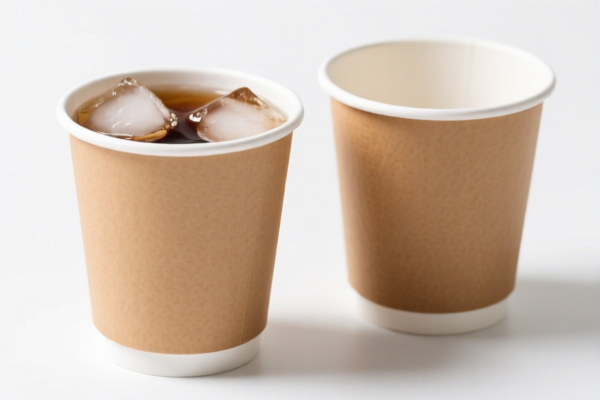
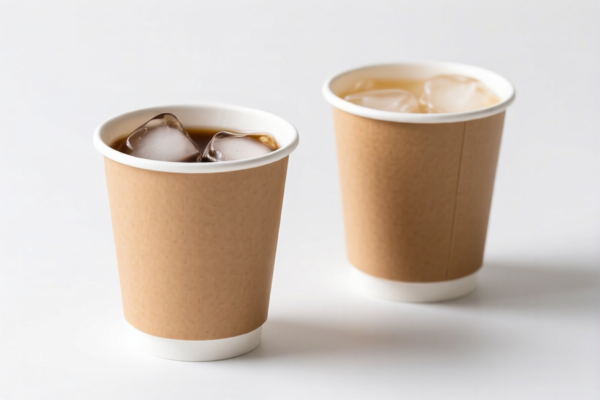
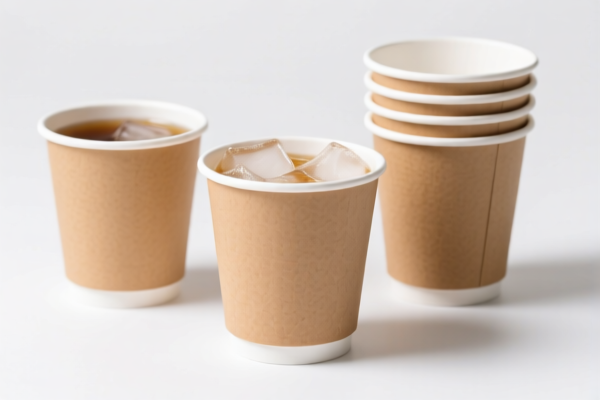
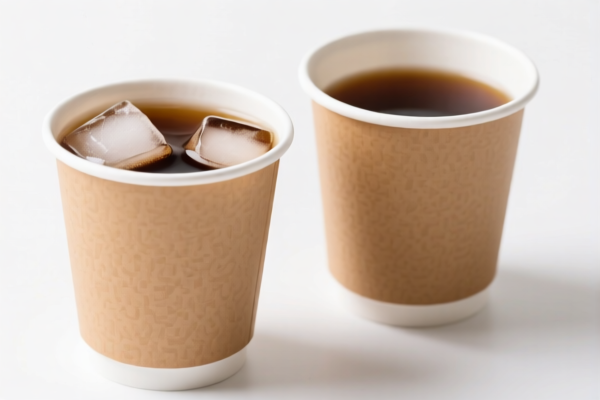
AI Analysis
🥤 Paper Cold Drink Cups (Disposable Paper Cups)
🌐 HS Code Reference & Customs Clearance Guide | 2026 Latest Tariff Analysis | Professional Clearance Strategy
📌 I. Product Definition & Classification: Do You Really Understand "Paper Cups"?
Paper cold drink cups are single-use containers primarily made of paper or paperboard, often coated with polyethylene (PE) or polylactic acid (PLA) to prevent liquid leakage. In international trade, they are categorized based on their material structure, shape, and intended use.
While they may look simple, customs authorities strictly distinguish between: * Simple Paper Containers: Uncoated or lightly coated paper cups falling under general paper container categories. * Specific Cup Categories: Cups specifically shaped for beverages, often grouped under "articles of paper pulp, paper, or paperboard" or "other paper containers."
⚠️ Key Distinction:
- If the cup is strictly a cup-shaped article intended for drinks, it often falls under Chapter 48.23 (Other articles of paper pulp, paper, cellulose wadding and papers) or 48.19 (Cartons, boxes, cases, bags and other packing articles). - Misclassification Risk: Declaring them as generic "paper packaging" (e.g., boxes) instead of "cups" can lead to incorrect HS codes and potential penalties.
📦 II. HS Code Classification Details (2026 Latest Tariff Authority Comparison)
| HS Code | Product Description | Applicable Scenario | Key Classification Criteria |
|---|---|---|---|
4823.69.00.20 |
Paper beverage cups, paper material, for drink use; matches Chapter 48.23 requirements. | General paper cups, unlined or lightly lined cups. | ✅ Shape: Cup ✅ Material: Paper ✅ Use: Beverage |
4823.61.00.20 |
Paper cups, paper material, cup shape; meets definition of paper cups and similar articles. | Standard disposable paper cups, often with PE lining. | ✅ Shape: Cup ✅ Material: Paper ✅ Category: Cups |
4819.20.00.20 |
Paper cups, non-corrugated paper material, cup shape, beverage container use. | Cups made from solid board or non-corrugated paper. | ✅ Material: Non-corrugated ✅ Shape: Cup ✅ Use: Beverage |
4819.10.00.20 |
Paper containers, paper material, cup shape; meets description of paper containers for beverages. | General paper containers shaped as cups. | ✅ Material: Paper ✅ Shape: Cup ✅ Use: Container |
🔍 Important Note:
- All listed HS codes above result in the same total tax rate due to specific trade policies applied to Chinese-origin goods. - The distinction between4823and4819often depends on whether the item is considered a "packing article" (4819) or an "article of paper" (4823). However, for cups, both chapters are frequently applied depending on the specific liner and manufacturing process. - Do not classify as4819.10.00.20if the cup has a significant plastic lining that changes its essential character, though currently, all listed options apply the same tariff burden.
💰 III. 2026 Latest Tariff Rate Breakdown (Including Additional Taxes & Policy Surcharges)
✅ Applicable Country: United States (US)
✅ Country of Origin: China (CN)
✅ Effective Date: 2025年11月10日起 (Including subsequent imports)
🎯 All Listed HS Codes (4823.69.00.20, 4823.61.00.20, 4819.20.00.20, 4819.10.00.20)
| Item | Content |
|---|---|
| Base Duty Rate | 0.0% (Ad Valorem) |
| Section 301 Duty (Additional) | +25.0% (From USITC Footnote 9903.88.01) |
| Section 122 Duty (IEEPA) | +10.0% (Against China/HK products, effective from Nov 10, 2025) |
| Total Duty Rate | 35.0% |
| Tax Calculation | CIF Value × 35% |
| De Minimis Exemption | ❌ Not Eligible (deny_de_minimis) |
| Legal Basis Path | IEEPA:9903.01.25 → IEEPA:9903.01.24 → USITC:48xx.xx.xx.xx → FOOTNOTE:9903.88.01 |
📌 Explanation:
- "Section 301 Duty 25%": Applied under the "Section 301 of the Trade Act of 1974" for goods from China. - "Section 122 Duty 10%": A separate surcharge applied under the International Emergency Economic Powers Act (IEEPA) for specific Chinese imports, effective from November 10, 2025. - Combined Rate: 35%. This is a significant cost factor. Unlike electronics or machinery, paper cups have a low base value, so a 35% duty substantially impacts profit margins.
🛠️ IV. Customs Clearance Practical Advice (Real-World Pitfall Avoidance Guide)
✅ 1. Document Preparation Checklist (Mandatory)
| Document | Must Provide | Description |
|---|---|---|
| ✅ Product Specification Sheet | ✔️ | Must include: Material composition (e.g., 100% paper, PE liner thickness), Capacity (oz/ml), Shape, Intended Use (Cold Drink). |
| ✅ Product Photos (Including Labels) | ✔️ | Clear images of the cup, showing branding, material labels, and any "recyclable" or "compostable" claims. |
| ✅ Commercial Invoice | ✔️ | Must explicitly state: "Paper Cups for Cold Beverages, HS Code: [Insert HS Code]". Avoid vague terms like "Paper Goods." |
| ✅ Packing List | ✔️ | Detail the number of cups per carton, gross weight, and net weight. Ensure no mixed shipments with non-paper items unless properly separated. |
| ✅ Certificate of Origin (CO) | ✔️ | If applicable, to prove origin. However, note that origin does not reduce the 35% tariff for Chinese goods in this category. |
✅ 2. Declaration Tips (Key Mantra)
🔥 "Specify Material, Define Shape, Declare Use, Avoid Vague Terms!"
| Situation | Correct Declaration | Incorrect Practice |
|---|---|---|
| Standard Paper Cup | 4823.69.00.20 - "Paper Beverage Cup" |
"Paper Packaging" → Risk of misclassification |
| Cup with PLA Lining (Biodegradable) | 4823.61.00.20 - "Paper Cup" |
"Plastic Cup" → Incorrect Chapter (39 vs 48) |
| Mixed Shipment (Cups + Lids) | Declare Cups as primary good; lids as accessories | Split declaration → Complex customs review |
| Non-Corrugated Paper Cup | 4819.20.00.20 - "Non-Corrugated Paper Cup" |
"Cardboard Cup" → "Cardboard" implies corrugated |
⚠️ Critical Warning:
- Do not declare as "Plastic Cups" (3924.10.00.00) if the main component is paper, even with a plastic liner. Customs may inspect and reclassify, leading to delays. - Do not use generic terms like "Disposable Tableware" without specifying the HS code.
✅ 3. Special Cases Handling
| Situation | Handling Advice |
|---|---|
| Biodegradable/Compostable Cups | Provide certification (e.g., BPI, OK Compost). Declare material as "Paper with PLA liner" to avoid being classified as pure plastic. |
| Double-Walled Paper Cups | Still classified under 4823 or 4819. Ensure dimensions and material weight are accurate. |
| Cups with Custom Printing | Ensure ink is food-safe. Declare "Printed Paper Cups" to avoid scrutiny on chemical compliance (FDA, EU 10/2011). |
| Sample Shipments | Even samples are subject to the 35% duty if declared commercially. Use "Non-Commercial Samples" carefully, but note that duty exemption is rare for China-origin goods under these rules. |
🌍 V. Global Market Clearance Comparison (2026 Latest)
| Country/Region | Recommended HS Code | Duty Rate (China Origin) | Certification Requirements | Remarks |
|---|---|---|---|---|
| 🇺🇸 USA | 4823.69.00.20 / 4823.61.00.20 |
35% | FDA Compliance for Food Contact | High duty burden; ensure accurate classification. |
| 🇨🇳 China | 4823.69.00.20 |
~5-10% | CCC (if applicable) | No additional surcharges. |
| 🇪🇺 EU | 4823.69.00.20 |
0-5% | CE, LFGB, FDA | No Section 301/122 equivalent. |
| 🇬🇧 UK | 4823.69.00.20 |
0-5% | UKCA, Food Standards Agency | Post-Brexit tariffs vary by FTA. |
| 🇨🇦 Canada | 4823.69.00.20 |
0% (if CUSMA eligible) | CFIA Standards | Check preferential tariff eligibility. |
📌 Conclusion:
- USA has the highest import cost for paper cups from China due to the 35% cumulative tariff. - Europe and Asia offer more favorable tariff conditions, but strict food safety and environmental regulations apply.
📌 VI. Common Errors & Pitfall Avoidance Guide (Lessons Learned)
❌ Error 1: Declaring "Paper Cups" as "Plastic Cups" (3924.10)
👉 Consequence: Customs inspection reveals paper content → Reclassification + Penalties.
❌ Error 2: Using vague description "Paper Packaging"
👉 Consequence: Customs assigns a different HS code with higher duty or additional scrutiny.
❌ Error 3: Ignoring the Section 122 10% Surcharge
👉 Consequence: Underpayment of duties → Seizure of goods and back-taxes with interest.
❌ Error 4: Failing to specify "Cold Drink Use"
👉 Consequence: Customs may classify as "General Paper Articles" with different regulatory requirements (e.g., food contact safety).
✅ Correct Practice:
"Paper Cups, 12oz, Cold Beverage Use, Paper Material with PE Liner, Model XYZ, FDA Compliant, HS Code: 4823.69.00.20"
🎯 VII. Conclusion: Precise Classification Saves Costs!
🎯 Remember the Mantra:
🔹 "Paper is Key, Shape Defines, Use Specifies, 35% is the Price!"
🔹 "Don't guess the HS Code, a wrong digit costs you a percentage!"
📌 Pro Tip:
- If you are importing biodegradable cups, ensure your supplier provides certificates of compostability to avoid being classified as plastic.
- Consider supply chain diversification to Vietnam or Malaysia to avoid the 35% US tariff, as these countries may have lower or zero tariffs under US trade policies.
- Apply for a Binding Ruling from US Customs and Border Protection (CBP) before large shipments to ensure HS code accuracy.
📣 Immediate Action:
📞 Consult a professional customs broker + Provide product specs + Verify FDA compliance
🚀 Ensure smooth clearance, maximize profits, and stay compliant!
✨ Professional Clearance Starts with Accurate Classification!
💼 Every cent of cost should be precisely calculated!
Customer Reviews
About HS Code Classification
The Harmonized System (HS) is an internationally standardized nomenclature developed by the World Customs Organization (WCO) to classify traded products. Over 200 countries use the HS system as the basis for customs tariffs, trade statistics, and import/export regulations.
Each HS code follows a hierarchical structure:
- Chapter (2 digits) — Broad category of goods (e.g., Chapter 84: Machinery and Mechanical Appliances)
- Heading (4 digits) — More specific grouping within the chapter
- Subheading (6 digits) — Internationally standardized breakdown, used by all WCO member countries
- National subdivisions (8-10 digits) — Country-specific extensions for further classification, such as US HTSUS 10-digit codes
Correct HS code classification is essential for smooth customs clearance, accurate duty payment, and compliance with trade regulations. Misclassification can lead to customs delays, overpayment of duties, or penalties.
When importing from CN to US, the applicable tariff rates may include:
- Most-Favored-Nation (MFN) rate — The standard duty rate applied to WTO members
- General rate — Applied to countries without trade agreements
- Trade remedy duties — Additional tariffs such as Section 301 (anti-dumping), Section 232 (national security), or countervailing duties
The information provided on this page is for reference purposes only. For official classification, please consult with your local customs authority or a licensed customs broker.