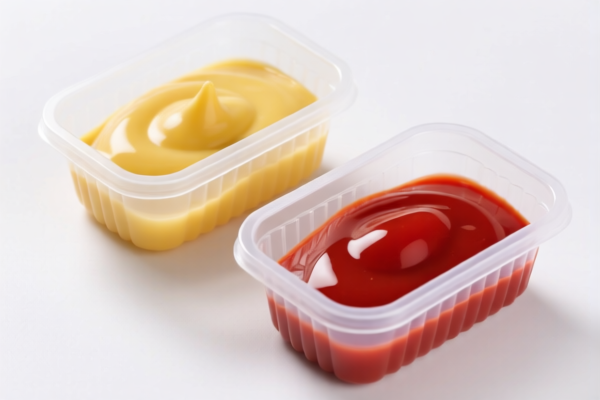
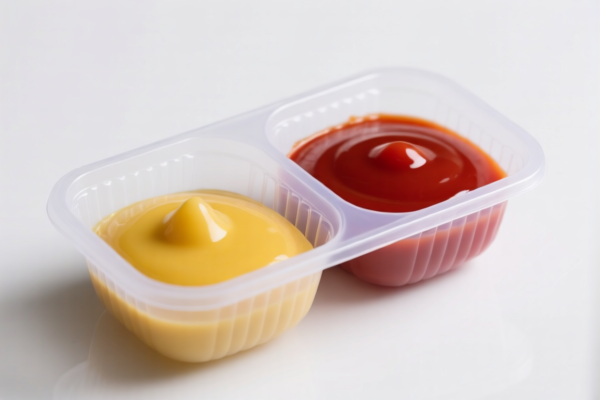
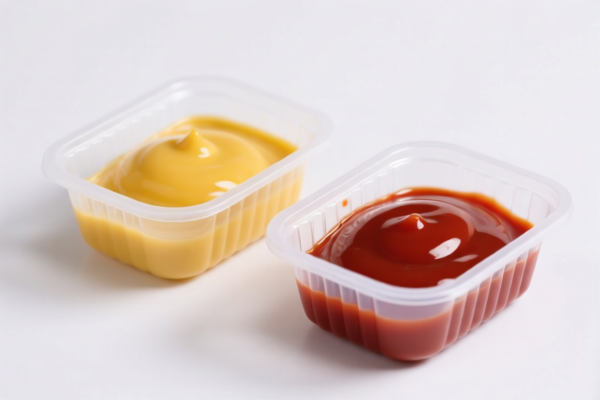
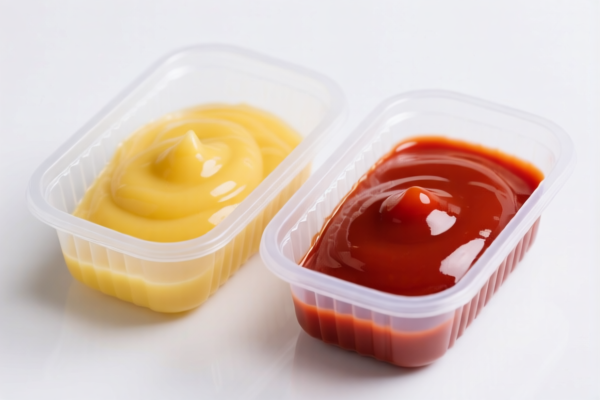
Paper Condiment Dish
CN → US| HS Code | Tariff Rate | Origin | Destination | Doc |
|---|---|---|---|---|
| 4823690040 | 35.0% | CN | US | Official Doc |
| 4823610040 | 35.0% | CN | US | Official Doc |
| 3924104000 | 13.4% | CN | US | Official Doc |
| 3924102000 | 24.0% | CN | US | Official Doc |
Product Images
AI Analysis
🥄 Paper Condiment Dish (Paper Sauce Cup / Paper Flavor Plate)
🌐 HS Code Reference & Customs Clearance Guide | 2026 Latest Tariff Analysis | Professional Clearance Strategy 📌 I. Product Definition & Classification: Do You Really Know What You Are Shipping?
Paper Condiment Dishes are single-use, disposable tableware items made primarily from paper or paperboard. They are designed to hold sauces, dips, seasonings, or condiments. In international trade, these items are strictly categorized based on their material composition and form factor.
Key Distinction: * Paper-Based (HsCode 4823) Made entirely of paper/paperboard. Often subject to high retaliatory tariffs depending on the specific sub-category. * Plastic-Based (HsCode 3924) Although named "Paper Condiment Dish," if the material is actually plastic (PET, PP, PS), it must be declared as plastic. Misdeclaration leads to severe penalties.
⚠️ Critical Classification Point:
- If the item is 100% Paper/Paperboard →归入 Chapter 48 (Paper products).
- If the item is Plastic →归入 Chapter 39 (Plastics).
- Do not mix materials in one declaration line. The duty rates differ drastically (35% vs. 13.4%-24%).
📦 II. HS Code Classification Details (2026 Latest Tariff Authority Comparison)
Based on the provided data, here are the applicable HS Codes for Paper Condiment Dishes and similar items, along with their tax implications.
| HS Code | Product Description | Material | Form/Shape | Total Tax Rate |
|---|---|---|---|---|
4823.69.00.40 |
Paper condiment dish/plate | Paper | Dish or Plate | 35.0% |
4823.61.00.40 |
Other paper/paperboard trays, dishes, plates | Paper | Tray/Dish/Plate | 35.0% |
3924.10.40.00 |
Plastic condiment dish | Plastic | Dish | 13.4% |
3924.10.20.00 |
Plastic tableware (dishes) | Plastic | Dish | 24.0% |
🔍 Key Insight:
- Paper vs. Plastic: Paper dishes (4823) incur a 35% total tariff, while plastic dishes (3924) range from 13.4% to 24%.
- Why the difference?: Paper products often face higher "122 Clause" tariffs or specific USITC footnotes depending on the exact subheading.
- Misclassification Risk: Declaring a plastic dish as paper (or vice versa) to save 10%+ in duties is considered fraud. Customs will reclassify and demand back taxes + penalties.
💰 III. 2026 Latest Tariff Rate Breakdown (Including Surcharges & Policy Add-ons)
✅ Applicable Country: United States (US)
✅ Origin: China (CN)
✅ Effective Date: November 10, 2025 (and subsequent imports)
🎯 1. 4823.69.00.40 & 4823.61.00.40 —— Paper Condiment Dishes/Plates
| Item | Details |
|---|---|
| Basic Tariff | 0.0% (Ad valorem) |
| Section 301 Surcharge | +25.0% |
| Clause 122 Surcharge | +10.0% |
| Total Tax Rate | 35.0% |
| Tax Calculation | CIF Value × 35% |
| De Minimis Exemption | ❌ Not Applicable (Deny De Minimis) |
| Legal Basis Path | Section 301: USITC 4823.61/69 → Clause 122: IEEPA 10% |
📌 Explanation:
- Section 301 (25%): Standard retaliatory tariff on Chinese goods under US Trade Act Section 301.
- Clause 122 (10%): Additional tariff imposed under specific executive orders or trade enforcement clauses for certain paper/plastic products.
- Total 35%: This is a high-cost item. Importers must factor this into their landed cost calculation. There is no de minimis exemption (i.e., shipments under $800 do not automatically avoid tax if the HS code is flagged for high-duty goods).
🎯 2. 3924.10.40.00 —— Plastic Condiment Dishes (For Comparison)
| Item | Details |
|---|---|
| Basic Tariff | 3.4% |
| Section 301 Surcharge | 0.0% |
| Clause 122 Surcharge | +10.0% |
| Total Tax Rate | 13.4% |
| Tax Calculation | CIF Value × 13.4% |
| De Minimis Exemption | ❌ Not Applicable (Depending on enforcement) |
📌 Explanation:
- Plastic dishes (3924.10.40) have a lower base tariff (3.4%) and no Section 301 surcharge, but still face the 10% Clause 122 tariff.
- Total 13.4%: Significantly cheaper than paper alternatives (35%). However, ensure the material is truly plastic.
🎯 3. 3924.10.20.00 —— Plastic Tableware (Dishes)
| Item | Details |
|---|---|
| Basic Tariff | 6.5% |
| Section 301 Surcharge | +7.5% |
| Clause 122 Surcharge | +10.0% |
| Total Tax Rate | 24.0% |
| Tax Calculation | CIF Value × 24.0% |
📌 Explanation:
- This subheading may apply to specific types of plastic tableware not covered under3924.10.40.
- Total 24%: Higher than3924.10.40due to the application of a partial Section 301 surcharge (7.5%) alongside Clause 122.
🛠️ IV. Customs Clearance Practical Advice (Avoid Pitfalls)
✅ 1. Required Documentation Checklist
| Document | Required? | Notes |
|---|---|---|
| Product Description | ✔️ | Must specify Material (Paper/Plastic), Form (Dish/Plate/Cup), Use (Condiment/Sauce). |
| Commercial Invoice | ✔️ | Must clearly state "Paper Condiment Dish" or "Plastic Condiment Dish" – avoid vague terms like "Tableware" alone. |
| Packing List | ✔️ | Show weight and quantity per box. |
| Material Declaration | ✔️ | Critical: Declare if lined with PE/PLA (plastic lining). If lined, it may still be classified under Chapter 48 or 39 depending on the primary material and processing. |
| Photos of Product | ✔️ | Show the item clearly to prove it is not reusable/metal/ceramic. |
✅ 2. Declaration Tips (Golden Rules)
🔥 "Material First, Form Second, Use Third"
| Scenario | Correct HS Code | Incorrect Action | Consequence |
|---|---|---|---|
| Paper Dish (Unlined) | 4823.69.00.40 |
Declare as Plastic | 35% vs 13.4% → Underpayment, Audit Risk |
| Paper Dish (Plastic Lined) | Check Primary Material | Declare as Paper | If plastic lining >50% weight/value, may be 3924 → Misclassification |
| Plastic Dish | 3924.10.40.00 |
Declare as Paper | 24%/13.4% vs 35% → Overpayment (Lost Profit) |
| Reusable Plastic Dish | May be Different HS | Declare as Disposable | If reusable, it may fall under different subheading with different duties. |
✅ 3. Special Case Handling
| Scenario | Advice |
|---|---|
| PLA (Biodegradable) Paper Dish | Still classified under Chapter 48 if paper-based. Tariff remains 35%. |
| Packaged with Other Items | If mixed with non-paper items, declare separately. Do not combine "Paper Dish + Plastic Spoon" into one HS Code. |
| Low-Value Shipments (<$800) | Caution: Even if under $800, if the HS Code is flagged (e.g., 4823.69.00.40), customs may still apply duties if they enforce Clause 122 strictly. Check current "De Minimis" enforcement status. |
🌍 V. Global Market Comparison (2026 Latest)
| Country/Region | Recommended HS Code | Tariff (China Origin) | Certification Required | Notes |
|---|---|---|---|---|
| 🇺🇸 USA | 4823.69.00.40 (Paper) |
35% | FDA Food Contact (if applicable) | High tariff due to Section 301 + Clause 122. |
| 🇪🇺 EU | 4823.69.00 |
~6-12% | LFGB (Germany), FDA equivalent | No Section 301. Lower tariffs. |
| 🇨🇦 Canada | 4823.69.00 |
~0-5% | CFIA Food Contact | CUSMA benefits may apply. |
| 🇯🇵 Japan | 4823.69.00 |
~0-10% | Food Sanitation Law | Check for specific food-safe certifications. |
📌 Conclusion:
- USA: Highest duty burden (35%). Consider pricing strategy or supply chain diversification.
- EU/Canada: More favorable tariff environments.
- Plastic Alternative: If allowed by market regulations, switching to plastic (3924) can save 11%–21.6% in duties.
📌 VI. Common Errors & Pitfalls (Lessons Learned)
❌ Error 1: Calling all "Dishes" the same HS Code
👉 Result: Paper and Plastic have different chapters (48 vs 39). Misclassification leads to duty overpayment or underpayment.
❌ Error 2: Ignoring "Plastic Lining"
👉 Result: A paper cup lined with plastic may still be Chapter 48, but if the liner is significant, customs might argue for Chapter 39. Clarify material composition.
❌ Error 3: Assuming De Minimis Applies to All HS Codes
👉 Result: Some HS Codes are excluded from the $800 de minimis exemption under Section 321. Check if your HS Code is flagged.
❌ Error 4: Using Generic Terms like "Paper Goods"
👉 Result: Customs cannot classify generic terms. Use specific descriptions: "Paper Condiment Dish, 3oz, Round, White."
✅ Correct Practice:
"Paper Condiment Dish, 100% Paper, 2oz Capacity, Disposable, For Food Service Use, Model PD-2024"
🎯 VII. Conclusion: Professional Declaration, Save Costs, Ensure Compliance
🎯 Remember the Key Takeaways:
🔹 Paper = 35% Total Duty (0% Base + 25% Sec 301 + 10% Clause 122)
🔹 Plastic = 13.4%–24% Total Duty (Variable based on subheading)
🔹 Declare Material Accurately: Paper vs. Plastic is the biggest driver of cost.
🔹 No De Minimis Exemption Risk: Even small shipments may be taxed.
📌 Pro Tip:
If you are importing Paper Condiment Dishes into the US, factor in the 35% duty immediately. If your margin is thin, consider:
1. Switching to Plastic (if acceptable to customers).
2. Using Duty-Exempt Warehouses (if applicable).
3. Applying for Pre-Rulings to confirm HS Code with CBP.
📣 Immediate Action:
📞 Contact a Licensed Customs Broker
📄 Prepare Detailed Product Specs (Material, Lining, Use)
🚀 Calculate Landed Cost Including 35% Duty
✨ Professional Customs Clearance Starts with Accurate Classification!
💼 Every Dollar Saved in Tariffs is Pure Profit!
Customer Reviews
About HS Code Classification
The Harmonized System (HS) is an internationally standardized nomenclature developed by the World Customs Organization (WCO) to classify traded products. Over 200 countries use the HS system as the basis for customs tariffs, trade statistics, and import/export regulations.
Each HS code follows a hierarchical structure:
- Chapter (2 digits) — Broad category of goods (e.g., Chapter 84: Machinery and Mechanical Appliances)
- Heading (4 digits) — More specific grouping within the chapter
- Subheading (6 digits) — Internationally standardized breakdown, used by all WCO member countries
- National subdivisions (8-10 digits) — Country-specific extensions for further classification, such as US HTSUS 10-digit codes
Correct HS code classification is essential for smooth customs clearance, accurate duty payment, and compliance with trade regulations. Misclassification can lead to customs delays, overpayment of duties, or penalties.
When importing from CN to US, the applicable tariff rates may include:
- Most-Favored-Nation (MFN) rate — The standard duty rate applied to WTO members
- General rate — Applied to countries without trade agreements
- Trade remedy duties — Additional tariffs such as Section 301 (anti-dumping), Section 232 (national security), or countervailing duties
The information provided on this page is for reference purposes only. For official classification, please consult with your local customs authority or a licensed customs broker.