Paper Core (Odorless)
CN → US| HS Code | Tariff Rate | Origin | Destination | Doc |
|---|---|---|---|---|
| 4823901000 | 35.0% | CN | US | Official Doc |
| 4823908000 | 35.0% | CN | US | Official Doc |
Product Images
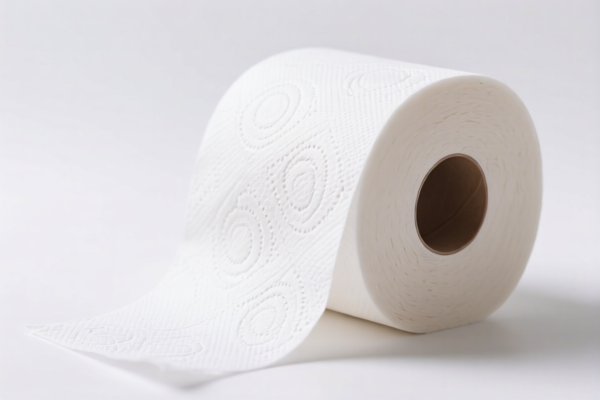
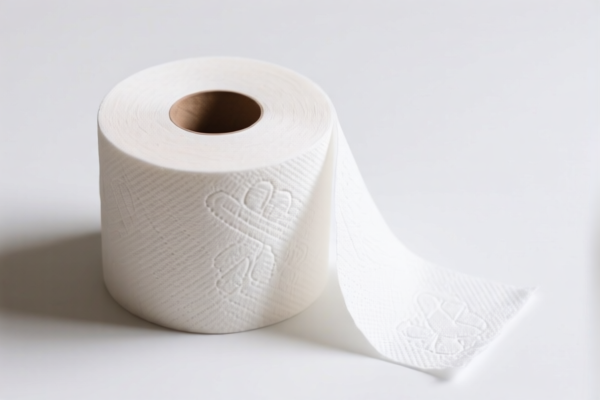
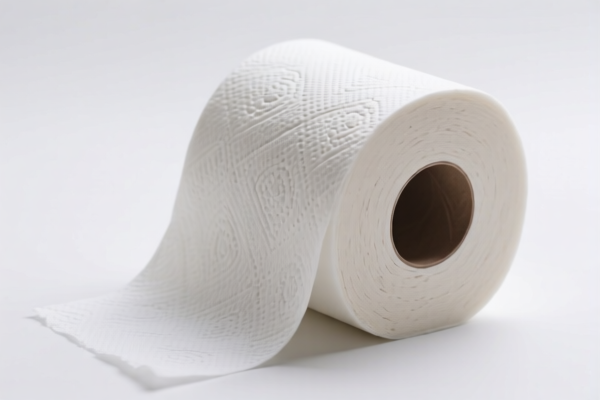
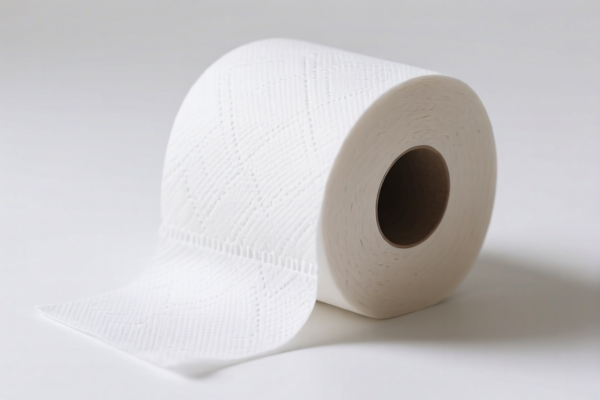
AI Analysis
📜 Paper Core (Odorless) | Industrial Cardboard Cores
🌐 HS Code Reference & Customs Clearance Guide | 2026 Latest Tariff Analysis | Professional Clearance Strategy
📌 I. Product Definition & Classification: What is a "Paper Core"?
A Paper Core (often called a cardboard tube, paper tube, or tube core) is a cylindrical container made from multiple layers of kraft paper or other paperboard, glued together. It is primarily used as a structural support for winding flexible materials such as: * Textiles (fabric rolls) * Paper & Film (printing paper, plastic film, aluminum foil) * Adhesives (tape rolls) * Industrial Materials (fiberglass, carbon fiber)
The term "Odorless" indicates a quality specification (no strong smell of glue or raw material), but it does not change the HS Code. Customs classification is based on the material (Paper) and form (Cut to size/shape), not the sensory characteristics.
In international trade, Paper Cores are not classified as "packaging" (Chapter 48) if they are integral to the product's winding, but often as "Other articles of paper" (Chapter 48, Heading 4823).
⚠️ Critical Distinction:
- If the core is discarded after use and has no structural value beyond holding the roll, it may be considered "packaging" or "waste."
- If the core is reusable or considered a component of the wound material, it falls under 4823.90.
- Standard Classification: Most commercial paper cores are classified under 4823.90.
📦 II. HS Code Classification Details (2026 Latest Tariff Reference)
Based on the provided <DATA>, the relevant HS Codes for Paper Cores are under 4823.90 ("Other paper... cut to size or shape... other articles...").
| HS Code | Product Description | Application Scenario | Key Features |
|---|---|---|---|
4823.90.10.00 |
Other paper pulp, paper, paperboard, cellulose wadding or webs of cellulose fibers: Of paper pulp | Generic Paper Cores | Made from paper pulp/kraft paper; cut to length; no specific sealing function. |
4823.90.80.00 |
Other paper pulp... Other: Other: Other: Other: Gaskets, washers and other seals | Specialty Sealing Cores | Only if the core is specifically designed/functionally used as a gasket or seal (e.g., in plumbing or machinery). Rare for standard winding cores. |
🔍 Important Note on
4823.90.80.00:
- Standard paper winding cores (for fabric, tape, etc.) are NOT gaskets or seals.
- Therefore,4823.90.10.00is the correct classification for 99% of paper cores.
- Do NOT use4823.90.80.00unless the product is explicitly a sealing component. Misclassification here leads to customs rejection.
💰 III. 2026 Latest Tariff Rate Breakdown (Including Surtaxes)
✅ Applicable Country: United States (US)
✅ Origin: China (CN)
✅ Effective Date: November 10, 2025 (and subsequent imports)
🎯 1. 4823.90.10.00 —— Paper Cores (Standard)
| Item | Content |
|---|---|
| Base Tariff | 0.0% (Ad valorem) |
| Section 301 Surcharge | +25.0% (USITC Footnote 9903.88.01) |
| Total Tariff Rate | 25.0% |
| Tax Calculation | CIF Value × 25% |
| De Minimis Eligibility | ❌ No (Denied for Section 301 goods) |
| Legal Basis Path | USITC:4823.90.10.00 → FOOTNOTE:9903.88.01 |
📌 Explanation:
- The base tariff for paper products is often 0% or low.
- However, Section 301 tariffs impose an additional 25% on most Chinese-origin paper products.
- Total Cost Impact: For every $10,000 of paper cores, you pay $2,500 in extra duties.
- No De Minimis: Small shipments (under $800) are NOT exempt from this 25% surcharge.
🎯 2. 4823.90.80.00 —— Gaskets/Seals (Incorrect for Cores)
| Item | Content |
|---|---|
| Base Tariff | 0.0% |
| Section 301 Surcharge | +25.0% |
| Total Tariff Rate | 25.0% |
📌 Warning:
- While the tax rate is the same (25%), misclassifying paper cores as "gaskets/seals" is a customs violation.
- Paper cores are not used for sealing. This misclassification can lead to penalties, audits, and shipment delays.
🛠️ IV. Customs Clearance Practical Advice (Avoiding Pitfalls)
✅ 1. Required Documentation Checklist
| Document | Mandatory? | Purpose |
|---|---|---|
| ✅ Product Specification Sheet | ✔️ | Must state: Material (Kraft Paper/Paperboard), Diameter, Length, Thickness, and Non-Sealing Function. |
| ✅ Commercial Invoice | ✔️ | Must clearly describe as "Paper Cores for Winding" or "Cardboard Tubes". Do NOT use "Gaskets" or "Seals". |
| ✅ Packing List | ✔️ | Detail quantity (pcs/kg) and net/gross weight. |
| ✅ Certificate of Origin (CO) | ✔️ | Required to prove origin (China) for 301 tariff calculation. |
| ✅ Photos of Product | ✔️ | Show the hollow tube structure, layers of paper, and lack of sealing gasket features. |
✅ 2. Declaration Best Practices
🔥 "Declare by Material & Form, Not by Use!"
| Scenario | Correct Declaration | Incorrect Declaration | Consequence |
|---|---|---|---|
| Standard paper winding core | "Paper Cores, for winding fabric, HS 4823.90.10.00" | "Gaskets, HS 4823.90.80.00" | Customs audit, penalty, seizure |
| High-quality odorless core | "Odorless Kraft Paper Cores, HS 4823.90.10.00" | "Packaging Materials" | May be reclassified, but 4823.90.10 is safer for "cut to shape" |
| Core with metal ends | "Paper Core with Metal End Rings, HS 4823.90.10.00" | "Metal Parts" | If paper is essential character, still 4823 |
✅ 3. Special Considerations
- "Odorless" Claim: If buyers request "odorless" cores, provide a Material Safety Data Sheet (MSDS) or a Glue Certification to prove no volatile organic compounds (VOCs) are present. This is for product quality, not customs classification.
- Recycled Content: If cores are made from 100% recycled paper, mention this on the invoice. While it doesn’t change the HS Code, it may help with importer sustainability claims.
- Dimensional Tolerances: Ensure declared dimensions match the physical product. Discrepancies >5% can trigger inspections.
🌍 V. Global Market Comparison (2026)
| Country/Region | Recommended HS Code | Tariff Rate (China Origin) | Key Certification | Notes |
|---|---|---|---|---|
| 🇺🇸 USA | 4823.90.10.00 |
25.0% | None specific | High tariff due to Section 301 |
| 🇨🇳 China | 4823.90.10.00 |
5.0% - 10% | ISO 9001 (Optional) | Domestic trade varies |
| 🇪🇺 EU | 4823.90.90 |
0% - 6.5% | CE (if contact with food) | Lower tariffs, stricter environmental rules |
| 🇬🇧 UK | 4823.90.90 |
0% - 6.5% | UKCA (if applicable) | Post-Brexit rules apply |
| 🇦🇺 Australia | 4823.90.90 |
5% | None | Free Trade Agreement with China may reduce rate |
📌 Key Insight:
- The USA is the only major market imposing a 25% surcharge on these goods due to geopolitical trade policies.
- For EU/UK/AU, the cost impact is minimal (0-6.5%), making these markets more attractive for paper core exports.
📌 VI. Common Mistakes & Pitfalls (Lessons Learned)
❌ Mistake 1: Classifying paper cores as "Packaging" (4819)
👉 Consequence: 4819 may have different tariff rates, but paper cores are "articles cut to shape," not just packaging. Misclassification can lead to retroactive duty adjustments.
❌ Mistake 2: Using "Gaskets" (4823.90.80.00) for winding cores
👉 Consequence: Customs Rejection. Paper cores are not seals. This error signals a lack of product knowledge to customs officers.
❌ Mistake 3: Ignoring the 25% Section 301 Surcharge
👉 Consequence: Unexpected Cost Increase. Importers expecting 0% base tax are shocked by the 25% additional duty. Always budget for 25%.
✅ Best Practice:
Use the exact description:
"Paper Cores, Kraft Paper, Odorless, for Winding Fabric, Cut to Size, HS 4823.90.10.00"
🎯 VII. Conclusion: Smart Clearance for Paper Cores
🎯 Key Takeaway:
🔹 HS Code is
4823.90.10.00for standard paper cores.
🔹 Total Duty for US Imports: 25% (Base 0% + Section 301 25%).
🔹 Never classify as "Gaskets/Seals" unless it’s a genuine sealing product.
🔹 Odorless is a quality feature, not a classification factor.
📌 Pro Tip:
If your Paper Cores are made in Vietnam, Thailand, or Malaysia (not China), you may avoid the 25% Section 301 surcharge.
👉 Action: Ensure Certificate of Origin clearly shows non-Chinese origin to benefit from lower tariffs (often 0-5%).
📣 Immediate Action:
📞 Consult your customs broker to confirm the "Essential Character" of your specific core design.
📝 Prepare detailed specs showing paper layers and lack of sealing function.
🚀 Plan for 25% duty in your US import costs.
✨ Precision in Classification, Savings in Tariffs!
💼 Every Core Counts—Don’t Waste Money on Misclassification!
Customer Reviews
About HS Code Classification
The Harmonized System (HS) is an internationally standardized nomenclature developed by the World Customs Organization (WCO) to classify traded products. Over 200 countries use the HS system as the basis for customs tariffs, trade statistics, and import/export regulations.
Each HS code follows a hierarchical structure:
- Chapter (2 digits) — Broad category of goods (e.g., Chapter 84: Machinery and Mechanical Appliances)
- Heading (4 digits) — More specific grouping within the chapter
- Subheading (6 digits) — Internationally standardized breakdown, used by all WCO member countries
- National subdivisions (8-10 digits) — Country-specific extensions for further classification, such as US HTSUS 10-digit codes
Correct HS code classification is essential for smooth customs clearance, accurate duty payment, and compliance with trade regulations. Misclassification can lead to customs delays, overpayment of duties, or penalties.
When importing from CN to US, the applicable tariff rates may include:
- Most-Favored-Nation (MFN) rate — The standard duty rate applied to WTO members
- General rate — Applied to countries without trade agreements
- Trade remedy duties — Additional tariffs such as Section 301 (anti-dumping), Section 232 (national security), or countervailing duties
The information provided on this page is for reference purposes only. For official classification, please consult with your local customs authority or a licensed customs broker.