Paper Core Eco Friendly Pulp
CN → US| HS Code | Tariff Rate | Origin | Destination | Doc |
|---|---|---|---|---|
| 4823901000 | 35.0% | CN | US | Official Doc |
| 4823700040 | 35.0% | CN | US | Official Doc |
Product Images
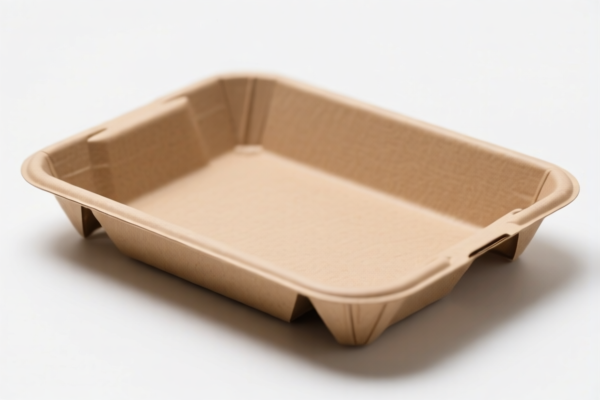
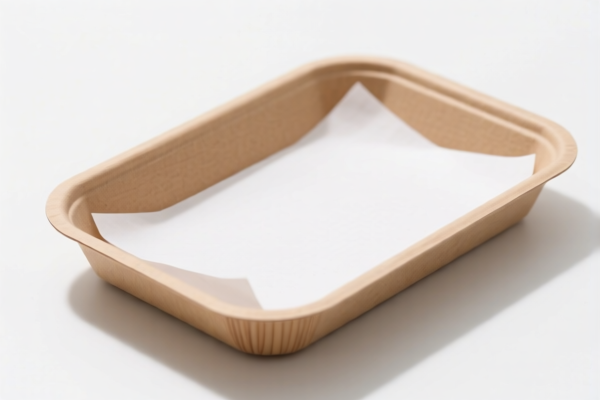
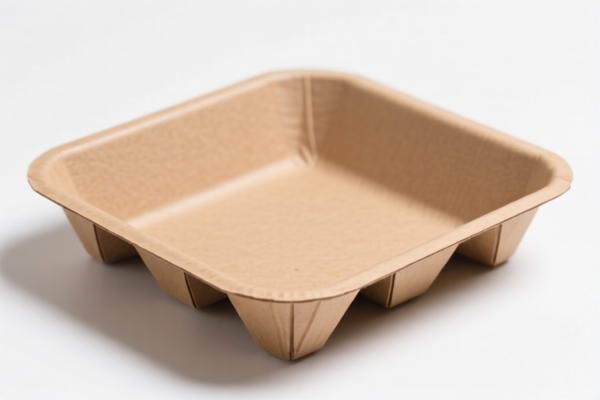
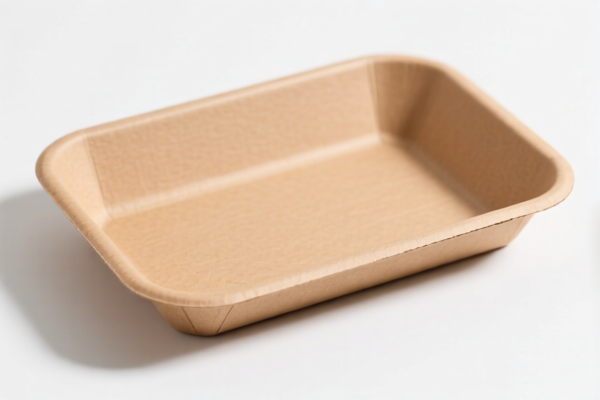
AI Analysis
🧻 Paper Core (Eco-Friendly Pulp)
🌐 HS Code Reference & Customs Clearance Guide | 2026 Latest Tariff Analysis | Professional Clearance Strategy
📌 Part I: Product Definition & Classification: What Exactly is "Paper Core Eco-Friendly Pulp"?
Paper cores, often referred to as cardboard tubes, spools, or tubes, are hollow cylindrical containers made from layered paper or paperboard. They are essential for winding textile, paper, film, and adhesive materials. The term "Eco-Friendly Pulp" indicates that the raw material is derived from recycled fiber or sustainable sources, processed without excessive chemical bleaching, aligning with global green packaging trends.
In international trade, these products are generally classified under Chapter 48, specifically under the heading for Paper Pulp, Paper, or Paperboard Articles. The key distinction lies in whether the core is a molded/pressed article or an article cut to size/shape.
⚠️ Key Distinction Point:
- If the core is molded or pressed from pulp (solid, thick-walled, uniform shape from a mold) → Classified under 4823.70 (Molded or pressed articles).
- If the core is rolled/wound from sheets or cut from paperboard (layered structure, tubular) → Classified under 4823.90 (Other articles).Note: Most commercial "paper cores" for industrial winding (e.g., for textiles or films) are rolled layers of paperboard, not molded pulp. Therefore, they typically fall under 4823.90. However, if the product is a single-piece molded pulp tube, it falls under 4823.70.
📦 Part II: HS Code Classification Details (Based on Provided Data)
Based on the provided <DATA>, here are the two relevant HS Codes for paper/paperboard articles. Please determine which fits your specific manufacturing process.
| HS Code | Product Description | Typical Application | Manufacturing Process |
|---|---|---|---|
4823.70.00.40 |
Molded or pressed articles of paper pulp (Other) | Single-piece molded tubes, protective packaging inserts, molded pulp trays | Pulping → Molding → Pressing/Drying |
4823.90.10.00 |
Of paper pulp (Other paper, paperboard, etc., cut to size/shape) | Industrial winding cores (textile, film, paper rolls), hollow tubes made from layered paperboard | Layering/Slitting → Rolling → Gluing → Cutting |
🔍 Critical Reminder:
- Do not confuse "Molded" with "Rolled".
- If your "paper core" is a hollow tube made by winding layers of paperboard (common for textile/film industry), use4823.90.10.00.
- If your product is a solid or hollow tube formed from a pulp mold (like an egg carton shape but tubular), use4823.70.00.40.
- Both codes currently face a 25% Additional Tariff in the context of US-China trade relations.
💰 Part III: 2026 Latest Tariff Rate Details
✅ Applicable Country: United States (US)
✅ Origin: China (CN) (Note: If origin is Vietnam/Thailand/Malaysia, tariffs may be lower or exemptible; check specific COO)
✅ Effective Time: Ongoing under Section 301 and IEEPA provisions
🎯 1. 4823.90.10.00 – Other Articles of Paper/Paperboard (Cut to Size/Shape)
| Item | Details |
|---|---|
| Base Tariff | 0.0% (Free) |
| Additional Tariff | +25.0% (Section 301 / IEEPA) |
| Total Tariff Rate | 25.0% |
| Tax Calculation | CIF Value × 25% |
| De Minimis Exemption? | ❌ No (For shipments from China, de minimis does not apply to goods subject to Section 301/IEEPA tariffs above the threshold, or generally excluded for these HS codes if scrutinized) |
| Legal Basis | Section 301 Tariff List (USITC) |
📌 Explanation:
- Although the base MFN rate is 0%, the 25% additional tariff applies to all Chinese-origin paper articles under this subheading due to trade tensions.
- "Eco-Friendly" does not exempt you from tariffs. Green certifications (e.g., FSC, recycled content) do not alter HS codes or tariff rates.
🎯 2. 4823.70.00.40 – Molded or Pressed Articles of Paper Pulp (Other)
| Item | Details |
|---|---|
| Base Tariff | 0.0% (Free) |
| Additional Tariff | +25.0% (Section 301 / IEEPA) |
| Total Tariff Rate | 25.0% |
| Tax Calculation | CIF Value × 25% |
| De Minimis Exemption? | ❌ No |
| Legal Basis | Section 301 Tariff List (USITC) |
📌 Explanation:
- Same tariff treatment as above. The "molded" classification does not provide a tariff advantage.
- Ensure your product description clearly states "Molded Pulp" to justify this code, as customs may default to4823.90if the description is vague.
🛠️ Part IV: Customs Clearance Practical Advice (Avoid Pitfalls)
✅ 1. Documentation Checklist (Mandatory)
| Document | Required? | Description |
|---|---|---|
| ✅ Commercial Invoice | ✔️ | Must explicitly state: "Paper Core, Made from Recycled Pulp, Eco-Friendly". Avoid generic terms like "Packaging". |
| ✅ Packing List | ✔️ | List dimensions (ID, OD, Length) and weight. |
| ✅ Product Photos | ✔️ | Show cross-section to prove if it's layered (4823.90) or molded (4823.70). |
| ✅ Certificate of Origin (CO) | ✔️ | Critical to prove origin. If shipped from a third country (e.g., Vietnam), ensure substantial transformation occurred. |
| ✅ Material Composition Statement | ✔️ | Specify % of recycled fiber, type of pulp (kraft, testliner), and whether binders were used. |
| ✅ FSC/PEFC Certification | Optional but Recommended | Proves "Eco-Friendly" claim, may help in buyer's ESG reporting, but does not reduce US tariffs. |
✅ 2. Declaration Tips (Key Mnemonics)
🔥 "Material Defines Code, Origin Defines Tax, Eco-Friendly is Marketing Not Tax Relief!"
| Scenario | Correct Declaration | Common Error |
|---|---|---|
| Industrial Winding Core (Layered paperboard) | 4823.90.10.00 |
Mistaking for "Molded Pulp" → Incorrect classification |
| Molded Pulp Tube (Single piece, molded) | 4823.70.00.40 |
Calling it "Paper Tube" → May be misclassified under 4823.90 |
| Mixed Shipment (Cores + Labels + Boxes) | Declare cores separately | Packing everything into one generic HS Code → High risk of audit |
✅ 3. Special Case Handling
| Situation | Recommendation |
|---|---|
| Transshipment via Third Country | If you ship directly from China, 25% tax applies. If you claim origin as Vietnam, you must prove substantial transformation (e.g., raw paper imported, cores manufactured there). Simple assembly/packaging is not enough. |
| "Eco-Friendly" Claims | Use precise language: "100% Recycled Content, Chlorine-Free Bleach". Avoid vague terms like "Biodegradable" without scientific proof. |
| Small Samples | Even small quantities of 4823.90.10.00 from China are subject to 25% tax. No de minimis exemption for Section 301 goods. |
🌍 Part V: Global Market Comparison (2026 Latest)
| Country/Region | Recommended HS Code | Tariff (China Origin) | Certification | Remarks |
|---|---|---|---|---|
| 🇺🇸 United States | 4823.90.10.00 or 4823.70.00.40 |
25% | No special eco-tariffs | Highest cost market due to Section 301 tariffs. |
| 🇨🇳 China | 4823.90.10.00 |
5% (Import) | N/A | Domestic production enjoys lower logistics costs. |
| 🇪🇺 European Union | 4823.90.10.00 |
0% | CE, REACH, FSC | Tariff-free if not subject to anti-dumping. Eco-certifications help market access. |
| 🇬🇧 United Kingdom | 4823.90.10.00 |
0% | UKCA | Post-Brexit, preferential rates may apply for some goods. |
| 🇦🇺 Australia | 4823.90.10.00 |
5% | N/A | Low tariffs compared to US. |
| 🇲🇽 Mexico | 4823.90.10.00 |
0% (USMCA) | N/A | If produced in Mexico/Canada, 0% under USMCA. |
📌 Conclusion:
- The US is the most expensive market for Chinese-made paper cores due to the 25% additional tariff.
- EU, UK, and Australia offer more favorable tariff rates (0-5%).
- Supply Chain Strategy: Consider manufacturing paper cores in Mexico, Vietnam, or Malaysia to leverage free trade agreements (FTAs) and avoid the 25% US tariff.
📌 Part VI: Common Mistakes & Pitfalls (Lessons Learned)
❌ Mistake 1: Calling "Paper Core" a "Cardboard Box"
👉 Consequence: Incorrect HS Code (4819 vs 4823) → Potential penalty or delay.
❌ Mistake 2: Ignoring the "Molded" vs "Cut to Shape" distinction
👉 Consequence: Customs may reclassify your shipment, leading to audits and back-taxes.
❌ Mistake 3: Believing "Eco-Friendly" = "Tariff-Free"
👉 Consequence: Surprise 25% tariff bill at US border. Green certs do not replace duty preferences.
❌ Mistake 4: Transshipping without Proper Transformation
👉 Consequence: Customs flags "Country of Origin Fraud" if you claim Vietnam origin for Chinese-made cores without proof of manufacturing.
✅ Correct Approach:
"Paper Core, Hollow Cylinder, ID 3", "OD 5", "Length 10", "Made from 100% Recycled Kraft Paperboard, Cut to Size, Eco-Friendly, Origin: China"
🎯 Part VII: Conclusion: Professional Classification, Cost Optimization!
🎯 Remember:
🔹 "Molded = 4823.70, Cut/Rolled = 4823.90"
🔹 "Eco-Friendly is Marketing, Not Tariff Relief"
🔹 "China Origin + US Destination = 25% Penalty"
📌 Pro Tip:
If you are exporting to the US, strongly consider supply chain diversification to countries with Free Trade Agreements (FTAs) like Mexico (USMCA), Canada (USMCA), or ASEAN nations (CPTPP). This can save you 25% on every shipment.
📣 Immediate Action:
📞 Contact your freight forwarder to confirm HS Code pre-classification.
📄 Request Certificate of Origin carefully.
🚀 Optimize your supply chain to avoid the 25% tariff hit!
✨ Professional Clearance Starts with Precise Classification!
💼 Every Percent Saved in Tariffs is Pure Profit!
Customer Reviews
About HS Code Classification
The Harmonized System (HS) is an internationally standardized nomenclature developed by the World Customs Organization (WCO) to classify traded products. Over 200 countries use the HS system as the basis for customs tariffs, trade statistics, and import/export regulations.
Each HS code follows a hierarchical structure:
- Chapter (2 digits) — Broad category of goods (e.g., Chapter 84: Machinery and Mechanical Appliances)
- Heading (4 digits) — More specific grouping within the chapter
- Subheading (6 digits) — Internationally standardized breakdown, used by all WCO member countries
- National subdivisions (8-10 digits) — Country-specific extensions for further classification, such as US HTSUS 10-digit codes
Correct HS code classification is essential for smooth customs clearance, accurate duty payment, and compliance with trade regulations. Misclassification can lead to customs delays, overpayment of duties, or penalties.
When importing from CN to US, the applicable tariff rates may include:
- Most-Favored-Nation (MFN) rate — The standard duty rate applied to WTO members
- General rate — Applied to countries without trade agreements
- Trade remedy duties — Additional tariffs such as Section 301 (anti-dumping), Section 232 (national security), or countervailing duties
The information provided on this page is for reference purposes only. For official classification, please consult with your local customs authority or a licensed customs broker.