Paper Cup
CN → US| HS Code | Tariff Rate | Origin | Destination | Doc |
|---|---|---|---|---|
| 4823690020 | 35.0% | CN | US | Official Doc |
| 4823610020 | 35.0% | CN | US | Official Doc |
| 4819502000 | 35.0% | CN | US | Official Doc |
| 4819504060 | 35.0% | CN | US | Official Doc |
| 4823690020 | 35.0% | CN | US | Official Doc |
Product Images
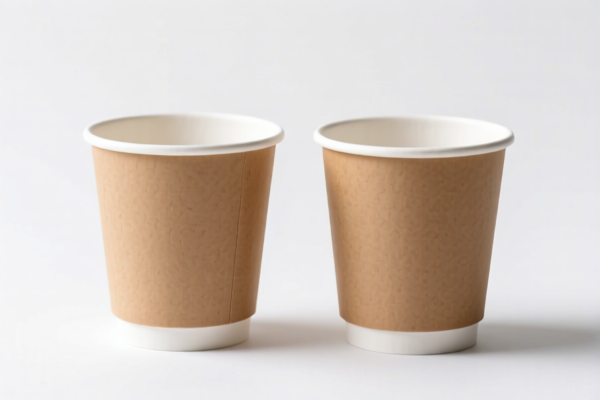
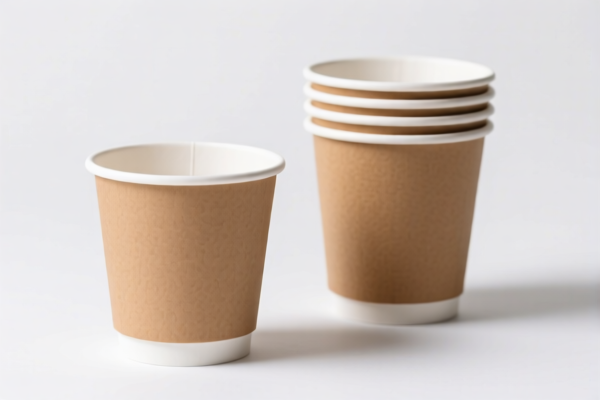
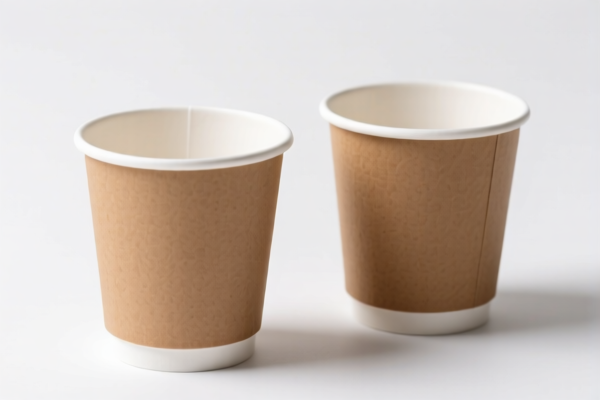
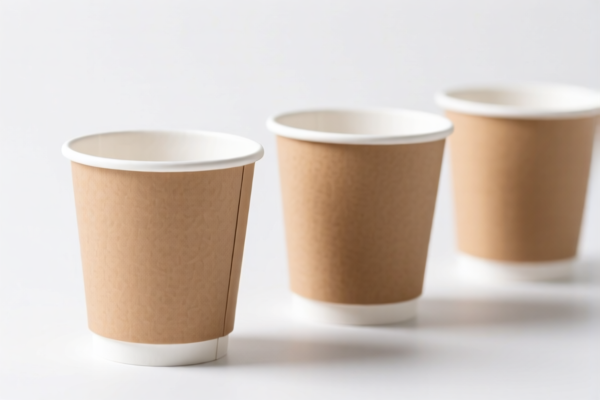
AI Analysis
🥤 Paper Cups & Cake Liners (Paper Food Containers)
🌐 HS Code Reference & Customs Clearance Guide | 2026 Latest Tariff Analysis | Professional Clearance Strategy
📌 I. Product Definition & Classification: Do You Really Understand "Paper Cups"?
Paper cups and cake liners are ubiquitous disposable food packaging items. In international trade, they are not a single monolithic category but are split based on material composition, form factor, and intended use. The critical distinction lies in whether the item is a simple paper container (Chapter 48, Heading 4823) or a folded paper packaging container (Chapter 48, Heading 4819).
1. Paper Cups & Round Nested Food Containers (Heading 4823)
Items primarily identified as drinking vessels or round nested containers for single-serve foods. This includes standard beverage cups, coffee cups, and round cake liners if classified specifically under the "cups/nested" subheadings.
2. Other Paper Packaging Containers (Heading 4819)
Items classified as general "other" paper packaging, such as certain cake cups or food containers that do not fit the specific "cup" definition in 4823, or those explicitly categorized as "other packing containers."
⚠️ Key Distinction Point:
- 4823 Series: Focuses on the shape and function as a "cup" or "circular nested container."
- 4819 Series: Focuses on the material and general packaging nature ("other packing containers") when the specific "cup" definition is less precise or when categorized under general food packaging.
📦 II. HS Code Classification Details (2026 Latest Tariff Authority Comparison)
The following HS Codes are derived directly from the provided data for paper cups and related paper food containers. All listed items originate from China and are subject to specific US trade measures.
| HS Code | Product Description | Specific Attributes | Classification Logic |
|---|---|---|---|
4823.69.00.20 |
Paper Beverage Cups or Cake Cups | Material: Paper; Use: Cups and circular nested food containers | Classified as a specific type of paper container under 4823, covering both beverage cups and nested cake forms. |
4823.61.00.20 |
Paper Cups or Cake Cups | Material: Paper; Form: Cups and food containers | Broadly covers paper cups and cake cups under the 4823 subheading, focusing on the "cup" form factor. |
4819.50.20.00 |
Paper Cake Cups | Material: Paper; Use: Food hygiene containers | Categorized under 4819 (Packaging) specifically for cake cups used as hygiene containers, distinct from the "cup" heading. |
4819.50.40.60 |
Paper Cake Cups | Material: Paper; Form: Other packing containers | Categorized under 4819 as "other" packing containers, often used for cake cups that don't fit the primary 4819.50.20 description. |
4823.69.00.20 |
Paper Cake Cups | Material: Paper; Form & Use: Cups and food containers | Reappears as a dual-purpose code for cake cups classified under the "cup" and "food container" umbrella of 4823. |
🔍 Key Reminder:
- Material is Key: All items are Paper-based. If coated with plastic, it may change the heading (e.g., to 3926), but the provided data strictly lists Paper. - Use vs. Form:4823codes emphasize the cup/nested shape.4819codes emphasize packaging/container utility. - Identical Tariff Rates: All listed HS Codes share the same tax structure, simplifying cost calculation but requiring accurate description to avoid classification errors.
💰 III. 2026 Latest Tariff Rate Breakdown (Including Surtaxes & Policy Add-ons)
✅ Applicable Country: United States (US)
✅ Origin: China (CN)
✅ Effective Date: Current as of 2025/2026 trade policies
🎯 Unified Tax Structure for All Listed Paper Cups (4819 & 4823 Series)
All HS codes provided (4823.69.00.20, 4823.61.00.20, 4819.50.20.00, 4819.50.40.60) carry the identical tariff burden.
| Item | Detail |
|---|---|
| Base Tariff Rate | 0.0% (Most Favored Nation rate) |
| Section 301 Surcharge | +25.0% (Added tariff on Chinese imports) |
| Section 122 Tariff | +10.0% (Specific duty clause 122) |
| Total Effective Tax Rate | 35.0% |
| Tax Calculation | CIF Value × 35% |
| De Minimis Exemption | ❌ NOT APPLICABLE |
| Legal Basis Path | Base: 0% + Added: 25% + Clause 122: 10% |
📌 Explanation:
- "Base Tariff 0%": Under normal MFN treatment, paper products often have low or zero base duties.
- "Added Tariff 25%": Refers to the Section 301 tariffs imposed on a wide range of Chinese goods, including paper packaging products.
- "Clause 122 Tariff 10%": Refers to a specific 122 tariff clause, adding an additional layer of duty on top of the 301 tariff.
- Total 35%: This is a high cumulative tariff for low-value disposable goods. Importers must carefully calculate landed costs, as this significantly impacts margin.
- No De Minimis: Unlike some low-value shipments, these specific HS codes are not exempt from duties under the $800 de minimis rule (Section 321) in this context, meaning every shipment is subject to the 35% duty.
🛠️ IV. Customs Clearance Practical Advice (Real-World Pitfall Avoidance)
✅ 1. Required Documentation Checklist (Non-Negotiable)
| Document | Mandatory? | Description |
|---|---|---|
| ✅ Commercial Invoice | ✔️ | Must clearly state: "Paper Cup" or "Paper Cake Liner," Material: Paper, Quantity, Unit Price. |
| ✅ Packing List | ✔️ | Detail the number of boxes, total pieces, and net/gross weight. |
| ✅ Product Description | ✔️ | Specify: "Single-wall," "Double-wall," "With/Without Plastic Coating," "Food Grade." |
| ✅ Certificate of Origin | ✔️ | Essential for confirming Chinese origin to apply (or defend against) the 35% tariff. |
| ✅ FDA Compliance Docs | ✔️ | Since these are food contact items, provide FDA compliance statements or prior notice records. |
| ✅ DS (Delivery Summary) | ✔️ | To support the declared value for customs assessment. |
✅ 2. Classification Strategy (Critical for Accuracy)
🔥 "Describe Shape, Not Just Name"
| Scenario | Recommended HS Code | Risk if Mislabeled |
|---|---|---|
| Standard Beverage Cup | 4823.61.00.20 or 4823.69.00.20 |
Misclassifying as 4819 might trigger scrutiny on "cup" definition, but tax is same. |
| Cake Liners (Round/Nested) | 4823.69.00.20 |
Describing as "paper package" (4819) is acceptable but less precise. |
| Cake Cups (General Packaging) | 4819.50.20.00 or 4819.50.40.60 |
Using 4823 for non-cup-shaped containers may lead to rejection. |
| Plastic-Coated Paper Cups | ❌ Not Listed | If coated significantly, it may fall under Chapter 39 (Plastics). The provided data assumes Paper. Check coating weight. |
📌 Note: Since all provided codes have the same 35% tariff, the primary goal is correct classification to avoid penalties for misdeclaration, rather than tariff optimization. Accuracy in description ("Beverage Cup" vs. "Cake Cup") is vital for statistical and regulatory compliance (FDA).
✅ 3. Special Considerations
| Issue | Advice |
|---|---|
| Food Contact Safety | Ensure all products meet FDA 21 CFR standards for food contact substances. Customs may request proof. |
| Wood Packaging Material | If shipped in wooden pallets, ensure ISPM 15 compliance. Paper itself is not regulated, but pallets are. |
| Volume Discounts | Given the 35% duty, bulk shipments are common. Ensure the declared value is accurate (FOB or CIF) to avoid over/underpayment. |
| Origin Marking | Products must be clearly marked "Made in China" to comply with US customs origin marking laws. |
🌍 V. Global Market Comparison (2026)
| Country/Region | Recommended HS Code | Tariff (China Origin) | Notes |
|---|---|---|---|
| 🇺🇸 USA | 4823.69.00.20 / 4819.50.20.00 |
35.0% | High duty due to Section 301 + Clause 122. No de minimis exemption. |
| 🇨🇳 China | 4823.69.00.20 |
Low/Zero | Domestic trade does not apply these US surcharges. |
| 🇪🇺 EU | 4823.69.00 |
~5-7% | Standard EU duty for paper cups. No Section 301 equivalent. |
| 🇬🇧 UK | 4823.69.00 |
~5% | Post-Brexit tariff structure. |
📌 Conclusion:
- The US market is the most expensive for Chinese paper cups due to the 35% cumulative tariff.
- Importers should factor this into pricing strategies.
- Consider sourcing from countries with FTAs or lower tariff rates if volume is high, though supply chain shifts take time.
📌 VI. Common Mistakes & Pitfalls (Lessons Learned)
❌ Mistake 1: Assuming "De Minimis" applies to paper cups.
👉 Consequence: 35% duty underpaid → Seizure, fines, and storage fees.
👉 Truth: The provided data explicitly lists the full 35% rate with no mention of exemption.
❌ Mistake 2: Mislabeling "Paper" as "Cardboard" or "Plastic."
👉 Consequence: Wrong HS Code → Potential classification errors, even if tariff is similar.
👉 Truth: Must specify Material: Paper and Usage: Food Container.
❌ Mistake 3: Ignoring FDA requirements.
👉 Consequence: Product detained at border for lack of food safety compliance.
👉 Truth: Paper food containers are subject to FDA food contact substance regulations.
🎯 VII. Conclusion: Professional Declaration, Cost Control, and Compliance
🎯 Key Takeaway:
🔹 "35% is the number for US paper cups from China."
🔹 "Accuracy in HS Code (4823 vs 4819) matters for compliance, not tax savings."
🔹 "Ensure FDA compliance to avoid border delays."
📌 Pro Tip:
If you are importing small quantities (< $800), verify if any exemptions apply to your specific supplier situation, but assume the 35% duty for planning purposes. For bulk shipments, consider Section 301 exclusions if available (check current US Trade Representative lists), though paper cups are rarely excluded.
📣 Immediate Action:
📞 Partner with a licensed customs broker to file accurate Entry Summaries.
📋 Maintain FDA compliance documentation for every batch.
💰 Calculate landed cost with 35% duty to ensure profitability.
✨ Expert Clearance, Start with Accurate Classification!
💼 Your margins depend on precision, not just price!
Customer Reviews
About HS Code Classification
The Harmonized System (HS) is an internationally standardized nomenclature developed by the World Customs Organization (WCO) to classify traded products. Over 200 countries use the HS system as the basis for customs tariffs, trade statistics, and import/export regulations.
Each HS code follows a hierarchical structure:
- Chapter (2 digits) — Broad category of goods (e.g., Chapter 84: Machinery and Mechanical Appliances)
- Heading (4 digits) — More specific grouping within the chapter
- Subheading (6 digits) — Internationally standardized breakdown, used by all WCO member countries
- National subdivisions (8-10 digits) — Country-specific extensions for further classification, such as US HTSUS 10-digit codes
Correct HS code classification is essential for smooth customs clearance, accurate duty payment, and compliance with trade regulations. Misclassification can lead to customs delays, overpayment of duties, or penalties.
When importing from CN to US, the applicable tariff rates may include:
- Most-Favored-Nation (MFN) rate — The standard duty rate applied to WTO members
- General rate — Applied to countries without trade agreements
- Trade remedy duties — Additional tariffs such as Section 301 (anti-dumping), Section 232 (national security), or countervailing duties
The information provided on this page is for reference purposes only. For official classification, please consult with your local customs authority or a licensed customs broker.