Paper Dispersant
CN → US| HS Code | Tariff Rate | Origin | Destination | Doc |
|---|---|---|---|---|
| 3505100020 | 0.0% | CN | US | Official Doc |
| 3910000000 | 38.0% | CN | US | Official Doc |
| 3505100015 | 0.0% | CN | US | Official Doc |
| 3911909110 | 41.5% | CN | US | Official Doc |
| 3824100000 | 41.0% | CN | US | Official Doc |
Product Images

AI Analysis
🧪 Paper Dispersants (Chemical Auxiliary Agents)
🌐 HS Code Reference & Customs Clearance Guide | 2026 Latest Tariff Analysis | Professional Clearance Strategy
📌 I. Product Definition & Classification: What is a "Paper Dispersant"?
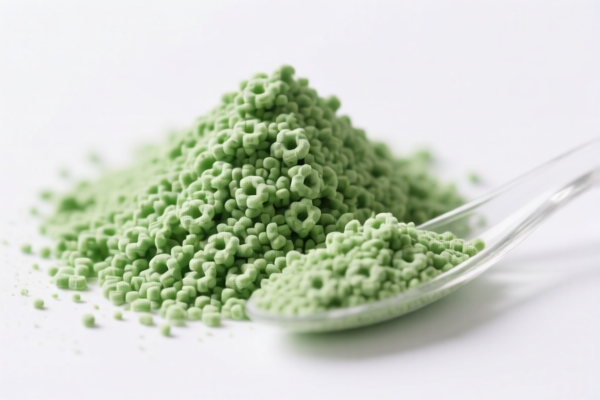
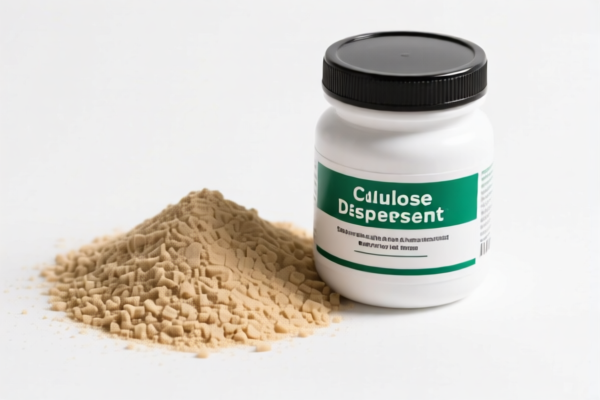
A Paper Dispersant is a specialized chemical auxiliary agent used in the papermaking industry to improve the dispersion of fillers, pigments, and fibers. It acts as a functional additive to ensure uniform distribution within the paper pulp slurry, enhancing paper quality and production efficiency.
In international trade, determining the correct HS Code is critical because these products can be classified under different chemical categories depending on their primary chemical composition (e.g., modified starch vs. synthetic polymer/surfactant). The data below outlines four potential classifications based on logical inference from their chemical nature and usage.
📦 II. HS Code Classification Details (2026 Latest Tariff Authority Comparison)
| HS Code | Product Description | Application Scenario | Chemical Nature / Logic |
|---|---|---|---|
3505.10.00.20 |
Dextrins & other modified starches; prepared glues based on these products | Starch-based dispersants; Biodegradable chemical agents | ✅ Modified Starch/Dextrin: High compatibility with paper pulp; logical fit for starch-derived additives. |
3910.00.00.00 |
Raw forms of polymers, not elsewhere specified or included | Synthetic polymer-based dispersants; Non-starch chemical auxiliaries | ✅ Polymer/Resin: Fits if the dispersant is a synthetic surfactant or non-starch polymer additive. |
3505.10.00.15 |
Dextrins & other modified starches; prepared glues based on these products | General modified starch glues; Broad category for starch-based auxiliaries | ✅ Modified Starch (Fallback): A broader category for starch-based chemical functional substances. |
3911.90.91.10 |
Prepared binders for foundry molds or cores; prepared knitting pastes; prepared finishing agents | Synthetic resin binders; Non-starch polymeric additives | ✅ Synthetic Polymer/Resin: Fits if the product is a resin-based binder rather than a starch derivative. |
3824.10.00.00 |
Prepared binders for metal casting molds or cores; preparedFoundry binders | Industrial chemical auxiliaries; Casting-related binders | ✅ Casting/Industrial Binder: Fits if the dispersant is functionally similar to foundry binders (less common for paper, but possible for specific industrial coatings). |
🔍 Key Distinction:
- If the dispersant is starch-derived (natural or chemically modified), it belongs in 3505.10 (3505.10.00.20or3505.10.00.15).
- If it is synthetic (polymer, surfactant, resin), it likely falls under 3910 or 3911 (3910.00.00.00or3911.90.91.10).
- Misclassification can lead to significant tariff differences and customs delays.
💰 III. 2026 Latest Tariff Rate Breakdown (Including Surtaxes & Policy Add-ons)
✅ Applicable Country: United States (US)
✅ Origin: China (CN)
✅ Effective Date: Post-2025 (Including subsequent imports)
⚠️ Note: All rates below include Base Tariff + Section 301 Surtax + IEEPA 122 Clause Tariff.
🎯 1. 3505.10.00.20 & 3505.10.00.15 —— Modified Starch / Dextrins (Starch-Based Dispersants)
| Item | Content |
|---|---|
| Base Tariff | 0.7¢/kg (Specific Duty) |
| Section 301 Surtax | +7.5% (Ad Valorem) |
| 122 Clause (IEEPA) | +10% (Ad Valorem, targeting China/HK products) |
| Total Effective Rate | 0.7¢/kg + 17.5% (Ad Valorem) |
| Tax Calculation | Specific Duty (0.7¢/kg) + CIF Value × 17.5% |
| De Minimis Exemption | ❌ Not Applicable (Subject to scrutiny) |
| Legal Basis Path | USITC:3505.10.00.20 → FOOTNOTE:301_7.5% → IEEPA:122_10% |
📌 Explanation:
- Base Rate: Very low specific duty (0.7 cents per kg) due to the nature of starch products.
- Surtax: 7.5% additional tariff under Section 301.
- 122 Clause: Additional 10% under IEEPA for Chinese-origin goods.
- Total: The ad valorem component is 17.5%, plus a small per-kg fee. This is the lowest tariff option among the choices if the product is starch-based.
🎯 2. 3910.00.00.00 —— Raw Polymers (Synthetic Dispersants)
| Item | Content |
|---|---|
| Base Tariff | 3.0% |
| Section 301 Surtax | +25% |
| 122 Clause (IEEPA) | +10% |
| Total Rate | 38.0% |
| Tax Calculation | CIF Value × 38.0% |
| De Minimis Exemption | ❌ Not Applicable |
| Legal Basis Path | USITC:3910.00.00.00 → FOOTNOTE:301_25% → IEEPA:122_10% |
📌 Note:
- Higher base rate (3.0%) compared to starch.
- Total 38% is significantly higher than starch-based options.
- Applies if the dispersant is a non-starch synthetic polymer.
🎯 3. 3911.90.91.10 —— Prepared Binders (Resin-Based)
| Item | Content |
|---|---|
| Base Tariff | 6.5% |
| Section 301 Surtax | +25% |
| 122 Clause (IEEPA) | +10% |
| Total Rate | 41.5% |
| Tax Calculation | CIF Value × 41.5% |
| De Minimis Exemption | ❌ Not Applicable |
| Legal Basis Path | USITC:3911.90.91.10 → FOOTNOTE:301_25% → IEEPA:122_10% |
📌 Warning:
- This is the highest tariff option (41.5%).
- Only apply if the product is definitively a resin/prepared binder and not a starch derivative.
🎯 4. 3824.10.00.00 —— Foundry/Casting Binders (Industrial Auxiliaries)
| Item | Content |
|---|---|
| Base Tariff | 6.0% |
| Section 301 Surtax | +25% |
| 122 Clause (IEEPA) | +10% |
| Total Rate | 41.0% |
| Tax Calculation | CIF Value × 41.0% |
| De Minimis Exemption | ❌ Not Applicable |
| Legal Basis Path | USITC:3824.10.00.00 → FOOTNOTE:301_25% → IEEPA:122_10% |
📌 Caution:
- Although base rate is slightly lower than 3911, the total is still 41.0%.
- This classification is less common for standard paper dispersants unless used in specific industrial coating applications.
🛠️ IV. Customs Clearance Practical Advice (Real-World Pitfall Guide)
✅ 1. Documentation Checklist (Essential)
| Document | Required | Explanation |
|---|---|---|
| ✅ Formula/Composition Sheet | ✔️ | Critical! Must show % of starch vs. synthetic polymers to determine HS Code. |
| ✅ Technical Data Sheet (TDS) | ✔️ | Shows usage in papermaking, pH range, and function. |
| ✅ Product Photos (Label & Container) | ✔️ | Must show product name, batch number, and safety warnings. |
| ✅ Third-Party Lab Report | ✔️ | GC/MS or FTIR analysis to confirm chemical identity (Starch vs. Polymer). |
| ✅ Commercial Invoice | ✔️ | Clearly state "Paper Dispersant" and HS Code. |
| ✅ Bill of Lading | ✔️ | Ensure weight (gross/net) matches customs declaration. |
✅ 2. Declaration Strategy (Key Principles)
🔥 “Know Your Chemistry, Choose Your Code, Avoid the 41% Trap!”
| Scenario | Correct HS Code | Reason |
|---|---|---|
| Starch-based dispersant | 3505.10.00.20 or 3505.10.00.15 |
Low tariff (17.5% + 0.7¢/kg). Most common for paper industry. |
| Synthetic Polymer/Surfactant | 3910.00.00.00 |
Moderate tariff (38%). Avoid if starch-based. |
| Resin/Prepared Binder | 3911.90.91.10 |
High tariff (41.5%). Only if functionally a binder, not a dispersant. |
| Industrial Foundry Agent | 3824.10.00.00 |
High tariff (41.0%). Rare for paper; use only if specifically for casting. |
⚠️ Critical Warning:
- Do NOT classify a starch-based dispersant as3910or3911to "simplify" declaration. Customs may reject it due to mismatched chemical profiles, leading to fines and delays.
- Conversely, do NOT misdeclare synthetic polymers as starch to save on tariffs. This is customs fraud.
✅ 3. Special Considerations
| Issue | Handling Advice |
|---|---|
| Mixed Formulations | If the product is >50% starch by weight, lean towards 3505. If synthetic, lean towards 3910/3911. |
| Brand Names | Do not use brand names alone in HS Code justification. Use chemical function and composition. |
| Pre-Clearance Ruling | Highly recommended. Submit a Letter of Ruling to CBP with lab reports before shipping to confirm HS Code. |
| Volume Discounts | For large shipments, consider if any exclusions or epidemic relief apply (though unlikely for these codes). |
🌍 V. Global Market Comparison (2026 Update)
| Country/Region | Recommended HS Code | Approx. Tariff (China Origin) | Notes |
|---|---|---|---|
| 🇺🇸 USA | 3505.10.00.20 |
17.5% + 0.7¢/kg | Best option for starch-based. Avoid 3910/3911 (38-41.5%). |
| 🇨🇳 China | 3505.10.00.20 |
~5% (Import Duty) | Lower tariffs in China. |
| 🇪🇺 EU | 3505.10.00.90 |
~6.5% | Check for REACH compliance. |
| 🇯🇵 Japan | 3505.10.00.00 |
~5% | JETRO guidelines apply. |
📌 Conclusion:
- USA is the most critical market due to high surtaxes.
- Starch-based classification (3505) offers the lowest tariff risk for paper dispersants from China.
- Synthetic alternatives face 38-41.5% tariffs, impacting profitability significantly.
📌 VI. Common Mistakes & Pitfalls (Lessons Learned)
❌ Mistake 1: Classifying all "chemical dispersants" under one code without checking composition.
👉 Consequence: Customs audit → Retroactive tariffs + penalties.
❌ Mistake 2: Using 3824.10.00.00 (Foundry Binder) for paper dispersants.
👉 Consequence: Misclassification → 41% tariff + seizure risk. Paper dispersants are not foundry binders.
❌ Mistake 3: Ignoring the 0.7¢/kg specific duty in 3505.10.
👉 Consequence: Underpayment for high-volume, low-value shipments. Always calculate both specific and ad valorem taxes.
✅ Correct Approach:
"Paper Dispersant, Starch-Based, for Papermaking Industry, Composition: 80% Modified Starch, 20% Surfactant, HS Code: 3505.10.00.20"
🎯 VII. Conclusion: Professional Declaration, Cost Optimization, Risk Mitigation!
🎯 Remember the Mantra:
🔹 "Starch Wins: 17.5% + 0.7¢/kg vs. Synthetics: 38-41.5%"
🔹 "Lab Report is Key, HS Code is King, Declaration is Safety!"
📌 Pro Tip:
- If your dispersant is starch-based, always declare under 3505.10.00.20 or 3505.10.00.15.
- For synthetic dispersants, accept the 38-41.5% tariff or explore supply chain diversification (e.g., origin from Vietnam/Mexico for IEEPA exemptions).
- Pre-clearance rulings are essential for high-volume shipments to avoid surprise audits.
📣 Immediate Action:
📞 Contact a licensed customs broker + Provide Lab Report + Apply for HS Code Pre-Ruling
🚀 Ensure your Paper Dispersants clear customs smoothly, save costs, and maximize profits!
✨ Professional Clearance Starts with Accurate Classification!
💼 Every cent of tariff cost deserves precise calculation!
Customer Reviews
About HS Code Classification
The Harmonized System (HS) is an internationally standardized nomenclature developed by the World Customs Organization (WCO) to classify traded products. Over 200 countries use the HS system as the basis for customs tariffs, trade statistics, and import/export regulations.
Each HS code follows a hierarchical structure:
- Chapter (2 digits) — Broad category of goods (e.g., Chapter 84: Machinery and Mechanical Appliances)
- Heading (4 digits) — More specific grouping within the chapter
- Subheading (6 digits) — Internationally standardized breakdown, used by all WCO member countries
- National subdivisions (8-10 digits) — Country-specific extensions for further classification, such as US HTSUS 10-digit codes
Correct HS code classification is essential for smooth customs clearance, accurate duty payment, and compliance with trade regulations. Misclassification can lead to customs delays, overpayment of duties, or penalties.
When importing from CN to US, the applicable tariff rates may include:
- Most-Favored-Nation (MFN) rate — The standard duty rate applied to WTO members
- General rate — Applied to countries without trade agreements
- Trade remedy duties — Additional tariffs such as Section 301 (anti-dumping), Section 232 (national security), or countervailing duties
The information provided on this page is for reference purposes only. For official classification, please consult with your local customs authority or a licensed customs broker.