Paper Divider
CN → US| HS Code | Tariff Rate | Origin | Destination | Doc |
|---|---|---|---|---|
| 4820300020 | 35.0% | CN | US | Official Doc |
| 4820300040 | 35.0% | CN | US | Official Doc |
| 4811909010 | 35.0% | CN | US | Official Doc |
Product Images
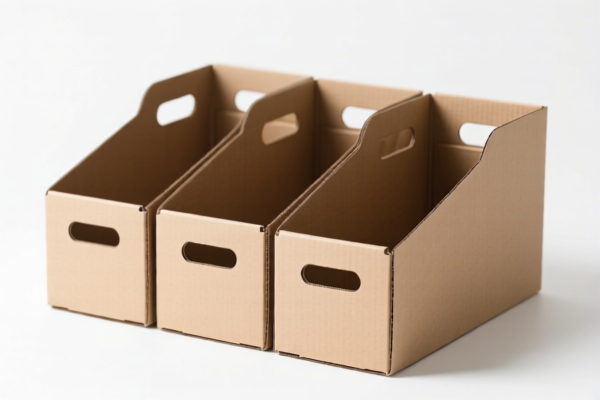
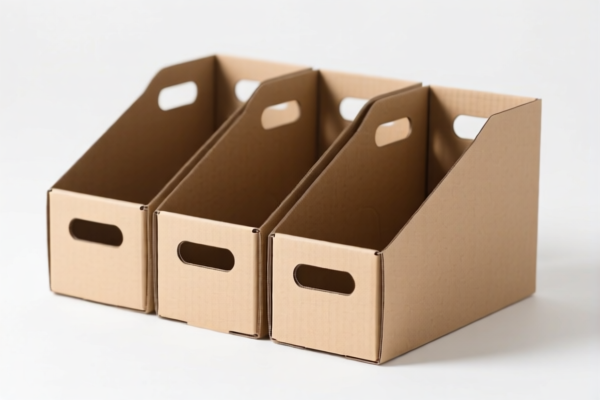
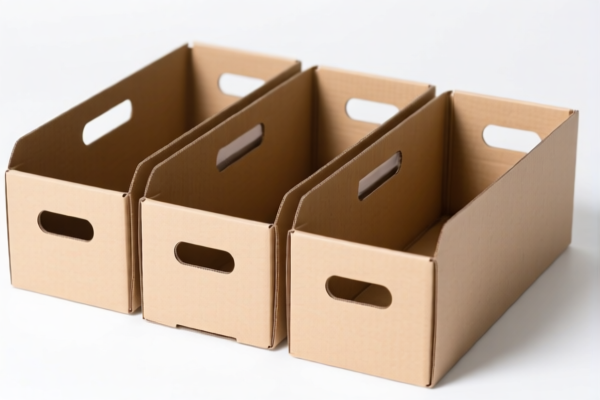

AI Analysis
📄 Paper Dividers (File Separators & Index Tabs)
🌐 HS Code Reference & Customs Clearance Guide | 2026 Latest Tariff Analysis | Strategic Import Strategy for US Markets
📌 I. Product Definition & Classification: What Exactly Are "Paper Dividers"?
Paper Dividers, also known as file separators, index tabs, or partition sheets, are essential stationery items used to organize documents within folders, binders, or filing cabinets. In international trade, their classification depends heavily on their material, form, and specific intended use.
Key Classification Distinction:
- Specific Stationery Class: Dividers designed specifically as part of a folder system or file cover assembly → Often grouped under 4820.30.
- General Paper Product Class: Standalone paper sheets or cutouts without specific folder integration → Often grouped under 4811.90.
⚠️ Critical Differentiation Point:
- If the dividers are integral to a folder system (e.g., pre-cut tabs for ring binders, part of a file cover set) →归入 4820.30
- If they are generic paper sheets, cardstock separators, or unclassified paper products →归入 4811.90
📦 II. HS Code Classification Details (2026 Latest Tariff Authority Mapping)
Based on the provided data, here are the three applicable HS Codes for Paper Dividers:
| HS Code | Product Description | Applicability Scenario | Material/Form |
|---|---|---|---|
4820.30.00.20 |
Paper Dividers, specifically categorized as stationery belonging to folders/file covers | Pre-cut divider sheets for binders, file organization systems | ✅ Paper |
4820.30.00.40 |
Other types of paper dividers/folders, not specified elsewhere | Miscellaneous folder accessories, generic file separators | ✅ Paper |
4811.90.90.10 |
Paper dividers, generic category (catch-all for other paper products) | Standalone paper sheets, cardstock dividers, not part of a folder system | ✅ Paper |
🔍 Key Reminder:
- All three codes apply to paper-based products.
- The choice between 4820.30 and 4811.90 depends on whether the product is considered a specialized stationery item (folder-related) or a general paper good.
- 4820.30 is more specific to "folders and file covers," while 4811.90 is a "catch-all" for other paper products.
💰 III. 2026 Latest Tariff Rate Breakdown (Including Surtaxes & Policy Add-ons)
✅ Applicable Country: United States (US)
✅ Country of Origin: China (CN)
✅ Effective Date: 2025 November 10 onwards (including subsequent imports)
🎯 1. 4820.30.00.20 — Paper Dividers (Folder/File Cover Category)
| Item | Content |
|---|---|
| Base Tariff Rate | 0% (ad valorem) |
| USITC Surcharge | +25% (Section 301 Duties) |
| 122 Clause Tariff | +10% (Specific USITC clause for Chinese-origin paper products) |
| Total Effective Rate | 35% |
| Tax Calculation | CIF Value × 35% |
| De Minimis Exemption Eligible | ❌ NO (deny_de_minimis) |
| Legal Basis Path | USITC:4820.30.00.20 → SECTION_301:9903.01.24 → CLAUSE_122:9903.88.01 |
📌 Explanation:
- The 25% comes from the Section 301 trade remedy duties imposed on specific Chinese-origin goods.
- The 10% is an additional surcharge under USITC Clause 122 for certain paper products.
- Total 35% is a significant cost factor.
🎯 2. 4820.30.00.40 — Other Paper Dividers (Folder Category)
| Item | Content |
|---|---|
| Base Tariff Rate | 0% |
| USITC Surcharge | +25% (Section 301 Duties) |
| 122 Clause Tariff | +10% (Specific USITC clause for Chinese-origin paper products) |
| Total Effective Rate | 35% |
| Tax Calculation | CIF Value × 35% |
| De Minimis Exemption Eligible | ❌ NO |
| Legal Basis Path | USITC:4820.30.00.40 → SECTION_301:9903.01.24 → CLAUSE_122:9903.88.01 |
📌 Note:
- Same tariff structure as above.
- Even if the dividers are "other" types within the folder category, they still attract the same surcharges.
🎯 3. 4811.90.90.10 — Paper Dividers (Generic/Other Paper Category)
| Item | Content |
|---|---|
| Base Tariff Rate | 0% |
| USITC Surcharge | +25% (Section 301 Duties) |
| 122 Clause Tariff | +10% (Specific USITC clause for Chinese-origin paper products) |
| Total Effective Rate | 35% |
| Tax Calculation | CIF Value × 35% |
| De Minimis Exemption Eligible | ❌ NO |
| Legal Basis Path | USITC:4811.90.90.10 → SECTION_301:9903.01.24 → CLAUSE_122:9903.88.01 |
📌 Note:
- Although classified under a different heading (4811 vs. 4820), the total tax burden remains 35%.
- This code is used as a fallback for dividers that do not fit neatly into the folder-specific categories.
🛠️ IV. Customs Clearance Practical Advice (Pitfall Avoidance Guide)
✅ 1. Required Documentation Checklist (All Are Mandatory)
| Document | Required | Description |
|---|---|---|
| ✅ Product Specification Sheet | ✔️ | Details material type (e.g., cardstock, kraft paper), dimensions, weight |
| ✅ Product Photos (with Label) | ✔️ | Show tabs, perforations, packaging, and any branding |
| ✅ Commercial Invoice | ✔️ | Clearly describe as "Paper File Dividers" or "Folder Separators" |
| ✅ Packing List | ✔️ | Itemize quantity, weight, and dimensions per carton |
| ✅ Certificate of Origin (CO) | ✔️ | Required to verify China origin for surcharge application |
| ✅ Third-Party Test Report | ✔️ | If claiming any eco-friendly or recycled content (for marketing) |
✅ 2. Declaration Tips (Key Strategies)
🔥 "Be Specific, Avoid Ambiguity!"
| Scenario | Correct Declaration | Incorrect Practice |
|---|---|---|
| Dividers with pre-cut tabs for binders | 4820.30.00.20 - "Paper Dividers for Binders" |
Vague term "Paper Products" → Risk of reclassification |
| Generic paper sheets sold as dividers | 4811.90.90.10 - "Paper Separators" |
Calling them "Folder Accessories" when they are not |
| Mixed shipments (dividers + folders) | Declare separately | Bundling into one line item → Potential audit flags |
| Recycled paper dividers | Specify "Recycled Paper" in description | Omitting material composition → May delay clearance |
✅ 3. Special Case Handling
| Scenario | Handling Advice |
|---|---|
| OEM Custom Dividers | Provide design blueprints or sample approvals to prove specific use |
| Dividers with Plastic Inserts | May change HS Code (e.g., to 4820.90). Consult customs broker |
| Dividers for Medical/Legal Files | No special tariff benefit, but ensure compliance with hygiene/safety standards |
| Small Sample Shipments | Still subject to 35% duty; de minimis does not apply to China-origin goods under Section 301 |
🌍 V. Global Market Comparison for Paper Dividers (2026 Latest)
| Country/Region | Recommended HS Code | Tariff (China Origin) | Certification Requirements | Notes |
|---|---|---|---|---|
| 🇺🇸 USA | 4820.30.00.20 / 4811.90.90.10 |
35% (Base 0% + 25% + 10%) | None | High duty burden; no de minimis |
| 🇨🇳 China | 4820.30 or 4811.90 |
5%~10% | CCC (if applicable) | Lower export tariffs |
| 🇪🇺 EU | 4820.30 or 4811.90 |
0%~4% (varies) | CE (if applicable) | No Section 301 equivalent |
| 🇬🇧 UK | 4820.30 or 4811.90 |
0%~5% | UKCA (if applicable) | Post-Brexit rules apply |
| 🇯🇵 Japan | 4820.30 or 4811.90 |
0%~5% | PSE (if applicable) | Low duty rates |
📌 Conclusion:
- The USA imposes the highest effective tariff on paper dividers from China due to Section 301 and Clause 122.
- For other markets, the duty burden is significantly lower (0%~10%).
- Consider supply chain diversification (e.g., manufacturing in Vietnam or Mexico) if targeting the US market heavily.
📌 VI. Common Mistakes & Pitfall Guide (Lessons Learned)
❌ Mistake 1: Using vague terms like "Paper Goods" in the invoice
👉 Consequence: Customs may reclassify to a higher-duty category or delay shipment.
❌ Mistake 2: Assuming de minimis exemption applies
👉 Consequence: 35% duty still applies to China-origin goods under Section 301, even for small packages.
❌ Mistake 3: Misclassifying plastic-coated or plastic-insert dividers as pure paper
👉 Consequence: Incorrect HS Code → Potential fines and back taxes.
❌ Mistake 4: Not declaring the specific use (e.g., for binders vs. generic filing)
👉 Consequence: Ambiguity leads to additional documentation requests and clearance delays.
✅ Correct Approach:
"Paper File Dividers, Kraft Paper, Perforated Tabs, for Use in Ring Binders, Model XYZ, China Origin"
🎯 VII. Conclusion: Strategic Clearance for Cost Efficiency
🎯 Key Takeaway:
🔹 "Paper Dividers from China: 35% Duty is Inevitable in the US"
🔹 "De Minimis Does NOT Apply — Plan for Full Tariff Payment"
🔹 "Accurate Description Prevents Delays — Specify 'Paper' and 'Use Case'"
📌 Pro Tip:
- If you are importing large volumes of paper dividers to the US, consider Advanced Ruling (APA) from CBP to confirm HS Code classification.
- Explore duty drawback programs if the dividers are re-exported.
- Evaluate non-China origin sourcing (e.g., Southeast Asia) to avoid Section 301 duties for US-bound goods.
📣 Immediate Action:
📞 Engage a licensed customs broker
📄 Ensure accurate commercial invoices with detailed product descriptions
📦 Verify Country of Origin labeling
🚀 Minimize Clearance Risks and Optimize Costs for Your Paper Dividers!
✨ Professional Clearance Starts with Precise Classification!
💼 Every Percent of Duty Matters — Get It Right from Day One!
Customer Reviews
About HS Code Classification
The Harmonized System (HS) is an internationally standardized nomenclature developed by the World Customs Organization (WCO) to classify traded products. Over 200 countries use the HS system as the basis for customs tariffs, trade statistics, and import/export regulations.
Each HS code follows a hierarchical structure:
- Chapter (2 digits) — Broad category of goods (e.g., Chapter 84: Machinery and Mechanical Appliances)
- Heading (4 digits) — More specific grouping within the chapter
- Subheading (6 digits) — Internationally standardized breakdown, used by all WCO member countries
- National subdivisions (8-10 digits) — Country-specific extensions for further classification, such as US HTSUS 10-digit codes
Correct HS code classification is essential for smooth customs clearance, accurate duty payment, and compliance with trade regulations. Misclassification can lead to customs delays, overpayment of duties, or penalties.
When importing from CN to US, the applicable tariff rates may include:
- Most-Favored-Nation (MFN) rate — The standard duty rate applied to WTO members
- General rate — Applied to countries without trade agreements
- Trade remedy duties — Additional tariffs such as Section 301 (anti-dumping), Section 232 (national security), or countervailing duties
The information provided on this page is for reference purposes only. For official classification, please consult with your local customs authority or a licensed customs broker.