Paper Dividers
CN → US| HS Code | Tariff Rate | Origin | Destination | Doc |
|---|---|---|---|---|
| 4820300020 | 35.0% | CN | US | Official Doc |
| 4820300040 | 35.0% | CN | US | Official Doc |
Product Images
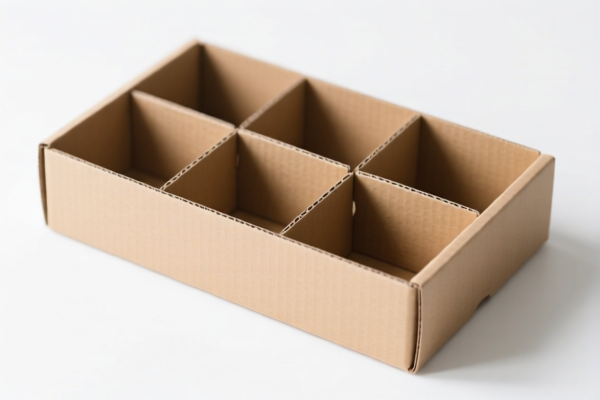
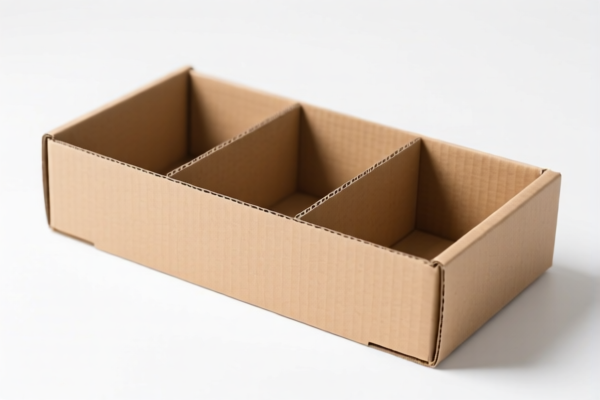
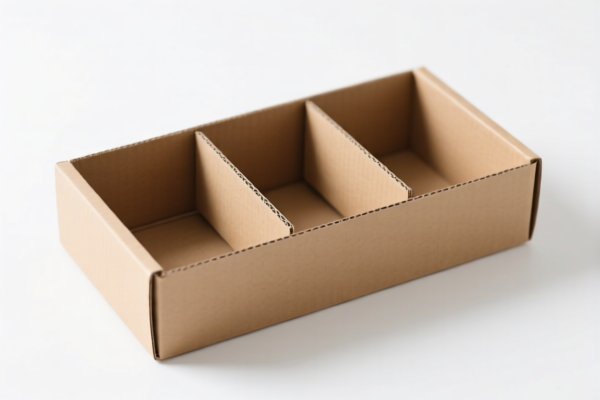
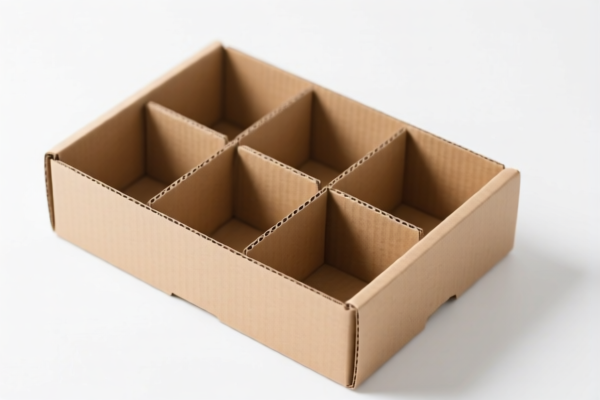
AI Analysis
📂 Paper Dividers & Stationery Organization Products
🌐 HS Code Reference & Customs Clearance Guide | 2026 Latest Tariff Analysis | Professional Clearance Strategy
📌 Part I: Product Definition & Classification: Do You Really Understand "Paper Dividers"?
Paper dividers, looseleaf binders, and folder systems are essential tools for document organization in office, legal, and academic settings. In international trade, these items fall under Chapter 48 (Paper and Paperboard) because they are primarily constructed of paper or paperboard, even if they contain metal components (like rings or springs).
The core distinction lies in the construction method: - Looseleaf Binders: Use mechanical fastening systems (rings, prongs, springs) to hold loose pages. - Folders/File Covers: Use gluing, stapling, or folding to hold pages. - Standalone Dividers: Single sheets of stiff paper/cardboard with tabs, used inside a binder or folder.
⚠️ Critical Distinction:
- If the product is a standalone divider sheet (no rings, no binding mechanism), it is generally classified under 4820.40 (Manifold business forms, sets, and other articles of stationery).
- However, the provided DATA only covers Binders, Folders, and File Covers under 4820.30.
- Note: If your "dividers" are part of a binder system or sold as pre-assembled file folders, they fall under the codes below. Pure standalone paper tabs may require HS Code 4820.40.90, but for this guide, we focus strictly on the provided DATA (4820.30).
📦 Part II: HS Code Classification Details (2026 Latest Tariff Authority Comparison)
Based on the provided <DATA>, only two specific HS Codes are available for this product category. Both fall under 4820.30 (Binders, folders, and file covers).
| HS Code | Product Description | Applicable Scenario | Key Features |
|---|---|---|---|
4820.30.00.20 |
Looseleaf binders | Standard office looseleaf notebooks, ring-bound journals, or divider systems with mechanical fasteners | Uses rings/prongs to hold pages |
4820.30.00.40 |
Other (Binders, folders, file covers) | Manilla folders, plastic-coated paper folders, accordion files, or non-looseleaf binding systems | No mechanical looseleaf rings; glued, stapled, or folded |
🔍 Key Reminder:
- "Looseleaf" (20): Specifically refers to items with mechanical binding mechanisms (rings, springs) that allow pages to be added/removed.
- "Other" (40): Includes folders, file covers, and simple binders that do not use looseleaf mechanisms.
- Standalone Paper Dividers: If these are just sheets of paper with tabs (no binding), they technically belong to 4820.40, which is NOT in the provided DATA. Ensure your product has binding or is a folder system to use the codes below.
💰 Part III: 2026 Latest Tariff Rate Breakdown (Including Surtaxes & Policy Surcharges)
✅ Applicable Country: United States (US)
✅ Origin: China (CN)
✅ Effective Date: 2025/2026 Tariff Schedule
Both HS Codes (4820.30.00.20 and 4820.30.00.40) have identical tax structures in the provided data.
🎯 1. 4820.30.00.20 —— Looseleaf Binders
| Item | Content |
|---|---|
| Base Tariff | 0.0% (ad valorem) |
| Section 301 Surcharge | +25.0% (USITC Footnote 9903.88.01) |
| Total Tax Rate | 25.0% |
| Tax Calculation | CIF Value × 25% |
| De Minimis Eligibility | ❌ Not Applicable (Generally, Section 301 duties apply regardless of value, but de minimis ($800) may still apply for small parcels if no other special duties exist; however, for bulk commercial import, full duty applies) |
| Legal Basis Path | USITC:4820.30.00.20 → FOOTNOTE:9903.88.01 |
📌 Explanation:
- The base tariff is 0%, meaning the product is duty-free under normal MFN rates.
- However, Section 301 tariffs add 25% for products originating in China.
- Total cost impact: 25% of the declared value.
🎯 2. 4820.30.00.40 —— Other Binders, Folders, and File Covers
| Item | Content |
|---|---|
| Base Tariff | 0.0% (ad valorem) |
| Section 301 Surcharge | +25.0% (USITC Footnote 9903.88.01) |
| Total Tax Rate | 25.0% |
| Tax Calculation | CIF Value × 25% |
| De Minimis Eligibility | ❌ Not Applicable |
| Legal Basis Path | USITC:4820.30.00.40 → FOOTNOTE:9903.88.01 |
📌 Note:
- Identical tax treatment to looseleaf binders.
- Even if the product is a simple paper folder, the 25% surcharge applies if from China.
🛠️ Part IV: Customs Clearance Practical Advice (Real-World Pitfall Guide)
✅ 1. Required Documentation Checklist (Non-Negotiable)
| Document | Must Provide | Notes |
|---|---|---|
| ✅ Commercial Invoice | ✔️ | Must clearly state "Paper Binders" or "Paper Folders" – avoid vague terms like "Office Supplies" |
| ✅ Product Photos | ✔️ | Show the binding mechanism (rings vs. glued) to prove classification |
| ✅ Material Composition | ✔️ | Confirm >50% paper/paperboard by weight. If metal content is high, classification may shift to Chapter 83 |
| ✅ Country of Origin Certificate | ✔️ | Crucial for verifying Chinese origin (triggers 25% tariff) |
| ✅ Packing List | ✔️ | Must separate binders from non-paper accessories (e.g., if sold with plastic sleeves, clarify) |
✅ 2. Classification Tips (Key Rules)
🔥 "Binding Type Determines Code, Paper Content is King!"
| Scenario | Correct HS Code | Error to Avoid |
|---|---|---|
| Looseleaf Notebook with Rings | 4820.30.00.20 |
Misclassifying as "Books" (4901) → Higher duty/complexity |
| Manilla Folder or File Cover | 4820.30.00.40 |
Misclassifying as "Plastic Folders" (3923) → If >50% paper, must use 4820 |
| Standalone Paper Dividers (No Binding) | NOT IN DATA | Use 4820.40.90 instead of 4820.30 |
| Binder with Plastic Cover + Paper Interior | 4820.30.00.40 |
Do NOT classify under Chapter 39 just because of the cover |
✅ 3. Special Cases & Mitigation
| Scenario | Handling Advice |
|---|---|
| Mixed Material (Paper + Plastic) | If paper content >50% by weight, use 4820. If plastic >50%, check 3923 (Plastic stationery). |
| Metal Components | If metal rings constitute a significant value/weight, consult a customs broker. However, generally, the essential character is paper. |
| Gift Sets (Binder + Pen + Notebook) | Declare as a Set. The HS Code is determined by the component that gives the set its essential character (usually the binder/notebook). |
| Origin Shifting | If exported from Vietnam or Malaysia, Section 301 25% tariff does NOT apply (unless transshipped fraudulently). Check Country of Origin carefully. |
🌍 Part V: Global Market Clearance Comparison (2026)
| Country/Region | Recommended HS Code | Tariff (China Origin) | Certification | Notes |
|---|---|---|---|---|
| 🇺🇸 United States | 4820.30.00.20 / .40 |
25% (Section 301) | None specific | High duty cost; ensure proper classification |
| 🇨🇳 China | 4820.30.00 |
0% - 5% (Import) | None | Low import duty for foreign buyers |
| 🇪🇺 European Union | 4820.30.00 |
6.5% (Standard) | CE (if plastic) | No Section 301 equivalent; stable rates |
| 🇨🇦 Canada | 4820.30.00 |
0% (Most FTA partners) | None | CUSMA/USMCA benefits may apply if from US/Mexico |
| 🇦🇺 Australia | 4820.30.00 |
5% | None | Standard GSP rates may apply |
📌 Conclusion:
- USA is the highest-cost market due to the 25% Section 301 surcharge.
- Diversify sourcing if possible (e.g., Vietnam, Thailand) to avoid 25% tariff.
- EU/Canada/Australia are more cost-effective for paper stationery imports.
📌 Part VI: Common Mistakes & Pitfalls (Lessons Learned)
❌ Mistake 1: Classifying "Looseleaf Dividers" under "Books" (4901)
👉 Consequence: Incorrect classification → Penalties + Retroactive Duties.
Fix: Use 4820.30.00.20 for binding systems.
❌ Mistake 2: Ignoring the "Other" category (4820.30.00.40) for folders
👉 Consequence: Overpaying duty or underpaying.
Fix: If no rings/springs, use 4820.30.00.40.
❌ Mistake 3: Declaring "Stationery" without specifying "Binders/Folders"
👉 Consequence: Customs may reject or audit.
Fix: Be specific: "Paper Binders, Looseleaf, 1-inch Ring."
✅ Correct Declaration Example:
"PAPER LOOSELEAF BINDERS, 1-INCH RING MECHANISM, PAPER BOARD COVER, MODEL XYZ, ORIGIN CHINA"
🎯 Part VII: Conclusion: Professional Classification Saves Money!
🎯 Remember the Rule:
🔹 "Looseleaf = .20, Other Folder = .40, Base 0% + 25% Surcharge."
🔹 "Paper Content is Key; If >50%, Use Chapter 48."
🔹 "China Origin = 25% Extra; Consider Alternative Sourcing for USA."
📌 Pro Tip:
If you are shipping to the USA, calculate the 25% surcharge into your landed cost. For large volumes, consider transshipment from a third country (with proper origin rules) or supplier sourcing from non-USITC target countries (e.g., Vietnam, India).
📣 Immediate Action:
📞 Verify binding type (Looseleaf vs. Folder).
📞 Check material composition (>50% paper).
📞 Confirm Country of Origin to avoid surprise tariffs.
✨ Precise Classification Starts Here!
💼 Your Profit Margin Depends on Accurate HS Codes!
Customer Reviews
About HS Code Classification
The Harmonized System (HS) is an internationally standardized nomenclature developed by the World Customs Organization (WCO) to classify traded products. Over 200 countries use the HS system as the basis for customs tariffs, trade statistics, and import/export regulations.
Each HS code follows a hierarchical structure:
- Chapter (2 digits) — Broad category of goods (e.g., Chapter 84: Machinery and Mechanical Appliances)
- Heading (4 digits) — More specific grouping within the chapter
- Subheading (6 digits) — Internationally standardized breakdown, used by all WCO member countries
- National subdivisions (8-10 digits) — Country-specific extensions for further classification, such as US HTSUS 10-digit codes
Correct HS code classification is essential for smooth customs clearance, accurate duty payment, and compliance with trade regulations. Misclassification can lead to customs delays, overpayment of duties, or penalties.
When importing from CN to US, the applicable tariff rates may include:
- Most-Favored-Nation (MFN) rate — The standard duty rate applied to WTO members
- General rate — Applied to countries without trade agreements
- Trade remedy duties — Additional tariffs such as Section 301 (anti-dumping), Section 232 (national security), or countervailing duties
The information provided on this page is for reference purposes only. For official classification, please consult with your local customs authority or a licensed customs broker.