Paper Double Layer Cake Tray
CN → US| HS Code | Tariff Rate | Origin | Destination | Doc |
|---|---|---|---|---|
| 4819200020 | 35.0% | CN | US | Official Doc |
| 4819100020 | 35.0% | CN | US | Official Doc |
| 4823610020 | 35.0% | CN | US | Official Doc |
| 4823690040 | 35.0% | CN | US | Official Doc |
| 4823690020 | 35.0% | CN | US | Official Doc |
Product Images
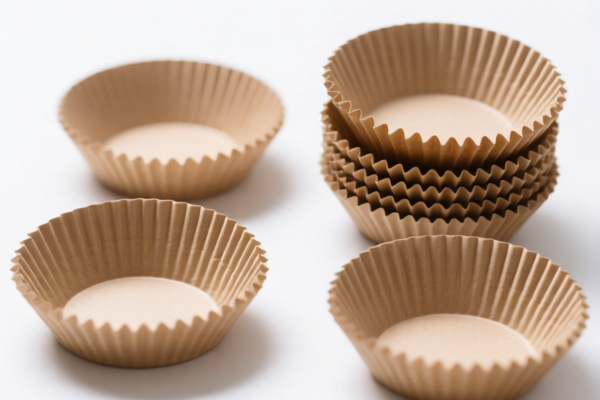
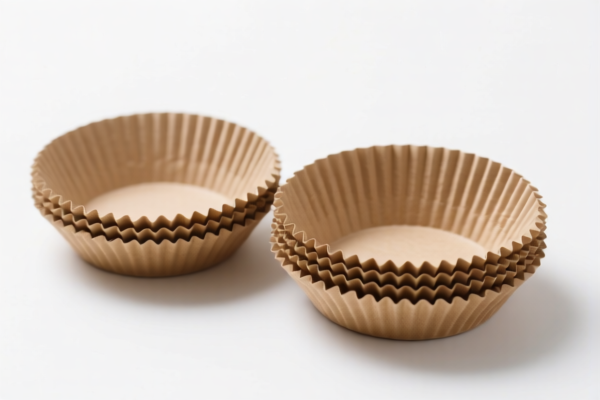
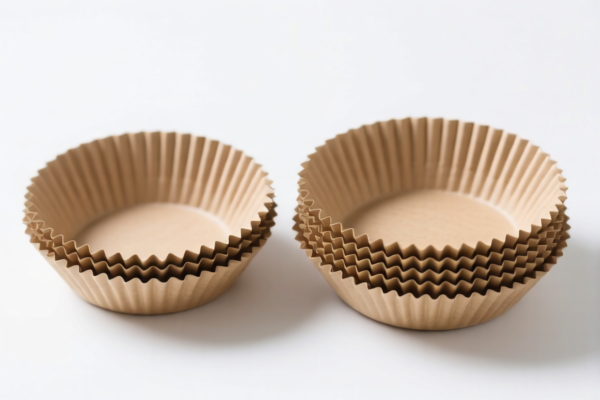
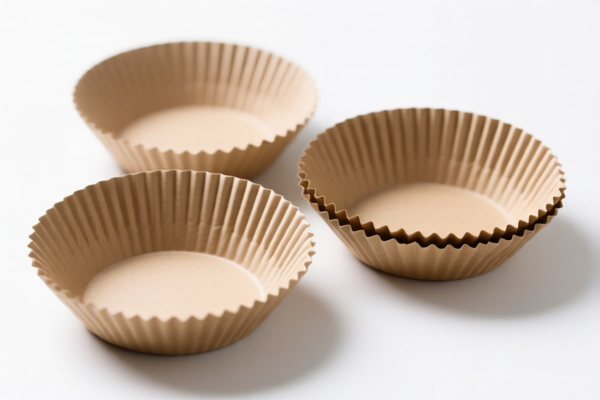
AI Analysis
🍰 Paper Double Layer Cake Tray (Paper Cake Stands & Supports)
🌐 HS Code Reference & Customs Clearance Guide | 2026 Latest Tariff Analysis | Professional Clearance Strategy
📌 I. Product Definition & Classification: Do You Really Know What a "Double Layer Cake Tray" Is?
A Paper Double Layer Cake Tray is a specialized packaging and serving accessory used in the baking, confectionery, and logistics industries. It is designed to support two tiers of cakes simultaneously, ensuring stability during transport and display. In international trade, it is classified not as a "bakery product" but as a Paper/Paperboard Container or Tableware, depending on its structural integrity and material.
In the eyes of customs authorities (specifically US CBP), these items fall under Chapter 48 (Paper and Paperboard), specifically within subheadings for trays, plates, dishes, cups, or folding boxes.
⚠️ Critical Distinction Point:
- If the tray is folded cardboard/folding box structure (like a gift box or carrier) → It may be classified under 4819 (Folding Cardboard Boxes).
- If it is a rigid molded paper/paperboard tray or plate (like a disposable plate or platter) → It falls under 4823 (Other Paper/Paperboard Articles).
- Material matters: Non-wrinkled (4819) vs. Corrugated (4819) vs. Generic Paperboard (4823).
📦 II. HS Code Classification Details (2026 Latest Tariff Authority Comparison)
Based on the specific structural variations of "Paper Double Layer Cake Trays," here are the five most accurate HS Codes applicable to US Imports from China:
| HS Code | Product Description | Application Scenario | Material/Structure Conflict? |
|---|---|---|---|
4819.20.00.20 |
Paper cake trays, Non-corrugated / Folding boxes, cases, and crates for carrying cakes. | Standard rigid paperboard trays that fold or assemble into a base for cakes. | ❌ No material conflict (Non-corrugated) |
4819.10.00.20 |
Paper cake trays, Corrugated paperboard / Cardboard, falls within food hygiene containers. | Sturdy, ribbed cardboard bases used for heavy multi-tier cakes requiring extra structural support. | ✅ Corrugated Material Specific |
4823.61.00.20 |
Paper cake trays, Trays, plates, dishes, cups, similar articles, for food containers. | Flat or slightly molded paper platters used as the base plate for the cake stack. | ✅ No material or use conflict |
4823.69.00.40 |
Paper cake trays, Trays, plates category articles, no material or use conflict. | Generic paper trays that don't fit specific subheadings like "food hygiene" explicitly or are mixed-use. | ❌ No conflict |
4823.69.00.20 |
Paper cake cups, Cups & circular nested food containers, no material conflict. | Small individual cake stands or cup-shaped supports within a double-layer system. | ❌ No material conflict |
🔍 Key Reminder:
- All these items are classified as Paper/Paperboard Articles. They are NOT classified as plastic or metal. - The distinction between 4819 (Boxes/Containers) and 4823 (Tableware/Plates) depends on whether the item is primarily a "box to carry" (4819) or a "plate to serve on" (4823). For double-layer trays, they are often treated as carrying containers (4819) if they hold the cake together, or plates (4823) if they are merely the bottom layer. - Corrugated vs. Non-Corrugated: If the cardboard has a fluted layer for strength, it is 4819.10. If it is solid paperboard/cardstock, it is 4819.20 or 4823.
💰 III. 2026 Latest Tariff Rate Details (Including Surtaxes, Policy Surcharges)
✅ Applicable Country: United States (US)
✅ Origin: China (CN)
✅ Effective Date: 2025年11月10日起 (Including subsequent imports)
🎯 1. 4819.20.00.20 —— Paper Cake Trays, Non-Corrugated (Folding Boxes/Cases)
| Item | Content |
|---|---|
| Base Tariff Rate | 0% (ad valorem) |
| Section 301 Surtax | +25% (from USITC Footnote 9903.88.01) |
| Section 122 Tariff | +10% (Specific policy surcharge for this category) |
| Total Tariff Rate | 35.0% |
| Tax Calculation | CIF Value × 35% |
| De Minimis Exemption Eligible | ❌ NO (deny_de_minimis) |
| Legal Basis Path | USITC:4819.20.00.20 → SECTION_301:9903.88.01 + SECTION_122:10% |
📌 Explanation:
- The 25% is the standard Section 301 tariff applied to most Chinese paper products. - The 10% is a specific additional levy (Section 122) often applied to certain packaging materials or food-contact paper products under recent trade policies. - Total 35% is significant. This is NOT a de minimis (800 USD) eligible item if declared as commercial goods.
🎯 2. 4819.10.00.20 —— Paper Cake Trays, Corrugated (Food Hygiene Containers)
| Item | Content |
|---|---|
| Base Tariff Rate | 0% |
| Section 301 Surtax | +25% |
| Section 122 Tariff | +10% |
| Total Tariff Rate | 35.0% |
| Tax Calculation | CIF × 35% |
| De Minimis Exemption Eligible | ❌ No |
| Legal Basis Path | USITC:4819.10.00.20 → SECTION_301:9903.88.01 + SECTION_122:10% |
📌 Note:
- Corrugated paper products face the same high tariffs as non-corrugated ones in this category. - Even if labeled as "Food Hygiene Containers," they are subject to the same Section 301 and 122 surcharges.
🎯 3. 4823.61.00.20 —— Paper Trays, Plates, Dishes (Food Containers)
| Item | Content |
|---|---|
| Base Tariff Rate | 0% |
| Section 301 Surtax | +25% |
| Section 122 Tariff | +10% |
| Total Tariff Rate | 35.0% |
| Tax Calculation | CIF × 35% |
| De Minimis Exemption Eligible | ❌ No |
| Legal Basis Path | USITC:4823.61.00.20 → SECTION_301:9903.88.01 + SECTION_122:10% |
📌 Warning:
- Classification under 4823 does not exempt you from the 35% total tariff. The US has aggressively taxed paper tableware and containers from China.
🎯 4. 4823.69.00.40 & 4823.69.00.20 —— Other Paper Trays/Cups
| Item | Content |
|---|---|
| Base Tariff Rate | 0% |
| Section 301 Surtax | +25% |
| Section 122 Tariff | +10% |
| Total Tariff Rate | 35.0% |
| Tax Calculation | CIF × 35% |
| De Minimis Exemption Eligible | ❌ No |
| Legal Basis Path | USITC:4823.69.00.40/20 → SECTION_301:9903.88.01 + SECTION_122:10% |
📌 Conclusion:
- Regardless of the slight nuance in the HS Code (61 vs 69, 40 vs 20), the Total Tariff is consistently 35% for Chinese-origin paper cake trays/cups/trays entering the US under current 2026 policies. - There is no tariff advantage between these subheadings for cost-saving purposes. Focus on correct classification to avoid penalties, not on finding a lower rate.
🛠️ IV. Customs Clearance Practical Advice (Battle-Tested Pitfall Avoidance Guide)
✅ 1. Preparation Material Checklist (Missing Any = Delay)
| Material | Must Provide | Explanation |
|---|---|---|
| ✅ Product Specifications | ✔️ | Dimensions, weight, layer count (double/triple), material type (corrugated vs. solid board). |
| ✅ Material Composition | ✔️ | 100% Paper/Paperboard. NO plastic lining if claiming pure paper. |
| ✅ Product Photos | ✔️ | Clear images showing the double-layer structure, folds, and any food-safe coatings. |
| ✅ Commercial Invoice | ✔️ | Must explicitly state: "Paper Double Layer Cake Tray, Paper Material, Not Food Product." |
| ✅ Packing List | ✔️ | Net weight/Gross weight. Ensure weights match the declared HS Code customs limits. |
| ✅ FSC Certification (Optional but Recommended) | ✔️ | Proves sustainable sourcing, may help with buyer requirements but not a tariff factor. |
✅ 2. Declaration Tips (Key Mantra)
🔥 "Material Defines Code, Structure Defines Subcode, 35% is the Bottom Line!"
| Situation | Correct Declaration | Wrong Practice |
|---|---|---|
| Corrugated Base | 4819.10.00.20 |
Reporting as 4823.69 → Risk of reclassification & penalties |
| Solid Board Base | 4819.20.00.20 or 4823.61.00.20 |
Reporting as 4819.10 → Customs will demand proof of corrugation |
| With Plastic Window | Re-evaluate HS Code! | Claiming 100% Paper → Customs Fraud Risk |
| Food Contact | Mention "Food Grade Coating" | Omitting coating info → Potential FDA/USDA flagging |
✅ 3. Special Situation Handling
| Situation | Handling Advice |
|---|---|
| With Plastic Liner/Window | If >5% plastic by weight or surface area, it may be classified under Chapter 39 (Plastics) instead of Chapter 48. Plastic tariffs differ. Check carefully! |
| OEM Custom Printed | Provide print proof. If it's a "gift box" structure, 4819 is safer. If it's a "plate," 4823 is safer. |
| Sample Shipments | Even for samples, if value > $800, full 35% applies. De minimis only applies to < $800 per person per day. |
| Mixed Containers (Paper + Metal Stands) | DO NOT MIX! Declare separately. Metal stands may have different tariffs (e.g., Section 301 also applies, but rates might differ). Mixing causes massive delays. |
🌍 V. Global Major Market Clearance Comparison (2026 Latest)
| Country/Region | Recommended HS Code | Tariff (China Origin) | Certification Requirements | Notes |
|---|---|---|---|---|
| 🇺🇸 United States | 4819.20.00.20 / 4823.61.00.20 |
35% (Base 0% + 25% + 10%) | FDA Food Contact Notification (if direct food contact) | Highest Barrier. Section 122 adds 10% on top of Section 301. |
| 🇨🇳 China | 4819.20.00.20 |
5-10% | GB Standard (Food Contact) | Low entry barrier for import/export within China. |
| 🇪🇺 European Union | 4819.20 / 4823.61 |
0-6.5% | LFGB / EU Food Contact Regulation | No Section 301/122 equivalents. Much cheaper than US. |
| 🇬🇧 United Kingdom | 4819.20 |
0-6.5% | UK Food Standards Agency | Post-Brexit, similar to EU but separate certification. |
| 🇦🇺 Australia | 4819.20 |
5% | Australian Food Standards Code | Moderate tariff, no punitive surtaxes. |
| 🇨🇦 Canada | 4819.20 |
0-5% | Health Canada Food & Drug Regulations | No Section 301 equivalent. |
📌 Conclusion:
- The US market is uniquely expensive due to the combination of Section 301 (25%) and Section 122 (10%).
- Total 35% is a hard cost that must be factored into pricing.
- Consider supply chain diversification (e.g., manufacturing in Vietnam or Mexico) if targeting the US, as these countries may be exempt from Section 301/122 surcharges.
📌 VI. Common Mistakes & Pitfall Guide (Blood & Tears Lessons)
❌ Mistake 1: Classifying as "Plastic" when it's Paper
👉 Consequence: Incorrect HS Code (Chapter 39 vs 48). If caught, 100% penalty + seizure.
❌ Mistake 2: Ignoring the 10% Section 122 Tariff
👉 Consequence: Budgeting only for 25% (Section 301) → Unexpected 35% cost → Loss of profit margin.
❌ Mistake 3: Mixing Paper Trays with Metal Supports in One HS Code
👉 Consequence: Customs requires itemized breakdown. Delays of 2-4 weeks.
❌ Mistake 4: Using "Cake Box" for a Trailing/Plate Structure
👉 Consequence: 4819 (Boxes) vs 4823 (Plates). If misclassified, customs may reassess. Stick to the structural reality.
✅ Correct Approach:
"Paper Double Layer Cake Stand, 100% Recycled Paperboard, Corrugated Base, Foldable, FDA Compliant for Indirect Food Contact, Model CT-2L"
🎯 VII. Conclusion: Professional Declaration, Save Time, Save Money!
🎯 Remember the Mantra:
🔹 "Paper is Paper, 35% is the Price!"
🔹 "Section 301 (25%) + Section 122 (10%) = No De Minimis!"
🔹 "Corrugated vs. Solid Board = Different HS, Same Tax!"
📌 Pro Tip:
If your paper trays are sourced from Vietnam, Mexico, Thailand, or Malaysia, you MAY be exempt from Section 301 and 122 surcharges.
Recommendation: Apply for a Pre-Ruling (Advance Ruling) from US CBP to confirm the specific HS Code and tariff applicability before shipping large volumes.
📣 Immediate Action:
📞 Contact a Professional Customs Broker + Provide Product Photos + Apply for HS Code Pre-Ruling
🚀 Ensure your Paper Double Layer Cake Trays clear customs smoothly, efficiently export, and protect your margins!
✨ Professional Clearance Starts with Accurate Classification!
💼 Every Cent of Cost Deserves Precise Calculation!
Customer Reviews
About HS Code Classification
The Harmonized System (HS) is an internationally standardized nomenclature developed by the World Customs Organization (WCO) to classify traded products. Over 200 countries use the HS system as the basis for customs tariffs, trade statistics, and import/export regulations.
Each HS code follows a hierarchical structure:
- Chapter (2 digits) — Broad category of goods (e.g., Chapter 84: Machinery and Mechanical Appliances)
- Heading (4 digits) — More specific grouping within the chapter
- Subheading (6 digits) — Internationally standardized breakdown, used by all WCO member countries
- National subdivisions (8-10 digits) — Country-specific extensions for further classification, such as US HTSUS 10-digit codes
Correct HS code classification is essential for smooth customs clearance, accurate duty payment, and compliance with trade regulations. Misclassification can lead to customs delays, overpayment of duties, or penalties.
When importing from CN to US, the applicable tariff rates may include:
- Most-Favored-Nation (MFN) rate — The standard duty rate applied to WTO members
- General rate — Applied to countries without trade agreements
- Trade remedy duties — Additional tariffs such as Section 301 (anti-dumping), Section 232 (national security), or countervailing duties
The information provided on this page is for reference purposes only. For official classification, please consult with your local customs authority or a licensed customs broker.