Paper Envelopes and Paper Bags
CN → US| HS Code | Tariff Rate | Origin | Destination | Doc |
|---|---|---|---|---|
| 4817300000 | 35.0% | CN | US | Official Doc |
| 4817100000 | 35.0% | CN | US | Official Doc |
| 4823908680 | 35.0% | CN | US | Official Doc |
| 4819400040 | 35.0% | CN | US | Official Doc |
| 4820102020 | 35.0% | CN | US | Official Doc |
Product Images
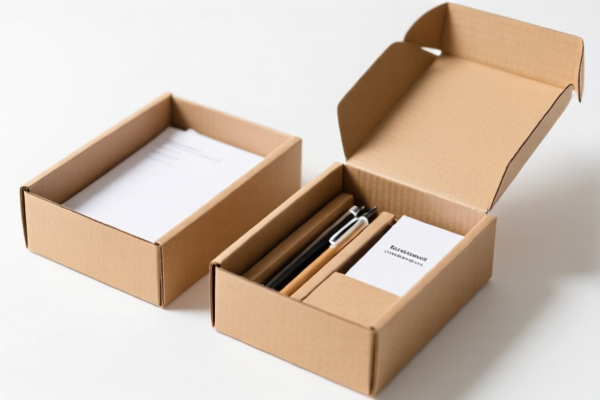
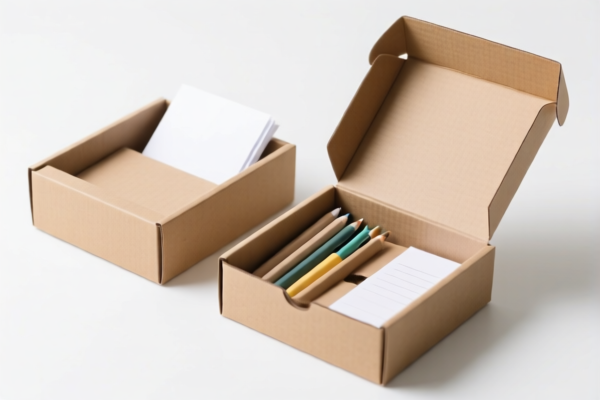
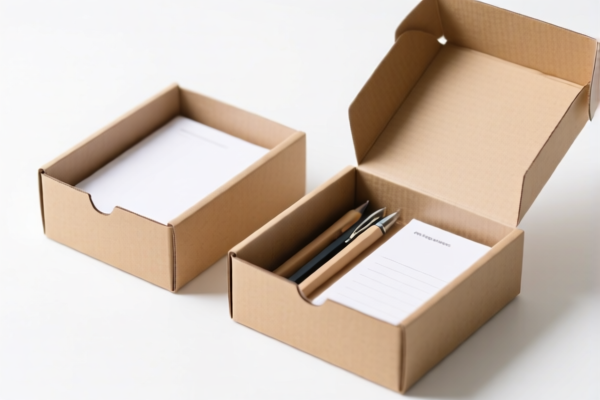
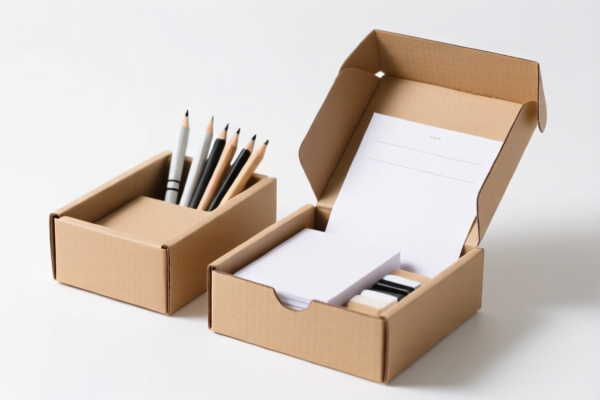
AI Analysis
📦 Paper Envelopes & Paper Bags (Papierumschläge und Papiertüten)
🌐 HS Code Reference & Customs Clearance Guide | 2026 Latest Tariff Analysis | Professional Compliance Strategy
📌 I. Product Definition & Classification: Do You Really Understand "Paper Bags"?
Paper envelopes and paper bags are ubiquitous packaging and stationery items in international trade. They are primarily classified under Chapter 48 (Paper and Paperboard) due to their material composition. However, the specific HS Code depends heavily on their structure, intended use, and whether they are lined or coated.
In the context of US imports from China, these items are subject to significant additional tariffs. Understanding the nuance between a simple "paper bag" (4823) and a "paper envelope" (4817) is critical for accurate duty calculation and customs compliance.
⚠️ Key Distinction Point:
- If the item is primarily for communication/stationery (e.g., mailing envelopes, letter pads) → Likely Chapter 4817.
- If the item is primarily for packaging/storage (e.g., shopping bags, retail packaging) → Likely Chapter 4819 or 4823.
- Note: All listed items below carry a 35% total effective tax rate due to US trade policies.
📦 II. HS Code Classification Details (2026 Latest Tariff Authority Comparison)
| HS Code | Product Description | Application Scenario | Material/Form |
|---|---|---|---|
4817.30.00.00 |
Paper envelopes and bags, of paper | Mailing envelopes, small paper bags | Paper-based, bag form |
4817.10.00.00 |
Paper envelopes and bags, of paper | Stationery, communication supplies | Paper-based, envelope/bag form |
4823.90.86.80 |
Other articles of paper, n.e.s. | General paper bags, non-specific packaging | Paper制品, generic form |
4819.40.00.40 |
Paper bags and sacks, of paper | Retail packaging, shopping bags | Paper-based, bag form |
4820.10.20.20 |
Letter pads, paper | Stationery, note-taking | Paper-based, pad form |
🔍 Important Reminder:
- 4817 Series: Focuses on envelopes and bags specifically designed for communication or specific paper-based bag uses.
- 4819.40: Typically refers to paper sacks and bags (often larger, for retail/grocery).
- 4823.90: A "catch-all" for paper articles not specified elsewhere (e.g., simple paper bags not fitting 4819 or 4817).
- 4820.10: Refers to Letter Pads (stationery), not bags. Included here as per data reference, but distinct from "bags."
💰 III. 2026 Latest Tariff Rate Breakdown (Including Additional Duties & Policy Surcharges)
✅ Applicable Country: United States (US)
✅ Origin: China (CN)
✅ Effective Date: Includes all imports subject to current trade restrictions
🎯 1. 4817.30.00.00 & 4817.10.00.00 —— Paper Envelopes and Bags
| Item | Content |
|---|---|
| Base Duty Rate | 0% (ad valorem) |
| Section 301 Tariff (Additional) | +25% (USITC Footnote for Chinese goods) |
| Section 122 Tariff (Additional) | +10% (Specific trade policy surcharge) |
| Total Effective Tax Rate | 35% |
| Tax Calculation | CIF Value × 35% |
| De Minimis Exemption Available? | ❌ No (High tariff items are generally excluded from Section 321 de minimis benefits if declared for commercial entry; check specific CBP rulings) |
| Legal Basis Path | HTSUS:4817.30.00.00 → Section 301: 9903.88.01 → Section 122: 9903.01.24 |
📌 Explanation:
- 0% Base: Paper products often have low base duties.
- 25% Section 301: Standard tariff war surcharge on Chinese goods.
- 10% Section 122: Specific additional tariff referenced in the data.
- 35% Total: This is a high-cost classification. Importers must factor this into their margin.
🎯 2. 4823.90.86.80 & 4819.40.00.40 —— Paper Bags & Sacks
| Item | Content |
|---|---|
| Base Duty Rate | 0% (ad valorem) |
| Section 301 Tariff (Additional) | +25% |
| Section 122 Tariff (Additional) | +10% |
| Total Effective Tax Rate | 35% |
| Tax Calculation | CIF Value × 35% |
| De Minimis Exemption Available? | ❌ No |
| Legal Basis Path | HTSUS:4819.40.00.40 → Section 301: 9903.88.01 → Section 122: 9903.01.24 |
📌 Note:
- Whether classified as a "bag" (4819/4823) or "envelope" (4817), the tariff burden is identical (35%).
- Classification accuracy is vital for customs scrutiny, not just duty cost. Misclassification can lead to penalties.
🎯 3. 4820.10.20.20 —— Letter Pads (Stationery)
| Item | Content |
|---|---|
| Base Duty Rate | 0% (ad valorem) |
| Section 301 Tariff (Additional) | +25% |
| Section 122 Tariff (Additional) | +10% |
| Total Effective Tax Rate | 35% |
| Tax Calculation | CIF Value × 35% |
| De Minimis Exemption Available? | ❌ No |
| Legal Basis Path | HTSUS:4820.10.20.20 → Section 301: 9903.88.01 → Section 122: 9903.01.24 |
📌 Note:
- While technically "stationery," it is listed with the same tariff structure.
- Ensure the product is genuinely a letter pad (paper sheets bound/stapled) and not a bag mislabeled as such.
🛠️ IV. Customs Clearance Practical Advice (Battle-Tested Pitfall Guide)
✅ 1. Required Documentation Checklist (Non-Negotiable)
| Document | Mandatory | Explanation |
|---|---|---|
| ✅ Commercial Invoice | ✔️ | Must clearly state "Paper Envelopes" or "Paper Bags," material (e.g., "kraft paper," "recycled paper"), and quantity. |
| ✅ Packing List | ✔️ | Detail dimensions, weight, and packaging type (cartons, pallets). |
| ✅ Product Description | ✔️ | Avoid generic terms like "Goods." Use specific terms: "Paper Envelopes, 100% Recycled Paper, No Lining." |
| ✅ Material Composition Statement | ✔️ | Confirm if there are any non-paper components (e.g., plastic windows, adhesive strips). If >5% plastic, classification may change. |
| ✅ Certificate of Origin (CO) | ✔️ | Essential for proving Chinese origin to apply correct Section 301/122 duties. |
✅ 2. Declaration Tips (Key Mantras)
🔥 "Material First, Form Second, Name Specific, Avoid Ambiguity!"
| Scenario | Correct Declaration | Incorrect Practice |
|---|---|---|
| Plain Paper Bags | 4823.90.86.80 or 4819.40.00.40 + "Paper Bags" |
Labeling as "Gift Boxes" → Wrong HTS, Penalty! |
| Mailing Envelopes | 4817.30.00.00 + "Paper Envelopes" |
Labeling as "Paper Bags" → Customs query for use case |
| Letter Pads | 4820.10.20.20 + "Letter Pads" |
Labeling as "Paper Bags" → Major Misclassification |
| Bag with Plastic Window | May shift to Chapter 39 (Plastics) or mixed material rules | Ignoring plastic component → Misdeclaration |
⚠️ Critical Warning:
- Do not use vague terms like "Office Supplies" or "Packaging."
- If the bag has a plastic lining or window, it may fall under Chapter 39 (Plastics), which could have different tariff rates. Verify material composition!
✅ 3. Special Handling Cases
| Case | Handling Advice |
|---|---|
| Private Label Bags | Provide brand authorization if applicable; otherwise, generic "OEM Paper Bags" is acceptable. |
| Custom Printed Bags | Ensure printing content does not violate US content laws (e.g., political misinformation, copyright). |
| High Volume Shipments | Consider Section 301 Exclusions if available (check USTR lists), though rare for standard paper bags. |
| De Minimis (Section 321) | Caution: Most commercial imports of paper bags from China are excluded from the $800 de minimis threshold due to high tariff rates and enforcement. Do not assume exemption. |
🌍 V. Global Market Comparison (2026 Latest)
| Country/Region | Recommended HS Code | Tariff (China Origin) | Certification Required | Notes |
|---|---|---|---|---|
| 🇺🇸 USA | 4817.30.00.00 / 4819.40.00.40 |
35% (25% + 10%) | No specific tech certs | Highest cost market due to trade wars. |
| 🇨🇳 China | 4817.30.00.00 / 4819.40.00.40 |
5-10% | CCC (if applicable) | Low duty for domestic/re-export. |
| 🇪🇺 EU | 4823.90.86.80 |
0-6.5% | CE (if packaging for food/goods) | No major additional tariffs. |
| 🇬🇧 UK | 4823.90.86.80 |
0-6.5% | UKCA | Post-Brexit alignment with EU. |
| 🇦🇺 Australia | 4823.90.86.80 |
0-5% | No special certs | FTAA (if applicable). |
📌 Conclusion:
- The USA is the most expensive market for importing paper envelopes and bags from China due to the 35% effective tax rate.
- EU/UK/Australia offer significantly lower duty burdens (often 0-6.5%).
- Strategy: If targeting the US, consider price absorption, tariff engineering (e.g., sourcing from non-China countries if possible), or accurate classification to avoid penalties.
📌 VI. Common Mistakes & Pitfall Guide (Lessons Learned)
❌ Mistake 1: Declaring "Paper Bags" as "Plastic Bags" (Chapter 39)
👉 Consequence: If inspected and found to be paper, penalties + back taxes for misclassification.
👉 Reality: Paper has different environmental and tariff profiles.
❌ Mistake 2: Ignoring the "Section 122" 10% surcharge
👉 Consequence: Underpayment of duties → Customs audits, fines, and seizure.
👉 Reality: The 35% rate is 301 (25%) + 122 (10%). Do not forget the 10%.
❌ Mistake 3: Using "Letter Pads" (4820) for actual Paper Bags (4817/4819)
👉 Consequence: Misclassification → Delay in customs clearance and potential penalties.
👉 Reality: They are functionally different. Letter pads are stationery; bags are packaging.
✅ Correct Practice:
"Paper Envelopes, 100% Kraft Paper, No Lining, For Mailing Only, HS 4817.30.00.00"
"Paper Shopping Bags, Recycled Paper, HS 4823.90.86.80"
🎯 VII. Conclusion: Precision in Classification Saves Money
🎯 Remember the Mantra:
🔹 "Paper is 35% in the US (25+10). Don't guess, classify right!"
🔹 "Envelopes vs. Bags matter for customs, but not for tax rate. Accuracy avoids penalties."
📌 Pro Tip:
- If your paper products are made in Vietnam, Thailand, or Mexico, you may qualify for lower or zero tariffs under USMCA or other FTAs.
- Always apply for a Binding Ruling (Pre-裁定) with US CBP if your product has mixed materials (e.g., paper with plastic window) to avoid disputes.
📣 Immediate Action:
📞 Consult a Licensed Customs Broker + Provide Detailed Product Specs + Verify HTS Code
🚀 Ensure Smooth Clearance, Avoid Delays, and Protect Your Margins!
✨ Professional Customs Compliance Starts with Accurate Classification!
💼 Every Dollar Saved in Duty is Pure Profit!
Customer Reviews
About HS Code Classification
The Harmonized System (HS) is an internationally standardized nomenclature developed by the World Customs Organization (WCO) to classify traded products. Over 200 countries use the HS system as the basis for customs tariffs, trade statistics, and import/export regulations.
Each HS code follows a hierarchical structure:
- Chapter (2 digits) — Broad category of goods (e.g., Chapter 84: Machinery and Mechanical Appliances)
- Heading (4 digits) — More specific grouping within the chapter
- Subheading (6 digits) — Internationally standardized breakdown, used by all WCO member countries
- National subdivisions (8-10 digits) — Country-specific extensions for further classification, such as US HTSUS 10-digit codes
Correct HS code classification is essential for smooth customs clearance, accurate duty payment, and compliance with trade regulations. Misclassification can lead to customs delays, overpayment of duties, or penalties.
When importing from CN to US, the applicable tariff rates may include:
- Most-Favored-Nation (MFN) rate — The standard duty rate applied to WTO members
- General rate — Applied to countries without trade agreements
- Trade remedy duties — Additional tariffs such as Section 301 (anti-dumping), Section 232 (national security), or countervailing duties
The information provided on this page is for reference purposes only. For official classification, please consult with your local customs authority or a licensed customs broker.