Paper Fan Packaging Box
CN → US| HS Code | Tariff Rate | Origin | Destination | Doc |
|---|---|---|---|---|
| 4823905000 | 35.0% | CN | US | Official Doc |
| 4823908680 | 35.0% | CN | US | Official Doc |
| 4819200020 | 35.0% | CN | US | Official Doc |
| 4819200040 | 35.0% | CN | US | Official Doc |
| 3923102000 | 35.0% | CN | US | Official Doc |
| 3923109000 | 38.0% | CN | US | Official Doc |
Product Images
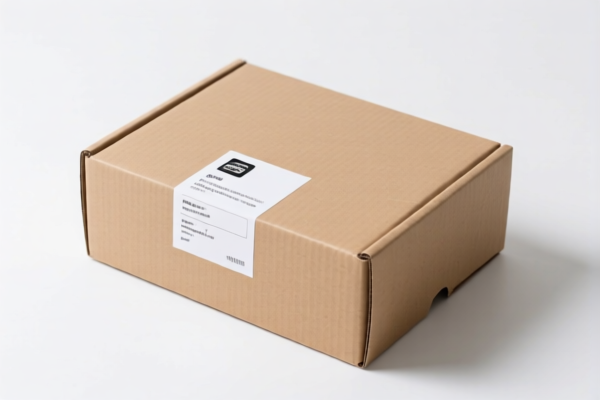
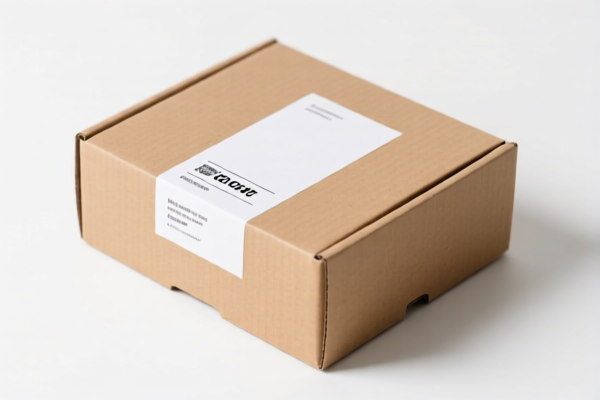
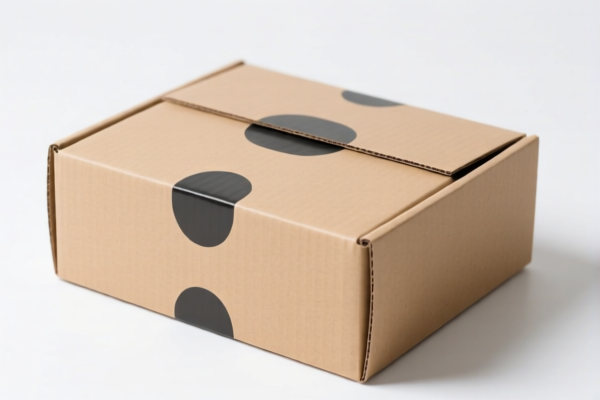
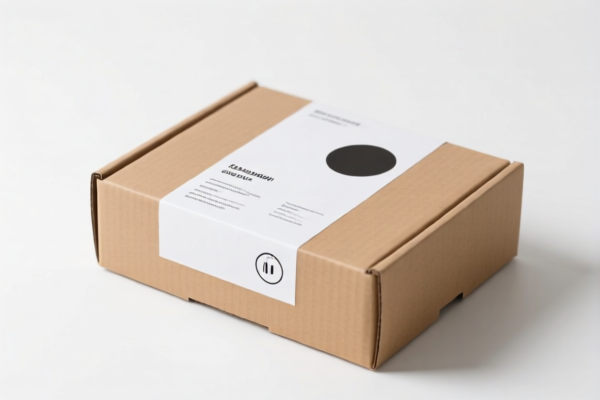
AI Analysis
📦 Paper Fan Packaging Box & Hand Fans
🌐 HS Code Reference & Clearance Guide | 2026 Latest Tariff Analysis | Professional Customs Strategy
📌 Part 1: Product Definition & Classification: What Exactly Is "Paper Fan Packaging"?
In international trade, the classification of "Paper Fan Packaging Boxes" depends heavily on the nature of the goods and the primary function of the packaging. This category is split into two distinct scenarios:
Scenario A: The Packaging Itself
If the item being imported is the box/container (e.g., corrugated or non-corrugated cardboard box, sleeve, or tray) used to package the fans, it is classified as a paper/paperboard packing container.
Scenario B: The Product Inside (Hand Fans)
If the declaration focuses on the hand fans themselves (often sold in sets or loose, but the HS code provided in the data specifically lists "Hand Fans"), they are classified as finished paper articles.
⚠️ Key Distinction:
- If you are shipping empty boxes →归入 4819.xxxx (Packing Containers).
- If you are shipping finished hand fans (even if they come with simple paper sleeves) → 归入 4823.90.50.00.
- Note: The provided DATA specifically includes "Hand Fans" under 4823.90.50.00. If your goods are the fans, do not misclassify as packaging to avoid customs penalties.
📦 Part 2: HS Code Classification Details (2026 Latest Tariff Authority Comparison)
Based on the provided data, here are the relevant HS Codes for paper products, packaging, and the specific hand fan item.
| HS Code | Product Description | Applicable Scenario | Tax Rate (China to US) |
|---|---|---|---|
4823.90.50.00 |
Hand Fans (Paper/Cellulose) | Finished paper fans, decorative or functional hand fans | 25.0% |
4823.90.86.80 |
Other paper articles (Other) | Generic paper items not specifically listed elsewhere (e.g., paper decorations) | 25.0% |
4819.20.00.20 |
Sanitary food/beverage containers | Folding cartons specifically for food/beverage use | 25.0% |
4819.20.00.40 |
Other folding cartons/boxes | Non-corrugated paper boxes (standard packaging for retail goods) | 25.0% |
3923.10.20.00 |
Plastic boxes for semiconductors | Specially shaped plastic containers for wafers/masks | 25.0% |
3923.10.90.00 |
Other plastic boxes/crates | General plastic packaging containers | 28.0% |
🔍 Critical Reminder:
- The provided DATA includes Plastic Boxes (3923.10.xx). If your "Packaging Box" is made of plastic (not paper), you MUST use HS Code3923.10.90.00(28%) or3923.10.20.00(25%).
- If your "Packaging Box" is made of paper/cardboard, you MUST use HS Code4819.20.00.40(25%).
- Do not mix materials. A paper box containing a plastic component must still be declared based on the primary material of the package if declaring as packaging.
💰 Part 3: 2026 Latest Tariff Rate Breakdown (Detailed Tax Clauses)
✅ Applicable Country: United States (US)
✅ Country of Origin: China (CN)
✅ Effective Date: Post-2025 policies (301 Tariffs apply)
🎯 1. 4819.20.00.40 —— Paper Folding Cartons/Boxes (Non-Corrugated)
Most likely for "Paper Fan Packaging Boxes"
| Item | Detail |
|---|---|
| Basic Tariff | 0.0% (Ad Valorem) |
| Section 301 Surcharge | +25.0% |
| Total Tariff | 25.0% |
| Calculation | CIF Value × 25% |
| De Minimis Eligibility | ❌ Not Eligible (USITC Footnote restrictions typically apply to high-tariff Chinese goods) |
| Legal Basis | USITC:4819.20.00.40 → FOOTNOTE:301 |
📌 Explanation:
- Paper packaging materials are generally subject to a 0% base duty.
- However, due to ongoing trade tensions, Section 301 imposes an additional 25% tariff.
- Total Cost: You pay 25% of the declared value on the packaging.
🎯 2. 4823.90.50.00 —— Hand Fans (Paper)
If the shipment is for the fans themselves, not the boxes*
| Item | Detail |
|---|---|
| Basic Tariff | 0.0% (Ad Valorem) |
| Section 301 Surcharge | +25.0% |
| Total Tariff | 25.0% |
| Calculation | CIF Value × 25% |
| De Minimis Eligibility | ❌ Not Eligible |
| Legal Basis | USITC:4823.90.50.00 → FOOTNOTE:301 |
📌 Explanation:
- Hand fans are classified as other articles of paper.
- Like all paper products from China in this list, they attract a 25% total tariff.
🎯 3. 3923.10.90.00 —— Other Plastic Boxes
If the "Packaging Box" is made of Plastic instead of Paper
| Item | Detail |
|---|---|
| Basic Tariff | 3.0% (Ad Valorem) |
| Section 301 Surcharge | +25.0% |
| Total Tariff | 28.0% |
| Calculation | CIF Value × 28% |
| De Minimis Eligibility | ❌ Not Eligible |
📌 Warning:
- Plastic packaging is more expensive in tariffs (28% vs 25% for paper).
- Always prefer paper packaging if cost and brand image allow, as it saves 3% on base duties.
🛠️ Part 4: Customs Clearance Practical Advice (Real-World Pitfall Guide)
✅ 1. Documentation Checklist (Non-Negotiable)
| Document | Required? | Description |
|---|---|---|
| ✅ Commercial Invoice | ✔️ | Must clearly state: "Paper Folding Cartons" OR "Hand Fans". Do NOT use vague terms like "Gifts". |
| ✅ Packing List | ✔️ | Detail the number of boxes, weight, and dimensions. |
| ✅ Product Photos | ✔️ | Show the material clearly (paper texture vs. plastic sheen). |
| ✅ Material Declaration | ✔️ | Explicitly state: "Material: 100% Paper/Cardboard" or "Material: PP Plastic". |
| ✅ Certificate of Origin | ✔️ | Proof of Chinese origin (triggers the 25-28% tariff). |
✅ 2. Classification Strategy (Key Mnemonics)
🔥 "Material Dictates Code, Function Dictates Tax!"
| Situation | Correct HS Code | Wrong Approach | Consequence |
|---|---|---|---|
| Shipping EMPTY paper boxes | 4819.20.00.40 (25%) |
Classifying as "Hand Fans" (4823.90.50.00) |
No difference in tax here, but wrong description leads to inspection delays. |
| Shipping HAND FANS (in paper sleeves) | 4823.90.50.00 (25%) |
Classifying as "Packaging" (4819.20.00.40) |
Customs may reject packaging code for finished goods. |
| Shipping PLASTIC BOXES | 3923.10.90.00 (28%) |
Classifying as Paper (4819) |
High Risk: Customs lab test will identify plastic → Penalty + Back Duties. |
| Mixed Paper/Plastic Packaging | Declare Primary Material | Splitting into multiple lines incorrectly | Complex inspection, potential rejection. |
✅ 3. Special Considerations
| Scenario | Advice |
|---|---|
| OEM Custom Printed Boxes | Ensure the invoice describes them as "Custom Printed Paper Cartons". Generic descriptions attract scrutiny. |
| Food Contact Paper Boxes | If used for food, ensure they are labeled 4819.20.00.20 (Sanitary Containers) if applicable, though tax is same (25%). Proof of food-safe coating may be requested. |
| Plastic-Windowed Boxes | If a paper box has a plastic window, the paper is the primary material. Classify as Paper (4819). If >50% value/weight is plastic, risk classification as Plastic (3923). |
🌍 Part 5: Global Market Comparison (2026)
| Market | Recommended HS Code | Tariff Rate (China Origin) | Key Certification | Note |
|---|---|---|---|---|
| 🇺🇸 USA | 4819.20.00.40 (Paper) |
25% (Total) | None specific | 301 Tariffs apply strictly. |
| 🇺🇸 USA | 3923.10.90.00 (Plastic) |
28% (Total) | None specific | Higher base duty for plastics. |
| 🇨🇳 China | 4819.20.00.40 |
5% | None | No anti-dumping duties on paper boxes. |
| 🇪🇺 EU | 4819.20.00 |
3.7% | FSC (if wood-based) | Lower base duty, no US-style surcharges. |
| 🇬🇧 UK | 4819.20.00 |
3.7% | FSC | Post-Brexit tariff remains moderate. |
📌 Conclusion:
- The US market is the most expensive for paper/paperboard packaging due to the flat 25% surcharge.
- Plastic packaging is even worse in the US (28%).
- Consider sourcing packaging from Vietnam or Mexico if possible to bypass US Section 301 tariffs (subject to rules of origin verification).
📌 Part 6: Common Mistakes & Pitfalls (Blood & Tears Lessons)
❌ Mistake 1: Declaring "Hand Fans" as "Stationery" or "Decorations" without the correct HS Code.
👉 Consequence: Customs may reclassify to 4823.90.86.80 (still 25%) or higher if misinterpreted, causing delays.
❌ Mistake 2: Using "Plastic Packaging" HS Code for Paper Boxes to avoid inspection.
👉 Consequence: Physical inspection reveals paper → Fine for misdeclaration + Back payment of duties (though rates are similar, the legal risk is high).
❌ Mistake 3: Ignoring the "Sanitary" classification for food-grade boxes.
👉 Consequence: If used for food, failure to prove sanitary compliance can lead to FDA rejection at US ports.
❌ Mistake 4: Not specifying "Non-Corrugated" for 4819.20.00.40.
👉 Consequence: If the box is corrugated (E-flute, B-flute, etc.), it must go to 4819.10 or 4819.40. Using 4819.20 for corrugated boxes is a classification error.
✅ Correct Declaration Example:
"Paper Folding Cartons, Non-Corrugated, 100% Recycled Paperboard, For Packaging Hand Fans, Model: PC-001"
🎯 Part 7: Conclusion: Professional Declaration Saves Money!
🎯 Remember the Mantra:
🔹 "Paper Boxes = 4819.20 (25%) / Plastic Boxes = 3923.10 (28%) / Fans = 4823.90 (25%)."
🔹 "Material First, Function Second. Misclassification = Delay + Penalty."
🔹 "US Market = 25% Surcharge. Plan Your Supply Chain Accordingly."
📌 Pro Tip:
If you are importing large volumes of paper packaging, consider Advance Rulings from CBP (Customs and Border Protection) to confirm the HS Code and duty rate. This protects you from future retrospective audits.
📣 Immediate Action:
📞 Verify your packaging material (Paper vs. Plastic).
📄 Prepare the Commercial Invoice with precise HS Codes.
🚀 Ship with confidence, knowing the exact 25-28% tax burden.
✨ Professional Clearance Starts with Accurate Classification!
💼 Every Percent Counts in International Trade!
Customer Reviews
About HS Code Classification
The Harmonized System (HS) is an internationally standardized nomenclature developed by the World Customs Organization (WCO) to classify traded products. Over 200 countries use the HS system as the basis for customs tariffs, trade statistics, and import/export regulations.
Each HS code follows a hierarchical structure:
- Chapter (2 digits) — Broad category of goods (e.g., Chapter 84: Machinery and Mechanical Appliances)
- Heading (4 digits) — More specific grouping within the chapter
- Subheading (6 digits) — Internationally standardized breakdown, used by all WCO member countries
- National subdivisions (8-10 digits) — Country-specific extensions for further classification, such as US HTSUS 10-digit codes
Correct HS code classification is essential for smooth customs clearance, accurate duty payment, and compliance with trade regulations. Misclassification can lead to customs delays, overpayment of duties, or penalties.
When importing from CN to US, the applicable tariff rates may include:
- Most-Favored-Nation (MFN) rate — The standard duty rate applied to WTO members
- General rate — Applied to countries without trade agreements
- Trade remedy duties — Additional tariffs such as Section 301 (anti-dumping), Section 232 (national security), or countervailing duties
The information provided on this page is for reference purposes only. For official classification, please consult with your local customs authority or a licensed customs broker.