Paper Folder
CN → US| HS Code | Tariff Rate | Origin | Destination | Doc |
|---|---|---|---|---|
| 4820300040 | 35.0% | CN | US | Official Doc |
| 4820300020 | 35.0% | CN | US | Official Doc |
| 3926908700 | 40.3% | CN | US | Official Doc |
| 4202322000 | 55.0% | CN | US | Official Doc |
| 3926909989 | 22.8% | CN | US | Official Doc |
Product Images
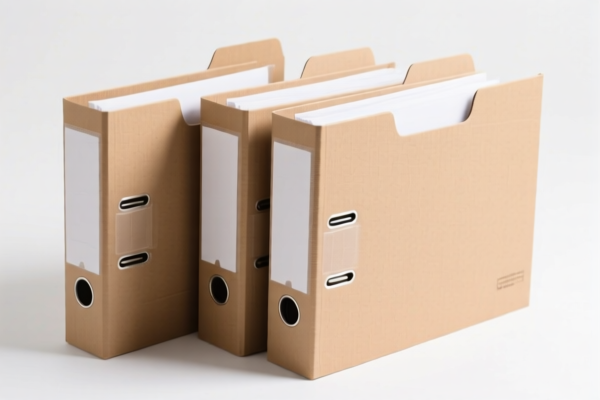
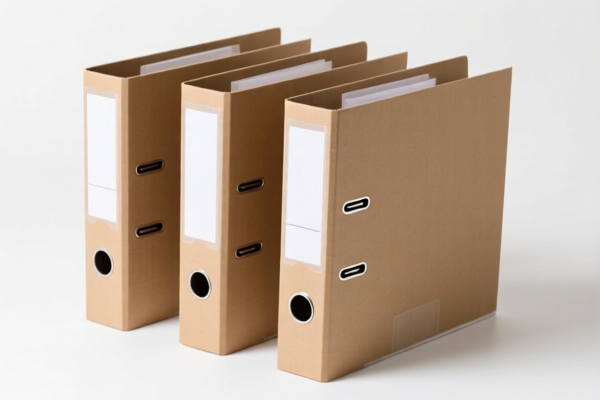
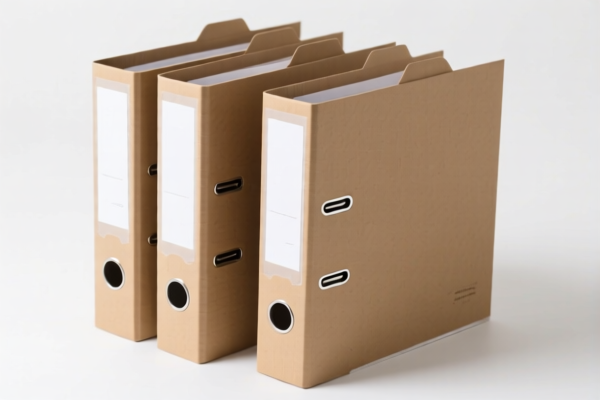

AI Analysis
📂 Paper Folders (Stationery & Storage Solutions)
🌐 HS Code Reference & Customs Clearance Guide | 2026 Latest Tariff Analysis | Professional Entry Strategies
📌 I. Product Definition & Classification: What Exactly is a "Paper Folder"?
Paper folders are essential office supplies used for organizing, storing, and transporting documents. In international trade, they are classified based on material composition (paper vs. plastic) and structural nature (flat stationery vs. container-like). Misclassification is common and can lead to significant tariff disparities.
Key Distinctions: - Paper/Cardboard Folders: Typically classified under Chapter 48. These include standard file folders, lever-arch files, and expandable folders made primarily of paper or cardboard. - Plastic Folders: Classified under Chapter 39 or Chapter 42. These include sheet protectors, plastic ring binders, or folders with significant plastic outer surfaces.
⚠️ Critical Classification Point:
- If the folder is primarily paper/cardboard and fits the definition of stationery → Go to HS Code 4820.
- If the folder is primarily plastic and is a flat item → Go to HS Code 3926.
- If the folder is plastic but structured like a container (e.g., box-like binders) → Go to HS Code 4202.
- If the material is unclear or mixed and doesn't fit specific plastic headings → Go to HS Code 3926.90.99.
📦 II. HS Code Classification Details (2026 Latest Tariff Authority Match)
| HS Code | Product Description | Application Scenario | Material Composition |
|---|---|---|---|
4820.30.00.40 |
Paper folders, classified as paper stationery | Standard document folders, lever-arch files, expandable paper folders | ✅ Paper/Cardboard |
4820.30.00.20 |
Paper or cardboard folders, fitting stationery category | General office paper folders, business card holders (paper) | ✅ Paper/Cardboard |
3926.90.87.00 |
Plastic folders, flat plastic products | Plastic sheet protectors, clear plastic document sleeves | ✅ Plastic (Flat) |
4202.32.20.00 |
Folders with plastic sheet outer surface, container-type | Plastic binders, folder cases with structured plastic exteriors | ✅ Plastic (Container-like) |
3926.90.99.89 |
Unspecified material plastic/paper folders, other plastic products | Mixed material folders not otherwise specified, generic plastic organizers | ✅ Mixed/Unclear |
🔍 Key Reminder:
- Chapter 48 (Paper) generally has lower base tariffs but is still subject to additional duties.
- Chapter 39/42 (Plastic) may have higher base tariffs, especially if classified as "containers."
- Material authenticity is key: If a "paper folder" has a plastic coating that transforms its essential character, customs may reclassify it to Chapter 39 or 42.
💰 III. 2026 Latest Tariff Rate Breakdown (Including Additional Duties, Policy Add-ons)
✅ Applicable Country: United States (US)
✅ Origin: China (CN)
✅ Effective Date: November 10, 2025 onwards (for subsequent imports)
🎯 1. 4820.30.00.40 & 4820.30.00.20 —— Paper Folders (Stationery Category)
| Item | Content |
|---|---|
| Base Tariff | 0.0% (ad valorem) |
| Section 301 Additional Tariff | +25.0% |
| IEEPA Additional Tariff (122 Clause) | +10.0% |
| Total Tariff Rate | 35.0% |
| Tax Calculation | CIF Value × 35% |
| De Minimis Exemption Eligible | ❌ No (deny_de_minimis) |
| Legal Basis Path | USITC:4820.30.00.40 → FOOTNOTE:Section 301 → IEEPA:9903.01.24 |
📌 Explanation:
- Base Rate 0%: Paper stationery typically has no MFN base tariff.
- Section 301 (25%): Applies to most Chinese-origin goods under this heading.
- IEEPA 10%: Additional surcharge on Chinese goods.
- Total 35%: A moderate but significant cost burden.
🎯 2. 3926.90.87.00 —— Plastic Folders (Flat Plastic Products)
| Item | Content |
|---|---|
| Base Tariff | 5.3% |
| Section 301 Additional Tariff | +25.0% |
| IEEPA Additional Tariff (122 Clause) | +10.0% |
| Total Tariff Rate | 40.3% |
| Tax Calculation | CIF Value × 40.3% |
| De Minimis Exemption Eligible | ❌ No (deny_de_minimis) |
| Legal Basis Path | USITC:3926.90.87.00 → FOOTNOTE:Section 301 → IEEPA:9903.01.24 |
📌 Explanation:
- Base Rate 5.3%: Plastic articles generally have a small base duty.
- Total 40.3%: Higher than paper folders due to the base rate.
🎯 3. 4202.32.20.00 —— Folders with Plastic Outer Surface (Container-Type)
| Item | Content |
|---|---|
| Base Tariff | 20.0% |
| Section 301 Additional Tariff | +25.0% |
| IEEPA Additional Tariff (122 Clause) | +10.0% |
| Total Tariff Rate | 55.0% |
| Tax Calculation | CIF Value × 55.0% |
| De Minimis Exemption Eligible | ❌ No (deny_de_minimis) |
| Legal Basis Path | USITC:4202.32.20.00 → FOOTNOTE:Section 301 → IEEPA:9903.01.24 |
📌 Explanation:
- Base Rate 20%: High because it is classified as "articles of apparel/accessories" or "container-type" goods.
- Total 55.0%: Highest tariff bracket among the options. Avoid this classification unless structurally accurate.
🎯 4. 3926.90.99.89 —— Unspecified Material Plastic/Paper Folders (Other Plastic Products)
| Item | Content |
|---|---|
| Base Tariff | 5.3% |
| Section 301 Additional Tariff | +7.5% |
| IEEPA Additional Tariff (122 Clause) | +10.0% |
| Total Tariff Rate | 22.8% |
| Tax Calculation | CIF Value × 22.8% |
| De Minimis Exemption Eligible | ❌ No (deny_de_minimis) |
| Legal Basis Path | USITC:3926.90.99.89 → FOOTNOTE:Section 301 (7.5%) → IEEPA:9903.01.24 |
📌 Explanation:
- Section 301 Rate 7.5%: This is a lower tier of additional duty for certain plastic articles.
- Total 22.8%: Lowest total tariff among all options.
- ⚠️ Risk: This classification is for "other" plastic products. If your product clearly fits4820or3926.90.87, using this code may trigger an audit for misclassification. Only use if the product is genuinely mixed/unspecified and does not fit other specific headings.
🛠️ IV. Customs Clearance Practical Advice (Battle-Tested Pitfall Avoidance)
✅ 1. Preparation Checklist (Mandatory)
| Document | Required | Notes |
|---|---|---|
| ✅ Product Specifications | ✔️ | Must specify material (Paper vs. Plastic %), dimensions, binding type. |
| ✅ Product Photos (Labeled) | ✔️ | Clear shots of front/back, showing material texture and closure mechanism. |
| ✅ Commercial Invoice | ✔️ | Description must match HS Code (e.g., "Paper File Folder" vs. "Plastic Binder"). |
| ✅ Packing List | ✔️ | Show quantity per box, total weight. |
| ✅ Material Certification | ✔️ | If claiming "Paper," provide material proof. If "Mixed," specify ratios. |
✅ 2. Declaration Strategy (Key Mnemonic)
🔥 "Material First, Structure Second, Name Precise, Tax Lowered!"
| Scenario | Correct Declaration | Wrong Practice |
|---|---|---|
| Standard Paper Folder | 4820.30.00.40 or .20 |
Declaring as "Plastic Folder" → 40.3% |
| Plastic Sheet Protector | 3926.90.87.00 |
Declaring as "Paper Folder" → Risk of misclassification audit |
| Structured Plastic Binder | 4202.32.20.00 |
Declaring as "Flat Plastic" → 55% vs 40.3% (Check structure!) |
| Mixed/Unclear Material | 3926.90.99.89 |
Using specific codes incorrectly → Penalty |
✅ 3. Special Cases Handling
| Situation | Recommendation |
|---|---|
| Paper Folder with Plastic Coating | If coating is minimal, keep 4820. If it transforms the essential character, move to 3926. |
| Plastic Folder with Paper Inserts | Still classified as Plastic (3926 or 4202). Do not use Chapter 48. |
| OEM Custom Folders | Provide design specs. If the design is unique, ensure description matches the physical form (flat vs. container). |
| Low-Value Shipments | ❌ No De Minimis Exemption applies to China-origin folders under IEEPA. All shipments are taxed. |
🌍 V. Global Market Clearance Comparison (2026 Latest)
| Country/Region | Recommended HS Code | Total Tariff (China Origin) | Certification | Notes |
|---|---|---|---|---|
| 🇺🇸 USA | 4820.30.00.40 (Paper) |
35.0% | N/A | High additional duties. |
| 🇺🇸 USA | 3926.90.99.89 (Mixed) |
22.8% | N/A | Lowest US rate, but high audit risk. |
| 🇪🇺 EU | 4820.30.00 |
~2.7% | CE (if applicable) | Lower base duties, no Section 301. |
| 🇨🇳 China | 4820.30.00 |
10-13% | CCC (if applicable) | Export to China. |
| 🇬🇧 UK | 4820.30.00 |
2.7% | UKCA | Post-Brexit alignment. |
📌 Conclusion:
- USA is the most expensive market due to Section 301 and IEEPA surcharges.
- Paper folders (35%) are cheaper than Plastic Container-folders (55%).
- Plastic Flat-folders (40.3%) are in the middle.
- Mixed/Unclear (22.8%) is cheapest but risky.
📌 VI. Common Errors & Pitfall Guide (Lessons from Experience)
❌ Error 1: Declaring a Plastic Binder as Paper Folder to get 35% tariff
👉 Consequence: Customs audit, reclassification to 4202.32.20.00 (55%) + penalties.
❌ Error 2: Declaring a Paper Folder as Mixed Plastic to get 22.8% tariff
👉 Consequence: High probability of audit. If material is 95% paper, this is misclassification.
❌ Error 3: Ignoring Structure
👉 Consequence: Classifying a Box-like Plastic Folder as Flat Plastic (3926.90.87) instead of Container (4202). If caught, you pay the difference + interest.
❌ Error 4: Assuming De Minimis applies
👉 Consequence: China-origin folders are excluded from Section 321 de minimis. Every shipment is taxed.
✅ Correct Practice:
"Paper File Folders, 9.5x11 inches, Brown Kraft Paper, 50 pcs/box, Model XYZ, Made in China"
vs.
"Plastic Document Sleeves, Clear PVC, 9x11 inches, 100 pcs/box, Model ABC, Made in China"
🎯 VII. Conclusion: Precision Classification, Cost Optimization!
🎯 Remember the Mantra:
🔹 "Paper is 35%, Flat Plastic is 40%, Container is 55%, Mixed is 22% (Risky)!"
🔹 "No De Minimis for China! Tax Every Single Box!"
📌 Tips:
- If your product is clearly paper, stick to 4820.30.00.40. It is the standard, safe, and reasonably priced option.
- Avoid 4202.32.20.00 unless the folder is genuinely structured like a case or box.
- 3926.90.99.89 should only be used if the product is truly mixed and doesn't fit other specific plastic headings. Use with caution and legal backing.
📣 Immediate Action:
📞 Consult a Customs Broker to validate material composition.
📦 Label Accurately on Commercial Invoice to match HS Code.
🚀 Plan for 35%+ Tariffs in your profit margin calculations for US exports!
✨ Professional Clearance Starts with Accurate Classification!
💼 Every Dollar Saved is a Dollar Earned!
Customer Reviews
About HS Code Classification
The Harmonized System (HS) is an internationally standardized nomenclature developed by the World Customs Organization (WCO) to classify traded products. Over 200 countries use the HS system as the basis for customs tariffs, trade statistics, and import/export regulations.
Each HS code follows a hierarchical structure:
- Chapter (2 digits) — Broad category of goods (e.g., Chapter 84: Machinery and Mechanical Appliances)
- Heading (4 digits) — More specific grouping within the chapter
- Subheading (6 digits) — Internationally standardized breakdown, used by all WCO member countries
- National subdivisions (8-10 digits) — Country-specific extensions for further classification, such as US HTSUS 10-digit codes
Correct HS code classification is essential for smooth customs clearance, accurate duty payment, and compliance with trade regulations. Misclassification can lead to customs delays, overpayment of duties, or penalties.
When importing from CN to US, the applicable tariff rates may include:
- Most-Favored-Nation (MFN) rate — The standard duty rate applied to WTO members
- General rate — Applied to countries without trade agreements
- Trade remedy duties — Additional tariffs such as Section 301 (anti-dumping), Section 232 (national security), or countervailing duties
The information provided on this page is for reference purposes only. For official classification, please consult with your local customs authority or a licensed customs broker.