Paper Folding
CN → US| HS Code | Tariff Rate | Origin | Destination | Doc |
|---|---|---|---|---|
| 4911998000 | 17.5% | CN | US | Official Doc |
| 4911914040 | 17.5% | CN | US | Official Doc |
| 4823908680 | 35.0% | CN | US | Official Doc |
| 4802572000 | 35.0% | CN | US | Official Doc |
| 4802571085 | 35.0% | CN | US | Official Doc |
Product Images
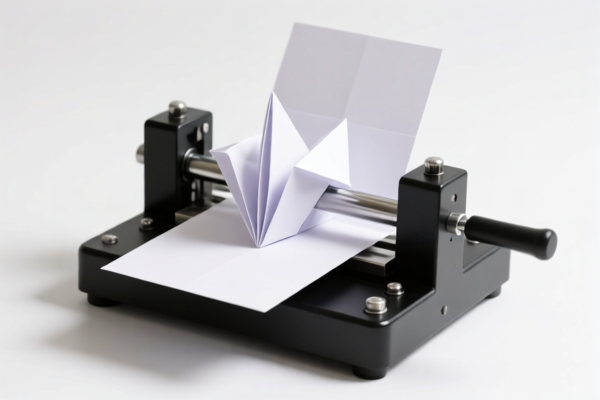
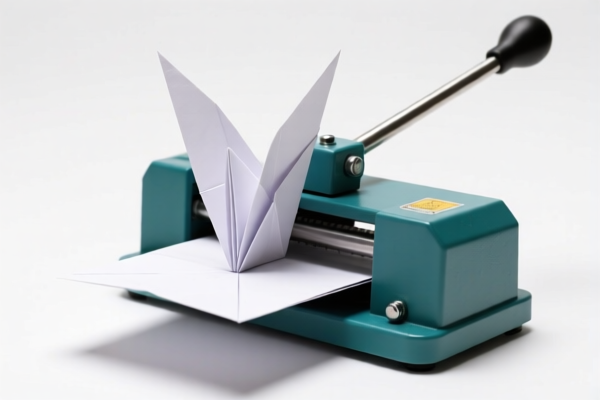
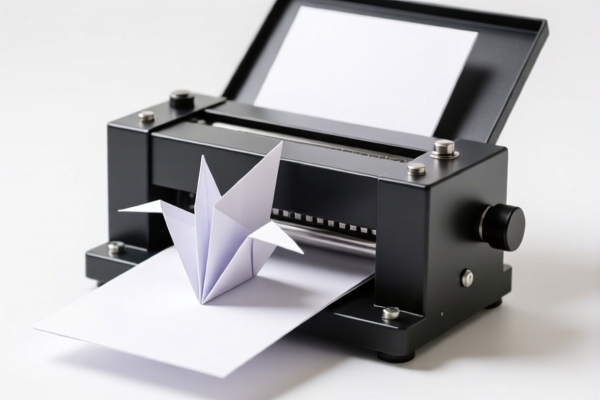

AI Analysis
📜 Paper Folding Origami (Papier Faltkunst / Origami)
🌐 HS Code Reference & Customs Clearance Guide | 2026 Latest Tariff Analysis | Professional Level Entry Strategy
📌 I. Product Definition & Classification: Do You Really Understand "Paper Folding"?
Paper folding, commonly known as Origami, spans two distinct categories in international trade depending on its physical form and final state:
1. Printed Paper Products (The Finished Art): Pre-folded, printed paper models, kits, or artistic pieces that serve as decorative items or educational tools. These are classified under Chapter 49 (Printed Books, Newspapers, Pictures and Other Products of the Printing Industry).
2. Raw Paper Materials (The Blank Slate): Unprinted, blank sheets of paper cut into specific sizes or shapes, intended for the user to fold manually. These fall under Chapter 48 (Paper and Paperboard; Articles of Paper Pulp, of Paper or of Paperboard).
⚠️ Key Distinction Point:
- If the item includes printed instructions, designs, or pre-creased folds ready for display → Classified as Printing Product (HS 4911). - If the item is blank, unprinted paper merely cut to size for manual crafting → Classified as Paper Product (HS 4823/4802).
📦 II. HS Code Classification Details (2026 Latest Tariff Authority Comparison)
| HS Code | Product Description | Applicable Scenario | Taxable Category |
|---|---|---|---|
4911.99.80.00 |
Other printed matter (not specified elsewhere) | Pre-folded printed art, printed origami kits, printed paper crafts | ✅ Printing Product |
4911.91.40.40 |
Other printed matter (Pictures, drawings, designs) | Folded paper with artistic prints, design templates, illustrated origami sheets | ✅ Printing Product |
4823.90.86.80 |
Paper/paperboard articles cut to shape (not elsewhere specified) | Blank paper cut into squares/triangles for origami, unprinted paper crafts | ✅ Raw Paper Product |
4802.57.20.00 |
Other paper/board for graphic/technical use (uncoated) | High-quality blank paper intended for graphic design or folding | ✅ Raw Paper Material |
4802.57.10.85 |
Other paper for writing/drawing (uncoated) | Standard blank paper sheets for manual folding activities | ✅ Raw Paper Material |
🔍 Key Reminder:
- All "finished" or "printed" origami items (even if folded) must be classified under Chapter 49 (4911 series) because the printing/design is the primary value-add; - "Blank" origami paper (cut to shape or raw sheets) falls under Chapter 48 (4823 or 4802 series) because the primary characteristic is the paper material itself.
💰 III. 2026 Latest Tariff Rate Breakdown (Including Additional Duties & Policy Surcharges)
✅ Applicable Country: United States (US)
✅ Origin: China (CN)
✅ Effective Date: November 10, 2025 (and subsequent imports)
🎯 1. 4911.99.80.00 & 4911.91.40.40 —— Printed Origami / Finished Paper Products
| Item | Content |
|---|---|
| Base Tariff | 0% (ad valorem) |
| USITC Additional Tariff (Section 301) | +7.5% |
| IEEPA Additional Tariff (Section 122/EO 14117) | +10% |
| Total Tariff Rate | 17.5% |
| Tax Calculation | CIF Value × 17.5% |
| De Minimis Eligibility | ❌ Not Applicable (Denied for de minimis) |
| Legal Path | IEEPA:9903.01.25 → USITC:4911.99.80.00 / 4911.91.40.40 → FOOTNOTE:9903.88.01 |
📌 Explanation:
- "USITC 7.5%": Comes from the Section 301 tariff list applicable to many paper products; - "IEEPA 10%": The additional tariff imposed on Chinese/Hong Kong products under the International Emergency Economic Powers Act; - Total 17.5% is moderately high but significantly lower than raw paper categories.
🎯 2. 4823.90.86.80 & 4802.57.20.00 & 4802.57.10.85 —— Raw Paper / Blank Origami Paper
| Item | Content |
|---|---|
| Base Tariff | 0% (ad valorem) |
| USITC Additional Tariff (Section 301) | +25.0% |
| IEEPA Additional Tariff (Section 122/EO 14117) | +10% |
| Total Tariff Rate | 35.0% |
| Tax Calculation | CIF Value × 35.0% |
| De Minimis Eligibility | ❌ Not Applicable (Denied for de minimis) |
| Legal Path | IEEPA:9901.25 → IEEPA:9903.01.24 → USITC:4823.90.86.80 / 4802.57.20.00 → FOOTNOTE:9903.88.01 |
📌 Note:
- "USITC 25%": This higher rate applies to raw paper materials and basic paper articles; - "IEEPA 10%": Same surcharge as above; - Total 35.0% is a high tariff burden, making raw paper imports costly. - Whether it is cut into shapes (4823) or raw sheets (4802), the tariff structure remains identical.
🛠️ IV. Customs Clearance Practical Advice (Combat Pitfall Guide)
✅ 1. Documentation Checklist (Mandatory)
| Document | Required | Description |
|---|---|---|
| ✅ Product Description | ✔️ | Clearly state "Origami Kit" or "Blank Origami Paper" |
| ✅ Material Composition | ✔️ | Specify paper type (e.g., Washi, Kraft, Cardstock) and GSM |
| ✅ Printing Status | ✔️ | Crucial: State explicitly "Printed" or "Unprinted/Blank" |
| ✅ Product Photos | ✔️ | Show front/back, packaging, and any pre-creased folds |
| ✅ Commercial Invoice | ✔️ | Must match HS Code description exactly (e.g., "Pre-printed Paper Craft") |
| ✅ Packing List | ✔️ | Detail weight and dimensions of paper vs. packaging |
✅ 2. Declaration Tips (Key Mantras)
🔥 "Printed goes to 49, Blank goes to 48. One percent point off, huge difference in cost!"
| Situation | Correct Declaration | Wrong Practice |
|---|---|---|
| Origami Kit with printed patterns | 4911.99.80.00 (17.5%) |
Misdeclared as "Paper" → 35% |
| Blank colored paper sheets | 4802.57.20.00 (35.0%) |
Misdeclared as "Printing" → 17.5% (Risk of penalty) |
| Pre-cut paper shapes (blank) | 4823.90.86.80 (35.0%) |
Misdeclared as "Toys" → Different, risky classification |
| Origami + Glue + Scissors Set | Split Declaration or Primary Purpose | Lump sum → Potential re-classification audit |
✅ 3. Special Case Handling
| Situation | Handling Advice |
|---|---|
| Printed Origami with Instructions | Must be declared as 4911 (Printing). The paper is secondary to the print. |
| Blank Paper Cut into Animals/Shapes | Declare as 4823 (Paper Articles). The shape does not make it a toy if unprinted. |
| High-End Art Paper (Unprinted) | Declare as 4802. Ensure GSM and coating status are accurate to avoid "Paperboard" misclassification. |
| Origami Sets with Plastic Parts | If plastic parts are accessories, the main item (paper) still dictates the HS Code usually, but check if it becomes a "Set" under Chapter 96. |
🌍 V. Global Market Comparison (2026 Latest)
| Country/Region | Recommended HS Code (Printed) | Tariff (China Origin) | Tariff (Raw Paper) | Notes |
|---|---|---|---|---|
| 🇺🇸 USA | 4911.99.80.00 |
17.5% | 35.0% | High additional tariffs for Chinese goods |
| 🇨🇳 China | 4911.99.80.00 |
0-5% | 0-5% | Low base tariffs, no US-style surcharges |
| 🇪🇺 EU | 4911.99.80.00 |
4% | 6.5% | Standard MFN rates, no 301/IEEPA surcharges |
| 🇬🇧 UK | 4911.99.80.00 |
4% | 6.5% | Post-Brexit tariffs similar to EU |
| 🇯🇵 Japan | 4911.99.80.00 |
0-3% | 0-5% | Free Trade Agreement (JCEPA) benefits apply |
📌 Conclusion:
- USA is the most expensive market for paper folding products due to the Section 301 and IEEPA tariffs; - The difference between 17.5% (Printed) and 35.0% (Raw) is significant. Strategic classification is vital for cost control.
📌 VI. Common Errors & Pitfalls (Lessons Learned)
❌ Error 1: Declaring Printed Origami Kits as "Blank Paper"
👉 Consequence: Under-declaration of duty (17.5% vs 35% is not under, but misclassification leads to seizure for false description).
👉 Correction: Always declare based on primary function/value. Printed = 4911.
❌ Error 2: Declaring Blank Pre-Cut Paper as "Toys" (HS 9503)
👉 Consequence: If unprinted, it is not a toy. Customs may re-classify to 4823 and apply 35% + penalties for incorrect HS Code.
👉 Correction: Unprinted paper, even cut into shapes, is a paper article, not a toy.
❌ Error 3: Ignoring the IEEPA 10% surcharge
👉 Consequence: Budgeting for only 7.5% or 25% leads to cash flow issues at customs.
👉 Correction: Always calculate total Base + 301 + IEEPA.
✅ Correct Practice:
"Origami Kit: Pre-printed, pre-creased paper sheets with assembly instructions. Material: 100% Paper. HS Code: 4911.99.80.00."
🎯 VII. Conclusion: Precise Classification Saves Money!
🎯 Remember the Mantra:
🔹 "Printed is 49 (17.5%), Blank is 48 (35%).
🔹 Shape doesn't matter, Printing does!
🔹 USA Surcharge hits both, so watch your margin!"
📌 Pro Tip:
If you are exporting raw paper to the US, consider if value-added processing (printing) in a third country (e.g., Vietnam, Malaysia) can shift the HS Code or origin status to avoid the 301/IEEPA surcharges.
For printed products, the 17.5% is unavoidable for China origin, so optimize packaging to reduce CIF value where possible.
📣 Immediate Action:
📞 Contact a professional customs broker
📸 Provide clear photos (Printed vs. Blank)
🚀 Ensure accurate HS Code to avoid 35% shock or 100% penalty!
✨ Professional Customs Clearance Starts with Accurate Classification!
💼 Every percentage point matters in your profit margin!
Customer Reviews
About HS Code Classification
The Harmonized System (HS) is an internationally standardized nomenclature developed by the World Customs Organization (WCO) to classify traded products. Over 200 countries use the HS system as the basis for customs tariffs, trade statistics, and import/export regulations.
Each HS code follows a hierarchical structure:
- Chapter (2 digits) — Broad category of goods (e.g., Chapter 84: Machinery and Mechanical Appliances)
- Heading (4 digits) — More specific grouping within the chapter
- Subheading (6 digits) — Internationally standardized breakdown, used by all WCO member countries
- National subdivisions (8-10 digits) — Country-specific extensions for further classification, such as US HTSUS 10-digit codes
Correct HS code classification is essential for smooth customs clearance, accurate duty payment, and compliance with trade regulations. Misclassification can lead to customs delays, overpayment of duties, or penalties.
When importing from CN to US, the applicable tariff rates may include:
- Most-Favored-Nation (MFN) rate — The standard duty rate applied to WTO members
- General rate — Applied to countries without trade agreements
- Trade remedy duties — Additional tariffs such as Section 301 (anti-dumping), Section 232 (national security), or countervailing duties
The information provided on this page is for reference purposes only. For official classification, please consult with your local customs authority or a licensed customs broker.