Paper Folding Plate
CN → US| HS Code | Tariff Rate | Origin | Destination | Doc |
|---|---|---|---|---|
| 4823690040 | 35.0% | CN | US | Official Doc |
| 4823700020 | 35.0% | CN | US | Official Doc |
| 4818500080 | 35.0% | CN | US | Official Doc |
| 4818900080 | 17.5% | CN | US | Official Doc |
| 4823908680 | 35.0% | CN | US | Official Doc |
Product Images
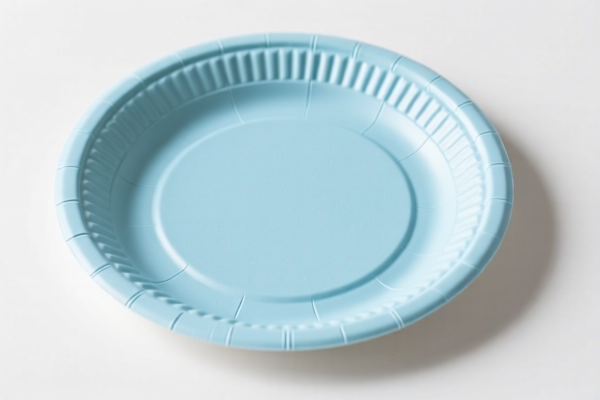
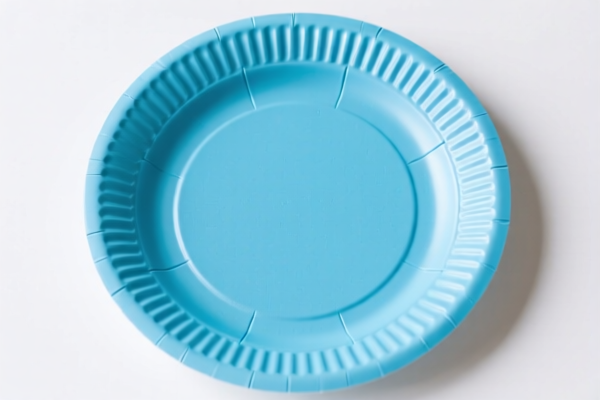
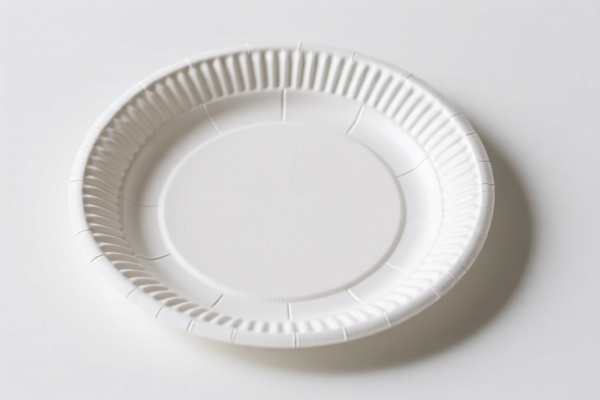
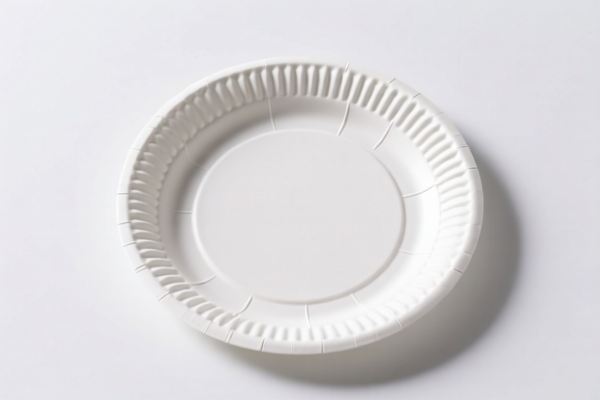
AI Analysis
🍽️ Paper Folding Plate
(Environmental Paper Plates / Molded Fiber Tableware)
🌐 HS Code Reference & Clearance Guide | 2026 Latest Tariff Analysis | Professional Compliance Strategy
📌 I. Product Definition & Classification: Is it a "Tray," a "Molded Product," or a "General Paper Item"?
Paper folding plates, often marketed as eco-friendly tableware, are typically made from molded pulp or pressed paper. In international trade, their classification depends heavily on the manufacturing process and specific shape. They generally fall into two main categories:
1. Molded/Pressed Pulp Products (Plate/Bowl/Cup category):
If the plate is formed through a wet-molding or high-pressure pressing process to create a specific dish shape, it falls under Chapter 48, Heading 4823 (Other paper, paperboard, cellulose wadding and webs of cellulose fibers, cut to size or shape). Specifically, it aligns with 4823.70 (Dishes, bowls, cups, etc., of pulp, paper pulp, paper or paperboard).
2. General Paper Trays/Dishes:
If the plate is simply cut and folded from paper stock without complex molding, it may fall under 4823.69 (Other trays, dishes, plates, etc.).
⚠️ Key Distinction Point:
- If the product is molded fiber/pulp (common for "eco-friendly" marketing) → 4823.70 is the most accurate fit.
- If the product is folded/printed paper (no molding) → 4823.69 is appropriate.
- If the product is mistakenly declared as a "paper sleeve" or general accessory → Risk of misclassification into 4818 or 4823.90, leading to severe penalties.
📦 II. HS Code Classification Details (2026 Latest Tariff Authority Cross-Check)
| HS Code | Product Description | Applicable Scenario | Classification Logic |
|---|---|---|---|
4823.70.00.20 |
Paper plates (Molded/Pressed) | Eco-friendly molded pulp plates, bowls, cups | ✅ Best Fit: Fits "dishes, bowls, cups" of pulp/paper pulp under 4823.70 |
4823.69.00.40 |
Other paper trays, dishes, plates | Folded paper plates, non-molded, general paper trays | ✅ Good Fit: Fits "other" trays/dishes under 4823.69 |
4818.50.00.80 |
Paper sleeves (Misclassification Risk) | Incorrect: If declared as "paper sleeves" for clothing/household | ❌ High Risk: Paper plates are NOT sleeves. High duty + penalties if misdeclared |
4818.90.00.80 |
Other paper sanitary/household articles | Incorrect: General household paper items not specifically plates | ❌ Medium Risk: Too broad. Should be specific to tableware |
4823.90.86.80 |
Other paper articles (Catch-all) | Incorrect: Used if no specific code applies | ❌ Low Risk: High duty, avoid if 4823.69/70 applies |
🔍 Critical Reminder:
-4823.70.00.20and4823.69.00.40are the primary correct codes for paper plates.
- Avoid4818codes (sanitary/household paper like tissues or sleeves) unless the item is truly a sleeve, not a plate. Misdeclaration here triggers 35% base tariffs instead of optimized rates.
💰 III. 2026 Latest Tariff Rate Breakdown (Including Surcharges & Policy Add-ons)
✅ Applicable Country: United States (US)
✅ Origin: China (CN)
✅ Effective Date: 2025/2026 (Current Policy Era)
🎯 1. 4823.70.00.20 – Paper Plates (Molded/Pressed)
| Item | Detail |
|---|---|
| Base Duty | 0% (Ad Valorem) |
| USITC Additional Duty (Section 301) | +25% |
| IEEPA Additional Duty (Section 122/China-Specific) | +10% |
| Total Duty Rate | 35.0% |
| Tax Calculation | CIF Value × 35% |
| De Minimis Exemption | ❌ Not Eligible (De Minimis threshold does not apply to Section 301/122 goods) |
| Legal Basis Path | IEEPA:9903.01.24 → USITC:4823.70.00.20 → FOOTNOTE:301 |
📌 Explanation:
- The 25% is the standard Section 301 tariff on Chinese paper products.
- The 10% is an additional surcharge often applied to specific Chinese-origin paper goods under current enforcement policies (labeled as "122 Clause" in some systems).
- Total 35% is significant. Do not confuse with the 17.5% rate available for non-molded general paper items if misclassified incorrectly (see below).
🎯 2. 4823.69.00.40 – Other Paper Trays/Dishes (Folded Paper)
| Item | Detail |
|---|---|
| Base Duty | 0% |
| USITC Additional Duty (Section 301) | +25% |
| IEEPA Additional Duty | +10% |
| Total Duty Rate | 35.0% |
| Tax Calculation | CIF Value × 35% |
| De Minimis Exemption | ❌ Not Eligible |
| Legal Basis Path | IEEPA:9903.01.24 → USITC:4823.69.00.40 → FOOTNOTE:301 |
📌 Note:
- Even if the plate is folded rather than molded, if it is clearly a "plate/dish," it falls under 4823.69.
- The tariff rate is identical (35%) to molded plates. There is no tariff advantage in misclassifying as a "sleeve" (4818) unless it truly is a sleeve.
🚨 3. 4818.90.00.80 – Other Paper Household Articles (Misclassification Risk)
| Item | Detail |
|---|---|
| Base Duty | 0% |
| USITC Additional Duty | +7.5% (Reduced rate for some general paper items) |
| IEEPA Additional Duty | +10% |
| Total Duty Rate | 17.5% |
| Tax Calculation | CIF Value × 17.5% |
| De Minimis Exemption | ❌ Not Eligible |
| Legal Basis Path | IEEPA:9903.01.24 → USITC:4818.90.00.80 |
⚠️ WARNING:
- Do NOT declare a Paper Plate as a "Paper Sleeve" or "General Household Paper" to save 17.5%.
- Customs will inspect the product. If it is a plate, it must be classified under 4823.69 or 4823.70.
- Misclassification leads to:
1. Back duties: Pay the difference (17.5% vs 35%) + Interest.
2. Penalties: Up to 40% of the dutiable value for negligence/fraud.
3. Detention: Cargo held until proper classification is proven.
🛠️ IV. Customs Clearance Practical Advice (Avoid Pitfalls)
✅ 1. Required Documentation Checklist
| Document | Mandatory? | Description |
|---|---|---|
| ✅ Product Spec Sheet | ✔️ | Must state: "Molded Pulp Plate" or "Folded Paper Plate." Avoid vague terms like "Tableware" without material details. |
| ✅ Material Composition | ✔️ | Specify "100% Recycled Paper Pulp" or "Fiber Paper." |
| ✅ Product Photos | ✔️ | Clear images showing the item is a plate/dish, not a sleeve or tissue. |
| ✅ Commercial Invoice | ✔️ | Use precise description: "Molded Paper Plate, Eco-Friendly, Food Grade." |
| ✅ Declaration Statement | ✔️ | Confirm: "Not a sanitary paper product, not a sleeve, but a molded/folded dish." |
✅ 2. Declaration Strategy (Key Mnemonics)
🔥 "Correct Shape, Correct Code, Avoid the 35% Trap!"
| Scenario | Correct HS Code | Risk if Misclassified |
|---|---|---|
| Molded Pulp Plate | 4823.70.00.20 |
35% Duty |
| Folded Paper Plate | 4823.69.00.40 |
35% Duty |
| Paper Plate declared as "Sleeve" | 4818.90.00.80 |
❌ Illegal. Penalty + Back Duties. |
| Paper Plate declared as "Generic Paper" | 4823.90.86.80 |
35% Duty + Scrutiny. |
📌 Advice:
- Be specific. Use "Paper Plate" or "Molded Fiber Dish" in the description.
- Do not use "Paper Sleeve" or "Paper Wrap" for plates.
- Do not rely on "De Minimis" exemptions. These goods are subject to Section 301/122 duties.
✅ 3. Special Cases
| Case | Handling Advice |
|---|---|
| Biodegradable/Compostable Plates | Still classified under 4823.69 or 4823.70. Certifications (BPI, compostable) do not change HS Code, but may help prove material composition. |
| Printed Plates | Printing does not change classification from 4823.69/70. Ensure ink is food-safe if declared as such. |
| Mixed Containers | If a shipment contains plates AND paper towels, separate them. Plates → 4823.69/70. Paper Towels → 4818. Mixing leads to 100% duty on the entire container in worst-case scenarios. |
🌍 V. Global Market Clearance Comparison (2026 Latest)
| Country/Region | Recommended HS Code | Duty (China Origin) | Certification | Notes |
|---|---|---|---|---|
| 🇺🇸 USA | 4823.70.00.20 or 4823.69.00.40 |
35% (25% + 10%) | FDA (if food contact) | High scrutiny on "eco-friendly" claims. |
| 🇨🇳 China | 4823.70 / 4823.69 |
0-5% | GB Standards | No additional tariffs. |
| 🇪🇺 EU | 4823.70 / 4823.69 |
0% (if MFN) | EN13432 (Compostable) | No Section 301 equivalent, but verify anti-dumping if applicable. |
| 🇬🇧 UK | 4823.70 / 4823.69 |
0-5% | FSA Standards | Post-Brexit rules apply. |
📌 Conclusion:
- The US market is the most costly due to the 35% combined tariff.
- EU/UK are more favorable for paper plates from China, but strict on food safety and compostability claims.
- Always declare correctly. The 17.5% rate for4818is a trap if applied to plates.
📌 VI. Common Errors & Pitfalls (Lessons Learned)
❌ Error 1: Declaring "Paper Plates" as "Paper Sleeves" to get 17.5% duty.
👉 Consequence: Customs audit reveals the true nature. You pay 35% + 10% penalty + interest. Total cost exceeds 50%.
❌ Error 2: Mixing "Paper Plates" with "Paper Towels" in one HS Code.
👉 Consequence: Paper Towels (4818) and Plates (4823) have different duty profiles. Misdeclaration can trigger a full container inspection.
❌ Error 3: Using vague terms like "Disposable Tableware."
👉 Consequence: Customs may classify as the highest duty rate (e.g., 4823.90) due to ambiguity.
❌ Error 4: Ignoring "Section 122" or "IEEPA" surcharges.
👉 Consequence: Underestimating landed cost by 10%. Profit margins eroded.
✅ Correct Approach:
"Molded Fiber Paper Plate, Eco-Friendly, Food Grade, 7-inch Diameter, Compostable."
HS Code:4823.70.00.20
Duty: 35% (Plan for this in pricing!)
🎯 VII. Conclusion: Professional Declaration Saves Money!
🎯 Remember:
🔹 "Plates are Plates, not Sleeves. 35% is the reality for US imports."
🔹 "Accuracy beats speculation. Misclassification costs more than duty."
📌 Pro Tip:
- If you are importing molded pulp plates, ensure your supplier provides a Material Safety Data Sheet (MSDS) and Food Contact Statement if applicable.
- Consider supply chain diversification (e.g., Vietnam, Indonesia) if US tariffs make China-origin plates uncompetitive. Many countries have lower or zero tariffs for similar paper products.
📣 Immediate Action:
📞 Consult your customs broker with photos and spec sheets.
🚀 Pre-classify your goods using the USITC Tariff Database or CBP Pre-Ruling to avoid surprises.
✨ Professional Clearance Starts with Accurate Classification!
💼 Your Landed Cost is Calculated Down to the Cent!
Customer Reviews
About HS Code Classification
The Harmonized System (HS) is an internationally standardized nomenclature developed by the World Customs Organization (WCO) to classify traded products. Over 200 countries use the HS system as the basis for customs tariffs, trade statistics, and import/export regulations.
Each HS code follows a hierarchical structure:
- Chapter (2 digits) — Broad category of goods (e.g., Chapter 84: Machinery and Mechanical Appliances)
- Heading (4 digits) — More specific grouping within the chapter
- Subheading (6 digits) — Internationally standardized breakdown, used by all WCO member countries
- National subdivisions (8-10 digits) — Country-specific extensions for further classification, such as US HTSUS 10-digit codes
Correct HS code classification is essential for smooth customs clearance, accurate duty payment, and compliance with trade regulations. Misclassification can lead to customs delays, overpayment of duties, or penalties.
When importing from CN to US, the applicable tariff rates may include:
- Most-Favored-Nation (MFN) rate — The standard duty rate applied to WTO members
- General rate — Applied to countries without trade agreements
- Trade remedy duties — Additional tariffs such as Section 301 (anti-dumping), Section 232 (national security), or countervailing duties
The information provided on this page is for reference purposes only. For official classification, please consult with your local customs authority or a licensed customs broker.