Paper Food Display Tray
CN → US| HS Code | Tariff Rate | Origin | Destination | Doc |
|---|---|---|---|---|
| 4821902000 | 35.0% | CN | US | Official Doc |
| 4821904000 | 35.0% | CN | US | Official Doc |
| 4819100020 | 35.0% | CN | US | Official Doc |
| 4819200020 | 35.0% | CN | US | Official Doc |
| 4823610020 | 35.0% | CN | US | Official Doc |
| 4823690040 | 35.0% | CN | US | Official Doc |
Product Images
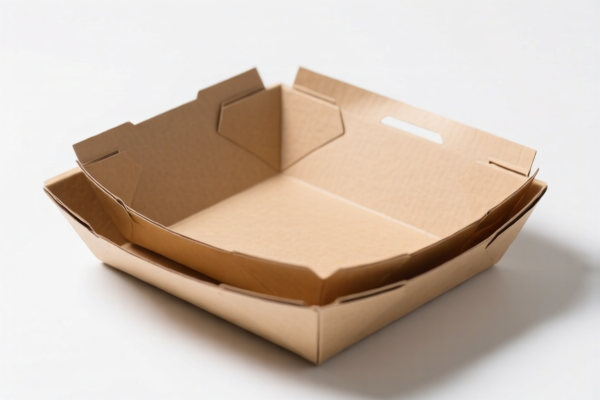
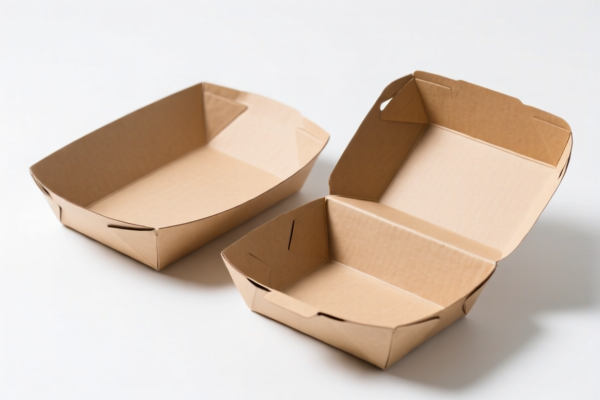
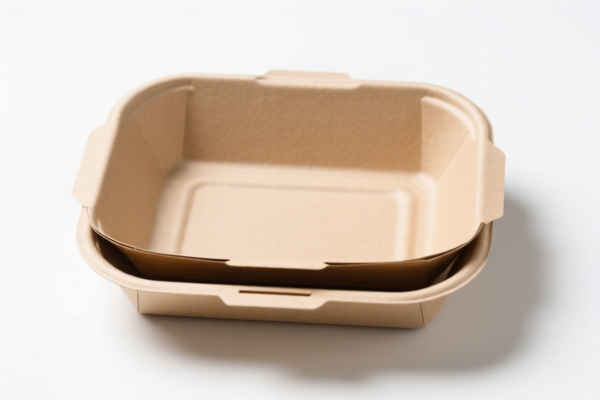
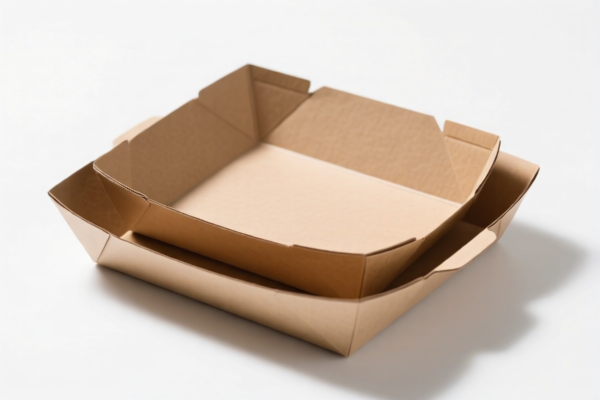
AI Analysis
🍱 Paper Food Display Tray (Bamboo & Non-Bamboo Variants)
🌐 HS Code Reference & Customs Clearance Guide | 2026 Latest Tariff Analysis | Strategic Clearance for Food Packaging
📌 I. Product Definition & Classification: Do You Know Your "Paper Tray" Really Is?
Paper food display trays are single-use, eco-friendly packaging solutions widely used in catering, fast food, and retail. In international trade, they are strictly differentiated by material and manufacturing process:
🎋 Bamboo Paper Trays (Bamboo Pulp/Molded):
Made primarily from bamboo fiber pulp, shaped into trays, cups, or nested containers. These are often marketed as "biodegradable" or "compostable."
Key Characteristic: Raw material is bamboo; process is molding/pulp-forming.
📄 Other Paper/Paperboard Trays:
Made from standard paper, paperboard, or cellulose wadding. This includes corrugated boxes, folding cartons, and molded pulp trays made from non-bamboo sources.
Key Characteristic: Raw material is standard paper/paperboard; process may include corrugating, folding, or general molding.
⚠️ Critical Distinction Point:
- If the tray is made of bamboo pulp and shaped (molded) → It falls under 4823.61.00.20 (Bamboo).
- If the tray is made of standard paper/paperboard (non-bamboo) and shaped → It falls under 4823.69.00.40 (Other).
- Do NOT confuse with corrugated cartons (4819 series) or labels (4821 series). This product is specifically for food containers/trays.
📦 II. HS Code Classification Details (2026 Latest Tariff Authority Comparison)
| HS Code | Product Description | Application Scenario | Material Source | Tax Rate (China to US) |
|---|---|---|---|---|
4823.61.00.20 |
Trays, dishes, plates, cups... of paper/paperboard: Of bamboo (Cups & round nested food containers) | Bamboo fiber food trays, molded bamboo cups, compostable nested containers | 🎋 Bamboo Fiber | 0.0% |
4823.69.00.40 |
Trays, dishes, plates, cups... of paper/paperboard: Other (Other) | Standard paper pulp trays, wax-coated paper plates, non-bamboo molded containers | 📄 Standard Paper/Cardboard | 25.0% |
🔍 Key Reminder:
- Bamboo vs. Non-Bamboo: The海关 (Customs) will inspect the material composition. If it is 100% bamboo pulp, it enjoys 0% tariff.
- "Other" Category: If the tray is made from recycled paper, wood pulp, or mixed fibers (non-bamboo), it is classified as "Other" and attracts a 25% additional tariff.
- Sanitary Containers: Both categories are for "Sanitary food and beverage containers," ensuring they meet food-grade safety standards.
💰 III. 2026 Latest Tariff Rate Breakdown (Detailed Tax Terms)
✅ Applicable Country: USA (US)
✅ Origin: China (CN)
✅ Effective Date: 2025 November 10 onwards
🎯 1. 4823.61.00.20 —— Bamboo Paper Food Tray
| Item | Details |
|---|---|
| Base Tariff | 0.0% (ad valorem) |
| USITC Additional Tariff | 0.0% |
| IEEPA Additional Tariff | 0.0% |
| Total Tax Rate | 0.0% |
| Tax Calculation | CIF Value × 0% = $0 |
| De Minimis Eligibility | ✅ Yes (if value < $800, but usually these are commercial shipments) |
| Legal Basis Path | HTSUS:4823.61.00.20 → No Section 301 or IEEPA penalty applied |
📌 Explanation:
- Bamboo paper products are exempt from the 25% Section 301 tariffs and IEEPA surcharges.
- This is a huge cost advantage over other paper packaging.
- Result: Zero additional tax burden for bamboo trays.
🎯 2. 4823.69.00.40 —— Other Paper/Paperboard Food Tray
| Item | Details |
|---|---|
| Base Tariff | 0.0% (ad valorem) |
| USITC Additional Tariff | +25.0% (Section 301) |
| IEEPA Additional Tariff | 0.0% (No IEEPA penalty for this specific subheading in 2026) |
| Total Tax Rate | 25.0% |
| Tax Calculation | CIF Value × 25% |
| De Minimis Eligibility | ❌ No (Commercial shipment) |
| Legal Basis Path | HTSUS:4823.69.00.40 → Footnote 9903.88.01 (if applicable) |
📌 Warning:
- Although the base tariff is 0%, the 25% Section 301 tariff is heavily applied to "Other paper products."
- This means non-bamboo paper trays face a significant 25% cost increase.
- Result: High taxation unless origin is changed or material is switched to bamboo.
🛠️ IV. Customs Clearance Practical Advice (Real-World Pitfall Avoidance)
✅ 1. Required Documentation Checklist (Mandatory)
| Document | Required | Explanation |
|---|---|---|
| ✅ Product Specification Sheet | ✔️ | Must specify material composition (e.g., "100% Bamboo Pulp" vs. "Wood Pulp"). |
| ✅ Material Safety Data Sheet (MSDS) | ✔️ | If coated with wax or biodegradable chemicals, declare ingredients. |
| ✅ Food Contact Certificate | ✔️ | FDA compliance certificate is critical for food packaging. |
| ✅ Commercial Invoice | ✔️ | Clearly state "Paper Food Tray, Made of Bamboo" or "Paper Pulp Tray". |
| ✅ Packing List | ✔️ | Show weight, volume, and quantity. |
| ✅ Photos of Product & Packaging | ✔️ | Show texture, shape, and any "Bamboo" labeling. |
✅ 2. Declaration Tips (Key Mantra)
🔥 "Material Determines Tax! Bamboo = 0%, Paper = 25%!"
| Scenario | Correct Declaration | Incorrect Action |
|---|---|---|
| Bamboo Fiber Tray | 4823.61.00.20 "Bamboo Pulp Tray" |
Call it "Paper Tray" → Risk of 25% tax |
| Wood Pulp Molded Tray | 4823.69.00.40 "Paper Pulp Tray" |
Claim it's bamboo → Fraud risk, penalties |
| Corrugated Food Box | 4819.10.00.20 or 4819.20.00.20 |
Misclassify as tray → Wrong HS Code, delay |
| Label/Sticker on Tray | 4821.90.20.00 |
Combine with tray → Separate HS Codes |
✅ 3. Special Case Handling
| Scenario | Handling Advice |
|---|---|
| Mixed Materials | If tray has bamboo fibers + plastic liner → May be classified as plastic/composite → Different Tax |
| Sample Shipment | If < $800, may qualify for de minimis, but still need accurate HS Code for future records |
| FDA Compliance | Ensure the product meets FDA 21 CFR 176.170 (paper in contact with aqueous and fatty foods) |
| Biodegradable Claim | Provide ASTM D6400 or EN 13432 certification to avoid "greenwashing" claims |
🌍 V. Global Market Clearance Comparison (2026 Latest)
| Country/Region | Recommended HS Code | Tariff (China Origin) | Certification Requirement | Note |
|---|---|---|---|---|
| 🇺🇸 USA | 4823.61.00.20 (Bamboo) |
0.0% | FDA Compliance | Best Option for Low Tax |
| 🇺🇸 USA | 4823.69.00.40 (Paper) |
25.0% | FDA Compliance | High Tax Burden |
| 🇨🇳 China | 4823.61.00.20 |
5% - 8% | None | Domestic Consumption |
| 🇪🇺 EU | 4823.61.00.20 |
0% (If GSP applies) | REACH, Food Contact | Eco-friendly focus |
| 🇬🇧 UK | 4823.61.00.20 |
0% | UKCA Marking | Post-Brexit Rules |
📌 Conclusion:
- USA is the key market where the 0% vs. 25% tariff difference is critical.
- Bamboo paper trays are highly recommended for US export due to zero additional tariffs.
- Non-bamboo paper trays are cost-prohibitive unless you can absorb the 25% tax.
📌 VI. Common Mistakes & Pitfall Guide (Lessons from the Field)
❌ Mistake 1: Calling "Bamboo Tray" a "Paper Tray"
👉 Consequence: Customs may classify it under 4823.69.00.40 → 25% tax → Unexpected Cost!
❌ Mistake 2: Not declaring "Bamboo" on Invoice
👉 Consequence: Customs officer has no proof of material → Default to "Other Paper" → 25% tax
❌ Mistake 3: Mixing Corrugated Boxes (4819) with Trays (4823) in One Declaration
👉 Consequence: HS Code mismatch → Customs Delay & Inspection
❌ Mistake 4: Ignoring FDA Compliance for Food Contact
👉 Consequence: Product Seizure & Destruction at US Border
✅ Correct Practice:
"Paper Food Display Tray, Molded Bamboo Pulp, FDA Compliant, Biodegradable, Model XYZ"
🎯 VII. Conclusion: Precise Classification Saves Money!
🎯 Remember the Mantra:
🔹 "Bamboo = 0%, Paper = 25%! Declare Material Clearly!"
🔹 "HS Code is Life! Wrong Code = 25% Penalty!"
📌 Pro Tip:
If your product is partially bamboo (e.g., bamboo fibers mixed with recycled paper), consult a customs broker to determine the essential character. If bamboo is dominant, you may still qualify for 0% tax.
📣 Action Now:
📞 Contact Customs Broker + Provide Material Spec Sheet + Apply for FDA Confirmation
🚀 Let Your Bamboo Trays Clear Customs Smoothly, Profitably, and Quickly!
✨ Professional Clearance Starts with Accurate Classification!
💼 Every Cent of Tax Saved is Pure Profit!
Customer Reviews
About HS Code Classification
The Harmonized System (HS) is an internationally standardized nomenclature developed by the World Customs Organization (WCO) to classify traded products. Over 200 countries use the HS system as the basis for customs tariffs, trade statistics, and import/export regulations.
Each HS code follows a hierarchical structure:
- Chapter (2 digits) — Broad category of goods (e.g., Chapter 84: Machinery and Mechanical Appliances)
- Heading (4 digits) — More specific grouping within the chapter
- Subheading (6 digits) — Internationally standardized breakdown, used by all WCO member countries
- National subdivisions (8-10 digits) — Country-specific extensions for further classification, such as US HTSUS 10-digit codes
Correct HS code classification is essential for smooth customs clearance, accurate duty payment, and compliance with trade regulations. Misclassification can lead to customs delays, overpayment of duties, or penalties.
When importing from CN to US, the applicable tariff rates may include:
- Most-Favored-Nation (MFN) rate — The standard duty rate applied to WTO members
- General rate — Applied to countries without trade agreements
- Trade remedy duties — Additional tariffs such as Section 301 (anti-dumping), Section 232 (national security), or countervailing duties
The information provided on this page is for reference purposes only. For official classification, please consult with your local customs authority or a licensed customs broker.