Paper Fruit Bowl
CN → US| HS Code | Tariff Rate | Origin | Destination | Doc |
|---|---|---|---|---|
| 4823690020 | 35.0% | CN | US | Official Doc |
| 4823700020 | 35.0% | CN | US | Official Doc |
| 4819502000 | 35.0% | CN | US | Official Doc |
| 3924102000 | 24.0% | CN | US | Official Doc |
| 3924104000 | 13.4% | CN | US | Official Doc |
Product Images
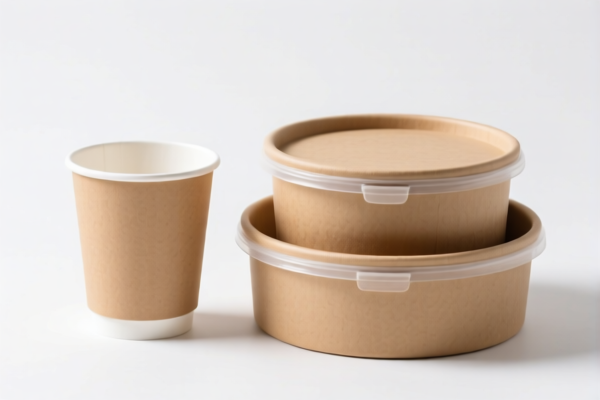
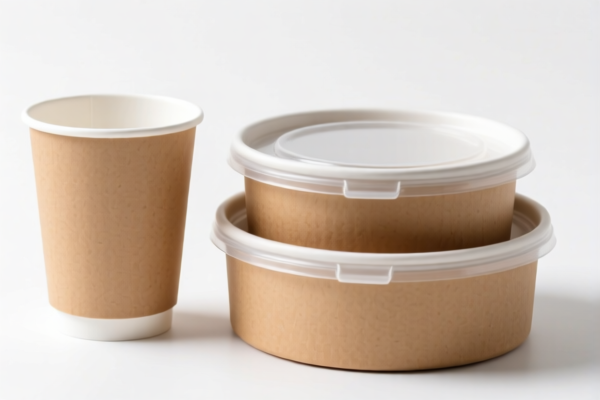
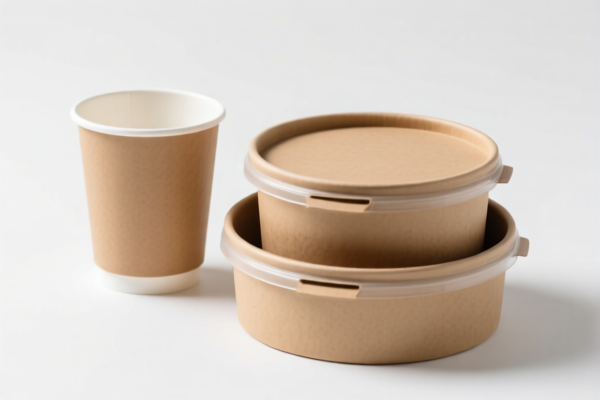
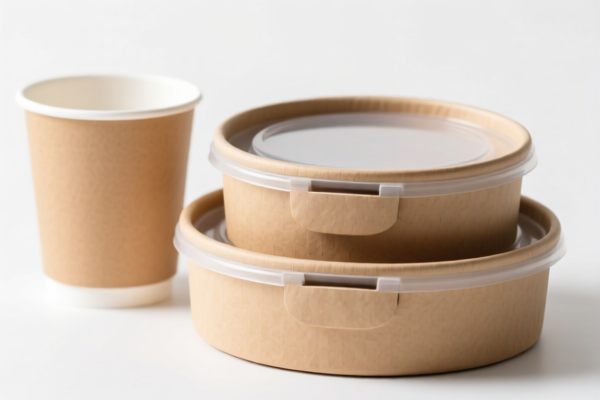
AI Analysis
🥣 Paper Fruit Bowl (Paper Bowls for Fruit Service)
🌐 HS Code Reference & Customs Clearance Guide | 2026 Latest Tariff Analysis | Professional Entry Strategy
📌 1. Product Definition and Classification: What is a "Paper Fruit Bowl"?
A Paper Fruit Bowl is a disposable or semi-rigid container made primarily of paper material, designed to hold fruit or other food items. In international trade, it is classified based on its material composition, manufacturing process, and specific shape/function.
There are two main categories for paper bowls: 1. Paper/Molded Pulp Bowls: Made from molded pulp or processed paper sheets, often used for eco-friendly packaging. 2. Packaging Containers: Classified under general packaging if they do not fit specific food-ware definitions.
⚠️ Key Distinction Point:
- If the bowl is made of molded pulp or pressed paper products specifically defined as dishes, bowls, or cups → It falls under Heading 4823.
- If it is a generic paper packaging container without specific food-ware designation → It may fall under Heading 4819.
- ⚠️ Do NOT confuse with Plastic Bowls: PS (Polystyrene) plastic fruit bowls are classified under Heading 3924, which has different tax implications.
📦 2. HS Code Classification Details (2026 Latest Tariff Authority Comparison)
| HS Code | Product Description | Application Scenario | Material/Process |
|---|---|---|---|
4823.69.00.20 |
Paper bowls, material: paper, shape: bowl, fits classification of cups and circular nested food containers | Disposable paper bowls for takeout or fruit service | Paper, molded or cut |
4823.70.00.20 |
Paper bowls, material: paper, shape: bowl, fits definition of pulp-molded or pressed products (plates, bowls, cups) | Eco-friendly molded pulp bowls | Molded pulp / pressed paper |
4819.50.20.00 |
Paper bowls, material: paper, shape: bowl, classified as packaging containers, purpose fits food container logic | Generic paper packaging bowls | Paper, general packaging |
3924.10.20.00 |
PS Plastic Fruit Bowl, material: PS plastic, purpose: fruit bowl, fits tableware/bowl category | Plastic (NOT paper) fruit bowls | PS Plastic |
3924.10.40.00 |
PS Plastic Fruit Bowl, material: PS plastic, purpose: fruit bowl, belongs to tableware category, shape: bowl | Plastic (NOT paper) fruit bowls | PS Plastic |
🔍 Important Note:
- Paper Bowls (HS 4823/4819) and Plastic Bowls (HS 3924) are MUTUALLY EXCLUSIVE.
- Ensure the product description explicitly states "Paper" or "Molded Pulp" to avoid misclassification as plastic.
- Misdeclaring a paper bowl as plastic (or vice versa) can lead to severe penalties and entry refusal.
💰 3. 2026 Latest Tariff Rate Details (Including Additional Taxes, Policy Surcharges)
✅ Applicable Country: United States (US)
✅ Origin: China (CN)
✅ Effective Date: 2025–2026 (Includes subsequent imports)
🎯 1. 4823.69.00.20 & 4823.70.00.20 & 4819.50.20.00 —— Paper Fruit Bowls (Paper/Molded Pulp)
| Item | Content |
|---|---|
| Base Duty Rate | 0% (ad valorem) |
| Section 301 Additional Duty | +25% (USITC Footnote for Chinese origin) |
| Section 122 Duty | +10% (Specific to certain paper/pulp products) |
| Total Duty Rate | 35% |
| Tax Calculation | CIF Value × 35% |
| De Minimis Exemption Eligible? | ❌ No (Section 301 duties are not exempt under de minimis) |
| Legal Basis Path | USITC:4823.69.00.20 / 4823.70.00.20 / 4819.50.20.00 → Section 301: 25% → Section 122: 10% |
📌 Explanation:
- The 25% Section 301 duty applies to most Chinese-origin goods, including paper products.
- The 10% Section 122 duty is an additional surcharge specifically targeting certain paper/pulp imports.
- Total 35% is a high tariff rate. Sellers must factor this into pricing.
- No de minimis exemption: Even small shipments are subject to full duty calculation.
🎯 2. 3924.10.20.00 & 3924.10.40.00 —— PS Plastic Fruit Bowls (For Comparison Only)
⚠️ Note: These HS Codes are for PLASTIC bowls, not paper. However, they are listed in the DATA for contrast.
| Item | Content |
|---|---|
| HS 3924.10.20.00 | Total Duty: 24% (Base 6.5% + Section 301 7.5% + Section 122 10%) |
| HS 3924.10.40.00 | Total Duty: 13.4% (Base 3.4% + Section 301 0% + Section 122 10%) |
📌 Observation:
- Plastic bowls may have lower or different duty structures depending on the specific subheading.
- However, Paper Bowls (35%) are currently more heavily taxed than some plastic alternatives under certain subheadings.
- Do not use plastic HS codes for paper products – this is fraud.
🛠️ 4. Customs Clearance Practical Advice (Real-World Pitfall Avoidance Guide)
✅ 1. Required Documentation Checklist (All Must Be Provided)
| Document | Mandatory? | Description |
|---|---|---|
| ✅ Product Specification Sheet | ✔️ | Must clearly state "Paper" or "Molded Pulp", not just "Bowl" |
| ✅ Material Certificate | ✔️ | Proof of paper pulp origin and composition |
| ✅ Product Photos (Labeled) | ✔️ | Show texture, flexibility, and any biodegradable labels |
| ✅ Commercial Invoice | ✔️ | Explicitly describe as "Paper Fruit Bowl, Molded Pulp, Disposable" |
| ✅ Packing List | ✔️ | Include weight, dimensions, and quantity per carton |
| ✅ COO (Certificate of Origin) | ✔️ | Confirm Chinese origin to apply correct Section 301/122 duties |
✅ 2. Declaration Tips (Key Mantras)
🔥 “Paper Declare Paper, Pulp Declare Pulp, Plastic Never Masquerade as Paper!”
| Scenario | Correct Declaration | Wrong Practice |
|---|---|---|
| Molded Pulp Bowl | 4823.70.00.20 – "Molded Pulp Bowl" |
Misdeclare as 4819 (Packaging) → Risk of audit |
| Cut Paper Bowl | 4823.69.00.20 – "Paper Bowl, Cut" |
Misdeclare as Plastic (3924) → Fraud & Penalties |
| Plastic PS Bowl | 3924.10.20.00 or 3924.10.40.00 |
Declare as Paper → Entry Refusal |
| Mixed Shipment | Separate lines for Paper and Plastic | Mixed declaration → Seizure Risk |
✅ 3. Special Case Handling
| Situation | Handling Advice |
|---|---|
| Biodegradable Paper Bowls | Still classified under 4823 or 4819; biodegradability does not change HS Code |
| Coated Paper Bowls | If coated with plastic/polymer, consult customs: may shift to 3924 if coating >50% by weight |
| OEM Custom Shapes | Provide design drawings to confirm classification under 4823.69 or 4823.70 |
| Small Quantity Samples | Still subject to 35% duty; no de minimis exemption for Section 301 goods |
🌍 5. Global Market Clearance Comparison (2026 Latest)
| Country/Region | Recommended HS Code | Duty Rate | Certification | Notes |
|---|---|---|---|---|
| 🇺🇸 USA | 4823.69.00.20 / 4823.70.00.20 |
35% | None required for paper | High duty due to Section 301 & 122 |
| 🇪🇺 EU | 4823.70 |
0–5% | FSC Certification recommended | No Section 301 |
| 🇬🇧 UK | 4823.70 |
0–5% | UKCA (if applicable) | Post-Brexit rules |
| 🇨🇳 China | 4823.70 |
0% | N/A | Export duty free |
| 🇨🇦 Canada | 4823.70 |
0% | N/A | CUSMA preferential |
📌 Conclusion:
- USA is the only market with high additional duties (35%) for paper fruit bowls.
- EU, UK, Canada, and China have significantly lower or zero duties.
- Consider supply chain diversification if exporting heavily to the US.
📌 6. Common Mistakes & Pitfall Avoidance (Lessons Learned from Blood and Tears)
❌ Mistake 1: Declaring a Paper Bowl as Plastic Bowl to avoid Section 301/122 duties
👉 Consequence: Customs inspection reveals paper material → Seizure, fines, and blacklisting
❌ Mistake 2: Using vague description "Food Container" without specifying material
👉 Consequence: Customs assigns highest duty rate → Unexpected 35% bill
❌ Mistake 3: Ignoring Section 122 duty for paper/pulp products
👉 Consequence: Underpayment → Penalties and interest charges
❌ Mistake 4: Mixing Paper and Plastic in one shipment without separate lines
👉 Consequence: Customs rejects entire entry → Delays and storage fees
✅ Correct Practice:
“Molded Pulp Paper Fruit Bowl, Disposable, Biodegradable, 500ml, 100% Recycled Paper Content, HS 4823.70.00.20”
🎯 7. Conclusion: Precise Declaration Saves Money and Time
🎯 Remember the Mantra:
🔹 “Paper is Paper, Pulp is Pulp, Plastic is Plastic – Never Mix!”
🔹 “35% Duty in USA, 0% in EU – Know Your Market!”
🔹 “HS Code Determines Cost, Declare Correctly, Avoid Penalties!”
📌 Pro Tip:
If your paper bowls are manufactured in Vietnam, Mexico, or Thailand, they may be exempt from Section 301/122 duties, reducing the rate to 0–5%.
✅ Recommendation: Apply for an Advance Ruling from US Customs to confirm HS Code and duty rate before shipping.
📣 Take Action Now:
📞 Contact a licensed customs broker + Provide product specs + Apply for HS Code Advance Ruling
🚀 Ensure smooth clearance, reduce costs, and maximize profits!
✨ Professional Clearance Starts with Accurate Classification!
💼 Every cent counts – Calculate Taxes Precisely!
Customer Reviews
About HS Code Classification
The Harmonized System (HS) is an internationally standardized nomenclature developed by the World Customs Organization (WCO) to classify traded products. Over 200 countries use the HS system as the basis for customs tariffs, trade statistics, and import/export regulations.
Each HS code follows a hierarchical structure:
- Chapter (2 digits) — Broad category of goods (e.g., Chapter 84: Machinery and Mechanical Appliances)
- Heading (4 digits) — More specific grouping within the chapter
- Subheading (6 digits) — Internationally standardized breakdown, used by all WCO member countries
- National subdivisions (8-10 digits) — Country-specific extensions for further classification, such as US HTSUS 10-digit codes
Correct HS code classification is essential for smooth customs clearance, accurate duty payment, and compliance with trade regulations. Misclassification can lead to customs delays, overpayment of duties, or penalties.
When importing from CN to US, the applicable tariff rates may include:
- Most-Favored-Nation (MFN) rate — The standard duty rate applied to WTO members
- General rate — Applied to countries without trade agreements
- Trade remedy duties — Additional tariffs such as Section 301 (anti-dumping), Section 232 (national security), or countervailing duties
The information provided on this page is for reference purposes only. For official classification, please consult with your local customs authority or a licensed customs broker.