Paper Gasket Cutting
CN → US| HS Code | Tariff Rate | Origin | Destination | Doc |
|---|---|---|---|---|
| 4823908000 | 35.0% | CN | US | Official Doc |
| 4823906000 | 35.0% | CN | US | Official Doc |
| 8484100000 | 37.5% | CN | US | Official Doc |
| 8484900000 | 37.5% | CN | US | Official Doc |
| 6815992000 | 35.0% | CN | US | Official Doc |
| 6815994110 | 35.0% | CN | US | Official Doc |
Product Images
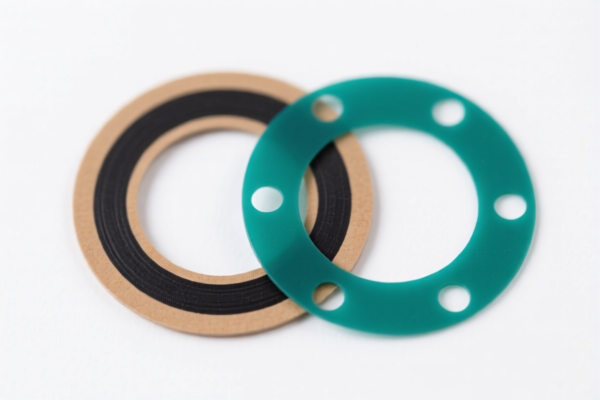
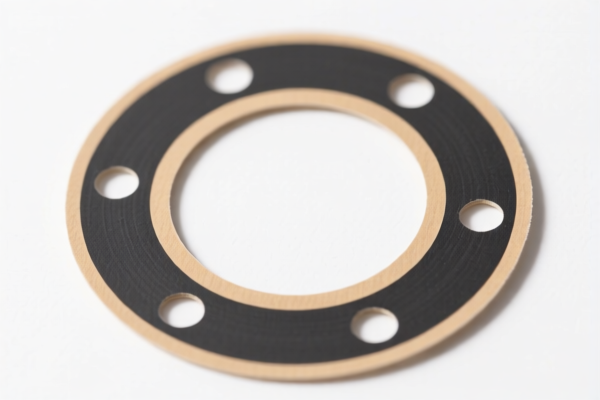
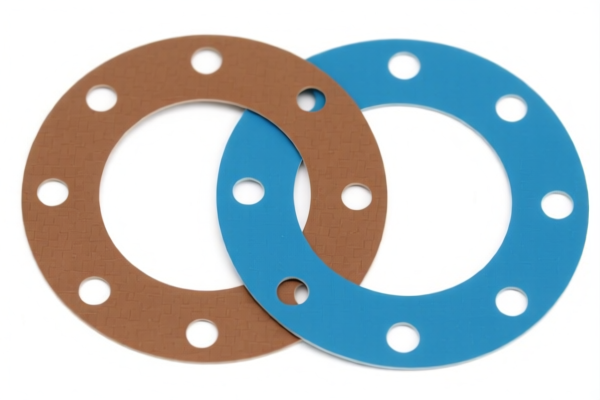

AI Analysis
✂️ Paper Gasket Cutting (Paper & Board Gaskets)
🌐 HS Code Reference & Customs Clearance Guide | 2026 Latest Tariff Analysis | Professional Strategy
📌 I. Product Definition & Classification: What Exactly Is "Paper Gasket Cutting"?
"Paper Gasket Cutting" refers to gaskets, washers, or seals primarily made from paper, paperboard, or coated paper/board. These are industrial components used for sealing, spacing, or insulating in machinery, piping, and automotive applications.
In international trade, classification depends strictly on the material composition and surface treatment:
1. Uncoated Paper/Cardboard Gaskets:
Raw paper or plain cardboard cut into shape. No special coatings.
2. Coated Paper/Cardboard Gaskets:
Paper or cardboard with a surface coating (e.g., plastic, resin, or foil) to enhance durability, oil resistance, or insulation.
⚠️ Key Distinction:
- If the material is plain/uncoated paper/cardboard → Use4823.90.80.00
- If the material is coated paper/coated paperboard → Use4823.90.60.00
- ⛔ Do not confuse with plastic (3921) or wood (4421) cutting mats/gaskets, which fall under completely different chapters.
📦 II. HS Code Classification Details (2026 Latest Tariff Authority)
| HS Code | Product Description | Application Scenario | Material Status |
|---|---|---|---|
4823.90.80.00 |
Paper gasket cutting, uncoated; other shaped paper/paperboard products | Standard industrial seals, gaskets for low-pressure/low-heat applications | ✅ Uncoated Paper/Board |
4823.90.60.00 |
Paper gasket cutting, coated/coated paperboard; shaped articles of coated paper | High-performance gaskets, oil-resistant seals, insulation gaskets | ✅ Coated Paper/Board |
🔍 Critical Reminder:
- The term "Cutting" here refers to the finished product (pre-cut gaskets), not the machine used to cut them. If importing the cutting machine, the HS codes would be entirely different (e.g., 8465).
- Ensure your invoice clearly states "Paper Gaskets" or "Shaped Paper Articles", not just "Gaskets" (which is ambiguous).
💰 III. 2026 Latest Tariff Rate Details (Detailed Breakdown)
✅ Applicable Country: United States (US)
✅ Origin: China (CN)
✅ Effective Date: From November 10, 2025 (and subsequent imports)
🎯 1. 4823.90.80.00 —— Paper Gaskets (Uncoated)
| Item | Content |
|---|---|
| Base Duty Rate | 0.0% (Ad Valorem) |
| USITC Additional Duty | +25.0% (Under USITC Footnote 9903.88.01) |
| IEEPA Additional Duty | +10.0% (Section 122, targeting China/HK products, effective Nov 10, 2025) |
| Total Duty Rate | 35.0% |
| Tax Calculation | CIF Value × 35% |
| De Minimis Exemption | ❌ Not Eligible (deny_de_minimis) |
| Legal Basis Path | IEEPA:9903.01.25 → IEEPA:9903.01.24 → USITC:4823.90.80.00 → FOOTNOTE:9903.88.01 |
📌 Explanation:
- "Base 0%": Paper products often have low base tariffs.
- "25% USITC": The "Section 301" additional tariff on Chinese paper articles.
- "10% IEEPA/122": The new "Section 122" tariff, effective Nov 10, 2025, specifically targeting certain Chinese goods.
- Total 35%: This is a high-cost entry point. Must be factored into landed cost calculations immediately.
🎯 2. 4823.90.60.00 —— Paper Gaskets (Coated)
| Item | Content |
|---|---|
| Base Duty Rate | 0.0% |
| USITC Additional Duty | +25.0% |
| IEEPA Additional Duty | +10.0% |
| Total Duty Rate | 35.0% |
| Tax Calculation | CIF × 35% |
| De Minimis Exemption | ❌ Not Eligible |
| Legal Basis Path | IEEPA:9901.25 → IEEPA:9903.01.24 → USITC:4823.90.60.00 → FOOTNOTE:9903.88.01 |
📌 Note:
- Identical tax treatment to uncoated paper gaskets.
- Coating does not lower the tariff burden for Chinese-origin goods.
- If the coating is plastic-heavy, consult if it might cross into Chapter 39 (Plastics), but paper-based coated gaskets generally stay in 4823.
🛠️ IV. Customs Clearance Practical Advice (Battle-Tested Pitfall Avoidance)
✅ 1. Documentation Checklist (Must-Haves)
| Document | Required? | Explanation |
|---|---|---|
| ✅ Product Spec Sheet | ✔️ | Must specify: Material (e.g., Kraft Paper, Fiberglass-reinforced Paper), Coating Type, Thickness, Pressure/Temp Rating. |
| ✅ Product Photos | ✔️ | Clear images of the gasket, showing texture (coated vs. uncoated). |
| ✅ Commercial Invoice | ✔️ | Must describe as: "Paper Gaskets, Cut to Shape, HS 4823.90.80.00". Avoid vague terms like "Office Supplies". |
| ✅ Packing List | ✔️ | Detail gross/net weight. Ensure no mixed HS codes in one shipment if possible. |
| ✅ Certificate of Origin | ✔️ | Prove CN origin to anticipate the 35% tariff. If from Vietnam/Thailand, request for potential IEEPA exemption. |
✅ 2. Declaration Tips (Key Mnemonic)
🔥 "Material Dictates Code, Coating Changes Subheading, 35% is the Reality!"
| Scenario | Correct Declaration | Wrong Practice |
|---|---|---|
| Plain black/grey paper gaskets | 4823.90.80.00 |
Misdeclaring as "Plastic Gasket" → Fraud Risk |
| Shiny/coated (e.g., red/blue oil-resistant) gaskets | 4823.90.60.00 |
Misdeclaring as "Uncoated" → Underpayment Penalty |
| Gaskets made of Rubber/Plastic | ❌ Not 4823 | Use 4016 (Rubber) or 3921 (Plastic) instead |
| Gaskets made of Metal | ❌ Not 4823 | Use 7318 (Metal Washers) or 7616 (Aluminum) |
✅ 3. Special Case Handling
| Situation | Handling Advice |
|---|---|
| Mixed Materials | If gasket has paper + metal core, declare as "Metal" usually, or consult ruling. Paper + Plastic film → Likely 4823 if paper is primary. |
| OEM Custom Sizes | Provide CAD drawings or templates to prove "Shaped Article" status. |
| Small Bamples | Still subject to 35% tariff. No de minimis. Plan sample shipments accordingly. |
🌍 V. Global Market Customs Comparison (2026 Latest)
| Country/Region | Recommended HS Code | Duty Rate | Certification | Notes |
|---|---|---|---|---|
| 🇺🇸 USA | 4823.90.80.00 / 4823.90.60.00 |
35% | N/A | High barrier due to 301+122 tariffs. |
| 🇨🇳 China | 4823.90.80.00 |
5-10% | N/A | Lower entry cost for domestic use. |
| 🇪🇺 EU | 4823.90 |
6.5% | CE (if applicable) | No Section 122 equivalent, but anti-dumping may apply in other sectors. |
| 🇦🇺 Australia | 4823.90 |
5% | N/A | Favorable for general paper products. |
| 🇯🇵 Japan | 4823.90 |
0-3% | JIS | Often duty-free for paper products. |
📌 Conclusion:
- USA is the only major market imposing this heavy 35% burden on Chinese paper gaskets due to trade wars.
- For US export, consider Supply Chain Diversification (e.g., sourcing from Vietnam/Mexico) to mitigate tariff risk, though origin rules are strict.
📌 VI. Common Errors & Pitfalls (Lessons Learned)
❌ Error 1: Calling it "Gaskets" without specifying material
👉 Result: CBP may classify under "Other" or ask for Ruling, causing 30+ day delays.
✅ Fix: Always specify "Paper" or "Coated Paper".
❌ Error 2: Confusing "Gaskets" with "Cutting Machines"
👉 Result: Machine HS (8465) has different duties. Misdeclaration leads to seizure.
✅ Fix: Ensure you are importing the product, not the tool.
❌ Error 3: Ignoring the "Coated" distinction
👉 Result: While rate is same (35%), wrong code can trigger audits for misclassification.
✅ Fix: Match invoice description to the specific subheading (60 vs 80).
🎯 VII. Conclusion: Precision is Profit!
🎯 Remember the Mantra:
🔹 "Paper is 4823, Coating is 60/80, USA is 35%, Don't Skip the Docs!"
🔹 "HS Code Saves Time, Tariff Saves Money, Accuracy Saves Your Shipment!"
📌 Pro Tip:
If your paper gaskets are shipped from Vietnam, Mexico, or Malaysia, you may qualify for IEEPA Exemption, reducing duty to 0%~6.5%.
Recommendation: Apply for an Advance Ruling (CBP Ruling) before first shipment if volume is high.
📣 Take Action Now:
📞 Contact a licensed customs broker + Provide Material Specs + Verify Origin Status
🚀 Ensure your paper gaskets clear customs smoothly, avoid penalties, and maximize margin!
✨ Professional clearance starts with accurate classification!
💼 Every percentage point of duty impacts your bottom line!
Customer Reviews
About HS Code Classification
The Harmonized System (HS) is an internationally standardized nomenclature developed by the World Customs Organization (WCO) to classify traded products. Over 200 countries use the HS system as the basis for customs tariffs, trade statistics, and import/export regulations.
Each HS code follows a hierarchical structure:
- Chapter (2 digits) — Broad category of goods (e.g., Chapter 84: Machinery and Mechanical Appliances)
- Heading (4 digits) — More specific grouping within the chapter
- Subheading (6 digits) — Internationally standardized breakdown, used by all WCO member countries
- National subdivisions (8-10 digits) — Country-specific extensions for further classification, such as US HTSUS 10-digit codes
Correct HS code classification is essential for smooth customs clearance, accurate duty payment, and compliance with trade regulations. Misclassification can lead to customs delays, overpayment of duties, or penalties.
When importing from CN to US, the applicable tariff rates may include:
- Most-Favored-Nation (MFN) rate — The standard duty rate applied to WTO members
- General rate — Applied to countries without trade agreements
- Trade remedy duties — Additional tariffs such as Section 301 (anti-dumping), Section 232 (national security), or countervailing duties
The information provided on this page is for reference purposes only. For official classification, please consult with your local customs authority or a licensed customs broker.