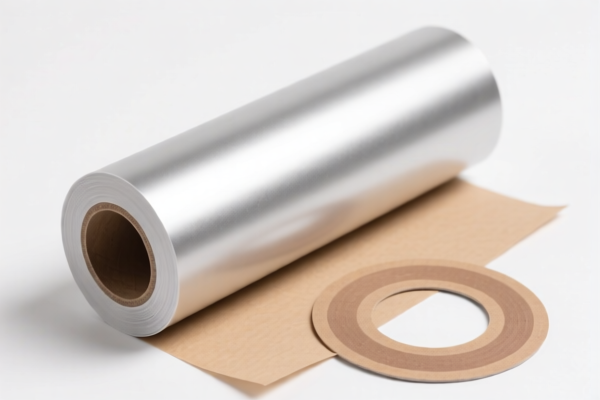
Paper Gasket Roll
CN → US| HS Code | Tariff Rate | Origin | Destination | Doc |
|---|---|---|---|---|
| 4823908000 | 35.0% | CN | US | Official Doc |
| 4823906000 | 35.0% | CN | US | Official Doc |
Product Images



AI Analysis
📄 Paper Gasket Roll (and Cut Seals)
🌐 HS Code Reference & Customs Clearance Guide | 2026 Latest Tariff Analysis | Professional通关 Strategy
📌 I. Product Definition & Classification: What is a "Paper Gasket Roll"?
A Paper Gasket Roll is an industrial sealing component used to prevent leakage between two mated surfaces in machinery, pipes, or engines. Unlike metal or rubber gaskets, these are made from compressed cellulose fibers, often treated with resins or coated for enhanced chemical and thermal resistance.
In international trade, the classification depends heavily on material composition and state of processing:
- Uncoated Paper/Cardboard Gaskets: Made from basic cellulose wadding, paper pulp, or non-coated paperboard.
- Coated Paper Gaskets: The paper substrate has been treated with a coating (e.g., rubber, silicone, asphalt, or synthetic resin) to improve sealing performance, heat resistance, or chemical compatibility.
⚠️ Key Distinction Point:
- If the gasket is made from plain/uncoated paper or cardboard → It falls under 4823.90.80.00.
- If the gasket is made from coated paper or paperboard (even if the coating is thin) → It falls under 4823.90.60.00.
📦 II. HS Code Classification Details (2026 Latest Tariff Authority Comparison)
Based on the provided DATA, there are two specific HS Codes relevant to Paper Gaskets. The primary differentiator is whether the paper is coated or uncoated.
| HS Code | Product Description | Application Scenario | Coating Status |
|---|---|---|---|
4823.90.80.00 |
Other articles of paper, paperboard, cellulose wadding... Gaskets, washers and other seals | Uncoated paper gaskets, basic cardboard seals, non-treated fiber gaskets | ❌ Uncoated |
4823.90.60.00 |
Other articles of paper, paperboard... Of coated paper or paperboard: Gaskets, washers and other seals | Coated paper gaskets, resin-impregnated seals, rubber-coated fiber gaskets | ✅ Coated |
🔍 Critical Reminder:
- "Roll" vs. "Cut to Size": Both codes specify "cut to size or shape." Even if the product is a roll that will be cut into shapes later, it is classified under these "articles" codes if it is prepared for use. However, if it is a simple bulk roll of raw paper without specific gasket preparation, it might fall elsewhere (e.g., 4804/4810), but for gasket-specific rolls,4823is the standard.
- Coating Definition: In customs practice, "coated" includes any surface treatment (chemical impregnation, resin saturation, or physical coating) that alters the surface properties for sealing purposes. Do not assume "paper" means "uncoated." If it feels slightly stiff, oily, or has a colored surface, it is likely coated.
💰 III. 2026 Latest Tariff Rate Details (Including Additional Duties & Policy Add-ons)
✅ Applicable Country: United States (US)
✅ Country of Origin: China (CN)
✅ Effective Time: Current rates apply (Note: US-China trade tariffs remain significant for paper products).
🎯 1. 4823.90.80.00 —— Paper Gaskets (Uncoated)
| Item | Content |
|---|---|
| Base Tariff Rate | 0.0% (ad valorem) |
| Section 301 Additional Tariff | +25.0% |
| Total Tariff Rate | 25.0% |
| Tax Calculation | CIF Value × 25% |
| De Minimis Eligibility | ❌ Not Eligible (Value is above $800 threshold for most commercial shipments; also, Section 301 items are generally excluded from Section 321 de minimis if they fall under specific restricted lists, though paper gaskets are primarily affected by the 301 rate). |
| Legal Basis Path | HTSUS:4823.90.80.00 → USITC Footnote 9903.88.01 (Section 301 List 4A) |
📌 Explanation:
- Base Rate: The general US duty for these paper articles is 0%.
- Additional Tariff: The 25% is imposed under Section 301 of the Trade Act of 1974, targeting specific Chinese imports.
- Total Burden: The importer must pay 25% of the declared value on top of the base rate.
🎯 2. 4823.90.60.00 —— Paper Gaskets (Coated)
| Item | Content |
|---|---|
| Base Tariff Rate | 0.0% (ad valorem) |
| Section 301 Additional Tariff | +25.0% |
| Total Tariff Rate | 25.0% |
| Tax Calculation | CIF Value × 25% |
| De Minimis Eligibility | ❌ Not Eligible |
| Legal Basis Path | HTSUS:4823.90.60.00 → USITC Footnote 9903.88.01 (Section 301 List 4A) |
📌 Note:
- The tariff structure for coated and uncoated paper gaskets is identical in terms of total effective rate (25%).
- However, misclassification between...80.00and...60.00can lead to customs audits if the physical product does not match the description (e.g., claiming uncoated when the product is clearly resin-impregnated).
🛠️ IV. Customs Clearance Practical Advice (Battle-Tested Pitfall Guide)
✅ 1. Required Documentation Checklist (Non-Negotiable)
| Document | Must Provide | Description |
|---|---|---|
| ✅ Commercial Invoice | ✔️ | Must clearly state: "Paper Gaskets" or "Gasket Rolls," not just "Paper." |
| ✅ Packing List | ✔️ | Specify gross/net weight and number of rolls/units. |
| ✅ Product Specifications | ✔️ | Crucial: Must state material (e.g., "Cellulose Fiber," "Coated Paper," "Resin-Impregnated"). |
| ✅ Material Safety Data Sheet (MSDS) | ✔️ | Required if coatings contain volatile organic compounds (VOCs) or hazardous chemicals. |
| ✅ Photo of Product | ✔️ | Show cross-section to demonstrate if it is solid paper or has a coated surface. |
| ✅ Country of Origin Certificate | ✔️ | To verify CN origin and apply Section 301 rates correctly. |
✅ 2. Declaration Techniques (Key Mantra)
🔥 “Describe Material, Not Just Function. Coated vs. Uncoated is Key!”
| Scenario | Correct Declaration | Wrong Practice |
|---|---|---|
| Plain Fiber Gaskets | "Uncoated Cellulose Paper Gaskets, HS 4823.90.80.00" | Declaring as "Industrial Seals" without material detail |
| Resin-Coated Gaskets | "Resin-Coated Paper Gaskets, HS 4823.90.60.00" | Declaring as "Uncoated" to try to avoid scrutiny (risky) |
| Rolls | "Paper Gasket Rolls, for cutting to shape" | Declaring as "Raw Paper Rolls" (HS 4804) |
| Mixed Shipments | Split invoice clearly | Mixing coated and uncoated in one line item |
✅ 3. Special Situations Handling
| Situation | Handling Advice |
|---|---|
| "Roll" Format | Even if sold as a roll, if it is pre-perforated or specifically manufactured for gasket use, it is an "article" (HS 4823). If it is a generic paper roll that the buyer cuts themselves, it might be classified as plain paper (HS 4804), but this is rare for specialized gasket rolls. |
| Multi-Layer Gaskets | If the gasket has a paper core with rubber layers on both sides, it is Coated Paper (HS 4823.90.60.00). |
| Asbestos-Content | ⚠️ WARNING: If the paper gasket contains asbestos, it is BANNED in the US under TSCA. Do not ship! |
| Felt or Wadded Fiber | If the material is cellulose wadding (not paper/web), it still falls under HS 4823. Ensure the description says "Wadding" if applicable, but the HS Code remains the same. |
🌍 V. Global Market Comparison (2026 Latest)
| Country/Region | Recommended HS Code | Tariff (China Origin) | Certification | Notes |
|---|---|---|---|---|
| 🇺🇸 USA | 4823.90.60.00 / 4823.90.80.00 |
25% (Total) | None typically | High duty due to Section 301. |
| 🇨🇳 China | 4823.90.60.00 / 4823.90.80.00 |
~5-10% | N/A | Import duties into China. |
| 🇪🇺 EU | 4823.90.60 / 4823.90.80 |
0% - 2.7% | REACH | No additional punitive tariffs. |
| 🇲🇽 Mexico | 4823.90.00 |
0% (under USMCA) | NOM | If originating in Mexico/US. |
| 🇬🇧 UK | 4823.90.00 |
0% - 5% | UKCA | Post-Brexit tariff schedule. |
📌 Conclusion:
- The US market is the most expensive for paper gaskets due to the 25% Section 301 tariff.
- EU and UK have much lower entry barriers. Consider supply chain diversification if targeting the US.
📌 VI. Common Mistakes & Pitfall Guide (Lessons Learned)
❌ Mistake 1: Declaring "Paper Rolls" (HS 4804) when they are pre-cut or perforated gaskets.
👉 Consequence: Customs may reclassify to HS 4823, apply penalties for misdeclaration, or delay shipment.
❌ Mistake 2: Ignoring the "Coated" distinction.
👉 Consequence: If audited, and the product is coated, you might face questions about whether the duty base is correct (though rates are same here, descriptions must match).
❌ Mistake 3: Failing to disclose "Resin" or "Chemical Treatment."
👉 Consequence: May trigger EPA/TSCA review if hazardous substances are suspected.
✅ Correct Declaration Example:
"Paper Gaskets, Coated, Cellulose Fiber Based, Roll Format, Model PG-100, HS 4823.90.60.00"
🎯 VII. Conclusion: Professional Declaration for Cost Efficiency
🎯 Remember the Mantra:
🔹 "Coated vs. Uncoated defines the sub-heading, but both carry 25% US Duty."
🔹 "Be precise about material: 'Cellulose Wadding' or 'Coated Paper'."
🔹 "Avoid 'Generic Paper' descriptions; they invite audits."
📌 Pro Tip:
If you are shipping to the US, ensure your Invoice Value includes all costs up to the port of entry (CIF) because the 25% tax is calculated on this value. Hidden costs in freight or insurance can increase the tax burden.
📣 Immediate Action:
📞 Verify Material: Is it coated? Check with your manufacturer.
📋 Update HS Code: Use4823.90.60.00for coated,4823.90.80.00for uncoated.
📉 Plan for 25% Duty: Factor this into your FOB pricing strategy for the US market.
✨ Precision in Classification, Savings in Compliance!
💼 Every percent counts in international trade!
Customer Reviews
About HS Code Classification
The Harmonized System (HS) is an internationally standardized nomenclature developed by the World Customs Organization (WCO) to classify traded products. Over 200 countries use the HS system as the basis for customs tariffs, trade statistics, and import/export regulations.
Each HS code follows a hierarchical structure:
- Chapter (2 digits) — Broad category of goods (e.g., Chapter 84: Machinery and Mechanical Appliances)
- Heading (4 digits) — More specific grouping within the chapter
- Subheading (6 digits) — Internationally standardized breakdown, used by all WCO member countries
- National subdivisions (8-10 digits) — Country-specific extensions for further classification, such as US HTSUS 10-digit codes
Correct HS code classification is essential for smooth customs clearance, accurate duty payment, and compliance with trade regulations. Misclassification can lead to customs delays, overpayment of duties, or penalties.
When importing from CN to US, the applicable tariff rates may include:
- Most-Favored-Nation (MFN) rate — The standard duty rate applied to WTO members
- General rate — Applied to countries without trade agreements
- Trade remedy duties — Additional tariffs such as Section 301 (anti-dumping), Section 232 (national security), or countervailing duties
The information provided on this page is for reference purposes only. For official classification, please consult with your local customs authority or a licensed customs broker.