Paper Glasses
CN → US| HS Code | Tariff Rate | Origin | Destination | Doc |
|---|---|---|---|---|
| 9505904000 | 10.0% | CN | US | Official Doc |
| 9505906000 | 10.0% | CN | US | Official Doc |
| 4823690020 | 35.0% | CN | US | Official Doc |
| 4823690040 | 35.0% | CN | US | Official Doc |
| 9004900090 | 20.0% | CN | US | Official Doc |
| 9004900010 | 20.0% | CN | US | Official Doc |
Product Images
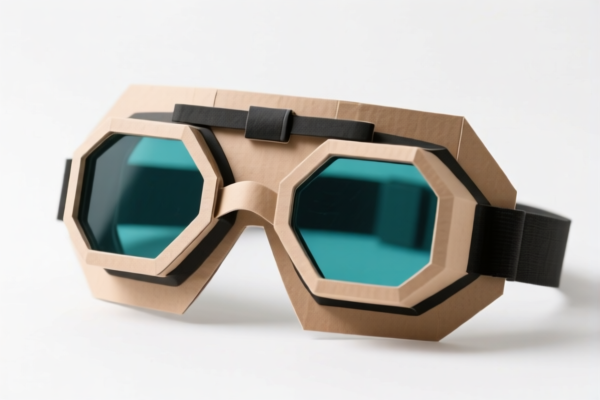
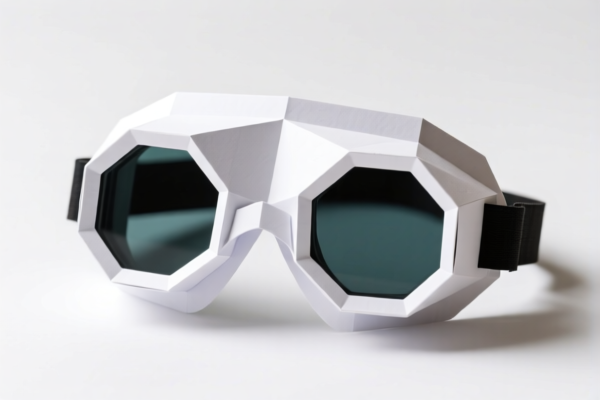
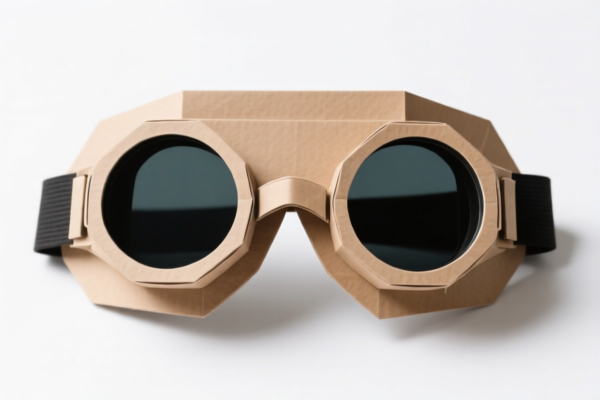
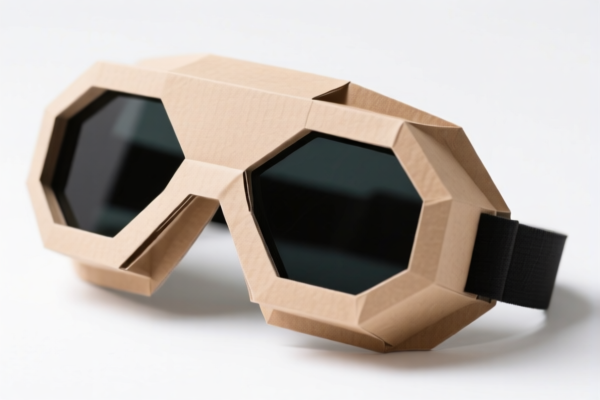
AI Analysis
🎉 Paper Glasses (Party Props & Novelty Eyewear)
🌐 HS Code Reference & Customs Clearance Guide | 2026 Latest Tariff Analysis | Professional-Level Strategy
📌 I. Product Definition & Classification: What Exactly Are "Paper Glasses"?
"Paper Glasses" typically refer to novelty eyewear made primarily of paper, cardstock, or thin cardboard, designed for festive occasions, costume parties, Halloween, or practical joke articles. They are not corrective lenses, protective safety gear, or durable plastic/metal eyewear.
In international trade, these items are categorized based on their primary material and primary function:
1. Carnival/Entertainment Articles (Most Common)
If the item is sold as a prop, accessory for parties, or a "fun" item (e.g., glasses with fake mustaches attached, rainbow lenses, or oversized frames), it falls under Chapter 95 (Toys, Games, and Sports Articles). Specifically, it is often classified as part of "Festive, carnival or other entertainment articles."
2. Paper Products
If the item is purely a disposable paper artifact without significant "toy-like" features (e.g., plain paper sunglasses cut to shape), it might fall under Chapter 48 (Paper and Paperboard Articles). However, if it has any festive or novelty element, Chapter 95 usually takes precedence over Chapter 48.
⚠️ Critical Distinction:
- If it is safety goggles or corrective glasses (even if paper frames, but with medical lenses) → Chapter 90 (Spectacles).
- If it is purely for fun/party (no corrective function, no safety rating) → Chapter 95 (Entertainment/Festive) or Chapter 48 (Paper articles).
- Most "Party Paper Glasses" are classified under Chapter 95.
📦 II. HS Code Classification Details (2026 Latest Tariff Authority)
Based on the provided <DATA>, here are the relevant HS Codes for "Paper Glasses" depending on their exact nature and market destination (primarily US import patterns as implied by the tax data):
| HS Code | Product Description | Applicability for "Paper Glasses" | Notes |
|---|---|---|---|
9505.90.40.00 |
Festive, carnival or other entertainment articles... Confetti, paper spirals or streamers, party favors and noisemakers; parts and accessories thereof | ✅ Highly Likely | If the paper glasses are considered "party favors" or "novelty accessories" for entertainment. This is the most common code for disposable party props. |
9505.90.60.00 |
Festive, carnival or other entertainment articles... Other | ✅ Possible | If the item doesn't fit the specific "confetti/streamer/noisemaker" list but is still clearly a festive/entertainment article. Used as a catch-all for other party goods. |
4823.69.00.20 |
Other paper... Trays, dishes, plates, cups and the like... Cups and round nested food containers | ❌ Unlikely | This code is for tableware. Unless the "glasses" are actually paper cups shaped like eyes (very rare), this does not apply. |
4823.69.00.40 |
Other paper... Trays, dishes, plates, cups and the like... Other | ❌ Unlikely | Same as above. Paper tableware, not eyewear props. |
9004.90.00.10 |
Spectacles... Other: Other Safety glasses or safety goggles | ❌ Not Applicable | Paper glasses are not safety-rated protective equipment. |
9004.90.00.90 |
Spectacles... Other: Other Other | ❌ Not Applicable | This is for corrective or other non-safety spectacles (plastic/metal/glass). Paper novelty items are excluded from Chapter 90. |
🔍 Key Takeaway:
For standard novelty paper party glasses, the correct classification is almost certainly9505.90.40.00(as party favors/entertainment articles).
Do not classify them under Chapter 90 (Spectacles) or Chapter 48 (Paper Tableware) unless they have specific non-festive industrial or culinary uses (which defeats the purpose of "paper glasses" as a party item).
💰 III. 2026 Latest Tariff Rate Breakdown (Including Surtaxes)
✅ Applicable Country: United States (US)
✅ Country of Origin: China (CN)
✅ Effective Date: Post-November 2025 policies (including Section 301 and IEEPA surcharges)
🎯 1. 9505.90.40.00 — Party Favors & Festive Entertainment Articles (Including Paper Glasses)
| Item | Content |
|---|---|
| Base Tariff | 0.0% (ad valorem) |
| Section 301 / USITC Surtax | 0.0% |
| IEEPA Surtax (China) | 0.0% |
| Total Tariff Rate | 0.0% |
| Tax Calculation | CIF Value × 0% = $0 |
| De Minimis Eligibility | ✅ Yes (If under $800, often no duty/de minimis applies anyway) |
| Legal Basis Path | HTS:9505.90.40.00 → FOOTNOTE:9505 (Exemptions for festive articles) |
📌 Explanation:
- Zero Duty: Many festive, carnival, and novelty party articles are exempt from base tariffs under HTS Chapter 95.
- No Surtax: The provided<DATA>shows 0.0% total tax for9505.90.40.00. This means these items are not subject to the aggressive 25% Section 301 tariffs or IEEPA surcharges that apply to electronics, machinery, or some plastics.
- Cost Advantage: This is a major benefit for exporters of party goods to the US.
🎯 2. 9505.90.60.00 — Other Festive/Entertainment Articles
| Item | Content |
|---|---|
| Base Tariff | 0.0% |
| Section 301 / USITC Surtax | 0.0% |
| IEEPA Surtax (China) | 0.0% |
| Total Tariff Rate | 0.0% |
| Tax Calculation | CIF Value × 0% = $0 |
| De Minimis Eligibility | ✅ Yes |
📌 Note: Even if classified under the "Other" subheading in Chapter 95, the tax remains 0.0% according to the provided data. This reinforces the low-risk, low-cost nature of this category.
❌ Why NOT Paper Tableware (4823.69.00)?
If you mistakenly classify paper glasses as "paper cups" (which is incorrect but sometimes attempted):
| Item | Content |
|---|---|
| Base Tariff | 0.0% |
| Section 301 / USITC Surtax | 25.0% |
| IEEPA Surtax (China) | 0.0% (per data, though often 10%+ applies to China generally, the data shows 25% total) |
| Total Tariff Rate | 25.0% |
| Risk | HIGH |
⚠️ Warning:
- Misclassification Risk: If you declare paper glasses as4823.69.00.20(paper cups), you face a 25% tariff.
- Even Worse: If Customs re-classes them correctly to9505, you pay 0%. If you declared them as9004(spectacles), you’d pay 10%.
- Conclusion: Always declare as Festive/Entertainment (9505) to benefit from 0% tax.
🛠️ IV. Customs Clearance Practical Advice (Battle-Tested Pitfall Guide)
✅ 1. Documentation Checklist (Mandatory)
| Document | Required | Notes |
|---|---|---|
| ✅ Commercial Invoice | ✔️ | Must clearly state "Novelty Paper Party Glasses" or "Festive Entertainment Articles". Avoid vague terms like "Eyewear" or "Glasses" without context. |
| ✅ Product Photos | ✔️ | Show the item being worn at a party or alongside other party props (confetti, streamers). Proves "festive" nature. |
| ✅ Material Declaration | ✔️ | Specify: "100% Paper/Cardboard, No Lenses, No Optical Components". This prevents misclassification under Chapter 90. |
| ✅ List of Contents | ✔️ | If sold in a set with other party favors, list them separately if possible, or declare as a single lot of "Party Favors." |
✅ 2. Declaration Best Practices
🔥 Golden Rule: "Call it a Party Favor, Not Glasses!"
| Scenario | Correct Declaration | Risk of Incorrect Declaration |
|---|---|---|
| Standard Novelty Glasses | 9505.90.40.00 - Novelty Paper Party Glasses |
⚠️ Low Risk. Best for 0% tax. |
| If declared as "Spectacles" | 9004.90.00.90 |
🚫 10% Tax + Potential Misclassification Penalty. |
| If declared as "Paper Cups" | 4823.69.00.20 |
🚫 25% Tax + High Risk of Rejection/Inspection. |
| If declared as "Plastic Glasses" | 9004.90.00.90 or 3926.90 |
🚫 10% Tax + Fraud Risk if material is paper. |
✅ 3. Special Considerations
| Situation | Recommendation |
|---|---|
| Glasses with Attached Props (e.g., fake beards, glasses with flowers) | Still classify under 9505.90.40.00. They are considered "parts/accessories of party favors." |
| Paper Glasses with Tinted Paper Lenses | Still 9505. Tinting does not make them "corrective" or "protective" unless specified for UV/safety (which paper cannot reliably provide). |
| Bulk Import (Pallets) | Ensure the commercial invoice lists the total value and unit count. Customs may inspect for "de minimis" abuse if split into small packages. |
| Origin: China | Even though tax is 0%, ensure Country of Origin is marked as China. Some US retailers may have internal policies against Chinese-sourced party goods, but customs itself imposes no penalty beyond standard inspection. |
🌍 V. Global Market Comparison (2026 Latest)
| Country/Region | Recommended HS Code | Tariff (China Origin) | Key Certification | Notes |
|---|---|---|---|---|
| 🇺🇸 USA | 9505.90.40.00 |
0% | None (General) | Best market for 0% duty. |
| 🇪🇺 EU | 9505.00.00 |
0-2.5% | CE (if deemed toy) | Often taxed under Chapter 95. |
| 🇬🇧 UK | 9505.00.00 |
0% | UKCA (if toy) | Post-Brexit, similar to EU. |
| 🇨🇦 Canada | 9505.90.00 |
0% | None | Preferential rates may apply. |
| 🇦🇺 Australia | 9505.00.00 |
5% | None | Standard GST applies. |
📌 Conclusion:
The USA offers the most favorable 0% tariff environment for paper party glasses under HS9505.90.40.00, with no additional Section 301 or IEEPA surcharges according to the provided data.
📌 VI. Common Errors & Pitfall Guide (Lessons Learned)
❌ Error 1: Declaring as "Spectacles" (9004)
👉 Consequence: Pay 10% tax unnecessarily. Customs will reject "corrective" or "protective" claims for paper items.
❌ Error 2: Declaring as "Paper Tableware" (4823)
👉 Consequence: Pay 25% tax + High audit risk. Customs will verify if the item is actually for drinking.
❌ Error 3: Vague Description: "Glasses"
👉 Consequence: Customs may assign a default higher tariff code or hold shipment for inspection.
👉 Fix: Use "Novelty Paper Party Glasses - Festive Entertainment Article".
❌ Error 4: Ignoring Material Composition
👉 Consequence: If inspected and found to be paper but declared as plastic, it’s fraud.
👉 Fix: Clearly state "Paper/Cardboard" on the invoice.
✅ Correct Declaration Example:
"Paper Novelty Party Glasses, Festive Entertainment Articles, No Optical Lenses, 100% Cardboard, For Costume Use"
HS Code:9505.90.40.00
Tariff: 0%
🎯 VII. Conclusion: Professional Declaration, Cost-Saving Efficiency!
🎯 Remember the Mantra:
🔹 "Party Props = Chapter 95 = 0% Tax!"
🔹 "Don't call them Spectacles, or you'll pay 10%!"
🔹 "Don't call them Cups, or you'll pay 25%!"
📌 Pro Tip:
If you are shipping under the De Minimis threshold (<$800 per person per day in the US), ensure the commercial invoice clearly reflects the "Party Favor" nature to avoid any questions. Even with 0% duty, accurate classification prevents delays.
📣 Immediate Action:
📞 Work with a Broker to confirm
9505.90.40.00is appropriate for your specific design.
📝 Invoice Description: Always use "Novelty Party Glasses" or "Festive Entertainment Articles."
🚀 Maximize Profit: With 0% duty, your cost structure is highly competitive in the US market.
✨ Professional Clearance Starts with Precise Classification!
💼 Every Dollar Saved in Duty is Pure Profit!
Customer Reviews
About HS Code Classification
The Harmonized System (HS) is an internationally standardized nomenclature developed by the World Customs Organization (WCO) to classify traded products. Over 200 countries use the HS system as the basis for customs tariffs, trade statistics, and import/export regulations.
Each HS code follows a hierarchical structure:
- Chapter (2 digits) — Broad category of goods (e.g., Chapter 84: Machinery and Mechanical Appliances)
- Heading (4 digits) — More specific grouping within the chapter
- Subheading (6 digits) — Internationally standardized breakdown, used by all WCO member countries
- National subdivisions (8-10 digits) — Country-specific extensions for further classification, such as US HTSUS 10-digit codes
Correct HS code classification is essential for smooth customs clearance, accurate duty payment, and compliance with trade regulations. Misclassification can lead to customs delays, overpayment of duties, or penalties.
When importing from CN to US, the applicable tariff rates may include:
- Most-Favored-Nation (MFN) rate — The standard duty rate applied to WTO members
- General rate — Applied to countries without trade agreements
- Trade remedy duties — Additional tariffs such as Section 301 (anti-dumping), Section 232 (national security), or countervailing duties
The information provided on this page is for reference purposes only. For official classification, please consult with your local customs authority or a licensed customs broker.