Paper Handbag (Collectibles)
CN → US| HS Code | Tariff Rate | Origin | Destination | Doc |
|---|---|---|---|---|
| 4823908680 | 35.0% | CN | US | Official Doc |
| 4819400040 | 35.0% | CN | US | Official Doc |
| 4202291000 | 40.3% | CN | US | Official Doc |
| 4819300040 | 35.0% | CN | US | Official Doc |
| 4202295000 | 42.8% | CN | US | Official Doc |
Product Images


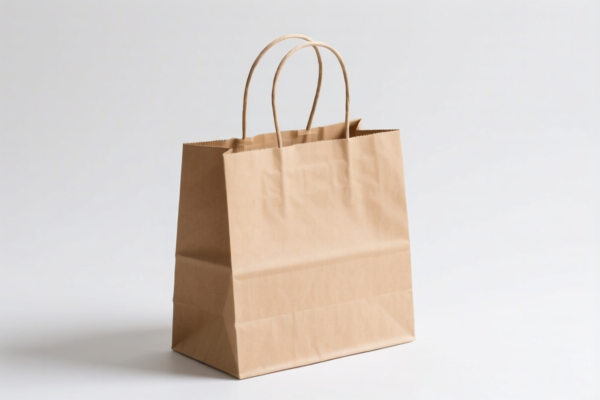
AI Analysis
🛍️ Paper Handbag (Collectibles)
🌐 HS Code Reference & Customs Clearance Guide | 2026 Latest Tariff Analysis | Professional Entry Strategy
📌 I. Product Definition & Classification: What Exactly is a "Paper Handbag"?
Paper handbags, especially those marketed as collectibles, are unique items that straddle the line between packaging materials and fashion accessories. In international trade, their classification depends heavily on material composition, structure, and primary function.
Key Distinction:
- Packaging Focus: If the bag is primarily used for carrying goods (gifts, retail items) and lacks durable structure or high-value materials → It is often classified under Chapter 48 (Paper/Paperboard).
- Accessory Focus: If the bag has a defined shape, handles, and is intended for personal use as a fashion item, even if made of paper → It may fall under Chapter 42 (Articles of Leather; Saddle Harness).
⚠️ Critical Note for Collectibles:
Many "collectible" paper handbags are treated as luxury or decorative items. However, customs authorities primarily look at the material and form. If it’s a flat-folded paper bag with simple handles, Chapter 48 is more likely. If it’s structured, lined, or designed for repeated personal use, Chapter 42 may apply.
📦 II. HS Code Classification Details (2026 Latest Tariff Reference)
| HS Code | Product Description | Key Features | Primary Material |
|---|---|---|---|
4823.90.86.80 |
Other paper articles, n.e.s. (incl. paper handbags) | General paper articles, including collectible paper bags not elsewhere specified. Often a "catch-all" for paper products. | Paper |
4819.40.00.40 |
Other bags and pouches, of paper or paperboard | Specifically for bags/pouches made of paper. Fits the functional description of a handbag. | Paper |
4202.29.10.00 |
Handbags with outer surface of paper | Classifies handbags where paper is the primary covering material. Focuses on the "handbag" form factor. | Paper (Covered) |
4819.30.00.40 |
Sacks and bags, of paper, with a base width ≥ 40cm | Specifically for larger bags/sacks. If the handbag is large (base ≥40cm), this code may apply. | Paper |
4202.29.50.00 |
Other handbags, n.e.s. (incl. those with paper surface) | A broader category for handbags not elsewhere specified. If the handbag doesn’t fit strict "paper-only" definitions, this may be used. | Mixed/Paper-covered |
🔍 Classification Logic:
- Chapters 48 vs. 42: Chapter 48 covers paper products (like bags/packaging). Chapter 42 covers articles of use (like handbags).
- If the bag is flimsy/packaging-style → Chapter 48 (4819.xxxxor4823.xxxx).
- If the bag is structured/fashion-style → Chapter 42 (4202.29.xx).
- "Collectible" Status: Does not change HS code. Customs still classifies by material and form.
💰 III. 2026 Latest Tariff Rate Breakdown (Including Surcharges)
✅ Applicable Country: United States (US)
✅ Origin: China (CN)
✅ Effective Date: November 10, 2025 (and subsequent imports)
🎯 1. 4823.90.86.80 — Other Paper Articles (Catch-All)
| Item | Content |
|---|---|
| Base Tariff | 0% (ad valorem) |
| USITC Surcharge | +25% (Section 301 Duties) |
| IEEPA Surcharge | +10% (Section 122 Duties for China) |
| Total Rate | 35.0% |
| Calculation | CIF Value × 35% |
| De Minimis Exemption | ❌ Not Eligible (Section 301 & 122 goods are excluded) |
| Legal Path | IEEPA:9903.01.25 → USITC:4823.90.86.80 → FOOTNOTE:9903.88.01 |
📌 Explanation:
- The 25% USITC surcharge is part of the Section 301 tariffs on Chinese imports.
- The 10% IEEPA surcharge is the additional "Section 122" tariff specifically targeting China.
- Total 35% is a high barrier for low-value paper goods.
🎯 2. 4819.40.00.40 — Paper Bags/Pouches
| Item | Content |
|---|---|
| Base Tariff | 0% |
| USITC Surcharge | +25% |
| IEEPA Surcharge | +10% |
| Total Rate | 35.0% |
| Calculation | CIF × 35% |
| De Minimis Exemption | ❌ Not Eligible |
| Legal Path | IEEPA:9903.01.24 → USITC:4819.40.00.40 → FOOTNOTE:9903.88.01 |
📌 Note:
- Identical tax treatment to4823.90.86.80.
- Preferred if the product is clearly a "bag" or "pouch" made of paper.
🎯 3. 4202.29.10.00 — Handbags with Paper Surface
| Item | Content |
|---|---|
| Base Tariff | 5.3% |
| USITC Surcharge | +25% |
| IEEPA Surcharge | +10% |
| Total Rate | 40.3% |
| Calculation | CIF × 40.3% |
| De Minimis Exemption | ❌ Not Eligible |
| Legal Path | IEEPA:9903.01.25 → USITC:4202.29.10.00 → FOOTNOTE:9903.88.01 |
📌 Critical Insight:
- Classifying under Chapter 42 results in a higher total rate (40.3%) due to the 5.3% base tariff.
- This code is used if the handbag is considered a "fashion accessory" rather than "packaging."
🎯 4. 4819.30.00.40 — Sacks/Bags ≥ 40cm Base Width
| Item | Content |
|---|---|
| Base Tariff | 0% |
| USITC Surcharge | +25% |
| IEEPA Surcharge | +10% |
| Total Rate | 35.0% |
| Calculation | CIF × 35% |
| De Minimis Exemption | ❌ Not Eligible |
| Legal Path | IEEPA:9903.01.24 → USITC:4819.30.00.40 → FOOTNOTE:9903.88.01 |
📌 Note:
- Use only if the handbag has a base width ≥ 40cm. Smaller bags should use4819.40.00.40.
🎯 5. 4202.29.50.00 — Other Handbags (Paper-Covered)
| Item | Content |
|---|---|
| Base Tariff | 7.8% |
| USITC Surcharge | +25% |
| IEEPA Surcharge | +10% |
| Total Rate | 42.8% |
| Calculation | CIF × 42.8% |
| De Minimis Exemption | ❌ Not Eligible |
| Legal Path | IEEPA:9903.01.25 → USITC:4202.29.50.00 → FOOTNOTE:9903.88.01 |
📌 Warning:
- This is the highest tax rate (42.8%).
- Use only if the bag is clearly a handbag but doesn’t fit the specific "paper surface" definition of4202.29.10.00.
🛠️ IV. Customs Clearance Practical Advice (Real-World Pitfall Guide)
✅ 1. Documentation Checklist (Essential)
| Document | Required | Notes |
|---|---|---|
| ✅ Product Specifications | ✔️ | Detail material (e.g., "100% kraft paper"), size, handle type. |
| ✅ Product Photos | ✔️ | Show front, back, inside, and handles. Clarify if it’s a "bag" or "packaging." |
| ✅ Commercial Invoice | ✔️ | Clearly state "Paper Handbag for Collectible/Decorative Use." Avoid vague terms like "Gift Bag" if it’s a fashion item. |
| ✅ Packing List | ✔️ | Include dimensions to verify if base width ≥ 40cm. |
| ✅ Certificate of Origin | ✔️ | Required for Section 301/122 duty assessments. |
| ✅ Third-Party Reports | ⚠️ Optional | Not usually required for paper, but useful if claiming non-paper components. |
✅ 2. Declaration Tips (Key Mantra)
🔥 "Material Defines Chapter, Form Defines Code!"
| Scenario | Correct HS Code | Incorrect Code | Consequence |
|---|---|---|---|
| Flimsy paper bag for gifts | 4819.40.00.40 (35%) |
4202.29.10.00 (40.3%) |
Overpayment of ~5.3% |
| Structured fashion handbag (paper cover) | 4202.29.10.00 (40.3%) |
4819.40.00.40 (35%) |
Underpayment → Penalties + Back Taxes |
| Large sack-like bag (≥40cm base) | 4819.30.00.40 (35%) |
4819.40.00.40 (35%) |
Same rate, but wrong description → Audit Risk |
| Unknown/Complex Material | 4202.29.50.00 (42.8%) |
4823.90.86.80 (35%) |
Overpayment if it should be Chapter 48. |
✅ 3. Special Cases
| Case | Handling Advice |
|---|---|
| Collectible with Metal/Plastic Handles | If handles are integral, it may still be classified under Chapter 48 if paper is dominant. If handles are leather, Chapter 42 is likely. |
| Lined Paper Bag | If lined with fabric, it may fall under 4202.29.50.00 (42.8%). Check lining percentage. |
| OEM/White Label | Provide design sheets to prove material composition. |
| Small Sample Shipments | Even samples are subject to 35-42.8% tariffs. No de minimis exemption for Section 301/122 goods. |
🌍 V. Global Market Comparison (2026 Latest)
| Country/Region | Recommended HS Code | Tariff Rate | Notes |
|---|---|---|---|
| 🇺🇸 USA | 4819.40.00.40 or 4202.29.10.00 |
35% - 42.8% | High Section 301/122 duties. |
| 🇨🇳 China | 4819.40.00.40 |
~10-15% | Lower base rate, no Section 301. |
| 🇪🇺 EU | 4819.40.00.40 or 4202.29.10.00 |
5-8% | No equivalent Section 301 duties. |
| 🇬🇧 UK | 4819.40.00.40 |
5-8% | Post-Brexit, no US-style surcharges. |
| 🇯🇵 Japan | 4819.40.00.40 |
3-6% | Low tariffs, no surcharges. |
📌 Conclusion:
- The US is the most expensive market for paper handbags due to Section 301 and 122 tariffs.
- Consider supply chain diversification (e.g., Vietnam, Thailand) if exporting to the US to avoid surcharges.
📌 VI. Common Errors & Pitfalls (Blood & Tears Lessons)
❌ Error 1: Classifying a structured paper handbag as 4819.40.00.40 (35%) when it should be 4202.29.10.00 (40.3%).
👉 Result: Underpayment → Customs audit, fines, and back taxes.
❌ Error 2: Claiming "de minimis" exemption for small paper handbags.
👉 Result: Seizure → Section 301/122 goods are not exempt under $800 de minimis.
❌ Error 3: Using vague terms like "Gift Bag" without material details.
👉 Result: Customs Detention → Authorities will request material breakdown, causing delays.
✅ Correct Practice:
"Paper Handbag, 100% Kraft Paper, Recyclable, Handle Type: Twisted Paper, Size: 15x10x20cm, Model: COLLECTIBLE-001"
🎯 VII. Conclusion: Precision Saves Money!
🎯 Key Takeaway:
🔹 "Paper Bag = Chapter 48 (35%) vs. Handbag = Chapter 42 (40-43%)."
🔹 "No De Minimis for China-Origin Paper Goods in the US."
🔹 "Collectible Status ≠ Tax Exemption."
📌 Pro Tip:
If your paper handbags are originating from Vietnam, Mexico, or Thailand, you may qualify for IEEPA Exemptions, reducing rates to 0-5%.
Recommendation: Apply for Advance Rulings before shipment to confirm HS code and duty liability.
📣 Take Action Now:
📞 Contact a Licensed Customs Broker + Provide Product Specs + Request Advance Ruling
🚀 Ensure smooth clearance, avoid penalties, and maximize profit margins!
✨ Professional Customs Clearance Starts with Accurate Classification!
💼 Every Percent of Duty Saved is Pure Profit!
Customer Reviews
About HS Code Classification
The Harmonized System (HS) is an internationally standardized nomenclature developed by the World Customs Organization (WCO) to classify traded products. Over 200 countries use the HS system as the basis for customs tariffs, trade statistics, and import/export regulations.
Each HS code follows a hierarchical structure:
- Chapter (2 digits) — Broad category of goods (e.g., Chapter 84: Machinery and Mechanical Appliances)
- Heading (4 digits) — More specific grouping within the chapter
- Subheading (6 digits) — Internationally standardized breakdown, used by all WCO member countries
- National subdivisions (8-10 digits) — Country-specific extensions for further classification, such as US HTSUS 10-digit codes
Correct HS code classification is essential for smooth customs clearance, accurate duty payment, and compliance with trade regulations. Misclassification can lead to customs delays, overpayment of duties, or penalties.
When importing from CN to US, the applicable tariff rates may include:
- Most-Favored-Nation (MFN) rate — The standard duty rate applied to WTO members
- General rate — Applied to countries without trade agreements
- Trade remedy duties — Additional tariffs such as Section 301 (anti-dumping), Section 232 (national security), or countervailing duties
The information provided on this page is for reference purposes only. For official classification, please consult with your local customs authority or a licensed customs broker.