Paper Index Labels
CN → US| HS Code | Tariff Rate | Origin | Destination | Doc |
|---|---|---|---|---|
| 4823903100 | 35.0% | CN | US | Official Doc |
| 4823908000 | 35.0% | CN | US | Official Doc |
| 4820104000 | 35.0% | CN | US | Official Doc |
| 4820900000 | 35.0% | CN | US | Official Doc |
| 4821904000 | 35.0% | CN | US | Official Doc |
Product Images

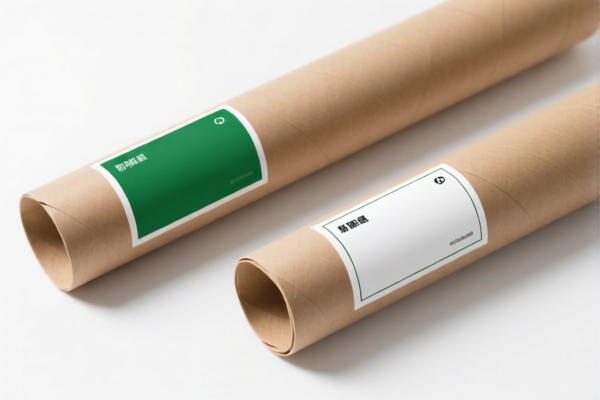
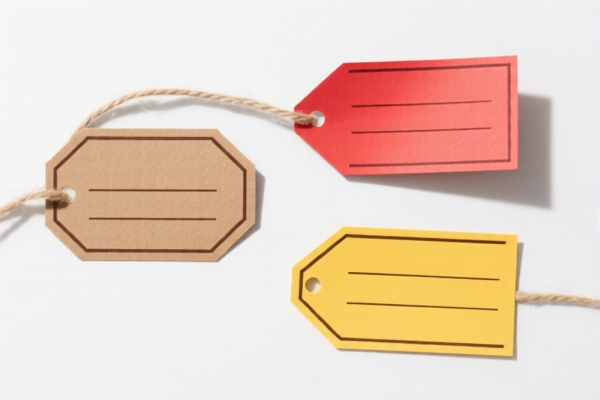

AI Analysis
📇 Paper Index Labels: HS Code Classification & US Import Tariff Guide (2026)
🌐 HS Code Reference & Clearance Guide | Latest 2026 Tariff Rules | Professional Strategy
📌 I. Product Definition: What are "Paper Index Labels"?
Paper Index Labels are adhesive or non-adhesive paper products used for organization, categorization, and quick reference in filing systems, books, binders, or retail shelving. They are distinct from standard labels because their primary function is structural organization or document indexing rather than simple identification or branding.
In international trade, they fall under Chapter 48 (Paper and Paperboard). The critical distinction lies in their form and specific use:
* Tabbed/Index Files: Pre-cut sheets with protruding tabs for file folders → Often 4820.10 or 4823.90.
* Sticker Index Tags: Small, adhesive-backed labels for marking spines or shelves → Often 4821.90 or 4823.90.
* Loose-Leaf Index Cards: Standalone cards for filing → Often 4820.90 or 4823.90.
⚠️ Key Distinction Point: - If the product is a pre-cut, shaped paper product (e.g., tabs, specific sizes) used for general labeling/organizing → HS 4823.90. - If the product is a stationery item designed specifically for recording or filing (e.g., index books, loose cards) → HS 4820.10 or 4820.90. - If the product is a self-adhesive label (stickers) used for tagging → HS 4821.90.
📦 II. HS Code Classification Matrix (2026 Latest Tariff)
| HS Code | Product Description | Application Scenario | Form/Key Feature |
|---|---|---|---|
4823.90.31.00 |
Paper Index Tabs | File folders, document organizers, archival systems | Paper-based, specifically designed as "other paper products" |
4823.90.80.00 |
Other Paper Index Labels | Retail shelf tags, custom-shaped markers, generic index strips | Other sizes/shapes, not specifically classified elsewhere |
4820.10.40.00 |
Paper Index (Loose) | Filing cabinets, library cards, organizational systems | Stationery/Recording purpose, often part of a system |
4820.90.00.00 |
Other Stationery Index | General office supplies, non-adhesive index cards | Stationery category, general use |
4821.90.40.00 |
Adhesive Index Labels | Shelf labels, barcode index tags, product identification | Label/Paper product, often self-adhesive |
🔍 Critical Note: -
4823.90vs4820.10: If the item is a tabbed insert or a cut-out shape specifically for indexing files,4823.90.31.00is often preferred. If it is a loose card or part of a stationery set,4820.10.40.00applies. -4821.90.40.00: Use this only if the product is explicitly a self-adhesive label (sticker) used for indexing. Non-adhesive paper tabs go to4823.
💰 III. 2026 US Tariff Rate Breakdown (China-Origin)
✅ Applicable Country: United States (US)
✅ Origin: China (CN)
✅ Effective Date: November 10, 2025 (and subsequent imports)
All five HS codes share the exact same tariff structure for Chinese-origin goods due to current trade policy (Section 301 + IEEPA).
🎯 1. 4823.90.31.00 – Paper Index Tabs
| Item | Details |
|---|---|
| Base Duty | 0.0% |
| Section 301 Duty | +25.0% |
| IEEPA Duty (122 Clause) | +10.0% |
| Total Effective Rate | 35.0% |
| De Minimis Exemption? | ❌ NO (deny_de_minimis) |
| Calculation | CIF Value × 35% |
| Legal Reference | Section 301: 9903.88.01 + IEEPA: 9903.01.24 |
📌 Explanation: - Base 0%: Paper products generally have low base duties under the Harmonized Tariff Schedule (HTSUS). - 35% Total: The combination of the 25% Section 301 tariff (targeting Chinese manufacturing) and the 10% IEEPA tariff (Executive Order 14117, effective Nov 2025) results in a significant cost increase. - No De Minimis: These items do not qualify for the $800 de minimis exemption. Even small shipments are subject to full duty payment at customs.
🎯 2. 4823.90.80.00 – Other Paper Index Labels
| Item | Details |
|---|---|
| Base Duty | 0.0% |
| Section 301 Duty | +25.0% |
| IEEPA Duty (122 Clause) | +10.0% |
| Total Effective Rate | 35.0% |
| De Minimis Exemption? | ❌ NO (deny_de_minimis) |
| Legal Reference | Section 301: 9903.88.01 + IEEPA: 9903.01.24 |
📌 Note: Same tariff treatment as
4823.90.31.00. The 25%+10% structure applies broadly to most Chinese-made paper products in this chapter.
🎯 3. 4820.10.40.00 – Paper Index (Stationery/Recording)
| Item | Details |
|---|---|
| Base Duty | 0.0% |
| Section 301 Duty | +25.0% |
| IEEPA Duty (122 Clause) | +10.0% |
| Total Effective Rate | 35.0% |
| De Minimis Exemption? | ❌ NO (deny_de_minimis) |
| Legal Reference | Section 301: 9903.88.01 + IEEPA: 9903.01.24 |
📌 Note: Even though this is classified under "Stationery," the trade remedies apply equally.
🎯 4. 4820.90.00.00 – Other Stationery Index
| Item | Details |
|---|---|
| Base Duty | 0.0% |
| Section 301 Duty | +25.0% |
| IEEPA Duty (122 Clause) | +10.0% |
| Total Effective Rate | 35.0% |
| De Minimis Exemption? | ❌ NO (deny_de_minimis) |
| Legal Reference | Section 301: 9903.88.01 + IEEPA: 9903.01.24 |
📌 Note: No special exemption for general stationery.
🎯 5. 4821.90.40.00 – Index Paper (Labels/Paper Products)
| Item | Details |
|---|---|
| Base Duty | 0.0% |
| Section 301 Duty | +25.0% |
| IEEPA Duty (122 Clause) | +10.0% |
| Total Effective Rate | 35.0% |
| De Minimis Exemption? | ❌ NO (deny_de_minimis) |
| Legal Reference | Section 301: 9903.88.01 + IEEPA: 9903.01.24 |
📌 Note: Even adhesive labels fall under the same high-tariff regime for Chinese goods.
🛠️ IV. Clearance Practical Advice (Avoiding Pitfalls)
✅ 1. Documentation Checklist (Mandatory)
| Document | Required? | Notes |
|---|---|---|
| ✅ Product Specification | ✔️ | Must clearly state material (paper), form (tabs/stickers/cards), and use (indexing/organizing). |
| ✅ Photos | ✔️ | Show the product in use, including any adhesive backing or tab shape. |
| ✅ Commercial Invoice | ✔️ | Must list HS Code and describe product accurately as "Paper Index Labels/Tabs." |
| ✅ Origin Certificate | ✔️ | Confirms origin as China (triggers the 35% duty). |
| ✅ Bill of Lading/Air Waybill | ✔️ | Standard shipping docs. |
📌 Tip: Do not describe the product vaguely as "Office Supplies." Customs may misclassify it, leading to delays. Be specific: "Paper Index Tabs, Non-Adhesive, for File Folders" or "Adhesive Paper Index Labels."
✅ 2. Classification Strategy
| Scenario | Recommended HS Code | Why? |
|---|---|---|
| Tabbed Inserts for Folders | 4823.90.31.00 |
Specifically "other paper products" designed as tabs. |
| Custom-Shaped Stickers | 4823.90.80.00 |
"Other sizes or shapes" of paper products. |
| Loose Index Cards | 4820.10.40.00 |
"Stationery for recording," typically cards. |
| Adhesive Shelf Tags | 4821.90.40.00 |
"Labels/Paper products" with adhesive. |
🔥 Golden Rule:
"Tabs go to 4823, Cards go to 4820, Stickers go to 4821."
Misclassification can lead to duties being reassessed or shipment delays.
✅ 3. Cost Calculation Example
Assume a shipment of 1,000 Paper Index Tabs (Value: $100 USD): - Base Duty: $0 - Section 301 (25%): $25 - IEEPA (10%): $10 - Total Duty: $35 - Total Landed Cost: $135 + Shipping/Handling
⚠️ Warning: Since
deny_de_minimisapplies, every single item is subject to the 35% duty, even if shipped individually.
🌍 V. Global Market Comparison (2026)
| Country | Recommended HS Code | Tariff (China Origin) | Notes |
|---|---|---|---|
| 🇺🇸 USA | 4823.90.31.00 etc. |
35% | Includes 25% Section 301 + 10% IEEPA. |
| 🇨🇳 China | 4823.90.31.00 etc. |
Varies (Export Side) | China does not tax exports for these items, but consider domestic VAT. |
| 🇪🇺 EU | 4823.90 series |
~4.5% | Standard EU duty for paper products. No US-style trade war tariffs. |
| 🇯🇵 Japan | 4823.90 series |
~0-5% | Generally low duties for paper products. |
| 🇦🇺 Australia | 4823.90 series |
~5% | Standard FTA or MFN rates may apply depending on origin. |
📌 Strategy:
If the US market is too costly due to 35% tariffs, consider: 1. Shifting Production: Manufacture in Vietnam, Thailand, or Mexico to avoid Section 301 tariffs (ensure substantial transformation). 2. Duty Drawback: If re-exporting, claim duty drawbacks where applicable. 3. Value Engineering: Reduce paper usage or switch to digital indexing solutions if possible.
📌 VI. Common Mistakes & Pitfalls
❌ Mistake 1: Claiming De Minimis Exemption
👉 Result: Customs will seize or assess duties on the entire shipment because paper index labels are explicitly excluded from the $800 exemption under current IEEPA rules.
❌ Mistake 2: Misclassifying Adhesive Labels as 4823.90
👉 Result: If they are self-adhesive, they should be 4821.90.40.00. While the tariff rate is the same (35%), incorrect classification can lead to customs audits or penalties.
❌ Mistake 3: Vague Description "Office Supplies"
👉 Result: Customs may assign a higher duty rate or require additional review, causing clearance delays.
✅ Correct Practice:
Use precise descriptions: "Paper Index Tabs, 1/5 Cut, Non-Adhesive, White, 100 pcs/Box" or "Adhesive Index Labels, 1x2 inch, Matte Finish."
🎯 VII. Conclusion: Navigate Tariffs with Precision
🎯 Key Takeaways:
🔹 Total Duty is 35% for all Chinese-origin paper index labels entering the US. 🔹 No De Minimis Exemption applies – small shipments are still taxed. 🔹 Classification Matters: Use
4823.90for tabs/shapes,4820.10for cards/stationery,4821.90for adhesive labels. 🔹 Plan Ahead: Consider supply chain diversification if tariff costs impact profitability.
📌 Pro Tip:
If your volume is high, consider applying for a Tariff Engineering review or Exclusion Petition (if available) or explore free trade agreements by sourcing from eligible countries (e.g., USMCA for Mexico/Canada).
📣 Action Required:
📞 Consult a licensed customs broker to confirm the final HS Code based on your specific product sample.
📄 Ensure all commercial invoices clearly state Product Name, Material, and Use to avoid customs queries.
🚀 Minimize Costs, Maximize Efficiency, Stay Compliant!
✨ Professional Clearance Starts with Accurate Classification!
💼 Every Percent Counts – Optimize Your Duty Strategy Today!
Customer Reviews
About HS Code Classification
The Harmonized System (HS) is an internationally standardized nomenclature developed by the World Customs Organization (WCO) to classify traded products. Over 200 countries use the HS system as the basis for customs tariffs, trade statistics, and import/export regulations.
Each HS code follows a hierarchical structure:
- Chapter (2 digits) — Broad category of goods (e.g., Chapter 84: Machinery and Mechanical Appliances)
- Heading (4 digits) — More specific grouping within the chapter
- Subheading (6 digits) — Internationally standardized breakdown, used by all WCO member countries
- National subdivisions (8-10 digits) — Country-specific extensions for further classification, such as US HTSUS 10-digit codes
Correct HS code classification is essential for smooth customs clearance, accurate duty payment, and compliance with trade regulations. Misclassification can lead to customs delays, overpayment of duties, or penalties.
When importing from CN to US, the applicable tariff rates may include:
- Most-Favored-Nation (MFN) rate — The standard duty rate applied to WTO members
- General rate — Applied to countries without trade agreements
- Trade remedy duties — Additional tariffs such as Section 301 (anti-dumping), Section 232 (national security), or countervailing duties
The information provided on this page is for reference purposes only. For official classification, please consult with your local customs authority or a licensed customs broker.