Paper Making Chemical Mixture
CN → US| HS Code | Tariff Rate | Origin | Destination | Doc |
|---|---|---|---|---|
| 380894 | 0.0% | CN | US | Official Doc |
| 382499 | 0.0% | CN | US | Official Doc |
Product Images


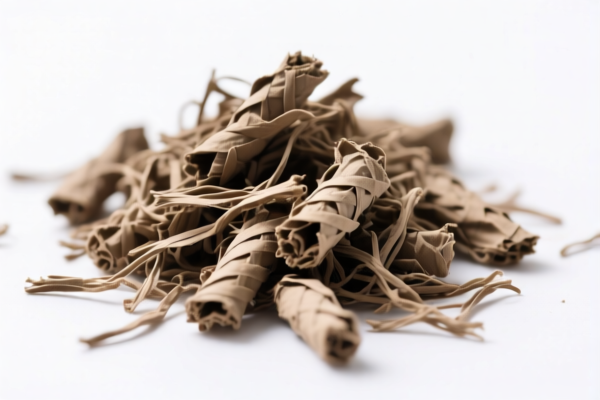
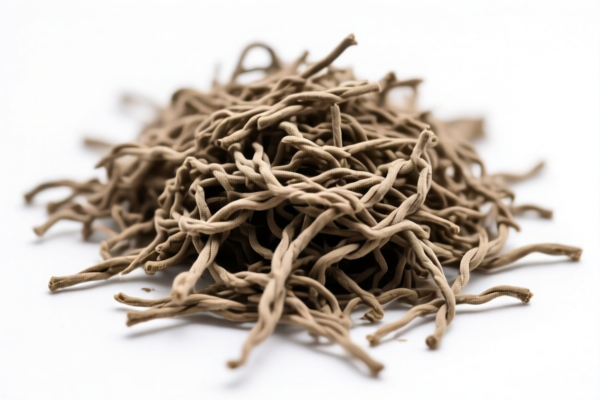
AI Analysis
🧪 Paper Making Chemical Mixture (纸浆化学品混合物)
🌐 HS Code Reference & Customs Clearance Guide | 2026 Latest Tariff Analysis | Professional-Level Clearance Strategy
📌 I. Product Definition & Classification: Do You Really Understand "Paper Making Chemicals"?
Paper making chemical mixtures are critical additives used in the paper manufacturing process to improve efficiency, quality, and cost-effectiveness. They are broadly categorized into two types based on their function and composition:
- Paper-Making Chemicals (Specific Additives): Chemicals specifically designed for the papermaking process, such as sizing agents (to control liquid absorption), retention aids (to keep fibers and fillers in the sheet), and dry strength agents. These are typically classified under Chapter 38 (Miscellaneous Chemical Products).
- Industrial Chemical Preparations (General Mixtures): Mixtures used in industrial processes that are not specifically described elsewhere. If they don't fit neatly into a specific subheading like sizing agents, they may fall under Other Chemical Products Not Elsewhere Specified or Included (N.E.S.I.).
⚠️ Key Distinction Point:
- If the product is specifically a sizing agent, retention aid, or other additive directly used in the papermaking process, it is likely classified under 3808.94 (if it fits the specific definition of paper-making chemicals) or more commonly under 3824.99 if it's a general mixture not specifically listed.
- Note: The provided data suggests 3808.94 is for "Other chemical products... used in the manufacture of paper, including paper-making chemicals... such as sizing agents, retention aids...". This is a specific heading for these additives.
- 3824.99 is a residual heading for "Other chemical products and preparations... including mixtures used in industrial processes... provided they are not specifically covered under other headings."
- Crucial: If the mixture is primarily a "paper-making chemical" as defined in 3808.94, it should go there. If it's a general industrial chemical mixture used in paper making but not specifically a "paper-making chemical" as defined in 3808.94, it may fall under 3824.99. However, the description for 3808.94 explicitly includes "paper-making chemicals," so this is the primary candidate for specific additives. 3824.99 is for when no other heading applies.
📦 II. HS Code Classification Details (2026 Latest Tariff Authoritative Comparison)
| HS Code | Product Description | Applicable Scenario | Specificity |
|---|---|---|---|
3808.94 |
Other chemical products, N.E.S.I., used in paper manufacture, including paper-making chemicals (e.g., sizing agents, retention aids) | Specific additives for papermaking: sizing, retention, wet/dry strength agents | ✅ Specific for papermaking additives |
3824.99 |
Other chemical products and preparations, N.E.S.I., including mixtures used in industrial processes, not specifically covered elsewhere | General industrial chemical mixtures used in papermaking but not fitting 3808.94's specific definition | ❌ Residual for general industrial mixtures |
🔍 Key Reminder:
- 3808.94 is the preferred classification for products explicitly described as "paper-making chemicals" like sizing agents and retention aids.
- 3824.99 is used only if the product is a general industrial chemical mixture used in papermaking but not specifically categorized under 3808.94.
- Misclassification Risk: Declaring a specific paper-making chemical (e.g., alum-based sizing agent) under 3824.99 may be rejected as it's too general. Conversely, declaring a general industrial cleaner under 3808.94 may be incorrect.
💰 III. 2026 Latest Tariff Rate Details (Including Surcharges & Policy Additions)
✅ Applicable Country: United States (US)
✅ Origin: China (CN)
✅ Effective Date: From November 10, 2025 (and subsequent imports)
🎯 1. 3808.94 —— Paper-Making Chemicals (Specific Additives)
| Item | Content |
|---|---|
| Base Tariff Rate | 0% (ad valorem) |
| USITC Additional Tariff | +25% (from USITC Footnote 9903.88.01) |
| IEEPA Additional Tariff | +10% (for China/Hong Kong products, effective from Nov 10, 2025) |
| Total Tariff Rate | 45% |
| Tax Calculation | CIF Value × 45% |
| De Minimis Exemption Applicable? | ❌ No (deny_de_minimis) |
| Legal Basis Path | IEEPA:9903.01.25 → IEEPA:9903.01.24 → USITC:3808.94 → FOOTNOTE:9903.88.01 |
📌 Explanation:
- The 25% USITC surcharge is part of the Section 301 tariffs under the US Trade Act.
- The 10% IEEPA surcharge is an additional tariff on Chinese products under the International Emergency Economic Powers Act.
- Total 45% is a very high tariff rate, requiring prior cost assessment!
🎯 2. 3824.99 —— Other Chemical Products & Preparations, N.E.S.I. (General Industrial Mixtures)
| Item | Content |
|---|---|
| Base Tariff Rate | 0% |
| USITC Additional Tariff | +25% |
| IEEPA Additional Tariff | +10% |
| Total Tariff Rate | 45% |
| Tax Calculation | CIF × 45% |
| De Minimis Exemption Applicable? | ❌ No |
| Legal Basis Path | IEEPA:9901.25 → IEEPA:9903.01.24 → USITC:3824.99 → FOOTNOTE:9903.88.01 |
📌 Note:
- Same as above, both codes under Chapter 38 face the same surcharges.
- Whether classified as specific paper-making chemicals (3808.94) or general industrial mixtures (3824.99), the total tariff is 45%.
- Classification Accuracy Still Matters: Correct HS code is essential for regulatory compliance, even if the tariff rate is the same. Misclassification can lead to penalties, delays, or audits.
🛠️ IV. Customs Clearance Practical Advice (Battle-Tested Pitfall Avoidance Guide)
✅ 1. Required Documentation List (All or Nothing)
| Document | Must Provide | Explanation |
|---|---|---|
| ✅ Product Specification Sheet | ✔️ | Include ingredients, concentration, pH, application method, and intended use in papermaking |
| ✅ Safety Data Sheet (SDS) | ✔️ | Mandatory for chemical products; confirms non-hazardous status if applicable |
| ✅ Certificate of Analysis (COA) | ✔️ | Proves composition matches declared specifications |
| ✅ Commercial Invoice | ✔️ | Must clearly state "Paper Making Chemical Mixture" or specific chemical names (e.g., "Polyacrylamide Retention Aid") |
| ✅ Packing List | ✔️ | Detail net/gross weight, number of packages, and packaging type |
| ✅ Origin Certificate (CO) | ✔️ | If non-Chinese origin, may qualify for preferential rates |
| ✅ Third-Party Test Report | ✔️ | FCC, REACH, or other relevant compliance certificates if required by end-market |
✅ 2. Declaration Tips (Key Mnemonics)
🔥 "Chemical Specifics, No Ambiguity! 'Paper Chemical' for 3808.94, 'General Mix' for 3824.99!"
| Scenario | Correct Declaration | Wrong Practice |
|---|---|---|
| Specific papermaking additive (e.g., sizing agent) | 3808.94 + Specific Name (e.g., "Alkyl Ketene Dimer Sizing Agent") |
Vague term "Chemical Mixture" → 3824.99 |
| General industrial chemical used in papermaking | 3824.99 + General Description (e.g., "Industrial Emulsion for Paper Coating") |
Mislabel as "Paper Chemical" → 3808.94 |
| Mixed declaration | Not Recommended | Splitting one product into multiple codes → Audit Risk |
| Vague Description | "Paper Chemicals" | No specific chemical name → Customs Query/Delay |
✅ 3. Special Cases Handling
| Scenario | Handling Advice |
|---|---|
| OEM Custom Blend | Provide client order + formulation details to justify classification |
| Regulatory Compliance | Ensure SDS is up-to-date; some chemicals may require additional approvals (e.g., TSCA in US) |
| High-Volume Shipments | Consider Advance Ruling from CBP to lock in HS code and tariff |
| Multi-Component Mixtures | Declare primary function; if primarily papermaking, lean towards 3808.94 |
🌍 V. Global Market Customs Clearance Comparison (2026 Latest)
| Country/Region | Recommended HS Code | Tariff | Certification Requirements | Notes |
|---|---|---|---|---|
| 🇺🇸 USA | 3808.94 or 3824.99 |
45% (China Origin) | TSCA Compliance | Same rate for both codes |
| 🇨🇳 China | 3808.94 or 3824.99 |
5-8% | No special certs | Lower base rate |
| 🇪🇺 EU | 3824.99 or 3808.94 |
0-6.5% | REACH Registration | Varies by substance |
| 🇬🇧 UK | 3808.94 or 3824.99 |
0-6.5% | UK REACH | Post-Brexit rules |
| 🇦🇺 Australia | 3808.94 or 3824.99 |
5% | AICIS Registration | Chemical inventory check |
📌 Conclusion:
- USA imposes the highest tariffs due to Section 301 and IEEPA surcharges.
- EU and UK may have lower base tariffs but require strict chemical registration (REACH/UK REACH).
- Classification accuracy is critical for compliance, even if tariff rates are similar across regions.
📌 VI. Common Errors & Pitfall Avoidance (Lessons Learned)
❌ Error 1: Using vague description like "Chemical Mixture"
👉 Consequence: Customs query, delay, potential reclassification → Penalties
❌ Error 2: Declaring specific papermaking chemical under 3824.99
👉 Consequence: Incorrect classification → Audit Risk
❌ Error 3: Omitting SDS or COA
👉 Consequence: Clearance blocked → Return/Shipment Delay
❌ Error 4: Not checking TSCA/REACH compliance
👉 Consequence: Regulatory violation → Fines/Confiscation
✅ Correct Practice:
"Paper Making Chemical Mixture: Polyacrylamide-based Retention Aid, 30% Active Content, for Paper Mill Use, SDS Attached, TSCA Compliant"
🎯 VII. Conclusion: Precise Classification Saves Money and Time!
🎯 Key Takeaways:
🔹 "Be Specific! 'Paper Chemical' gets 3808.94, 'General Mix' gets 3824.99!"
🔹 "45% Tariff in the US – Plan Ahead! Advance Ruling Recommended!"
🔹 "SDS and COA are Non-Negotiable for Chemical Products!"
📌 Pro Tip:
If your chemical mixture originates from Vietnam, Mexico, or Thailand, you may be eligible for IEEPA Exemptions, reducing the tariff to 0%-5%.
Consider applying for an Advance Ruling from CBP to ensure correct classification and avoid post-clearance audits.
📣 Take Action Now:
📞 Consult a Professional Customs Broker + Provide Product Specs + Apply for Advance Ruling
🚀 Ensure Smooth Clearance, Efficient Trade, and Maximized Profit Margins!
✨ Professional Clearance Starts with Accurate Classification!
💼 Every Cent Saved is a Cent Earned!
Customer Reviews
About HS Code Classification
The Harmonized System (HS) is an internationally standardized nomenclature developed by the World Customs Organization (WCO) to classify traded products. Over 200 countries use the HS system as the basis for customs tariffs, trade statistics, and import/export regulations.
Each HS code follows a hierarchical structure:
- Chapter (2 digits) — Broad category of goods (e.g., Chapter 84: Machinery and Mechanical Appliances)
- Heading (4 digits) — More specific grouping within the chapter
- Subheading (6 digits) — Internationally standardized breakdown, used by all WCO member countries
- National subdivisions (8-10 digits) — Country-specific extensions for further classification, such as US HTSUS 10-digit codes
Correct HS code classification is essential for smooth customs clearance, accurate duty payment, and compliance with trade regulations. Misclassification can lead to customs delays, overpayment of duties, or penalties.
When importing from CN to US, the applicable tariff rates may include:
- Most-Favored-Nation (MFN) rate — The standard duty rate applied to WTO members
- General rate — Applied to countries without trade agreements
- Trade remedy duties — Additional tariffs such as Section 301 (anti-dumping), Section 232 (national security), or countervailing duties
The information provided on this page is for reference purposes only. For official classification, please consult with your local customs authority or a licensed customs broker.