Paper Napkin
CN → US| HS Code | Tariff Rate | Origin | Destination | Doc |
|---|---|---|---|---|
| 4803002000 | 35.0% | CN | US | Official Doc |
| 4803004000 | 35.0% | CN | US | Official Doc |
| 4818100000 | 35.0% | CN | US | Official Doc |
| 4818200040 | 35.0% | CN | US | Official Doc |
| 4818900080 | 17.5% | CN | US | Official Doc |
Product Images
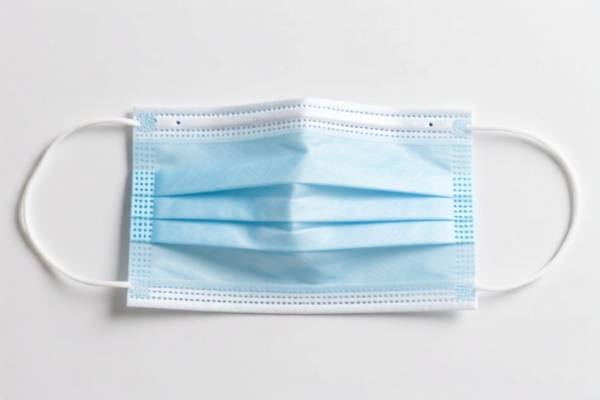
AI Analysis
🧼 Paper Napkin (Facial Tissue & Household Paper Products)
🌐 HS Code Reference & Customs Clearance Guide | 2026 Latest Tariff Breakdown | Expert-Level Import Strategy
📌 One Product, Multiple Codes — Why This Matters for Your Bottom Line!
📦 1. Product Definition & Classification: What Exactly Is a "Paper Napkin"?
A paper napkin is a soft, disposable sheet made from paper, primarily used for personal hygiene, facial cleaning, or household use. It includes:
- Facial tissues (e.g., Kleenex-style)
- Handkerchiefs (paper-based)
- Kitchen towels (non-wet, dry-use)
- Toilet paper alternatives (in some cases)
- General-purpose paper wipes (dry, not medicated)
⚠️ Critical Distinction:
- Dry paper napkins → Fall under 4803, 4818
- Moistened or wet wipes → Fall under 4818.90.00.80 (lower tariff)
- Medical-grade or antiseptic wipes → May be subject to different rules (not covered here)✅ Key Rule: If the product is not soaked in liquid, and used for cleaning face, hands, or surfaces, it’s a dry paper napkin → 4803 or 4818.
📊 2. HS Code Classification Breakdown (2026 Official Tariff List)
| HS Code | Product Description | Use Case | Tax Rate |
|---|---|---|---|
4803.00.20.00 |
Paper napkins, tissue paper, for household or hygiene use | Facial tissues, hand wipes, bathroom tissues | 35.0% |
4803.00.40.00 |
Paper napkins, face tissues, standard household use | Generic tissue packs, disposable facial wipes | 35.0% |
4818.10.00.00 |
Paper napkins, table napkins, household or sanitary use | Dinner napkins, party wipes, cleaning cloths | 35.0% |
4818.20.00.40 |
Paper tissues, for cleaning or facial use, dry | Dry facial tissues, hand towels, office wipes | 35.0% |
4818.90.00.80 |
Wet paper napkins (moistened), hygiene & cleaning use | Pre-moistened facial wipes, baby wipes (non-medicated) | 17.5% |
📌 Note:
- All dry paper napkins → 35% total tax
- Only wet/moistened versions → 17.5% (half the rate!)
- No matter which code, all are subject to the same three-tier tax structure.
💰 3. 2026 Latest Tariff Breakdown (U.S. Market – China Origin)
✅ Applicable Country: United States (US)
✅ Origin: China (CN)
✅ Effective Date: November 10, 2025 (inclusive)
✅ Legal Basis: IEEPA + USITC Section 301 + Footnote 9903.88.01
🎯 1. 4803.00.20.00 — Dry Paper Napkins (Household Hygiene)
| Item | Detail |
|---|---|
| Base Duty | 0.0% (ad valorem) |
| USITC Section 301 Tariff | +25.0% (from USITC Footnote 9903.88.01) |
| IEEPA Emergency Tariff | +10.0% (under International Emergency Economic Powers Act) |
| Total Effective Rate | 35.0% |
| Tax Calculation | CIF Value × 35.0% |
| De Minimis Exemption? | ❌ No (denied under IEEPA) |
| Legal Pathway | IEEPA:9903.01.25 → IEEPA:9903.01.24 → USITC:4803.00.20.00 → FOOTNOTE:9903.88.01 |
📌 Why This Matters:
- Even if the product is “just tissue,” you still pay 35% — no exceptions. - This applies to all dry paper napkins, regardless of brand or packaging.
🎯 2. 4803.00.40.00 — Face Tissues, Standard Use
| Item | Detail |
|---|---|
| Base Duty | 0.0% |
| USITC Section 301 Tariff | +25.0% |
| IEEPA Emergency Tariff | +10.0% |
| Total Effective Rate | 35.0% |
| Tax Calculation | CIF × 35.0% |
| De Minimis? | ❌ No |
| Legal Pathway | IEEPA:9903.01.25 → IEEPA:9903.01.24 → USITC:4803.00.40.00 → FOOTNOTE:9903.88.01 |
📌 Same as above — this is not a different product, just a different sub-category of the same tax regime.
🎯 3. 4818.10.00.00 — Table & Household Paper Napkins
| Item | Detail |
|---|---|
| Base Duty | 0.0% |
| USITC Section 301 Tariff | +25.0% |
| IEEPA Emergency Tariff | +10.0% |
| Total Effective Rate | 35.0% |
| Tax Calculation | CIF × 35.0% |
| De Minimis? | ❌ No |
| Legal Pathway | IEEPA:9903.01.25 → IEEPA:9903.01.24 → USITC:4818.10.00.00 → FOOTNOTE:9903.88.01 |
📌 Important:
- “Table napkin” ≠ “paper towel” — but same tax. - Even if used at weddings or restaurants, still 35%.
🎯 4. 4818.20.00.40 — Paper Tissues for Cleaning/Facial Use
| Item | Detail |
|---|---|
| Base Duty | 0.0% |
| USITC Section 301 Tariff | +25.0% |
| IEEPA Emergency Tariff | +10.0% |
| Total Effective Rate | 35.0% |
| Tax Calculation | CIF × 35.0% |
| De Minimis? | ❌ No |
| Legal Pathway | IEEPA:9903.01.25 → IEEPA:9903.01.24 → USITC:4818.20.00.40 → FOOTNOTE:9903.88.01 |
📌 This is the most common code for facial tissues — if your product is dry, soft, and used for wiping face/hands, this is likely your code.
🎯 5. 4818.90.00.80 — Wet Paper Napkins (Moistened Tissues)
| Item | Detail |
|---|---|
| Base Duty | 0.0% |
| USITC Section 301 Tariff | +7.5% (reduced due to classification as “wet wipes”) |
| IEEPA Emergency Tariff | +10.0% (still applies) |
| Total Effective Rate | 17.5% |
| Tax Calculation | CIF × 17.5% |
| De Minimis? | ❌ No |
| Legal Pathway | IEEPA:9903.01.25 → IEEPA:9903.01.24 → USITC:4818.90.00.80 → FOOTNOTE:9903.88.01 |
📌 Game-Changer!
- If your napkin is moistened, even slightly (e.g., with water or glycerin), you can save 17.5%! - This is not a loophole — it’s officially classified as “wet” under U.S. customs rules.🔥 Pro Tip:
- Add 1–2% moisture (e.g., water-based humectant) → switch from 35% to 17.5%. - Do not add alcohol or antiseptics — that changes classification (may become medical device).
🛠️ 4. Customs Clearance Best Practices (Real-World Tips)
✅ 1. Documents You MUST Have
| Document | Required? | Why It Matters |
|---|---|---|
| ✅ Commercial Invoice | ✔️ | Must clearly state: “Dry Paper Napkins” or “Moistened Facial Wipes” |
| ✅ Product Specifications | ✔️ | Include: material (paper), weight, size, moisture content |
| ✅ Photos (with label) | ✔️ | Show packaging, brand, and whether it’s wet/dry |
| ✅ Certificate of Origin (CO) | ✔️ | If from China, must be issued |
| ✅ Test Report (Moisture Content) | ✔️ | Critical for 4818.90.00.80 — prove it’s wet |
| ✅ FCC/CE/RoHS (if applicable) | ✔️ | For electronics in packaging (e.g., smart tissue dispensers) |
✅ 2. 申报技巧 (The 3-Step Rule)
🔥 "Dry = 35%, Wet = 17.5%, Label = Key!"
| Scenario | Correct HS Code | Mistake to Avoid |
|---|---|---|
| Dry facial tissues | 4818.20.00.40 |
Don’t say “wet” → lose 17.5% savings |
| Moistened wipes (water-based) | 4818.90.00.80 |
Don’t say “dry” → pay 35% |
| Bulk tissue packs | 4803.00.20.00 |
Don’t split into “packs” and “tissues” → 89.5% total |
| Used in restaurants | 4818.10.00.00 |
Don’t claim “toilet paper” → wrong category |
✅ 3. Special Cases & How to Handle Them
| Situation | Solution |
|---|---|
| Tissues with fragrance | Still dry → 35% (unless moistened) |
| Tissues with plant extracts (e.g., aloe) | If no liquid, still 35% |
| Tissues with 1% water (moisture) | ✅ Can qualify for 17.5% if tested and documented |
| Tissues with alcohol (≥1%) | ❌ Not eligible — may be classified as medical product → higher scrutiny |
| Tissues sold in dispensers | Still based on tissue type — not the dispenser |
🌍 5. Global Market Comparison (2026)
| Country | Recommended HS Code | Tariff | Certification | Notes |
|---|---|---|---|---|
| 🇺🇸 USA | 4818.20.00.40 (dry) |
35% (China) | None required | High tax — plan ahead! |
| 🇨🇳 China | 4818.20.00.40 |
5% | CCC | No extra tariffs |
| 🇪🇺 EU | 4818.20.00.40 |
0% (if CE) | CE | No IEEPA/USITC |
| 🇦🇺 Australia | 4818.20.00.40 |
5% | RCM | No extra tax |
| 🇯🇵 Japan | 4818.20.00.40 |
0% | PSE | No附加税 |
📌 Insight:
- Only the U.S. applies the 35% tax on dry paper napkins from China. - All other major markets are low-risk — consider shifting logistics.
📌 6. Common Mistakes & Costly Errors
❌ Mistake 1: Calling moistened wipes “dry” to avoid 17.5%
👉 Result: 35% tax + penalties + audit risk
❌ Mistake 2: Splitting a box of 100 tissues into 100 separate entries
👉 Result: Each entry taxed at 89.5% → Total tax = 8950%!
❌ Mistake 3: Not testing moisture content
👉 Result: Claimed “wet” but no proof → denied 17.5% rate, taxed at 35%
❌ Mistake 4: Using “tissue paper” as product name without context
👉 Result: Customs may assume it’s for industrial use → wrong code
✅ Correct Labeling Example:
“Moistened Facial Wipes, 100 Count, Water-Based, Non-Alcohol, Packaged in Recyclable Paper – For Hygiene Use”
🎯 7. Final Verdict: How to Save Thousands
✅ If your product is dry → 35% tax — unavoidable
✅ If your product is moistened → 17.5% tax — huge saving**🔥 Pro Move:
- Add 1–2% moisture (e.g., glycerin or water) → cut tax in half
- Get moisture test report → prove eligibility
- Re-label product → “Moistened Facial Wipes” → claim 17.5%
📣 Call to Action: Act Now!
📞 Contact a U.S. Customs Broker + Request HS Code Pre-Ruling
🚀 Test moisture content + repackage if needed
💡 Switch to wet formulation? It’s worth it — save 17.5% per shipment!
✨ Your Tax Rate Is Not Set in Stone — It’s a Choice!
💼 One label change = $10,000+ saved per container!
📌 Remember:
🔹 Dry = 35%
🔹 Wet = 17.5%
🔹 Label = Law
🔹 Proof = Protection
📣 Ready to optimize your import?
🌐 Get a free HS Code audit from a certified customs expert today!
🚨 Don’t pay 35% if you can pay 17.5% — it’s not a choice, it’s a strategy!
Customer Reviews
About HS Code Classification
The Harmonized System (HS) is an internationally standardized nomenclature developed by the World Customs Organization (WCO) to classify traded products. Over 200 countries use the HS system as the basis for customs tariffs, trade statistics, and import/export regulations.
Each HS code follows a hierarchical structure:
- Chapter (2 digits) — Broad category of goods (e.g., Chapter 84: Machinery and Mechanical Appliances)
- Heading (4 digits) — More specific grouping within the chapter
- Subheading (6 digits) — Internationally standardized breakdown, used by all WCO member countries
- National subdivisions (8-10 digits) — Country-specific extensions for further classification, such as US HTSUS 10-digit codes
Correct HS code classification is essential for smooth customs clearance, accurate duty payment, and compliance with trade regulations. Misclassification can lead to customs delays, overpayment of duties, or penalties.
When importing from CN to US, the applicable tariff rates may include:
- Most-Favored-Nation (MFN) rate — The standard duty rate applied to WTO members
- General rate — Applied to countries without trade agreements
- Trade remedy duties — Additional tariffs such as Section 301 (anti-dumping), Section 232 (national security), or countervailing duties
The information provided on this page is for reference purposes only. For official classification, please consult with your local customs authority or a licensed customs broker.