Paper Product (HS Code 4810297035)
CN → US| HS Code | Tariff Rate | Origin | Destination | Doc |
|---|---|---|---|---|
| 4802552000 | 35.0% | CN | US | Official Doc |
| 4801000120 | 35.0% | CN | US | Official Doc |
| 4810225080 | 35.0% | CN | US | Official Doc |
| 4823908680 | 35.0% | CN | US | Official Doc |
| 4823906700 | 35.0% | CN | US | Official Doc |
| 4802582040 | 35.0% | CN | US | Official Doc |
| 4810227040 | 35.0% | CN | US | Official Doc |
Product Images

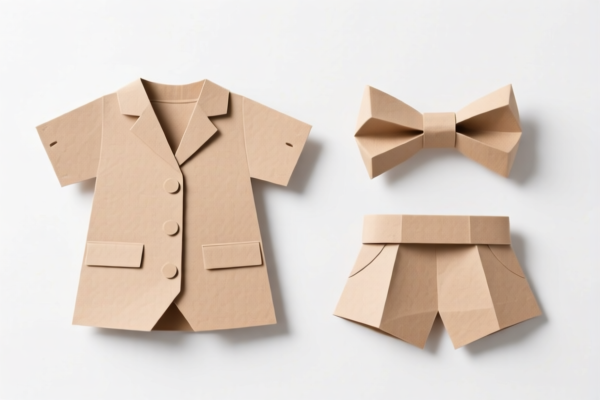


AI Analysis
📄 Paper Products (Generic Paper & Cardboard)
🌐 HS Code Reference & Customs Clearance Guide | 2026 Latest Tariff Analysis | Professional Clearance Strategy
📌 I. Product Definition & Classification: Do You Really Understand "Paper"?
"Paper," in the context of international trade, is a broad category that covers everything from simple newsprint to specialized drawing paper and coated cardboard. The specific HS Code depends heavily on the material composition, coating status, mechanical fiber content, and specific use.
Since the user input was generic "Paper Product," the data provided highlights several potential classifications ranging from specific uses (drawing paper) to broad catch-all categories. All identified codes share the same material base: Paper/Cardboard.
⚠️ Key Distinction Points:
- Specific Use: If it's for drawing/sketching → 4802.55.20.00
- Standard Newsprint: If it's standard newspaper printing → 4801.00.01.20
- Coated/Light Coated: If it has a clay or polymer coating → 4810.22.70.40 or 4810.22.50.80
- Catch-All/Others: If it doesn't fit specific descriptions → 4823.90.86.80 or 4823.90.67.00
📦 II. HS Code Classification Details (2026 Latest Tariff Authority Comparison)
| HS Code | Product Description | Application Scenario | Attribute Match with Input |
|---|---|---|---|
4802.55.20.00 |
Drawing or sketching paper (Paper) | Art supplies, drafting, sketches | ✅ Direct Match: "Paper" for "Drawing Paper" |
4801.00.01.20 |
Newsprint, unrolled or in sheets | Newspaper printing, standard bulk paper | ✅ Direct Match: "Paper" as "Standard Newsprint" |
4810.22.50.80 |
Coated paper/cardboard (Other) | High-quality printing, packaging, brochures | ✅ Material Match: "Paper" fits "Paper/Cardboard" category |
4823.90.86.80 |
Other paper, paperboard, cut to size (Catch-all) | Miscellaneous paper items not elsewhere specified | ✅ Material Match: "Paper" as a catch-all category |
4823.90.67.00 |
Other paper, paperboard, cut to size (Other) | General purpose other paper products | ✅ Material Match: "Paper" as a catch-all item |
4802.58.20.40 |
Other paper (Paper/Uncoated) | General uncoated paper, stationery | ✅ Direct Match: "Paper" matches material and classification |
4810.22.70.40 |
Light-coated paper (Mechanical fiber >10%) | Magazines, catalogs, light-coated printing paper | ✅ Inferred Match: "Paper" fits "Mechanical fiber content >10% light-coated paper" |
🔍 Important Reminder:
- The term "Paper" is generic. Customs will scrutinize the specific type (coated vs. uncoated, mechanical vs. chemical fibers).
- If the product is coated, it likely falls under 4810.
- If it is for specific use (e.g., drawing), it falls under 4802.
- If it is generic, it may fall under the 4823 catch-all, but this carries higher scrutiny.
💰 III. 2026 Latest Tariff Rate Details (Including Surtaxes & Policy Add-ons)
✅ Applicable Country: United States (US)
✅ Country of Origin: China (CN)
✅ Effective Date: From November 10, 2025 (including subsequent imports)
🎯 1. General Tax Structure for All Identified HS Codes
All HS codes listed in the data share the same tariff structure due to the "122 Clause" and USITC Section 301 tariffs targeting Chinese paper products.
| Item | Content |
|---|---|
| Base Tariff | 0.0% (Ad Valorem) |
| USITC Surtax (Section 301) | +25.0% |
| IEEPA Surtax (Clause 122) | +10.0% |
| Total Tariff Rate | 35.0% |
| Tax Calculation | CIF Value × 35% |
| De Minimis Eligibility | ❌ Not Eligible (Deny De Minimis) |
| Legal Basis Path | USITC: [HS Code] → FOOTNOTE: 9903.88.01 (25%) → IEEPA:9903.01.25/24 (10%) |
📌 Explanation:
- "USITC Surtax 25%": Comes from the "Additional Duties" under U.S. Trade Law Section 301.
- "IEEPA 10%": Additional duty against Chinese/HK products under the International Emergency Economic Powers Act.
- Total 35%: This is a high tariff rate. Must be accounted for in cost calculations!
- No Exemptions: De Minimis (Section 321) is explicitly denied for these goods.
🛠️ IV. Customs Clearance Practical Advice (Battle-Tested Pitfall Avoidance Guide)
✅ 1. Required Documentation Checklist (None Can Be Missing)
| Document | Mandatory | Explanation |
|---|---|---|
| ✅ Product Specification Sheet | ✔️ | Must specify: Material (wood pulp/chemical), Coating status, Weight (GSM), Mechanical fiber content. |
| ✅ Commercial Invoice | ✔️ | Clearly state: "Paper Product," HS Code, Origin: China. |
| ✅ Packing List | ✔️ | Detail carton dimensions, gross/net weight. |
| ✅ Certificate of Origin (CO) | ✔️ | Essential for proving origin. If not CN, rates may differ. |
| ✅ Product Photos | ✔️ | Clear images showing texture, coating, and packaging. |
| ✅ Third-Party Test Report | ✔️ | If claiming "Mechanical Fiber >10%" or specific coating, a lab report helps justify the HS Code. |
✅ 2. Declaration Tips (Key Mnemonics)
🔥 "Be Specific, Don't Be Generic! 'Paper' is Too Broad!"
| Scenario | Correct Declaration | Wrong Practice |
|---|---|---|
| Drawing Paper | 4802.55.20.00 - "Drawing Paper, Uncoated" |
Just "Paper" → Risk of reclassification to higher tariff |
| Newsprint | 4801.00.01.20 - "Newsprint, Standard" |
Mislabeling as "Coated Paper" → Wrong code, penalty |
| Coated Paper | 4810.22.70.40 - "Light-Coated Paper, Mech. Fiber >10%" |
Omitting "Coated" or "Fiber Content" → Customs may downgrade/up-grade |
| Miscellaneous Paper | 4823.90.86.80 - "Other Paper, Cut to Size" |
Over-generalizing |
✅ 3. Special Case Handling
| Scenario | Handling Advice |
|---|---|
| Mixed Paper Products | If a shipment contains both "Drawing Paper" and "Newsprint," separate HS Codes. Do not mix under one catch-all code. |
| Coated vs. Uncoated | Critical distinction. Coated paper falls under 4810, uncoated under 4802 or 4823. Misclassification leads to 35% tax vs. potential penalties. |
| Mechanical Fiber Content | For 4810.22.70.40, proof that mechanical fiber >10% is key. Provide lab test results if questioned. |
| Catch-All Codes (4823) | Use only if the product truly doesn't fit other categories. Customs may challenge "generic" declarations. |
🌍 V. Global Main Market Clearance Comparison (2026 Latest)
| Country/Region | Recommended HS Code | Tariff (China Origin) | Certification Requirements | Notes |
|---|---|---|---|---|
| 🇺🇸 USA | 4802.55.20.00 etc. |
35% (All listed codes) | No specific agency cert. | High Tariff: 25% (Section 301) + 10% (IEEPA). No De Minimis. |
| 🇨🇳 China | 4802.55.20.00 etc. |
~5-6% | No special cert. | Standard import duty. |
| 🇪🇺 EU | 4802.55.20.00 etc. |
~6.5% | CE (if applicable), REACH | No Section 301 tariffs. |
| 🇬🇧 UK | 4802.55.20.00 etc. |
~6.5% | UKCA (if applicable) | Post-Brexit tariffs apply. |
| 🇦🇺 Australia | 4802.55.20.00 etc. |
~5% | No special cert. | No major surtaxes. |
📌 Conclusion:
- USA is the most challenging market for Chinese paper products due to the 35% total tariff.
- EU, UK, Australia, and China have significantly lower tariffs (5-7%).
- Strategy: If targeting the US, ensure accurate HS Code classification to avoid penalties. Consider supply chain adjustments if margins are thin.
📌 VI. Common Errors & Pitfall Guide (Blood & Tears Lessons)
❌ Error 1: Declaring "Paper" without specifying type (coated/uncoated, use)
👉 Consequence: Customs may reclassify to a higher tariff or impose penalties for inaccurate declaration.
❌ Error 2: Ignoring the 35% Total Tariff in cost calculations
👉 Consequence: Profit margin wipeout. 35% is significant!
❌ Error 3: Using Catch-All Code 4823 for specific products like "Drawing Paper"
👉 Consequence: Customs may reject or reclassify to 4802.55.20.00, causing delays and potential fines.
❌ Error 4: Assuming De Minimis applies
👉 Consequence: Deny De Minimis. Even small shipments are subject to the 35% tariff.
✅ Correct Approach:
"Drawing Paper, Uncoated, White, 500 Sheets, A4 Size, For Artistic Use, Model XYZ, Origin: China"
🎯 VII. Conclusion: Professional Declaration, Save Time & Money!
🎯 Remember Mnemonics:
🔹 "Specific Type, Not Generic 'Paper'!"
🔹 "35% Tariff for US, No De Minimis!"
🔹 "Coated? Check 4810. Drawing? Check 4802. Generic? Check 4823."
📌 Pro Tip:
If your paper products are originating from Vietnam, Mexico, Thailand, or Malaysia, you may apply for IEEPA Exemption, reducing tariffs to 0-5%.
Recommendation: Apply for an Advance Ruling (Pre-classification) to avoid customs disputes.
📣 Immediate Action:
📞 Contact a professional customs broker + Provide Product Specs + Apply for HS Code Advance Ruling
🚀 Ensure your paper products clear customs smoothly, efficiently, and profitably!
✨ Professional Clearance Starts with Precise Classification!
💼 Every cent of cost deserves accurate calculation!
Customer Reviews
About HS Code Classification
The Harmonized System (HS) is an internationally standardized nomenclature developed by the World Customs Organization (WCO) to classify traded products. Over 200 countries use the HS system as the basis for customs tariffs, trade statistics, and import/export regulations.
Each HS code follows a hierarchical structure:
- Chapter (2 digits) — Broad category of goods (e.g., Chapter 84: Machinery and Mechanical Appliances)
- Heading (4 digits) — More specific grouping within the chapter
- Subheading (6 digits) — Internationally standardized breakdown, used by all WCO member countries
- National subdivisions (8-10 digits) — Country-specific extensions for further classification, such as US HTSUS 10-digit codes
Correct HS code classification is essential for smooth customs clearance, accurate duty payment, and compliance with trade regulations. Misclassification can lead to customs delays, overpayment of duties, or penalties.
When importing from CN to US, the applicable tariff rates may include:
- Most-Favored-Nation (MFN) rate — The standard duty rate applied to WTO members
- General rate — Applied to countries without trade agreements
- Trade remedy duties — Additional tariffs such as Section 301 (anti-dumping), Section 232 (national security), or countervailing duties
The information provided on this page is for reference purposes only. For official classification, please consult with your local customs authority or a licensed customs broker.