Paper Products (HS 4823908680)
CN → US| HS Code | Tariff Rate | Origin | Destination | Doc |
|---|---|---|---|---|
| 4802552000 | 35.0% | CN | US | Official Doc |
| 4810225080 | 35.0% | CN | US | Official Doc |
| 4823908680 | 35.0% | CN | US | Official Doc |
| 4823906700 | 35.0% | CN | US | Official Doc |
| 4802582040 | 35.0% | CN | US | Official Doc |
| 4810227040 | 35.0% | CN | US | Official Doc |
Product Images
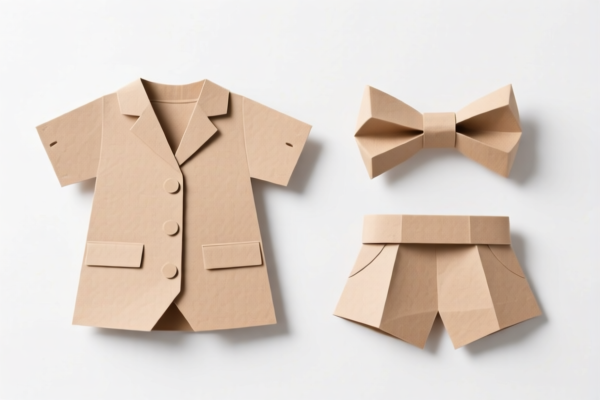



AI Analysis
📜 Paper Products (HS Code: 4823.90.86.80)
🌐 HS Code Reference & Customs Clearance Guide | 2026 Latest Tariff Analysis | Professional Strategy
📌 I. Product Definition & Classification: What Exactly Are "Paper Products"?
Paper products are versatile materials derived primarily from wood pulp or other fibrous materials. In international trade, they are broadly categorized based on coating status, fiber content, and finished form. The HS Code 4823.90.86.80 falls under Chapter 48 (Paper and paperboard), specifically within the subheading for other paper, paperboard, cut to size or shape, other than goods of headings 4801 to 4805.
⚠️ Key Distinction:
- If the paper is uncoated and primarily used for writing/drawing → It may belong to 4802 or 4810.
- If the paper is coated (light or heavy) → It may belong to 4810 or 4811.
- If the paper is cut, shaped, or processed but doesn't fit specific primary headings (like printed matter or special industrial paper), it often falls into the "Other" or "Niche/Residual" categories like 4823.
For 4823.90.86.80, the goods are considered paper products that do not fit neatly into the primary categories of uncoated writing paper, coated paper, or paperboard. They are often used as "catch-all" or specific niche items where the exact chemical or fiber composition isn't the primary classifier, but the material is unmistakably Paper.
📦 II. HS Code Classification Details (2026 Latest Tariff Alignment)
| HS Code | Product Description | Applicable Scenario | Conflict Check |
|---|---|---|---|
4823.90.86.80 |
Other paper, paperboard, cardboard, cut to size or shape; other articles of paper pulp, paper, paperboard, cardboard or cellulose fibre | Niche paper products, specialty papers, non-standard cuts, or items not fitting 4802/4810 primary definitions | ✅ No Material Conflict: The item is made of Paper, which aligns with the chapter definition. |
4802.55.20.00 |
Writing and printing paper, other than paper of headings 4801 or 4803; sheets single side coated with kaolin or other inorganic substances | Standard drawing paper, uncoated writing paper | ⚠️ Potential Overlap: If the item is simple drawing paper, 4802.55 might be more precise, but 4823 is accepted if it's a "finished product" or "niche." |
4810.22.50.80 |
Paper and paperboard, coated on one or both sides with kaolin... in rolls | Coated paper rolls, light-coated paper | ⚠️ Inference: If the paper is light-coated and in rolls, 4810 is technically more accurate. However, 4823 is used as a fallback if the coating/fiber details are incomplete or if it's a finished cut item. |
4823.90.67.00 |
Other paper, paperboard, etc., cut to size or shape | Another "Other" subheading for paper products | ✅ Alternative: Similar to 4823.90.86.80, this is a competitor code for "other" paper goods. The choice depends on specific national sub-classifications. |
4802.58.20.40 |
Other paper and paperboard for writing, printing or graphic purposes | Specialty writing/printing paper | ⚠️ Specific Use: If the paper is explicitly for graphic purposes and uncoated, 4802 is preferred. 4823 is less specific. |
4810.22.70.40 |
Paper and paperboard, coated... other than those of 4810.22.50 | Light-coated paper not meeting specific weight/coating criteria | ⚠️ Fiber Content Inference: If the paper is mechanical fiber (>10%) and light-coated, 4810 is the logical category. 4823 is used when fiber details are unknown or it's a "other" category item. |
🔍 Critical Insight:
- Material Consistency: All listed codes involve Paper. There is no material conflict.
- Fallback Logic:4823.90.86.80is often used when the exact coating weight, fiber content, or specific use is not clearly defined or when the item is a finished cut product that doesn't fit the "roll" or "specific grade" definitions of4802or4810.
- Customs Discretion: If the item is clearly a standard sheet of drawing paper, customs may prefer4802.55. However, if it's a specialty cut item,4823is defensible.
💰 III. 2026 Latest Tariff Rate Breakdown (Including Surtaxes & Policy Add-ons)
✅ Applicable Country: United States (US)
✅ Country of Origin: China (CN)
✅ Effective Date: From November 10, 2025 (including subsequent imports)
🎯 1. 4823.90.86.80 —— Other Paper Products (Niche/Finished)
| Item | Content |
|---|---|
| Base Duty Rate | 0% (ad valorem) |
| USITC Additional Duty | +25% (Under USITC Footnote 9903.88.01) |
| IEEPA Additional Duty | +10% (Targeting China/Hong Kong products, effective from Nov 10, 2025) |
| Total Duty Rate | 35% |
| Tax Calculation | CIF Value × 35% |
| De Minimis Exemption | ❌ Not Eligible (deny_de_minimis) |
| Legal Path | IEEPA:9903.01.25 → IEEPA:9903.01.24 → USITC:4823.90.86.80 → FOOTNOTE:9903.88.01 |
📌 Explanation:
- The 25% USITC surtax is part of the Section 301 tariffs imposed on Chinese goods.
- The 10% IEEPA surtax is a specific additional tariff on Chinese imports under the International Emergency Economic Powers Act.
- Total of 35% is a high tariff, making cost planning crucial.
- Note: Even though the base rate is 0%, the add-on tariffs make it expensive.
🎯 2. Competing Codes & Their Rates (Same Tariff Structure)
| HS Code | Description | Total Rate | Reason for Same Rate |
|---|---|---|---|
4802.55.20.00 |
Writing/Printing Paper | 35% | Same Section 301 + IEEPA apply |
4810.22.50.80 |
Coated Paper Rolls | 35% | Same Section 301 + IEEPA apply |
4823.90.67.00 |
Other Paper (Cut) | 35% | Same Section 301 + IEEPA apply |
4802.58.20.40 |
Graphic Paper | 35% | Same Section 301 + IEEPA apply |
4810.22.70.40 |
Light-Coated Paper | 35% | Same Section 301 + IEEPA apply |
📌 Key Takeaway:
- All paper products from China to the US are subject to the same 35% total tariff (0% base + 25% Section 301 + 10% IEEPA).
- The choice of HS Code does not change the tariff rate in this case.
- The choice of HS Code should be based on accurate product description to avoid customs penalties, not for tax savings.
🛠️ IV. Customs Clearance Practical Advice (Real-World Pitfall Guide)
✅ 1. Preparation Checklist (All Required)
| Document | Mandatory | Notes |
|---|---|---|
| ✅ Product Specification Sheet | ✔️ | Must detail: Material (Paper type), Coating (if any), Fiber content (if known), Dimensions, Weight |
| ✅ Product Photos (Clear) | ✔️ | Show the product, label, and any unique features (cut shape, finish) |
| ✅ Commercial Invoice | ✔️ | Must clearly state: "Paper Product," HS Code, Country of Origin (China), CIF Value |
| ✅ Packing List | ✔️ | Detail items, quantities, weights. Ensure no missing items. |
| ✅ Certificate of Origin (CO) | ✔️ | If applicable for any potential future exemptions (though currently none for China-US paper) |
| ✅ Third-Party Test Report | ❌ Optional but Recommended | If claiming specific paper standards (e.g., archival quality, recyclability) |
✅ 2. Declaration Tips (Key Phrases)
🔥 "Describe the Form, Not Just the Material!"
| Scenario | Correct Declaration | Incorrect Declaration |
|---|---|---|
| Standard Drawing Paper | "Drawing Paper, Uncoated, Cut to Size, Paper Material" | "Paper" (Too vague) |
| Coated Paper Rolls | "Light-Coated Paper, Mechanical Fiber >10%, in Rolls" | "Coated Paper" (Missing fiber/coating details) |
| Niche Cut Paper | "Specialty Paper Product, Cut to Shape, Other Paper Products" | "Cardboard" (Wrong material if it's thin paper) |
| Mixed Shipment | Separate HS Codes for different paper types | Combine all as "Paper" (Risk of audit) |
✅ 3. Special Cases & Handling
| Scenario | Handling Advice |
|---|---|
| OEM Custom Paper | Provide customer specs and design drawings. Avoid generic terms. |
| Paper with Coating | Specify coating type (Kaolin, Clay, etc.) and weight. Misclassification as "uncoated" can lead to penalties. |
| Paper for Medical Use | If used in medical devices, ensure it meets FDA standards. Declaration should reflect "Medical Grade Paper." |
| Paper for Packaging | If it's heavy cardboard, use 4820 or 4808. Do not use 4823 if it fits better elsewhere. |
🌍 V. Global Market Comparison (2026 Latest)
| Country/Region | Recommended HS Code | Duty Rate | Certification | Notes |
|---|---|---|---|---|
| 🇺🇸 USA | 4823.90.86.80 (or similar) |
35% (China) | None specific | High tariff due to Section 301 & IEEPA |
| 🇨🇳 China | 4823.90.86.80 |
5-10% | CCC (if applicable) | No additional surtaxes |
| 🇪🇺 EU | 4823.90.86.80 |
6.5% | CE (if relevant) | No Section 301 equivalent |
| 🇦🇺 Australia | 4823.90.86.80 |
5% | RCM (if relevant) | No additional surtaxes |
| 🇯🇵 Japan | 4823.90.86.80 |
8% | PSE (if relevant) | No additional surtaxes |
📌 Conclusion:
- The US is the most expensive market for Chinese paper products due to 35% total tariffs.
- Other markets are significantly cheaper. Consider supply chain diversification if targeting the US.
- Accuracy is key: Even if the tariff is the same, wrong HS Code can lead to delays, fines, or seizure.
📌 VI. Common Mistakes & Pitfalls (Lessons Learned)
❌ Mistake 1: Declaring "Paper" without specifying Coating or Form
👉 Consequence: Customs may reclassify to a different code, leading to delays or additional duties.
❌ Mistake 2: Using 4823 for standard writing paper that fits 4802
👉 Consequence: While the tariff is the same, inaccurate description can flag your shipment for audit.
❌ Mistake 3: Not providing Product Photos
👉 Consequence: Customs cannot verify the form/shape, leading to hold-ups.
❌ Mistake 4: Ignoring IEEPA 10% Surtax
👉 Consequence: Underestimating costs by 10%, impacting profit margins.
✅ Correct Approach:
"Light-Coated Paper, Mechanical Fiber >10%, Cut to 11x17 Inches, Model XYZ, Certified for Office Use"
🎯 VII. Conclusion: Precise Classification, Smooth Clearance, Cost Control!
🎯 Remember the Mantra:
🔹 "Describe the Form, Specify the Coating, Avoid Vague Terms!"
🔹 "35% is the Cost, Accuracy is the Key, Delay is the Enemy!"
📌 Pro Tip:
- If your paper products are originating from Vietnam, Mexico, Thailand, or Malaysia, you may be eligible for lower or no tariffs under FTAs or Section 301 exclusions.
- Recommendation: Apply for Advance Rulings from US Customs to confirm the HS Code and avoid post-import audits.
📣 Call to Action:
📞 Contact a Professional Customs Broker + Provide Product Photos + Apply for HS Code Advance Ruling
🚀 Ensure Smooth Clearance, Maximize Profits, and Stay Compliant!
✨ Professional Customs Clearance Starts with Accurate Classification!
💼 Every Percent of Duty Matters!
Customer Reviews
About HS Code Classification
The Harmonized System (HS) is an internationally standardized nomenclature developed by the World Customs Organization (WCO) to classify traded products. Over 200 countries use the HS system as the basis for customs tariffs, trade statistics, and import/export regulations.
Each HS code follows a hierarchical structure:
- Chapter (2 digits) — Broad category of goods (e.g., Chapter 84: Machinery and Mechanical Appliances)
- Heading (4 digits) — More specific grouping within the chapter
- Subheading (6 digits) — Internationally standardized breakdown, used by all WCO member countries
- National subdivisions (8-10 digits) — Country-specific extensions for further classification, such as US HTSUS 10-digit codes
Correct HS code classification is essential for smooth customs clearance, accurate duty payment, and compliance with trade regulations. Misclassification can lead to customs delays, overpayment of duties, or penalties.
When importing from CN to US, the applicable tariff rates may include:
- Most-Favored-Nation (MFN) rate — The standard duty rate applied to WTO members
- General rate — Applied to countries without trade agreements
- Trade remedy duties — Additional tariffs such as Section 301 (anti-dumping), Section 232 (national security), or countervailing duties
The information provided on this page is for reference purposes only. For official classification, please consult with your local customs authority or a licensed customs broker.